
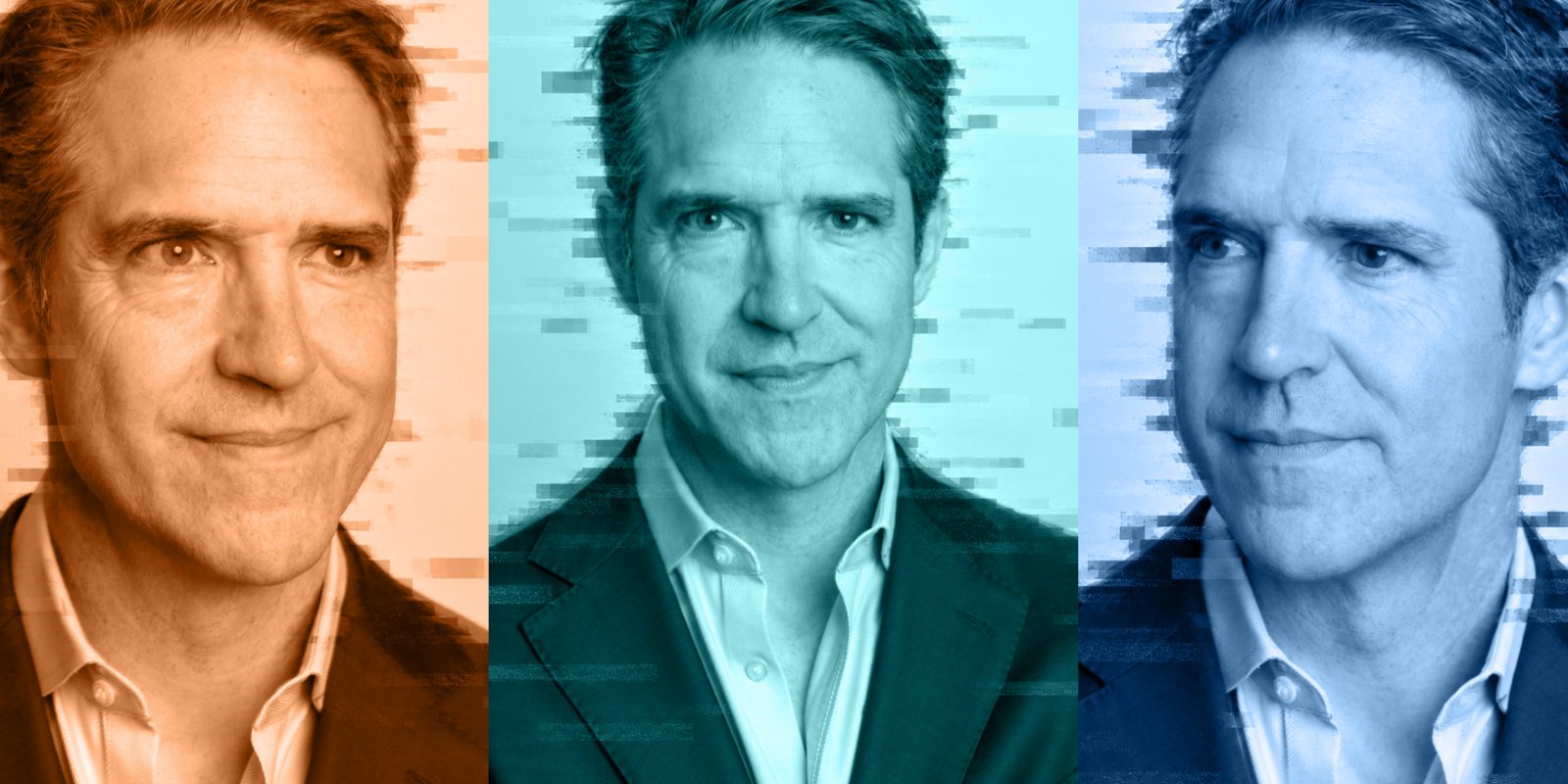
Bobby Chesney is dean of the University of Texas School of Law. Original photos by Kirk Weddle | Photo illustration by Kim Baker
What Is the Liar’s Dividend? The TCU Graduate Who Helped Name AI’s Threat to Truth
Bobby Chesney is an expert on national security and the threats posed by artificial intelligence.
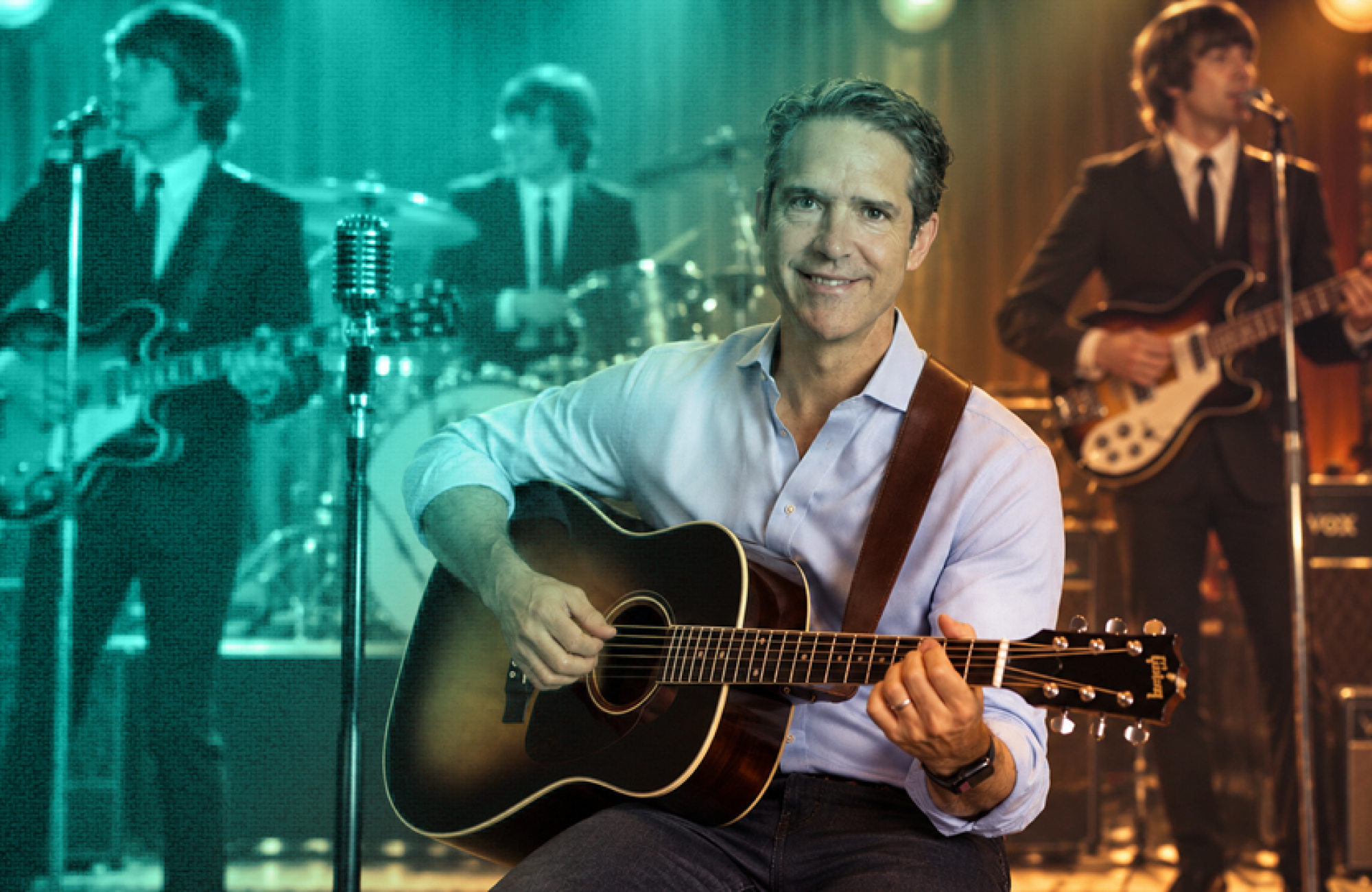
Earlier this year, Bobby Chesney ’94 gave a talk in downtown Austin, Texas, about deepfakes. To show his audience the persuasive power of the ultrarealistic AI-generated images and videos, the dean of the University of Texas School of Law played a clip of the Beatles, with Chesney on lead guitar.
He had created the footage by supplying generative AI tools with a photo of his real-life band the Deep Eddies, then instructing it to swap out the other musicians with Beatles and have them play a Fab Four-style song. The AI cooked up a tune that sounded so convincing, Chesney went looking for it in the Beatles’ discography. But he’d been fooled; the song didn’t exist.
Chesney, an expert on national security and cybersecurity law, was one of the first observers to sound the alarm about deepfakes’ threat to democracy and national security. The technology was new, but Chesney’s prescience wasn’t.
For more than two decades, he has been early to identify topics that will present complex legal dilemmas — counterterrorism, cybersecurity, synthetic media and other artificial intelligence — all while teaching the next generation of lawyers.
A Life Full of Ideas
Chesney grew up in San Antonio and arrived at TCU in fall 1989 as the Cold War was ending. He majored in psychology and political science. His primary mentors, J. Michael Dodson, emeritus professor of political science, and Richard Galvin, professor of philosophy and Betty S. Wright Chair in Applied Ethics, “helped me grow up and be more ambitious for myself and more intellectually curious,” Chesney said.
He also took note of Galvin’s lifestyle, which was full of ideas, friends, an intellectually engaging job — and occasional performances in a faculty rock band.
Chesney said he formed a goal in law school to write and teach about national security issues. “That was the dream,” he said, “and I absolutely got to have my dream.”
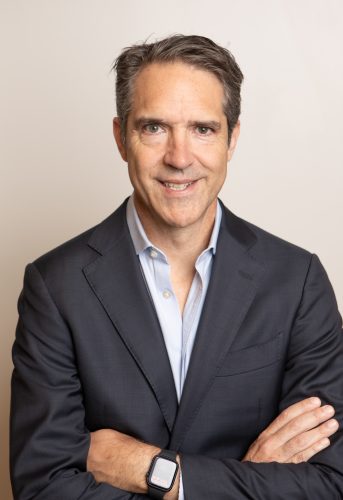
Bobby Chesney and Danielle Keats Citron coined the phrase “the liar’s dividend.” Photo by Kirk Weddle
Crime or War
As a student at Harvard Law School, Chesney became fascinated by national security law. In the mid-1990s, the national security conversation was shifting from a focus on the Cold War to emerging nonstate actors such as terrorist groups. “You could see some of the issues that later on would bloom into national consciousness,” he said.
Chesney said he wanted to study terrorism for a visceral reason: It made him angry. “I was just very passionate about the outrageousness of people using violence on purpose against random people to make their political points.”
He realized that the government’s response to terrorism illustrated a fundamental tension between the law’s dual purposes: to enable and to constrain. For example: How does a state balance surveilling people to detect terrorist plots with limiting surveillance to protect privacy? This tension has been central to Chesney’s scholarship. “You never have a perfect final answer,” he said. “It’s always an equilibrium that you can sustain for a time, but then it gets disrupted by technological, cultural or strategic change.”
While in law school, Chesney wrote a law review article about the risk that terrorists could build bombs with unsecured nuclear material from the former Soviet Union and what Chesney considered inadequate efforts by the U.S. at prevention.
After graduating, he looked for a teaching position, but in the ’90s, national security law was not a sought-after area of expertise at law schools.
All that changed after the terrorist attacks of Sept. 11, 2001, and the ensuing debates about counterterrorism, detention, interrogation and surveillance. Chesney found an academic position in 2002, and in 2008, he taught at the University of Texas as a visiting professor. He joined the faculty permanently the next year and later developed a curriculum on cybersecurity law.
The Liar’s Dividend
In 2017, Chesney read an article about deepfakes, content produced with AI technology that enables users to create convincing but synthetic audio, images and videos of real people. Danielle Keats Citron, a professor at the University of Virginia School of Law who studies information privacy, civil rights and gender, had read the same story.
She suggested to Chesney that they write about the dangers posed by the dissemination of deepfakes. Citron took note because the technology initially was used to create fake pornographic videos of celebrities, an egregious violation of intimate privacy. Chesney realized artificial intelligence also could be used to swing elections or disrupt peace negotiations by manufacturing clips of speeches or attacks that never happened.
The two coined the phrase “the liar’s dividend” to describe how the public’s increasing awareness of deepfake technology can lead people to doubt the veracity of authentic footage. A person who wants to avoid accountability for something they’ve said can deny making the remarks, even if they were captured on film, by claiming the footage is a deepfake.
Chesney and Citron concluded that technological solutions to the problem, such as deepfake detection software, would struggle to overcome efforts to thwart them. An outright ban on deepfakes would likely violate the First Amendment, and other legal remedies could be stymied if the creator of a harmful deepfake lived outside the U.S.
The duo suggested the most promising — if unusual — response would likely emerge from the free market: a “life log” service provided by a vendor that uses wearable tech to comprehensively track a person’s activities and speech. The vendor could provide a certified alibi if a deepfake was disseminated about the client. But the public might find this privacy-eroding solution unpalatable.
“It’s always an equilibrium that you can sustain for a time, but then it gets disrupted by technological, cultural or strategic change.”
Bobby Chesney on the law’s dual purposes: to enable and to constrain
Because Citron studies privacy rather than national security, she said she learned a great deal from Chesney while the duo collaborated on several publications. “He taught me how to think about some of these technologies from a national security perspective,” she said. “It helped me understand how deepfakes have a wider lens, that the implications for democracy extended far beyond silencing women’s speech, coercing sexual expression and damage to trust and truth.”
Steve Vladeck, a professor at the Georgetown University Law Center, has known Chesney for more than two decades. Describing himself as “center-left” and Chesney as “center-right” on national security, Vladeck said the two have had heated debates about the surveillance tools the U.S. government deployed after the 9/11 attacks and the legality of military commissions, the tribunals established to try terrorism suspects who were not U.S. citizens. Yet Chesney is “hard to fight with because he’s so nice. I can’t think of anyone in my career or in my profession who is so good at both listening to viewpoints with which he disagrees and tolerating them.”
What a Lawyer Needs to Know
Chesney became dean of UT Law in 2022, a position he loves but that leaves no time for scholarship about new developments in AI — even as the technologies become more influential and widespread. From Day 1 of his deanship, he has been working to adapt to the rise of AI across all aspects of the law school’s operations and in the curriculum.
At the same time, Chesney said, such “upskilling” should be balanced with a renewed emphasis on developing the analytical ability, judgment and communication that are the hallmarks of legal education and that can’t be outsourced to technology.
In his spare time, Chesney plays guitar and sings backing vocals in two bands. The Dean’s List comprises five current and former academic leaders playing classic rock at occasional campus events. The second band, the Deep Eddies, named after one of Austin’s spring-fed swimming pools, plays monthly. “We’re a dad band of middle-aged people who are midlife crisis-ing their way into gigs,” he said. “We’re not bad.”
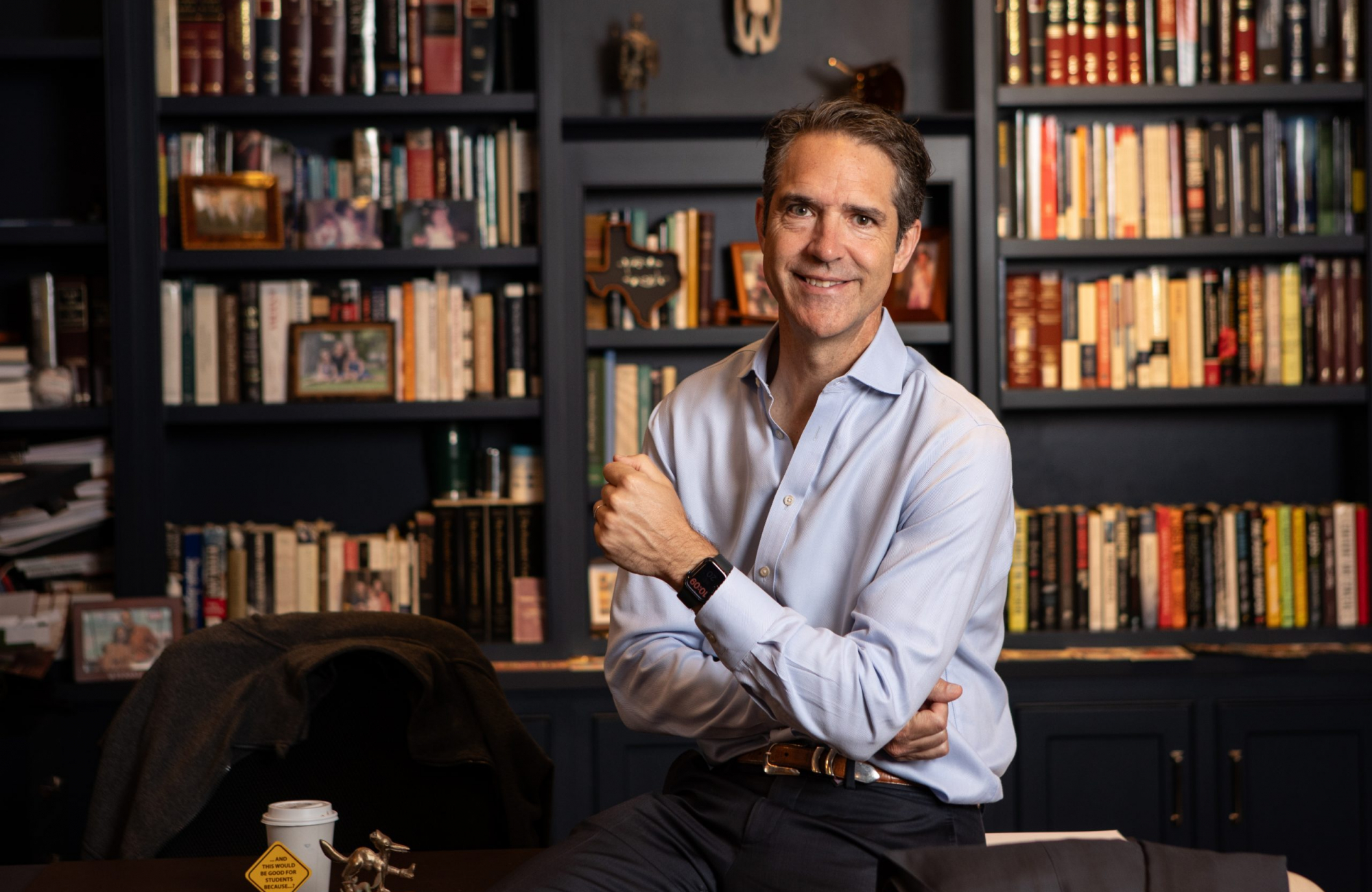
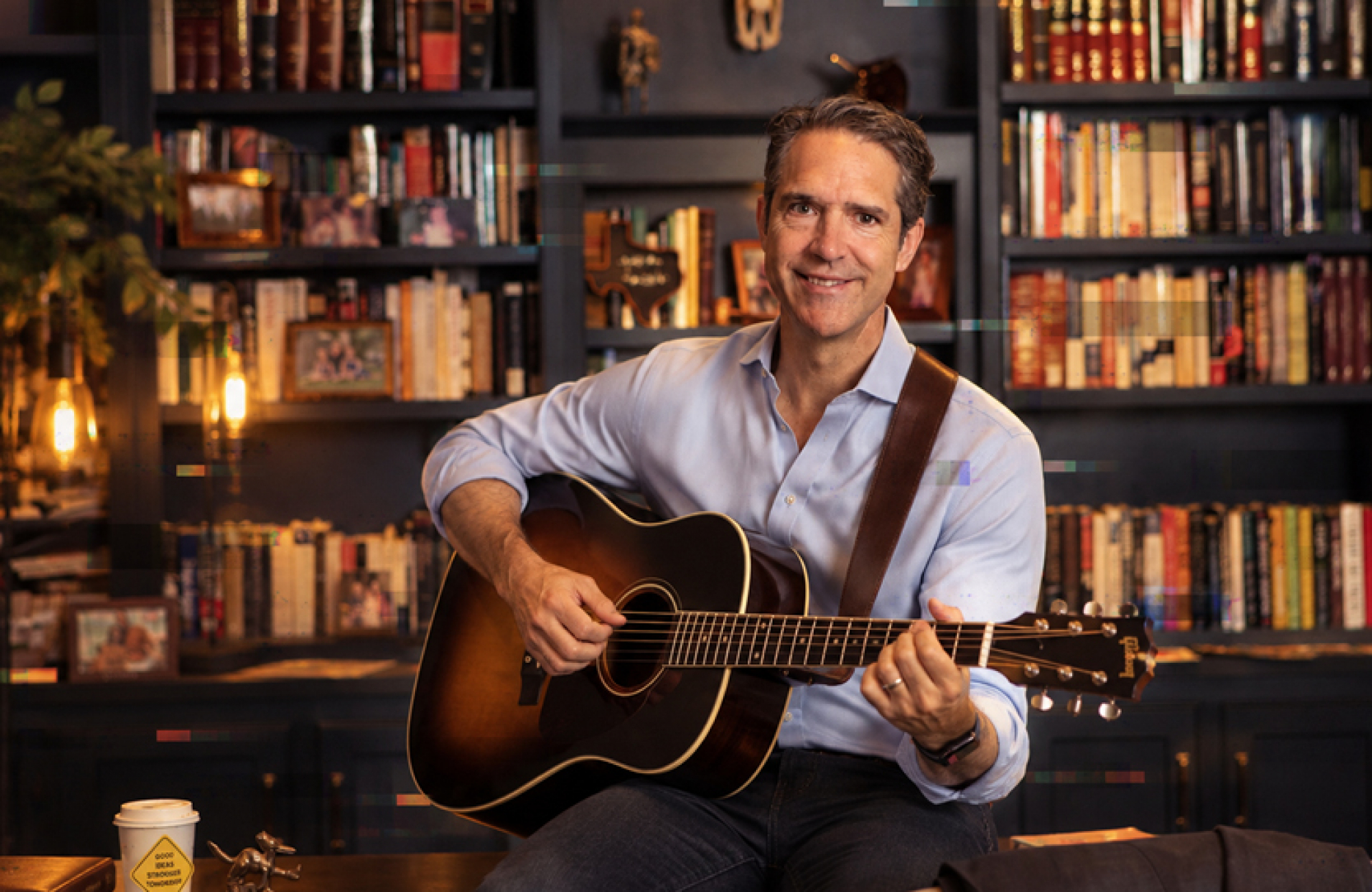
Thirty years on, Chesney has built the life he watched his mentor Galvin live.
He recently reconnected with a law school graduate who, during his first semester of law school, visited Chesney during office hours to let his professor know he planned to quit. Chesney encouraged him to stick it out, and the student did; he now has his own firm.
Chesney and his wife have three daughters, and such moments yield a type of satisfaction akin to parental pride. Professors are in loco parentis for students who count on them to impart critical information and help shape their thinking, he said.
“When it goes really well, and then you get to watch them leave the nest and go on to become practitioners, you get to see the success and know that you might have played a small role in that.”
Your comments are welcome
Comments
Related reading:
Features
How TCU Is Teaching Students to Work Alongside AI
Faculty are emphasizing AI literacy and critical evaluation skills as employers increasingly expect graduates to be fluent in AI tools.
Alumni
David Lay Williams Discovered His True Passion for Political Thought at TCU
The political science professor explores economic inequality’s history and moral impact in “The Greatest of All Plagues.”
Research + Discovery
Digital Safety Net
John T. Harvey recommends creating a Federal Cyber Insurance Corp., which would protect the U.S. from ransomware and other online crimes.