
Maj. Horace S. Carswell Jr. Would Not Leave a Crewman Behind
TCU’s only Medal of Honor recipient sank two warships with a single bomber. Eleven days later, eight men bailed out on his order, and he stayed with the one who couldn’t jump.
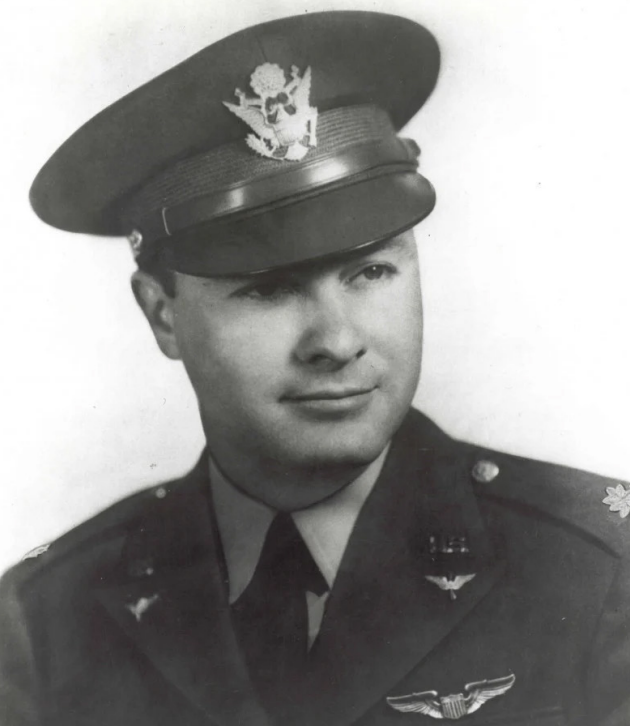
In 1948, the Fort Worth Army Air Field was renamed Carswell Air Force Base in honor of the TCU graduate. Photo courtesy of the U.S. Army Air Forces / Department of Defense
Maj. Horace S. Carswell Jr. Would Not Leave a Crewman Behind
TCU’s only Medal of Honor recipient sank two warships with a single bomber. Eleven days later, eight men bailed out on his order, and he stayed with the one who couldn’t jump.
THE NEWS WAS DELIVERED IN A THREE-PARAGRAPH STORY ON PAGE 14 OF THE NEW YORK TIMES. The date was Nov. 24, 1944, nearly three years since the Japanese had bombed Pearl Harbor and increased the stakes for the United States in World War II.
The story told of the death of Maj. Horace S. Carswell Jr. ’39, a native of Fort Worth and a TCU graduate who was a pilot in the U.S. Army Air Corps. Carswell’s plane had been damaged by enemy fire during a mission to bomb a Japanese convoy in the South China Sea. Two of the B-24’s four engines had been shot out, so Carswell and his copilot, Lt. James L. O’Neal, were trying to get the unwieldy plane back to base. With the other engines struggling, eight crew members bailed out on Carswell’s order. Carswell and O’Neal stayed with Lt. Walter W. Hillier, whose parachute had been so riddled by flak that he was unable to jump with the others. All three men died when the plane crashed into a Chinese mountainside on Oct. 26, 1944.
Carswell had established himself, the paper also noted, as one of the war’s heroes before the fatal crash. Just 11 days earlier, he had piloted a B-24 that had sunk a Japanese cruiser and destroyer in what the story described as “one of the greatest bombing exploits of the war.”
On Feb. 27, 1946, Carswell was posthumously awarded the Medal of Honor, the first and still only TCU graduate to be so recognized. “He ordered the crew to bail out while he struggled to maintain altitude,” read the medal citation, “and, refusing to save himself, chose to remain with his comrade and attempt a crash landing.”
He also earned the Distinguished Flying Cross, the Distinguished Service Cross, the Air Medal and the Purple Heart. In 1948, the Fort Worth Army Air Field was renamed Carswell Air Force Base in his honor. The base carried his name until it was deactivated in 1993 as a result of a Base Realignment and Closure decision. It was reopened in 1994 as the Naval Air Station Joint Reserve Base Fort Worth.
U.S. Rep. Roger Williams ’72, whose 25th District stretches west from Dallas, noted that Carswell’s legacy is recognized at the National Medal of Honor Museum in Arlington, Texas. “There, future generations will learn of his heroism and be reminded of the true cost of freedom,” Williams said.
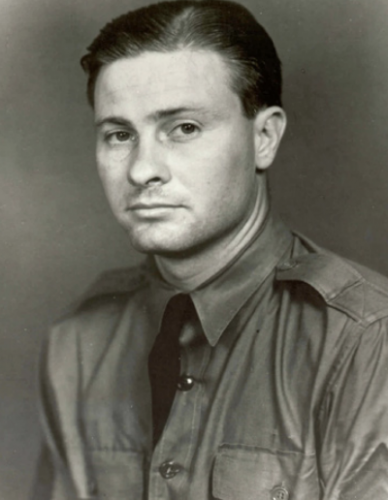
At TCU, Horace S. Carswell Jr. played baseball and football and met his future wife, Virginia Ede. Fort Worth Star-Telegram Collection / UT Arlington Libraries
A FORT WORTH NATIVE
Carswell grew up on Fort Worth’s North Side, where his father worked in human resources at a meatpacking plant near the Stockyards. He attended North Side High School, where he was the football team’s quarterback for two years and a member of the Boys Glee Club and National Thespian Club. He initially enrolled at Texas A&M in 1934. He transferred to TCU a year later after failing to make the Aggies football team.
At TCU, Carswell majored in physical education and played baseball and football. His teammates included All-Americans Sammy Baugh ’37 and Davey O’Brien ’39. He graduated in 1939 and briefly worked for an insurance company in Fort Worth before enlisting as a flying cadet in the U.S. Army Air Corps in March 1940.
Following his flight training, Carswell was commissioned as a second lieutenant and served as a flight instructor, earning promotions along the way. In 1941 he married Virginia Ede ’38, whom he had met on a double date when they were both students at TCU. Carswell was promoted to major in 1944 and sent to China with the 374th Bombardment Squadron, 308th Bombardment Group. Carswell was going to war, albeit in an often-overlooked corner of the global conflict.
THE WAR IN CHINA
China, before it became the world power it is today, had suffered greatly in a war with Japan that began in 1937. The U.S., coping with the Depression and then the war in Europe, had paid little attention as millions of Chinese were killed and countless others fled as refugees. That changed when Japan attacked Pearl Harbor.
“By holding down large numbers of Japanese troops on the mainland, China was an important part of the overall Allied strategy,” wrote Rana Mitter, a Harvard historian, in Forgotten Ally: China’s World War II, 1937-1945.
The 308th Bombardment Group that Carswell joined was part of that strategy. It flew under Gen. Claire Lee Chennault, something of a rebel within U.S. military ranks. Casualty rates were high, but the group also “performed some of the most accurate bombing of the U.S. Army Air Forces,” according to Chennault’s Forgotten Warriors: The Saga of the 308th Bomb Group in China, by Carroll V. Glines, a retired Air Force colonel.
“Its missions were long and hard, often conducted at very low level and at night through the very heart of Japanese-occupied territory,” Glines wrote. “The 308th flew nearly 600 combat missions under conditions that would have been deemed impossible in Europe.”
Miguel Leatham, a senior instructor in anthropology at TCU, said Carswell was the sort of pilot Chennault needed. Leatham’s academic specialty is Latin American cultures, focusing on Mexico and religion, but he has long had a personal interest in military history, with a strong focus on the Air Force and its heritage organizations. That led him to Carswell’s story.
“His career was stellar,” Leatham said. “There’s no question about his ability to lead. He was a hard charger, not afraid to go into combat, leading his men.”
A DIFFICULT PLANE TO FLY
With his background as a flight instructor, Carswell knew how to handle the B-24, a notoriously clunky plane to fly. When loaded with fuel and bombs — as it was when he flew it in China — it became extremely difficult to maneuver. But Carswell may have been uniquely suited for the challenge. “The man could fly,” according to one of Carswell’s frequent copilots quoted in Glines’ book.
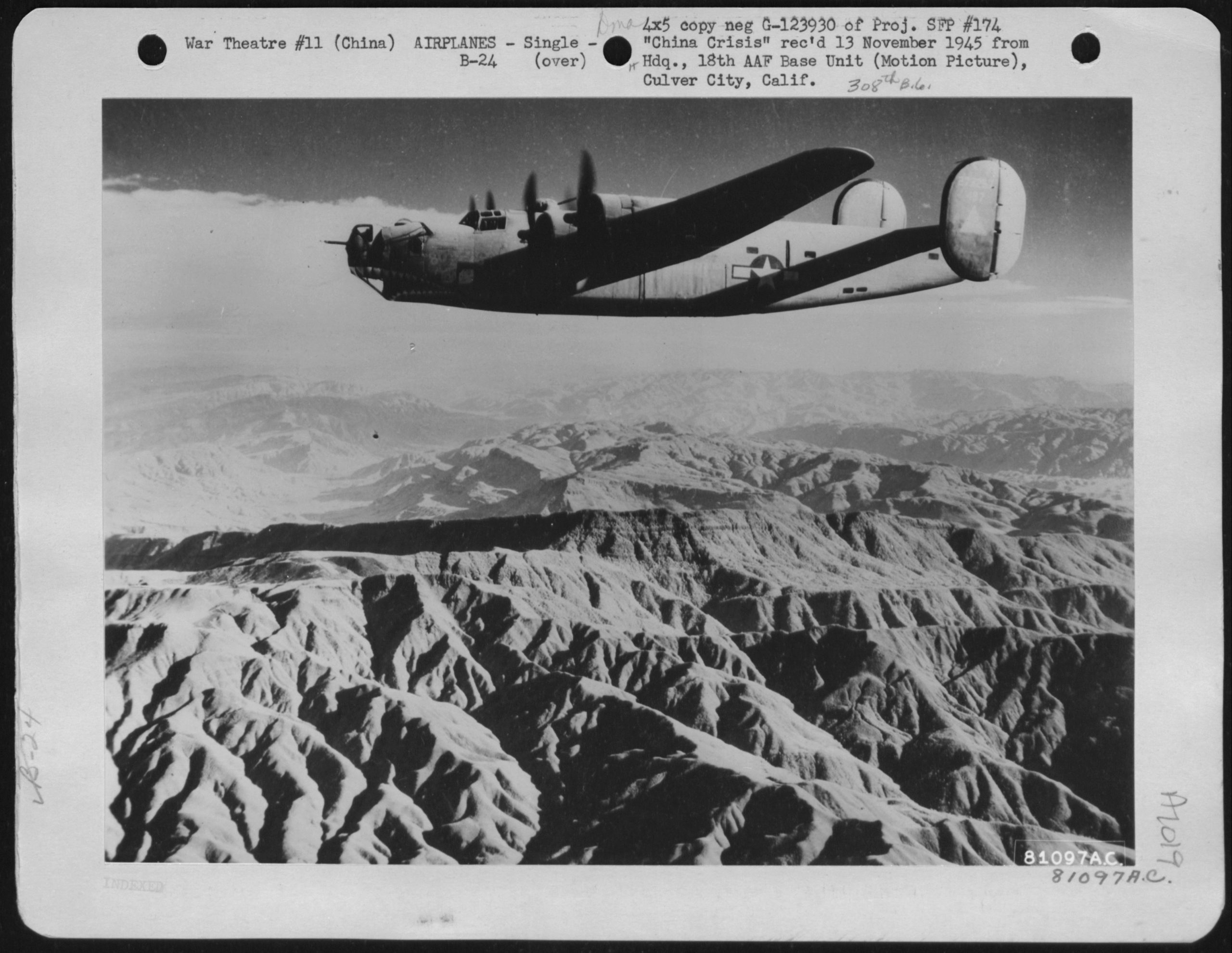
Carswell flew the B-24 in China, a notoriously clunky plane that became extremely difficult to maneuver when loaded with fuel and bombs. Photo courtesy of the National Archives
On a night sweep over the South China Sea, Carswell’s crew saw a group of six vessels. The plane drew enemy fire but landed a direct hit on a Japanese destroyer before dropping more bombs on the ship on a second flyover. When the crew spotted a Japanese cruiser, Carswell made a third run, despite damage to the plane.
“There was a big explosion and we were right over it,” Carswell said in an interview published after the mission in a weekly military newspaper called the C.B.I. Roundup. “We could see stuff exploding in front and behind us.”
Carswell and his copilot leveled the plane out and started climbing. After dropping three more bombs, they saw a blinding flash and heard an explosion. “As Carswell swung around to look, the ship folded up in the middle and began to sink,” according to Glines’ book. The crew headed back to base, worried their fuel was running low. The mission lasted more than 12 hours. The U.S. Navy confirmed later that they had sunk two Japanese warships. A news report at the time described the mission as “one of the most notable one-plane achievements of any air force.”
The flight earned Carswell the Distinguished Flying Cross for “the exceptional courage, gallantry, cool judgement and skill demonstrated by Major Carswell in attacking such a large task force with his lone plane in the face of almost certain destruction.”
Leatham said Carswell exhibited consummate skill in the cockpit of the B-24. “Flying at low altitude and dropping salvos of bombs down the length of a ship, that’s fighter-pilot-type skills,” Leatham said. “He was the man for that kind of job, taking those kinds of forward, aggressive actions.”
GONE, BUT NOT FORGOTTEN
“He was a hard charger, not afraid to go into combat, leading his men.”
Miguel Leatham
Leatham is doing what he can to ensure that Carswell’s story is told on campus. For the past 20 years, he has taken time during his anthropology classes to tell students about Carswell. He shows them a 20-minute slide presentation on Carswell and presents veterans who are studying at TCU with a specially minted military coin to thank them for their service.
The TCU Alumni Association recognized Carswell in 2016 with the Founders Award. In May, the Neeley School of Business named the first recipient of the Major Horace S. Carswell Jr. Memorial Award. It honors a veteran student or dependent of a veteran who exemplifies courage, sacrifice and selfless service.
Leatham has spent much of his free time over the last several years conducting research for a possible book on Carswell and is working with others on campus, including the Air Force ROTC, to establish a memorial to him at TCU. Shawn Keane, an academic program specialist with Air Force ROTC Detachment 845, said they have been working on that off and on for roughly 15 years.
While there is a plaque on Veterans Plaza bearing the name of Carswell and other TCU alumni who died in battle, Leatham and Keane, along with a number of advocates for TCU veterans, believe more should be done for Carswell. They have a tentative design for a statue in front of Reed Hall but still need to raise money for the project.
“I just feel that Horace made the ultimate sacrifice,” Keane said. “It would be very nice to see him recognized for his very heroic act by his university. He is a hero in every sense of the word.”
Your comments are welcome
Comments
Related reading:
Campus News: Alma Matters
Veterans Plaza Honors 89 Fallen Frogs
The memorial pays tribute to those who died for their country.
Alumni
Engineering a Career of Service
Gordon England modeled leadership in industry and at the Pentagon.
Alumni, Features, Research + Discovery
Vietnam War’s Battle Scars
The Pentagon Papers pushed anti-war sentiment to new heights.