
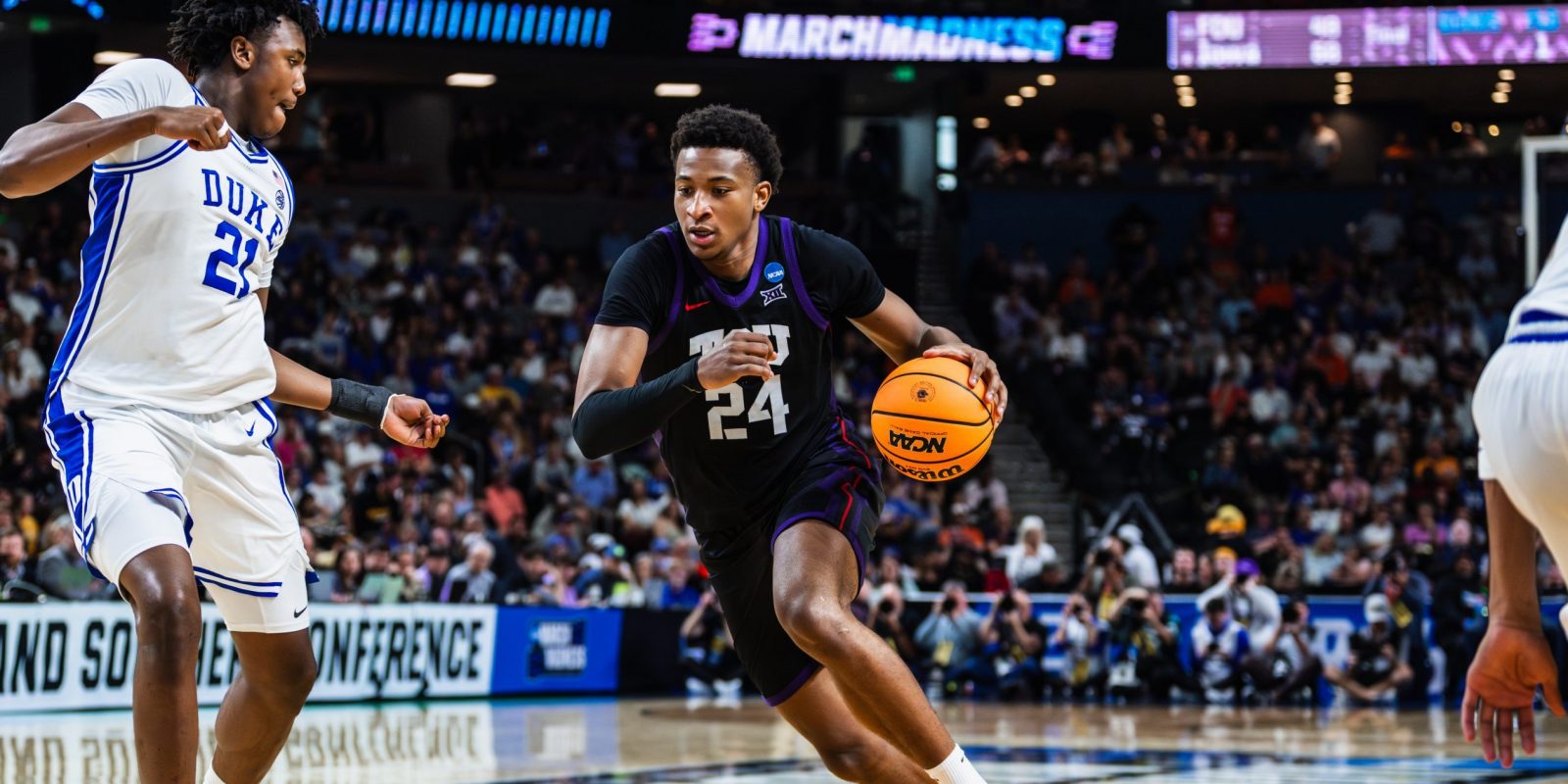
Xavier Edmonds drives against top-seeded Duke in the second round of the 2026 NCAA Tournament, a game TCU led in the second half before Duke pulled away. Courtesy of TCU Athletics
TCU’s Xavier Edmonds Talks Kobe Bryant, Long Beach and the Road to the Big 12
Xavier Edmonds describes his hometown as a community full of underdogs, one that’s produced NBA players including Russell Westbrook and Peyton Watson. “It’s just a lot of guys that play with a chip on their shoulder, a lot of guys that are hungry,” Edmonds said. “Long Beach is a place where you have to work for everything.”
The 6-foot-8 forward, who wears No. 24 in honor of Kobe Bryant, came to TCU by way of Bishop Montgomery High School in Torrance, California, and Salt Lake Community College, where he was the No. 1 junior college player in the country.
Edmonds started 34 of the Horned Frogs’ 35 games in his 2025-26 Division I debut season, averaging 12.7 points and 6.5 rebounds over 22.8 minutes per game en route to third-team all-conference recognition. The team, meanwhile, won a program-record 11 Big 12 games and reached the NCAA Tournament for the fifth time in the Jamie Dixon ’87 era.
The 22-year-old chose the program that pursued him early and never let up. TCU’s coaches began recruiting Edmonds during his senior year of high school and stayed consistent, he said. “I just wanted to go to a place where my name could be solidified,” Edmonds said. “I wanted to come here and leave my mark.”
You’re the youngest of nine. What was it like growing up in a household with eight older siblings?
It’s fun. It’s something new every day, especially on weekends. The bickering was fun, the fighting over the remote — all of the little things. It builds character.
Through the years, I picked up a lot of different things from my siblings, whether it was personality-wise or work ethic, and them pouring a lot of advice into me. Sometimes it’s like an extension of your parents. I’m grateful for the experience.
Was basketball something you came to on your own?
I fell in love with basketball naturally. I can remember watching Kobe play in 2008. I was in love with the Lakers, Kobe. My parents bought me a little door hoop, and I would go over there and play. It all started with me balling up socks and throwing them into a laundry basket across the living room.
My dad used to sit me down and try to force me to watch football. I didn’t like it at all.
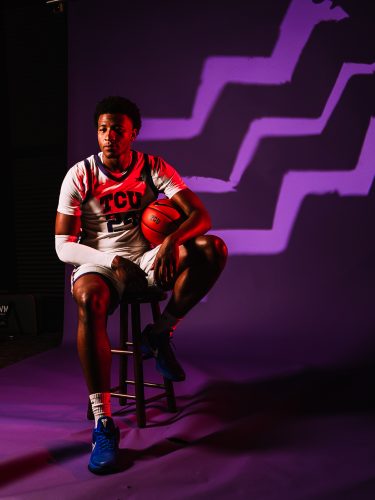
Edmonds says he learned early that you can’t ever be satisfied with a win or a good performance. Courtesy of TCU Athletics
Can you share your experience as a high schooler playing for Bishop Montgomery? What mentors or experiences come to mind from that time?
It was great. I praise my high school coach, Doug Mitchell, who I’m really thankful for — showing me what it means to have a good work ethic, showing me what it means to play basketball the right way. He’s been coaching there for more than 30 years, so he’s real old school with it. He’s not gonna give guys anything.
Whenever I was messing up, there was no leeway. Whenever I did good, he never praised me too much. He never wanted me to get my head too high. He kept me level-headed. Looking back now that I’m older, it’s something I’m really grateful for, because it’s like nothing’s ever enough now. You can’t ever be satisfied with a win or a good performance because it’s a long-term goal at the end of the day. You have to stay hungry.
By your second college season, you were the No. 1 junior college player in the country. What stands out to you now about your time at Salt Lake Community College?
My coach was a heck of a recruiter — Coach Kyle Taylor — and he brought in a lot of guys who had Division I experience: guys who know they belong, guys who are coming to compete every day, guys who were making me better. Only being 19 — these guys were 21, 22 — I picked up a lot from them.
In JUCO, we didn’t have the best resources, but we still made a way. And on top of all of that, we had fun.
But what JUCO taught me the most is who I am as a player, what it means to be confident and how confidence can take you a long way, knowing what you’re capable of doing on the court. If no one ever takes my confidence away, nobody can tell me anything, because I know what I’m capable of.
You were the team’s most efficient 3-point shooter last year and one of its top rebounders. How do you think about your role on the floor?
Last year, especially because I was playing out of position at center when I’m really a power forward, I felt like I had to be that anchor. Being only 6-foot-8 playing center, I knew I would be undersized against a lot of Big 12 teams, and I wanted to be the guy that brought the energy, that helped my team believe we’re always gonna win no matter what.
I liked it, though. I like playing against bigger guys and stepping up to the plate to take those challenges. I didn’t make excuses for myself.
And also, being 6-foot-8 against the bigger guys, you were able to find holes in the offense because big guys are not used to guarding on the perimeter. I might be setting a screen and pop back for a three, and now I’m wide open.
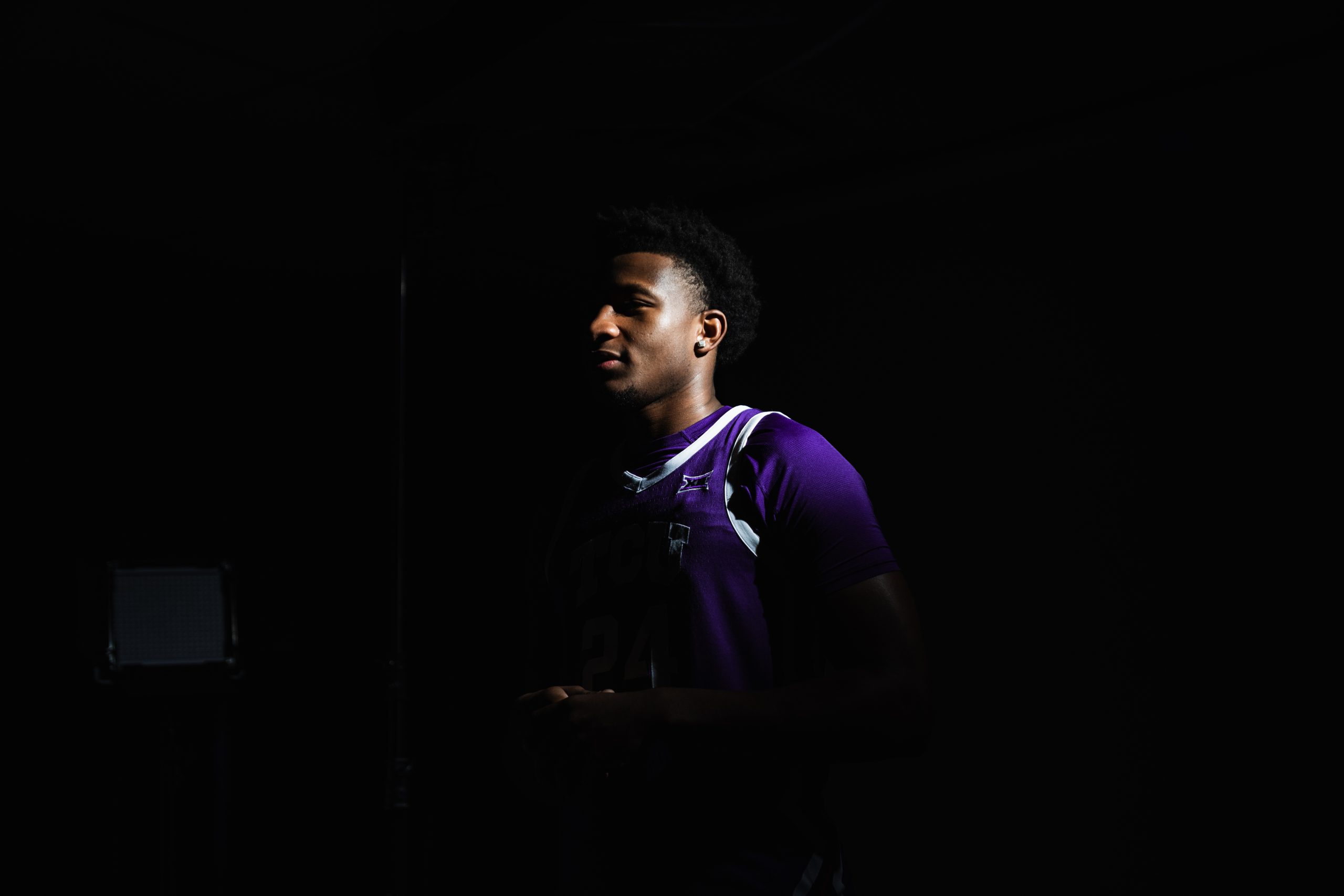
A natural power forward, Edmonds played out of position at center in 2025-26. Courtesy of TCU Athletics
Men’s basketball was 14-5 at home last year and has won 12 or more at home for five straight years. Do you notice a home-court advantage?
Yes, for sure, especially against those bigger teams. The first couple of games — I’m not sure if it’s because we were a brand-new team and people weren’t familiar with us — but the stands were empty. I didn’t think anybody would show up for our games in the future.
But games such as Michigan, who went on to win the national championship, we lost to them by four. Our crowd played a big part: They were loud, giving us energy all of the time. The game versus Houston was close at certain points. They got away at the end, but the crowd played a big role in that, too.
Guys love playing here. We interact with the crowd. And after the games, when we win, being chosen as the player of the game with the crowd choosing who they want — that goes into it. I’m excited to see them in the Scholl [Schollmaier Arena] next year.
What’s it like playing for Coach Dixon, a TCU alum himself? Does that history ever come through in how he coaches?
No, because coach never really likes to go on about his past. If I do hear about it, I’m hearing it from media outlets or students talking about it.
But coach in general — again, like with the underdog stories — he wasn’t the best player on his team, but from what I’ve heard, he was always the hardest worker and didn’t make any excuses. He holds the same standard here. He doesn’t want to hear any excuses. He wants to see results.
Going into this next year, a lot of guys trust what he’s doing and know that it works, so a lot more guys will buy in sooner, and hopefully it can contribute to winning sooner. Playing for a coach like that, where he’s well-respected, you can’t ask for anything better.
The team closed the 2025-26 regular season with wins in eight of its last nine games. Do you feel like there was a particular point where things turned, or was it gradual?
There was a stretch where we lost to BYU, then we lost to Utah. We ended up winning a couple of games, then we lost to Colorado.
After that Colorado game, coach chewed us out in the film room. He wanted us to be honest with ourselves about what we were doing on the court — was it helping our teammates? Did we trust each other? Did we want to play with each other?
Guys let each other know how they felt at that moment, chewed each other out, held each other accountable, and that moment brought us all closer together.
We took a huge jump from there. We wanted to prove to everybody how good we were and make the hard work we had been doing pay off.
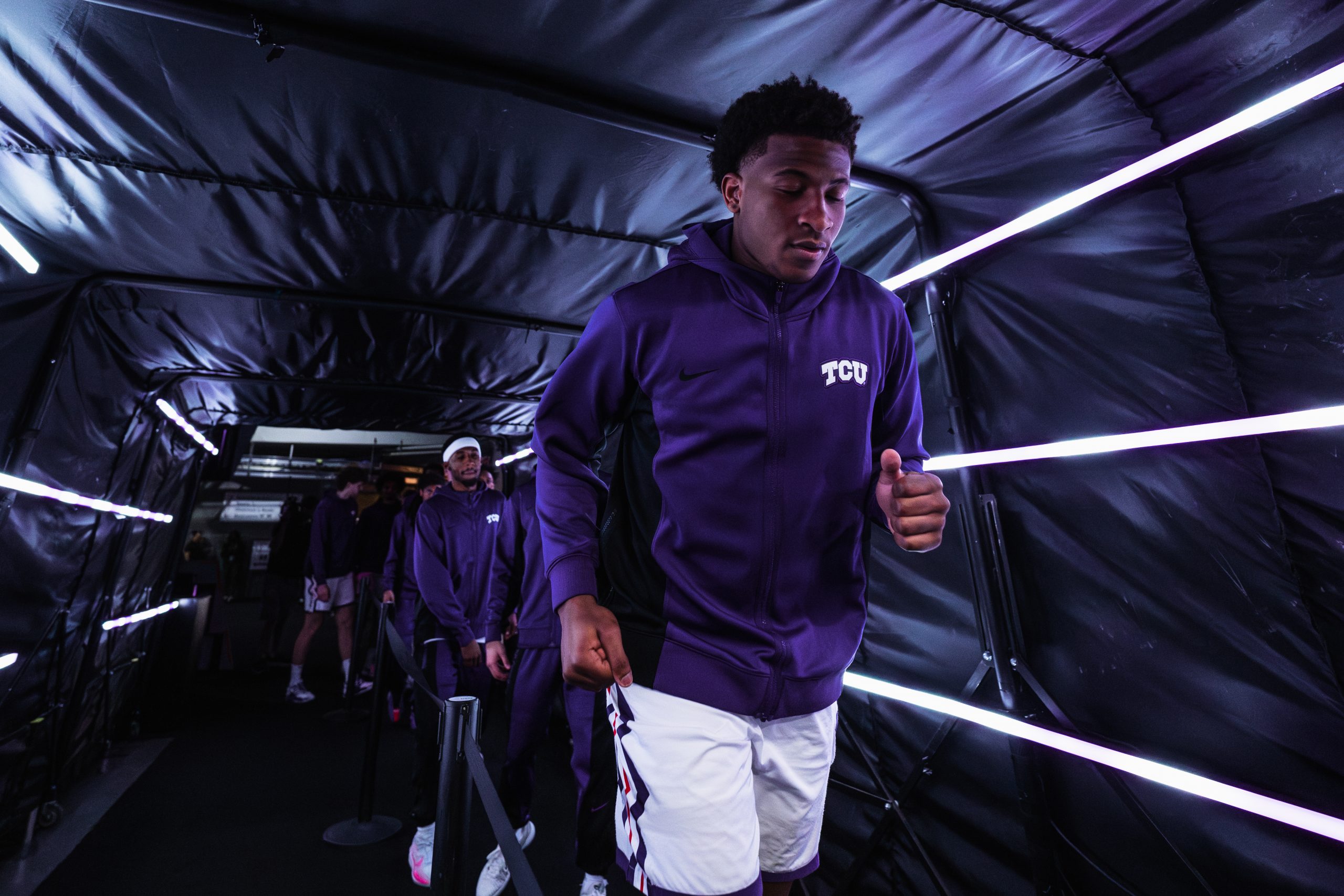
Edmonds credits a film session after a February loss to Colorado with bringing the team closer together. Courtesy of TCU Athletics
What did last year’s NCAA Tournament run teach you about yourself and about the team, and are you carrying any of that into this year?
The biggest thing is staying level-headed, not letting the refs play any role in the game. In the second-round tournament game against Duke, we were close for a while, but at certain points we let the refs get into our heads, let the players get into our heads, and we folded.
Having that experience, it’ll take us further. We won a lot of close games last year. With the final two minutes being close, we ended up finishing those games out. So in a certain aspect, we had some good experience going in. But the next step is being able to stay level-headed, being able to stay focused on the task at hand, and going out there and executing no matter what’s going on.
Is there a part of your game you’ve been working on most this offseason?
My perimeter game — being able to attack bigger defenders and knowing when to post up bigger or smaller defenders. Playmaking, too. Expect to see a huge jump in those areas and in my shot-making ability.
And the defense, too — just seeing me guarding smaller players now, faster players.
Is there anyone — family, a coach, a teammate from along the way — you want to give a shoutout to?
A shoutout to my mom. Working from 8 to 4, picking me up from school around 5:30 after practice, then taking me to training an hour away, not getting home till like 9:30, 10. That was a huge sacrifice she had to make. I’m sure not every day she wanted to do it, but no matter how she felt, she made sure she got it done. Hopefully I’m making her proud right now.
Editor’s Note: The questions and answers have been edited for length and clarity.
Your comments are welcome
Comments
Related reading:
Sports: Riff Ram
First Person with… Kenrich Williams
From wounded to winner, the NIT standout is ready to succeed in his senior season with TCU men’s basketball.
Sports: Riff Ram
Cameron Patton Wants More After TCU Soccer’s Historic Run to the College Cup
The Austin native and All-Big 12 defender returns to anchor a back line and a veteran core that’s chasing the program’s first national title.
Features
A New Frontier for TCU Athletics
TCU bets on world-class facilities and a supportive culture to build an elite athletics program.