
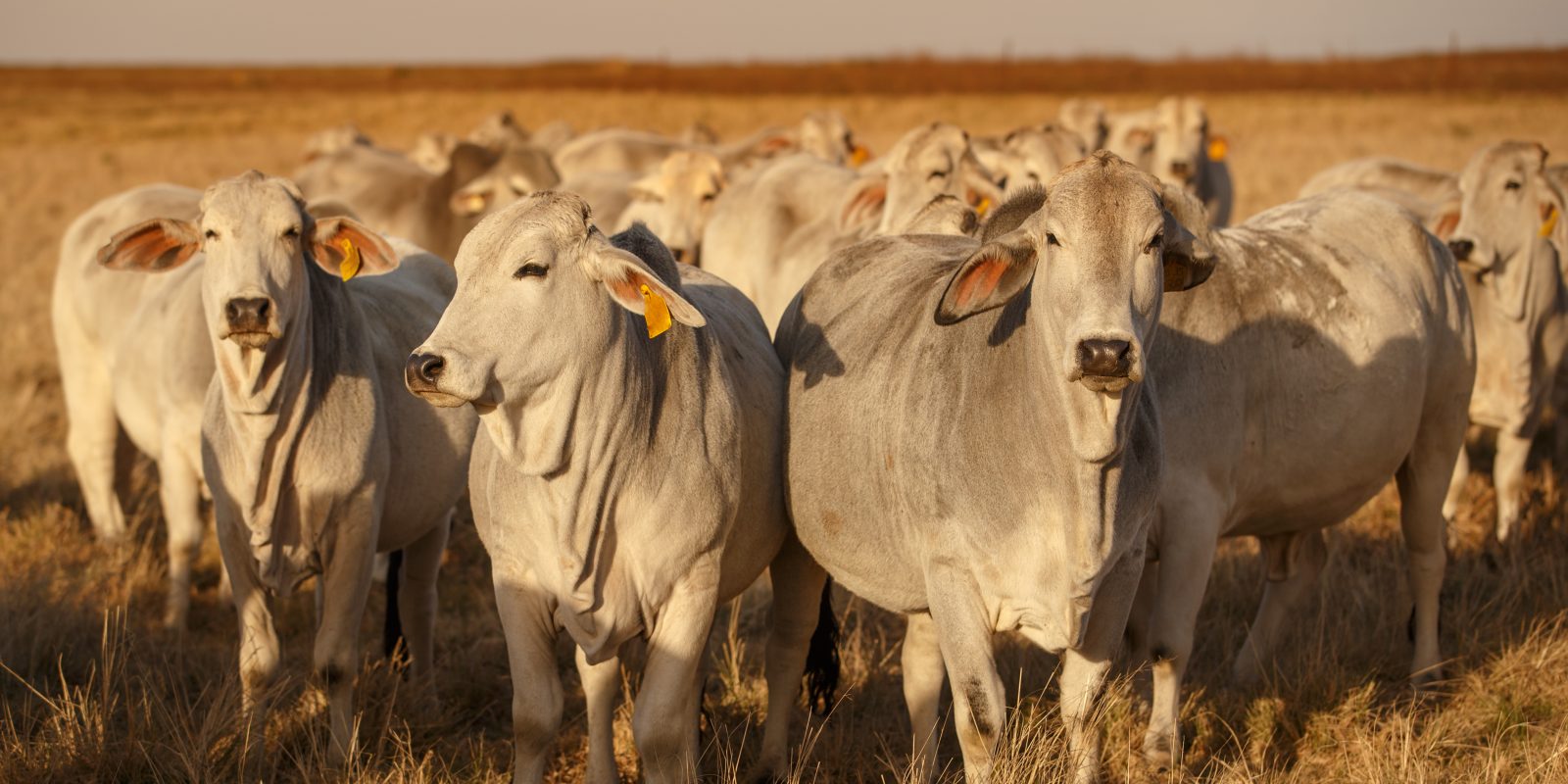
Los tiempos de la vaca flaca, “skinny cow times,” was the Cuban phrase for periods of beef scarcity. From 1927 to 1963, that scarcity proved chronic. iStock/Dawie Nolte Photography
Land of the Skinny Cow: Inside Cuba’s Centuries-Long Beef Crisis
In her new book, TCU scholar Bonnie Lucero traces how beef became one of the most powerful — and most political — foods in Cuban history.
In the pages of The Land of the Skinny Cow: Beef Politics in Cuba, 1927 to 1963, the stories read like crime fiction: butcher shops bombed in the night. Beef-motivated murders. Smugglers trafficking illegally slaughtered meat in suitcases and garbage bins. But for Bonnie A. Lucero, TCU’s Neville G. Penrose Chair in Latin American Studies and History, these were not plot points; they were archival discoveries, buried in decades of Cuban court records and newspapers, that revealed how a single commodity shaped a nation’s politics, identity and destiny.
Beef “would always come up unsolicited in conversation,” Lucero said, adding that the topic’s omnipresence piqued her interest. “Cattle and beef metaphors are infused throughout the entire culture.”
On a visit to the Cuban national archives in Havana, Lucero browsed dozens of collections for content on cattle and beef. She discovered that beef production and consumption were so deeply entwined with Cuban politics, history and culture that a book began to take shape.
BEEF OR BUST
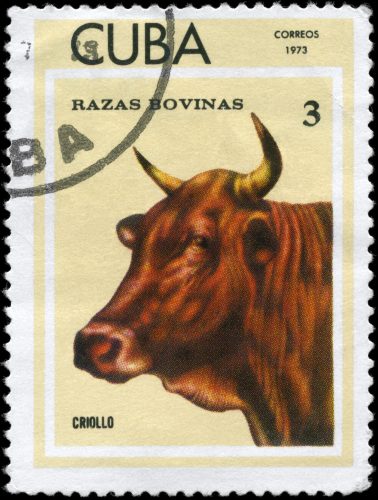
A 1973 Cuban postage stamp from the Razas Bovinas (Cattle Breeds) series features the Criollo. Cattle and beef imagery, Bonnie Lucero notes, are “infused throughout the entire culture.” iStock/AlexanderZam
The title The Land of the Skinny Cow, forthcoming from Stanford Press in early 2027, draws on one of the many beef metaphors that sparked Lucero’s interest in the subject. The phrase los tiempos de la vaca flaca (skinny cow times) referred to periods of beef scarcity.
During the period covered in the book, 1927 to 1963, three different eras of politically influential ranching cartels controlled the beef supply and price and created shortages on the island. The government vacillated between cooperating with the beef barons and attempting to rein them in.
It was not just the industrial monopolies that made beef a persistently scarce commodity. Environmental factors such as drought and disease and ideological conflicts between the haves and have-nots in the country’s highly stratified society contributed to Cuba being what Lucero called “the land of the skinny cow, a place of enduring shortage and chronic scarcity.”
The story of Cuba’s obsession with beef began in the 1500s. For centuries, the Spanish colonial government requisitioned cattle from ranchers and provided beef to the people under what was called the pesa system, which “not only reflected an understanding that ranchers, by virtue of their privileged access to land, had an obligation to feed the public,” Lucero said. “It also bequeathed a deeply rooted sense of entitlement to affordable beef as a primary dietary staple to colonial denizens, regardless of status.”
During the colonial period, beef emerged as a central pillar of the Cuban diet, prized for its presumed associations with “strength, productivity and masculinity,” Lucero said. The Spanish dish ropa vieja, a slow-cooked beef stew, evolved into Cuba’s national dish. Other food sources — pork, poultry, seafood — were considered inferior, and their consumption was minuscule in comparison. The distribution of beef inextricably shaped Cubans’ expectations of their government.
During the late 1800s, Cuba’s cattle industry was decimated by three wars for independence and by land reallocated to booming sugar plantations. The government supplemented dwindling domestic beef supplies by importing tasajo, an inexpensive form of dried salted beef, from Uruguay. It became the dietary staple of the masses, popular in fried and stewed variations.
U.S. ranching and meatpacking firms, present in Cuba since the 1870s, reconstructed the Cuban beef industry by replenishing herds and building Havana’s first modern slaughterhouse and meatpacking plant. They turned the Cuban beef industry into a powerful economic and political force that gradually controlled prices and supply. This propelled the shift from a municipal monopoly on beef to privatization, Lucero said, which priced fresh beef beyond the budget of most Cubans and “upended the colonial ethos of social obligation and popular entitlement.”
To promote the domestic cattle industry, the Cuban government in 1927 imposed a protectionist tariff on imported beef — specifically, tasajo, which became prohibitively expensive. Prices for fresh beef and other sources of protein were even higher, in part due to collusion by two private companies controlling the market in Havana.
“It had a very tangible effect on people’s lives,” Lucero said. The global depression of the 1930s significantly reduced Cubans’ purchasing power, “but even if you had money, there was no affordable product to buy.”
Consumer protests prompted government intervention through price controls, direct distribution and rationing that repeatedly tried, but failed, to resolve persistent shortages over the next two decades. As revolutionary forces gained power in the lead-up to the 1959 overthrow of the government, Lucero said, “they recognized delivering beef to impoverished people as critical to consolidating political support.”
Eventually, the revolutionary government’s first agrarian reform law from 1959 to 1963 seized ranchland from cattle barons and redistributed it into cooperatives, marking the end of the country’s commercial beef industry. The law also led to diversification of the Cuban diet.
SEEDS OF REVOLUTION
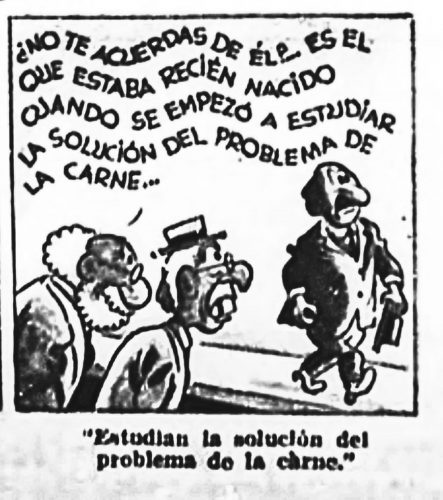
Political cartoons in Cuba made mention of “the beef problem.” Illustration courtesy of Bonnie Lucero
Lucero’s fascination with these questions has deep roots. In 2006, she spent part of her sophomore year of college at the University of Havana. “I absolutely fell in love with the country,” she said. “The United States is a very individualistic place. But in Cuba at that time, there was still a beautiful solidarity among people just wanting to help each other.”
Lucero was thrilled to work on a PhD in history at the University of North Carolina at Chapel Hill under Louis Pérez Jr., an esteemed and prolific Cuban scholar. “I tell my graduate students that when you work on Cuba, you have to have three Ps: passion, persistence and perseverance, plus a sprinkling of humor because there will always be setbacks,” Pérez said. “Bonnie has a commitment that is very much driven by her passion for her subject. She’s one of those researchers who just dives into her material with both a broader vision and an eye for details.”
That talent served Lucero well in her research for The Land of the Skinny Cow. She read through 30 years of Cuban cattlemen magazines to learn about the industry and 40 years of newspaper articles to understand popular sentiments about beef. “The level of detail you can get from the everyday press is fantastic,” she said. “Beef made the news practically every day.”
She recruited an assistant for her research: then-sophomore Kate Spielbauer ’25, a biology and Spanish double major who took classes and completed independent studies with Lucero. A fluent Spanish speaker, Spielbauer skimmed through Spanish newspapers on microfilm at TCU’s Mary Couts Burnett Library and, with support from the history department’s Regina Memorial Endowment, accompanied Lucero on a research trip to Cuba in summer 2023.
Together, they spent hours poring through court cases at the Archivo Nacional de la República de Cuba in Havana as well as a provincial archive in Camagüey, the center of Cuba’s historic ranching region. Spielbauer helped Lucero translate court cases to discover all the ways beef became criminalized and contraband through bootlegging and smuggling. “Interpreting was a challenge but also like a scavenger hunt,” Spielbauer said. “You’d find new words and learn something new.”
Lucero has included some vignettes from those court cases in The Land of the Skinny Cow. Her narrative unfolds not just in words but through 52 illustrations that connect readers to the events and to the emotions behind the beef crisis. The cultural disdain toward other food sources comes through in a magazine cover’s depiction of a plate of fish titled, “¡Esto no es Carne!” (“This is not beef!”)
Another of her favorite images from that era depicts a father and son in front of the 16th-century El Morro fortress in Havana. The father says, “That castle is very old, almost as old as when there was beef in Havana.”
“Ensuring that people have enough to eat, especially the foods that are important to them, is the foundation of political stability,” said food historian Jeffrey Pilcher ’93 PhD. “Beef had this totemic importance for the Cuban people. What Bonnie’s book does very nicely is show the complexity of all these different actors within the beef industry in Cuba.”
Your comments are welcome
Comments
Related reading:
Research + Discovery
Cultural Deep Dive
Sonja Watson invites readers to a richer understanding of Latin America’s history and diversity with a new book.
Research + Discovery
Painting a Fuller Picture
With TCU’s help, the Fort Worth school district bolsters its lessons on Latin American history and culture.
Research + Discovery
Tracing Colonial Mexico with Maps and Ink
Alex Hidalgo re-creates the colonial experience in Latin America with mapmaking, astronomy and a scriptorium by candlelight.