
How a 1976 TCU Learning Study and Early AI Research Began With the Same Question
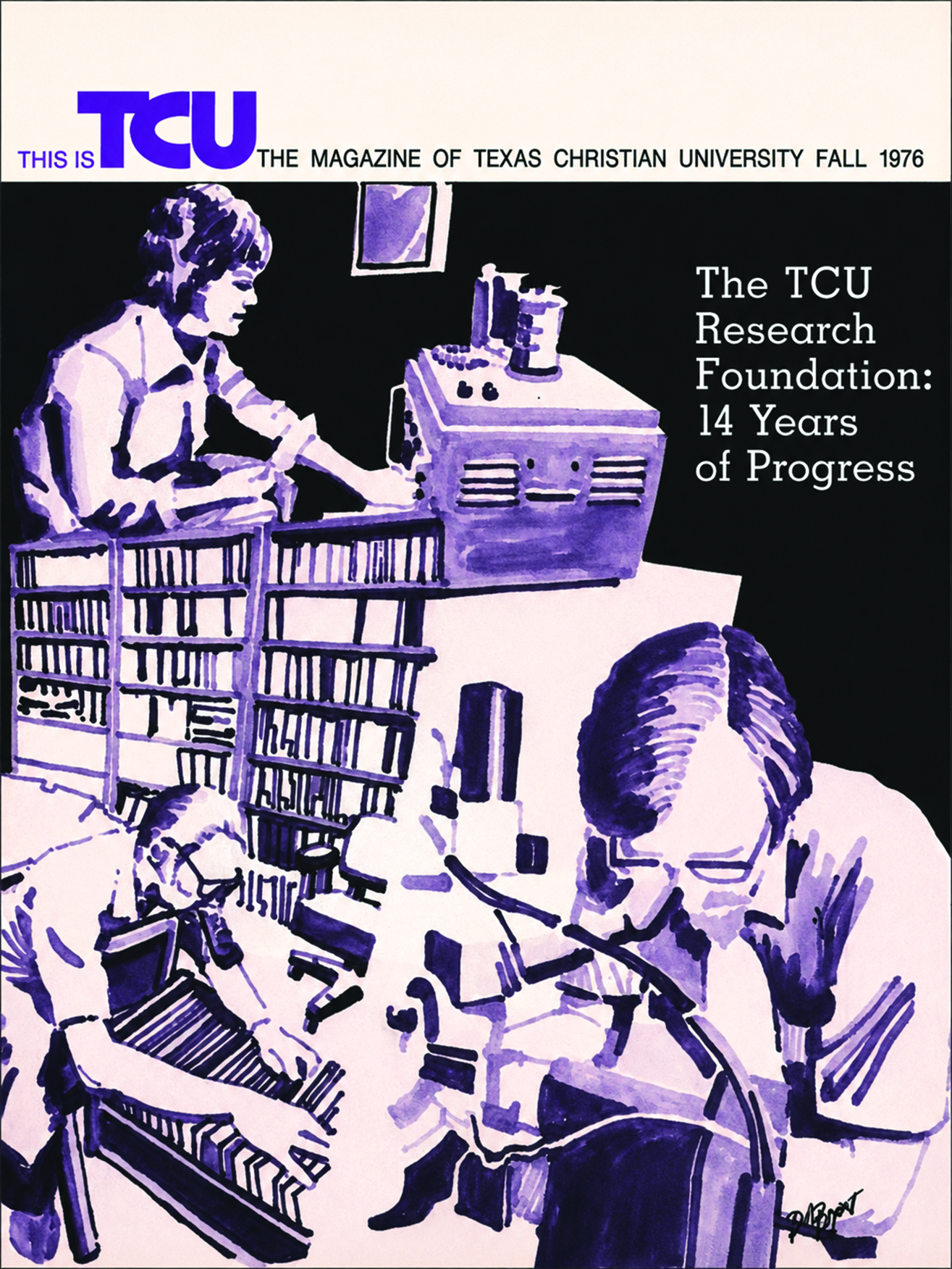
The Fall 1976 cover of “This Is TCU” put the university’s research enterprise on display.
How a 1976 TCU Learning Study and Early AI Research Began With the Same Question
Fifty years ago, This Is TCU, the predecessor to this magazine, put the university’s research enterprise on its cover. Inside was a question artificial intelligence has made urgent again: How do people learn?
In 1976, Donald Dansereau, a professor of psychology, was studying the mechanics of learning. He found that students often fell back on memorizing. But regurgitated knowledge, he argued, offers little help when it must be applied to a new context. The homework may look perfect without real learning ever having taken place.
So he developed a curriculum that taught the process of learning: how to take in an idea and reshape it, retrieve it later, check your own understanding and hold your attention.
Dansereau’s funding came from the TCU Research Foundation and from the U.S. Department of Defense’s Advanced Research Projects Agency. In those years, the same agency was coincidentally funding early attempts to build artificial intelligence.
Both efforts began with the idea that thinking is a process that can be examined and reconstructed.
One branch became a strategy for teaching students to think for themselves.
The other became a machine that thinks for them. Fifty years later, the two have met in the classroom. What happens to learning now is the subject of this issue.
Your comments are welcome
Comments
Related reading:
Research + Discovery
AI² CENTER AT TCU
The university has built AI infrastructure the way it once built libraries — as a foundation for the next century of research. The new AI² Center enables TCU to operate this technology securely and ethically from campus.
Features
How TCU Is Teaching Students to Work Alongside AI
Faculty are emphasizing AI literacy and critical evaluation skills as employers increasingly expect graduates to be fluent in AI tools.
Features
Inside TCU’s AI Infrastructure and Its R1 Push