
New IDLmeals App Makes Easy Meal Prep Accessible for College Students
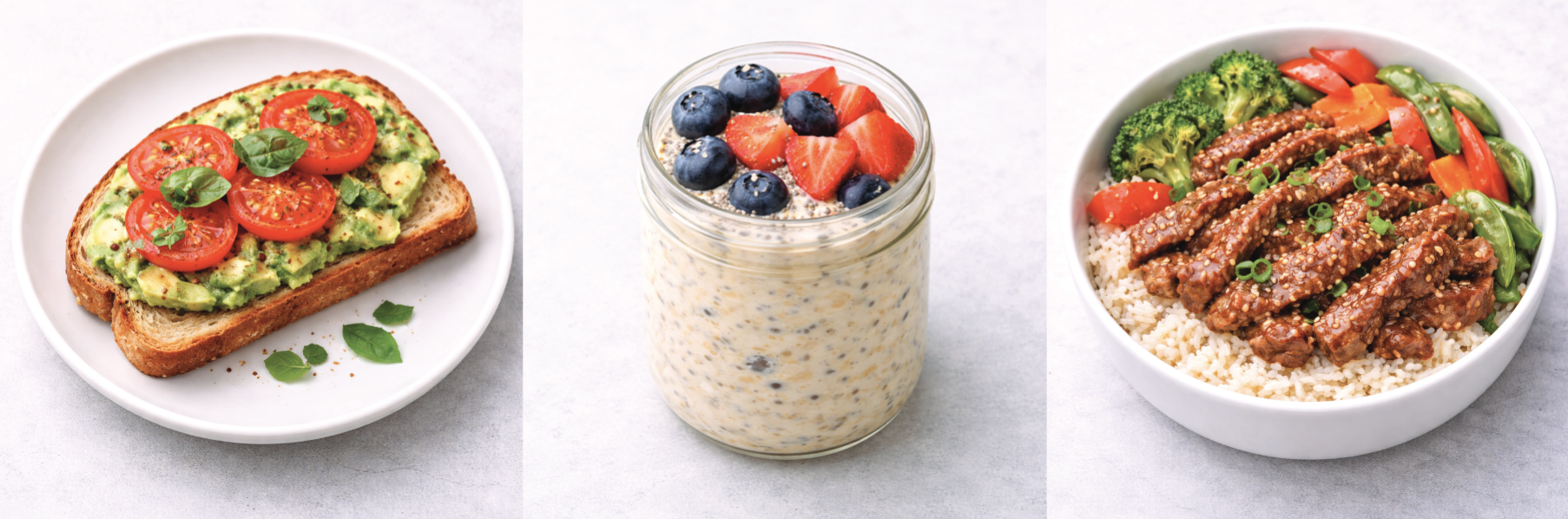
The IDLmeals app offers more than 100 recipes designed by TCU nutrition and dietetics students. AI illustrations courtesy of IDLmeals
New IDLmeals App Makes Easy Meal Prep Accessible for College Students
Ordering a teriyaki bowl in a campus dining hall is easy. Re-creating it at home — from making a shopping list to purchasing ingredients to cooking — is another story. For many TCU students, moving off campus means leaving behind a meal plan and facing a steep learning curve in the kitchen.
Samantha Davis, professor of professional practice in nutritional sciences, said she frequently hears students complain that they don’t know how to prepare meals and that it’s too expensive to buy food that isn’t overly processed. She began to wonder if there was a way to make cooking feel less overwhelming.
After researching more than 30 meal-planning apps, Davis discovered that none checked all the boxes for low-cost, easy recipes that don’t require much equipment and can be adjusted to dietary needs like food allergies. Her idea grew into the IDLmeals cooking app, designed by students for students — and anyone struggling to prepare meals. After three years of development, her team released the web version of the app in April. Once approved, mobile versions of the app will be available for Apple and Android devices.
In her prior role as a registered dietitian with Meals on Wheels Inc. of Tarrant County, Davis learned that older adults often face their own cooking challenges. Dietary advice from a doctor doesn’t always make sense in the context of one’s home, for instance, where a caretaker might remove the knobs from the stove to prevent a fire, leaving only a microwave to use.
“You have got to meet them where they are,” Davis said, “and that’s what we’re trying to do — meet students where they are.”
IDLmeals — its name can be read as either “ideal meals” or “idle meals,” emphasizing the recipes’ focus on nutritious and low-effort cooking — offers more than 100 recipes created by nutrition and dietetics students with their peers’ needs in mind.
A beef rice bowl recipe, for example, requires only a few ingredients and takes about 20 minutes to prepare on the stovetop, using a single skillet. It makes four servings, which is enough to save as leftovers or share with roommates, for under $15. Other recipes include shrimp lo mein and chicken with snap peas and garlic noodles.
“We’ve got students with allergies, people are short on time, have no cooking skills … maybe don’t have a lot of money,” Davis said. “So that’s really how it was born.”
PEER-APPROVED RECIPES
Maci Jones, a senior dietetics major who worked on the app during her sophomore year, said that the team designed recipes with common constraints in mind.
“I tried to make recipes really straightforward and simple and take less time and not require a lot of in-depth skill,” Jones said. “Obviously, it’s college students. They want something quick and easy.”
Nutrition students, many of whom tested the recipes independently, prioritized ingredients such as ground beef, chicken, chickpeas, black beans, rice, sweet potatoes and other low-cost foods that can be bought in bulk and used in multiple recipes.
“Rather than calling for a fresh head of broccoli, we would use a bag of frozen broccoli florets. They have the same nutritional qualities, yet one is much faster to use and often cheaper,” said Matthew Loritz, a senior dietetics major who worked with Jones on the app. “It was also a great option for students who may be less comfortable preparing and chopping vegetables, who don’t have great knife skills yet.”
The time students spent developing and testing recipes counted toward the 200 hours of nutrition experience they need before applying to one of TCU’s dietetics programs, such as the combined bachelor’s and master’s that serves as a pathway to become a registered dietitian.
The recipe collection’s strength is in its ease — each dish takes 30 to 45 minutes, including prep and cook time.
Loritz said taking on a difficult workload his sophomore year gave him firsthand experience with not having much time or desire to cook. His favorite recipe is one for enchiladas that can be made using a variety of proteins.
Jones said the task of cooking chicken was daunting before she began her studies in nutrition.
“I think this will just give people more confidence in the kitchen and in their own skills,” Jones said, “and give them some staple recipes that they don’t have to think about before cooking.”
FROM CONCEPT TO CODE
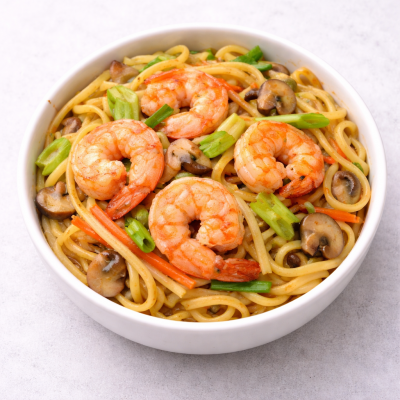
TCU computer science students chose generated imagery, like this depiction of shrimp lo mein, to give the app’s recipes a clean, consistent look. AI illustration courtesy of IDLmeals
As nutrition students worked on recipes, the programming and design side of IDLmeals was unfolding across campus. During fall 2023, a group of computer science students worked on the IDLmeals app for their yearlong senior design project under the guidance of Bingyang Wei, department chair and associate professor of computer science.
Then-seniors Francisco Alarcon ’24, Paige Anderson ’24, Annalise Gadbois ’24, Eriife Aiyepeku ’24 and RC Reynolds ’24 saw potential in the IDLmeals project.
“It was something that was expandable,” Reynolds said. “You could envision it being brought to other campuses and actually making some sort of impact.”
When trying to crack the code on making the app user-friendly and geared toward college students, the computer science group decided to incorporate a feature to help users search for recipes they can make with limited cooking equipment, such as an air fryer or a hot plate. The team also included a feature that generates shopping lists, removing items the user already has at home. Users can browse recipes and mark them as favorites to revisit later.
“I really liked the grocery list, where I actually had little pictures of what you would need for each recipe,” Gadbois said. “It was super user-friendly.”
The app also includes photos of what the completed recipes should look like. Originally, nutrition students took photos as they tested their recipes — and planned to use those images in the app. The computer science team, however, decided that using photos without professional lighting or plating wasn’t the right approach. Their solution? To create AI-generated images of the meals.
“We found that this was a way to be able to represent the meal,” Anderson said, “but still make it look clean and look appetizing, and have one succinct look.”
Students were eager to come up with recipes.
“All the nutrition students took it very seriously,” Alarcon said. “We told them, ‘We need like 10, 20 more recipes,’ and they just went and did it.”
Finishing touches included a connection with the Kroger grocery chain, which provides TCU students with updated ingredient pricing. The app also incorporates features to make the user experience more personalized, including the ability to adjust spice and seasoning levels and scale recipe yield.
The computer science students presented their work at the Michael and Sally McCracken Annual Student Research Symposium in spring 2024. Since work on the IDLmeals project was ongoing, Alarcon elected to stay involved post-graduation, smoothing the transition to a new team.
Davis enlisted Ed Ipser ’84, adjunct computer science instructor, to oversee completion of the app’s design. She also recruited Michael DiCenso, president of DiCenso Consulting, a financial services and retirement plan consulting firm, as the IDLmeals CEO to manage business decisions, including how to reach its intended audience. All three contributed personal funding to support the project’s development.
Going forward, the team’s focus is to help the app grow, reaching students beyond TCU.
“It could expand to everyone,” Davis said, adding that she, too, struggles to fit meal preparation in amid work, exercise and the need for downtime. “There are not enough hours in the day.”
Davis is considering a future study to measure the impact the IDLmeals app makes on users’ cooking and eating habits.
“We are looking for our students … to feed themselves in an easy way without breaking the bank, without having lots of equipment, without having any skills, without having any time,” Davis said. “It’s not eating perfectly — we can still have a healthful diet without being perfect.”
Your comments are welcome
1 Comment
Excellent story about developing an app for college students by various dept.s at TCU. It’s about time all the dept.s work collaboratively to develop a Nutrition Tool for all to use.
My degree from TCU in 84 was a B.S. in Home Economics Ed. I was taught by all professors with a PhD then. The CUP Dietetics dept. was the trend at the time.
Eventually only Fashion Merchandising was left as the College of Nursing expanded. Nutrition was important then & it’s importance is even greater today with the rise in cancer, heart disease, obesity, & diabetes.
Related reading:
Web Extras
Horned Frog Foodies: The Magical Meals of Katie-Rose Watson
The alumna tapped into her creative side, and her food blog’s social media presence soared.
Campus News: Alma Matters
TCU Student Co-Founds Buffs, a New Take on Protein Snacks
Senior Beckett Kitaen, a finance and real estate major, co-founded Buffs to launch a grass-fed beef puff into a protein snack category long defined by bars and jerky.
Alumni
Realsy Founders Sophia Karbowski and Austin Patry: How It Started … How It’s Going
Two TCU alumni went from selling acai bowls out of a kitchen to building a multimillion-dollar snack company.