
Thanks for the Memories: Retirees Reflect on Some of Their Fondest TCU Moments
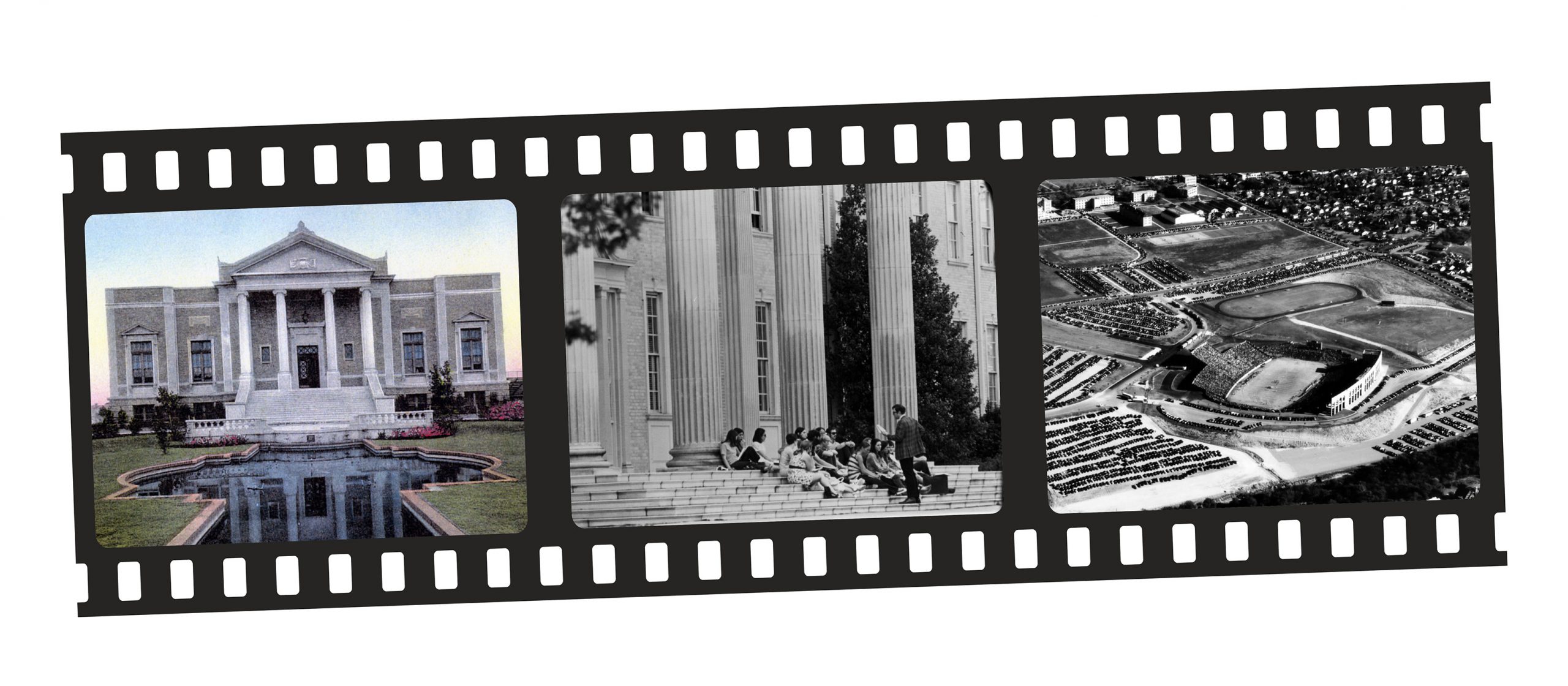
After careers spanning up to five decades, TCU retirees say relationships with students and colleagues kept them on campus.
Thanks for the Memories: Retirees Reflect on Some of Their Fondest TCU Moments
Many will recall that comedian Bob Hope ended his performances with his signature song, “Thanks for the Memories.” We asked TCU retirees to recall some of their fondest TCU memories or, as we Horned Frogs sing, “Mem’ries Sweet.”

Richard Leo Enos helped elevate TCU’s Honors Program to an Honors College with its own dean through his work co-chairing a university commission subgroup.
I have a habit that is so unconscious and automatic that I have never reflected upon it . . . until a few days ago. Whenever my TCU Magazine arrives in my mailbox, I always stop whatever plans I have and flip through the pages. I especially look at the activities of the alumni/ae section to catch up on the students I once taught, as well as the featured stories of that issue. This time, however, I stopped and asked myself a question, “Has there ever been a feature on TCU retirees?”
I couldn’t recall one, at least immediately, and that somehow seemed wrong to me. We have a variety of features on our alumni/ae, events, and achievements of individuals. We occasionally do have a special feature on professors, such as the wonderful essay on the TCU Piper Professors, but nothing about the hundreds of retirees — faculty and staff — who contributed so much to shape our identity and contribute to the nationally recognized university that we enjoy today.
These retirees are not only our “Elder Frogs” but sadly our “Silent Frogs.” So I thought that it was time to give voice to our TCU retirees. I asked some of our retirees to recall some of their fondest memories of TCU. I hope that you will enjoy their comments. As you read these comments, you will be struck — as I was — at how each of these comments, written independently and with no real directives, recalled their fondest moments with students a central feature!
“Mem’ries sweet, comrades true . . .”
In alphabetical order . . .
Richard Leo Enos
Emeritus Piper Professor (State of Texas). He retired as a Professor of Rhetoric from the Department of English in 2019.
Honors at TCU: From Program to College

Richard Leo Enos
Emeritus Piper Professor, English
One of the exciting discoveries that I made when I arrived at TCU from Carnegie Mellon University in 1995 was our long-standing Honors Program. For decades, the TCU Honors Program had been an important resource that served the university well by providing exceptional students with the opportunity to learn at a level that few experience as undergraduates.
I immediately asked to be included in the activities of the Honors Program and witnessed firsthand the dedication of the faculty and staff.
When I arrived, TCU’s academic reputation was rising to even higher national prominence, and we were all looking for ways to showcase our university. That opportunity came a few years later when then Chancellor Michael Ferrari created a large task force called The Commission on the Future of TCU. This was a university-wide initiative comprising multiple subgroups. Each subgroup was co-directed by a faculty member and a member of the Board of Trustees, with committee members composed of TCU faculty, staff, alumni/ae and friends.
I was fortunate enough to co-chair the AddRan subgroup with Trustee Deedie Potter Rose ’63. After months of work, our subgroup presented recommendations aimed at enhancing the opportunities and merits of TCU, which would benefit our students.
One of our most important recommendations was that TCU Honors move from the status of a program to a College with its own dean. Inherent in this recommendation, of course, was a major increase in facilities, faculty and resources. We wanted this Honors College to be inclusive, drawing students and faculty from across the university and giving them the opportunity not only to realize and demonstrate their talents, but also to provide a more detailed organizational structure that would make such efforts inherent in the Honors College mission.
At about that time, we were also working on a university committee to compose TCU’s mission and vision statements. We firmly believed that reconceptualizing the Honors Program as the Honors College would not only demonstrate our commitment to the new TCU mission but also help lead us toward our vision of being an internationally recognized model of higher education.
I am proud to say that the efforts of so many helped make the dream of an Honors College come true.
Sally L. Fortenberry
Emeritus Piper Professor (State of Texas). She retired as a Professor and Department Chair of Fashion Merchandising in 2024.
Reflecting on Past Engagements Sustains the Future

Sally L. Fortenberry
Emeritus Piper Professor, Fashion Merchandising
When asked to write about my fondest memories at TCU, I was challenged to come up with only one drawn from the 35 years I worked here. I thought first about all the many students I have taught and advised and gotten to know over this time. I reflected on several major trips I took with students and how those memories are still some of my fondest.
Every 2 years for the past 32 years, I attended the Phi Upsilon Omicron National Honor Society Conference with members of the TCU chapter as its advisor. Some of the most memorable conferences involved traveling with students to Buffalo, New York, and getting to visit Niagara Falls; to Boise, Idaho, and getting an up-close look at the blue football field; to Menomonee, Wisconsin, and Savannah, Georgia, where we had the chance to explore both cities’ history and the beautiful surroundings; and a trip to Bowling Green, Kentucky, where we toured the Corvette museum.
A trip to Puebla, Mexico, with one of our department honors students to visit the University of the Americas and a local apparel manufacturing facility is another of my favorite memories, especially considering neither of us spoke much Spanish.
When connecting with students outside the classroom, the bonds of friendship are established, and once they graduate, staying in touch is easier and allows for opportunities to create more memories. I have attended weddings, baby showers, new business openings and new product launches of former students, and I cherish each activity and appreciate the chance to stay connected to these alumni/ae who are now friends.
I would also be remiss not to mention the fond memories I have of the many faculty and staff members I worked with at TCU and got to know as individuals, not just work colleagues. It is primarily because of the people I worked with, across departments and colleges, on university committees, and within the Faculty Senate, that kept me at TCU for 35 years. I truly enjoyed getting to know these individuals in all these capacities, and without the opportunity to collaborate across departments, colleges and disciplines, my experience at TCU would not have been the same.
Picking up the phone and calling someone who could assist, or walking down the hall or across campus to brainstorm ideas on projects, brought me to campus each day. Out of these interactions at work grew a network of friends who could call on each other when needed. One such example is when engineering faculty found themselves housed in the Annie Richardson Bass Building until their new building was completed. All the Engineering faculty were new to TCU, so the faculty of nutritional sciences, fashion merchandising and interior design made a point to include them in our monthly potluck lunches, holiday celebrations as well as our impromptu gatherings in the Bass Living Room. Lifelong friendships resulted from these work-related engagements, and many of us continue to get together even after retirement.
Phil Hartman
Retired in 2021 after 40 years in the biology department, through which he served as head of the Pre-Health Professions Program for 22 years and as Dean of the College of Science & Engineering for 9 years. He coauthored the second edition of Walking TCU: A Historic Perspective.
These are a Few of My Favorite Things
(with apologies to Rodgers and Hammerstein)
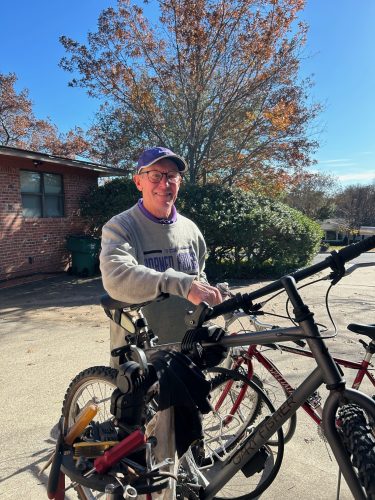
Phil Hartman
Emeritus Dean of the Louise Dilworth Davis College of Science & Engineering and Professor of Biology
In my 40 years at TCU and going on three-plus years of retirement, I’ve accumulated a host of fond memories. Most center around people I admire and respect, whether they be students, faculty or staff. Rather than limiting this essay to my single fondest memory, I’ve taken the liberty of listing my top 13, in no particular order.
Before the list, though, a quick anecdote: Shortly before my Walking TCU book, coauthored with Joan Swaim ’56 (MA ’68), was published, I was asked to name my favorite place on campus. Rather than the expected — someplace like Frog Fountain or Amon Carter — my interviewer was initially perplexed by my response of “the fifth floor of Winton Scott.” Why, she asked? “Because that’s where I had my most cherished moments interacting with students, faculty and staff.”
I bet many of you feel the same way.
So now to the list:
- Sports memories:
- The 1986 miracle shot by Jamie Dixon ’87 in Daniel Meyer Coliseum (Yes, Dave Minter and I were there!!)
- Sitting in a Michigan basement with my son Jonathan Hartman ’06 watching the Rose Bowl win.
- Playing basketball with the guys on the grounds crew. I’m proud to call them my friends and was honored when they attended my retirement fete in the TCU Music Center.
- Research trips to Japan to visit my collaborator and dear friend Nao Ishii. What an amazing country!
- LONG Travels (e.g., Orlando) with pre-health students in university vehicles to biennial pre-health professions honor society conventions.
- Along with Susan Weeks ’09 DNP, playing a role in the beginnings of the Anne Burnett Marion School of Medicine at TCU, including the initial “top-secret” negotiations with the University of North Texas Health Science Center.
- For 22 years, teaching, advising, mock interviewing and writing letters of recommendation for applicants to medical school. It was challenging at times, but also intensely rewarding to work with committed faculty and staff in mentoring stellar students.
- Watching our younger son Jonathan cross the stage in 2006 with his diploma and then giving him a huge hug. So proud of him!
- Mentoring students in my research lab … helping them experience the thrill, but also the frustrations, of doing science.
- Revising and expanding Walking TCU: A Historic Perspective, which kept me busy during my first year of retirement.
- Turning students on to the beauty of genetics.
- Walking across campus and encountering students as well as faculty and staff I treasured as both colleagues and friends.
- Although not a fond memory, taking intense pride in the faculty and staff as they worked heroically during the Covid/sustainability/optimization era of distance learning and budget cuts.
- Entertaining students, faculty and staff in our home, thanks largely to the planning and execution efforts of Mary Beth, the “Deanette” and my best friend!
- As a retiree, rehabbing abandoned bikes and donating them to two agencies to be gifted to either homeless individuals or immigrants. I’m up to 60 bikes now over the past 14 months (a shout out to Tom and George, my two favorite TCU Police Officers, for supplying most of the bikes!!).
As Julie Andrews so beautifully sang in the Rodgers/Hammerstein classic: “When the dog bites; When the bee stings; When I’m feeling sad; I simply remember my favorite things and then I don’t feel so bad.” And thusly, “These are a few of my favorite things,” or rather some of my fondest memories of TCU.
Don B. Mills ’72 MDiV
Administrator and faculty member at TCU for 52 years. He retired as Emeritus Vice Chancellor for Student Affairs and Distinguished Professor of Higher Education in 2021.
Thoughts on TCU
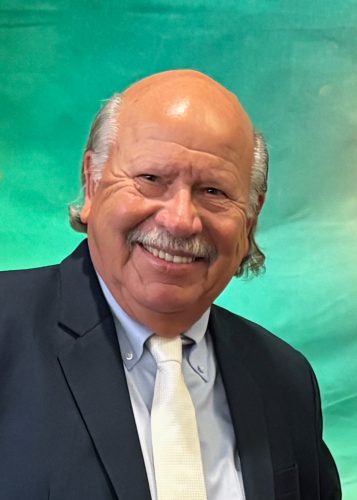
Don B. Mills
Emeritus Vice Chancellor for Student Affairs
What memories stand out to me after 52 years working at TCU? I could certainly tell a lot of stories about things that happened. I could share tales about the many thousands of students I met or the alumni who have helped to shape the university. No doubt the campus has undergone physical changes from a relatively nondescript site to a dynamic and beautiful location. The reach of TCU’s influence has expanded from being regional to being national, even international.
Memories are extremely personal. We remember things because they have somehow left an imprint that may dim over time, but they do not disappear. What is important to one person may only be incidental to another. We remember events that may be amusing, sad, joyful, heartbreaking, embarrassing or life-changing. We may remember single events or a procession of events that lead to an understanding of the character of the people and the institution that they build. It is that procession of events that I would like to focus on because I believe it illuminates what provided the energy that provided the unique culture that is TCU.
I initially came to Fort Worth to earn a degree from Brite Divinity School. After a year, I accepted a position in student affairs at TCU. I soon learned some important elements of our culture. There was a sense that TCU’s success depended on everyone, not just leadership but also the students, faculty, staff and alumni/ae. Because success depended on everyone, there was a general acknowledgement that those who were part of the history of TCU provided a foundation, and it was up to contemporary members of the university community to carry our legacy forward. That also meant that everyone rooted for each other’s success and, by doing so, recognized that it assured success for TCU.
Did this mean that people always agreed? Of course not. Students were, and are, always pushing for more autonomy. Faculty voices were, and are, seeking more involvement in governance. Money is never plentiful enough, and disagreements about the highest priorities were expected and accepted. The key, however, for me was the sense that all were working together for a common goal.
The reality of a connected campus did not need a formal designation. Fraternities and sororities, residence halls, honor societies, student government and other student organizations organize the student body. Schools, departments, divisions and administrative functions organize a university. In some institutions, that organization determines a person’s place in the university. At TCU the organization is a starting place to find connections everywhere.
So what are my memories? What made me want to spend a career in one place? It was the culture. It is people such as our faculty who make an effort to ensure student success. It is the hall director who encourages a student to have the courage to step into a leadership role. It is the leadership of the university that understands the greatness of the university lies in the character of people who inhabit the physical campus, not the physical campus itself. Excellence in a university stems from the connections between its members, rather than from designated programs. The connections have defined TCU for decades. That is who we are. Those are my most significant and fondest memories.
Richard Sybesma ’91 MLA
TCU Swimming Coach for 38 years, 1979-2017. Coach Sybesma is the longest-tenured head coach in any sport in TCU’s history. Among the many accolades Coach Sybesma received are coaching in the Olympics, winning 5 “Coach of the Year” honors and several conference championships.
My Fondest Memories: Remembering Swimming and Diving Practice on 9/11, 2001, and One Very Young, Very Special Hero

Richard Sybesma
Emeritus Head Coach, Swimming
Photo by Sharon Ellman
On September 11, 2001, the team met at the Forest Park outdoor 50-meter pool at 2:30 for a normal practice. Most athletes were not sure what had happened with the day’s events, as they had been in class. We gathered to discuss what we knew, and I instructed them to go home, check on any relatives in New York or other cities, call their parents, fill their cars with gas, and if further terrorist activities occurred, to meet at the TCU pool.
I felt we needed a team plan, something to focus on in case anything else might happen to our country and knowing that the building of TCU indoor pool was also a fallout shelter built in the ’70s. The team would be safe, have plenty of water to drink, and we could be together to form a plan. Fortunately, we did not need to meet, but that day, we came together as a team in case of further problems. We added the NYDC with an American Flag logo to our swimming suits and team poster supporting all the victims and heroes of this tragedy. It was a huge team-bonding experience, with everyone knowing that a plan was in place to keep our team safe.
In the years following 9/11, we have always talked about this plan in case of other attacks on America and providing for the safety of our team. As a nation, we must continually remind our young people of this tragic day in American history. I hope none of us ever forgets and we can share with others the loss, sadness, heroism, solidarity and commitment our nation had that day.
On an individual and personal level, one of my proudest and most poignant memories was having Nathan Lin, at the time an 8-year-old who was suffering from an aggressive brain tumor, sign a Letter of Intent to become a member of our team. In fact, despite all of the honors and distinctions that I have been fortunate enough to receive — including my coaching at the Olympics, NCAA national and conference championships — I consider this experience with Nathan to be my proudest moment! This was made possible not only by our team but also by Make-A-Wish and other very caring groups and individuals.
Watching the team cheer Nathan as he swam in our pool was a moment I shall never forget. Nathan’s mother Cathy Boyd Lin ’89 swam for us (1985-1989), and she wrote me a powerful letter saying how much it meant for the family. Having Nathan embraced by our team showed me how much we benefit from our students, past, present and future!
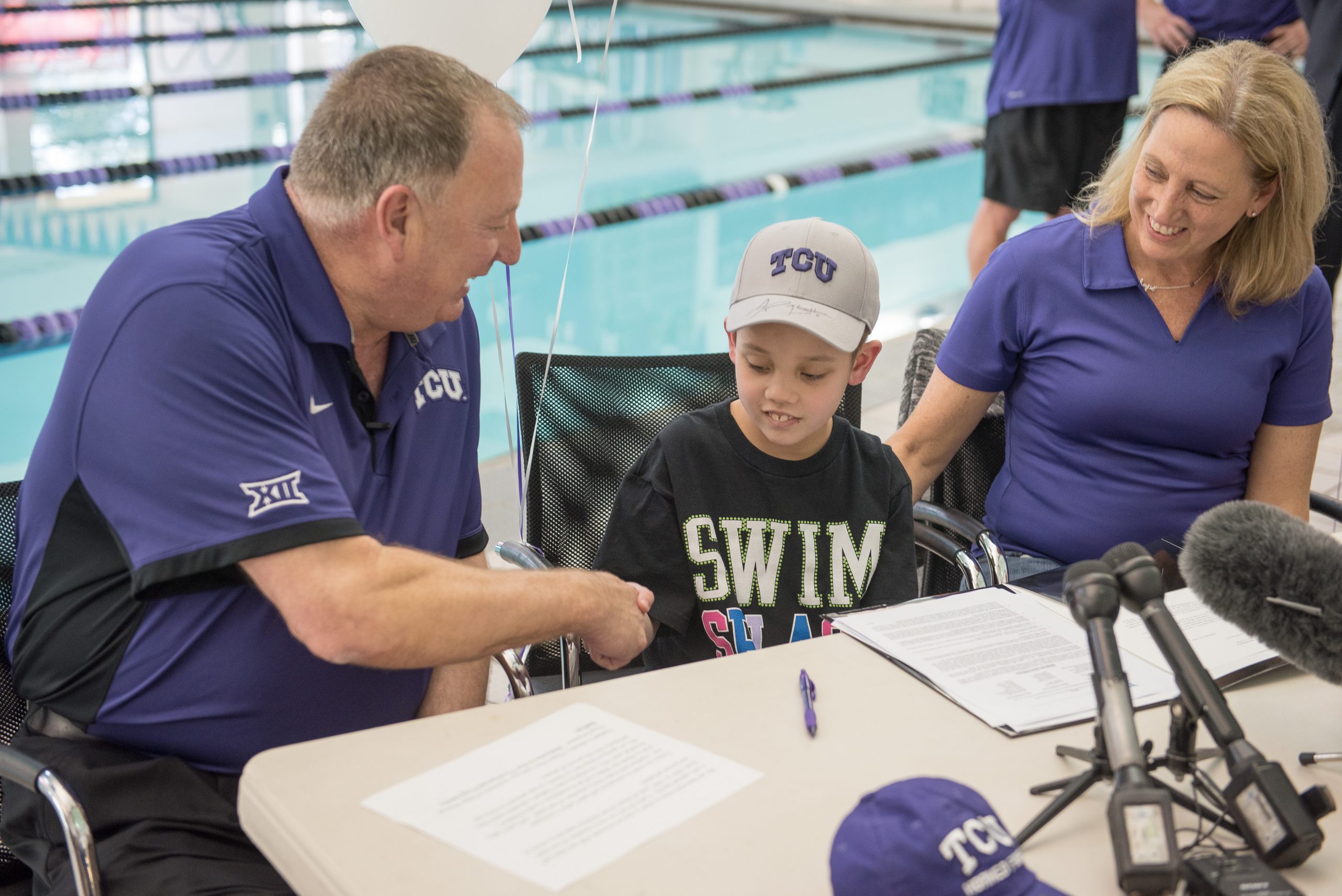
From left, coach Richard Sybesma, Nathan Lin and Nathan’s mother, swimming letterwinner Cathy Boyd Lin, at a 2016 event in which the 8-year-old was signed as a member of the TCU swim team. The signing was part of Lin’s Make-A-Wish Foundation dream come true. Photo by Glen E. Ellman
I would like to end by quoting Cathy’s own words of appreciation for our Horned Frog Swimming Team: “Many of you came to Nathan’s funeral, and I am so very grateful for that loving show of support for your littlest teammate. To have the TCU Swimming/Diving coaches as pallbearers at Nathan’s funeral was quite an honor. I am certain Nathan was so proud to have them escort him to his final resting place.”
As Cathy went on to tell me in her letter, our experience had a profound impact on her, her husband Jeff and the entire family, and I will add to the team and to me as a coach: “This brings me to my next point — whether you realize it or not, these people you swim every day and share so much of your life with right now are far more than just your teammates — they truly are your family. And as a TCU athlete, you are part of an even bigger family that will be with you long after you graduate.”
Mary L. Volcansek
Emerita Professor of Political Science. She also served as Dean of the AddRan College of Liberal Arts from 2000 to 2007 and retired from TCU in 2018.
Mem’ries Sweet, 2000-2018
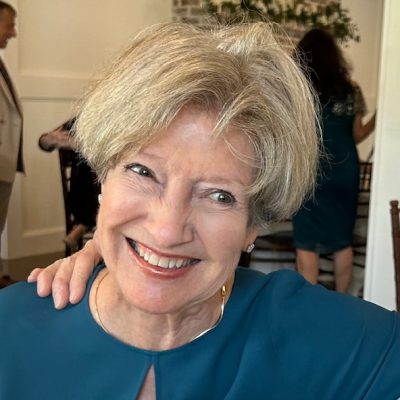
Mary L. Volcansek
Emerita Professor, Political Science and Dean of the AddRan College of Liberal Arts
TCU, “mem’ries sweet?” A cascade of delicious thoughts flow over me — the 2011 Rose Bowl game, sky diving with the Army Golden Knights, TCU moot court competitions, a who’s who of outstanding speakers and many people and events.
But, primarily, students fill my thoughts. I naturally use the metric of students to measure what tastes the sweetest, endures the longest, and ranks the highest. My successes are reflected in the accomplishments of my students, and many who passed through my classrooms over my 48-year career have achieved laudable attainments. A number particularly stand out when I think about those I taught and advised at TCU, not only by their later life’s work, but also by the seeds already germinating at TCU.
A notable example of such student accomplishments is a young woman, a communications major who presented herself in my office to ask about taking my Judicial Politics course the following term. I described the course and mentioned that required readings included excerpts from Franz Kafka’s The Trial, to which she responded, “Why just excerpts and not the whole book?” You can readily see why she impressed me.
She enrolled in the course and was an avid student, obviously having read all of the assignments and ready with insightful comments and questions. One day — this was in the years immediately following 9/11 and the U.S. expeditions into Afghanistan and Iraq, when few Americans knew much about Muslims — I walked into class and was struck to see her sitting with her laptop open, but wearing a full burka or at least a full-length robe and hijab. She explained that she was writing a story about how people reacted to women dressed in prescribed conservative Islamic attire and was dressed this way for the full day. She displayed no embarrassment or discomfort and proceeded to ply me with her usual questions and to offer ready laughs at appropriate times.
I knew that Christina Ruffini ’07 interned one summer with CBS and heard from her once or twice after graduation when she was a CBS producer. For reasons I can’t recall, I started following her on X when it was still Twitter and was delighted to see that she obviously was part of the press corps that accompanied then-Secretary of State Mike Pompeo.
Time passed, I deleted my Twitter account and thought no more about it. One Sunday, I happened to turn to CBS Evening News. A stunningly attractive, poised, confident, knowledgeable and articulate young woman was reporting on the major foreign policy issue of the day. Yes, my “make me read all of The Trial” and hijab-attired student was explaining U.S. foreign relations to the nation. My pride could not be contained. I tracked down an email address and sent a “you-probably-don’t-remember-me-but” email via CBS to compliment her performance. As any good Horned Frog would, she promptly responded and said that she remembered me and my course well.
THAT is a memory sweet and one that warms the heart of a retired professor. A recent Google search revealed that her accomplishments as a journalist far exceed the single CBS episode that I saw. My happiest and most meaningful memories from TCU are of my students, and my pride derives from how they have used their TCU educations to become “ethical leaders . . . in a global world.”
Your comments are welcome
1 Comment
Thanks, Rich Enos–what a great idea!
Related reading:
Mem’ries Sweet
Where We Hung Out: TCU’s Lost ’90s Landmarks
TCU’s campus has seen seismic change over the past quarter century, but the memories remain.
Alumni, Recollections
Frogs Recall Meeting Other Frogs All Over the World
Have you met a fellow Horned Frog somewhere unexpected?
Alumni
Recollections: Alumni Reflect on Historical Moments
What was the biggest historical event to happen during your college years?