
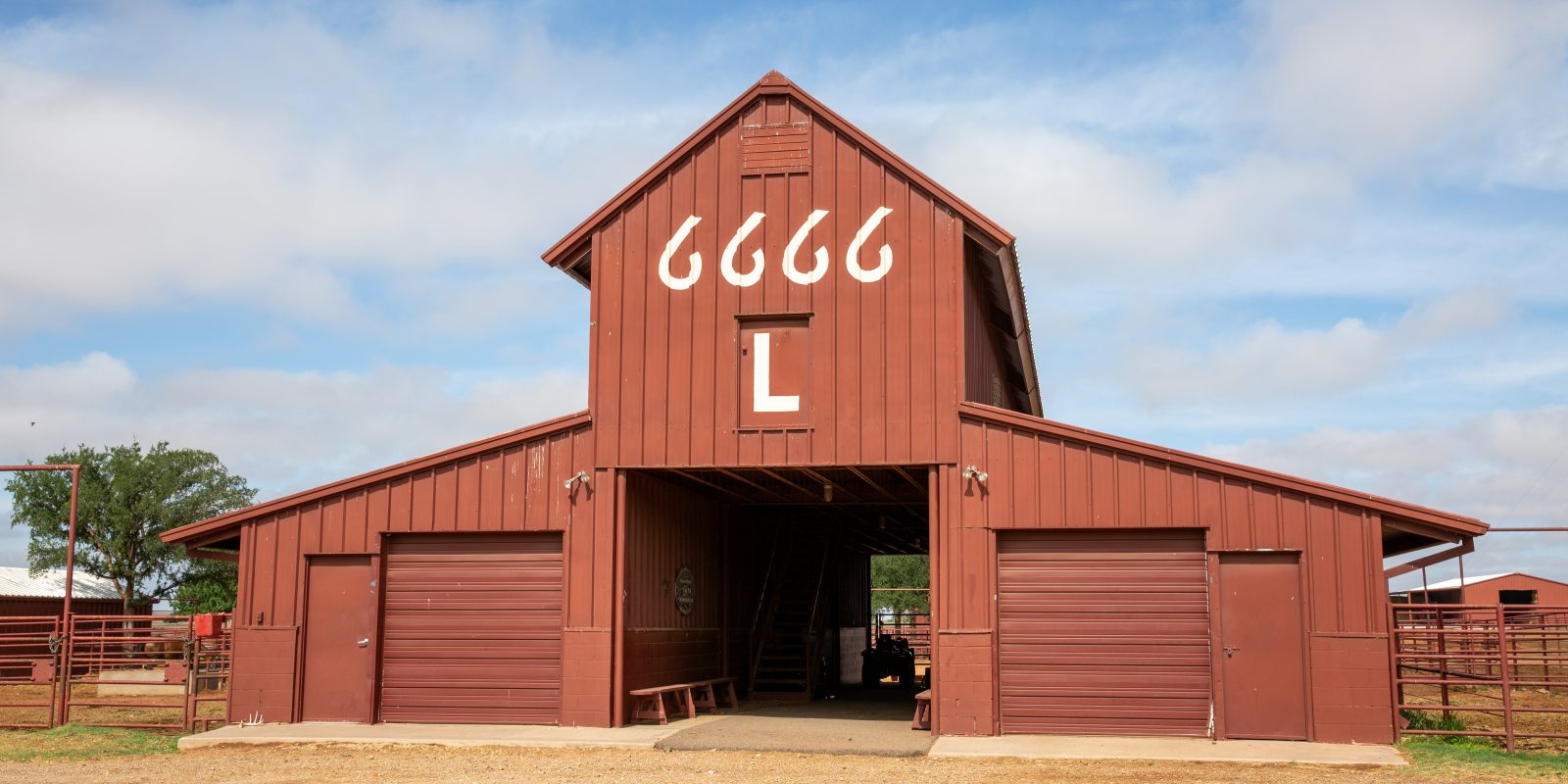
The Four Sixes Ranch has been a Texas legend for 150 years, and a TCU team is helping write its next chapter. Photo by Caroline Collier
Inside the Four Sixes Ranch: How a TCU Fashion Partnership Is Shaping the Future of a Texas Icon
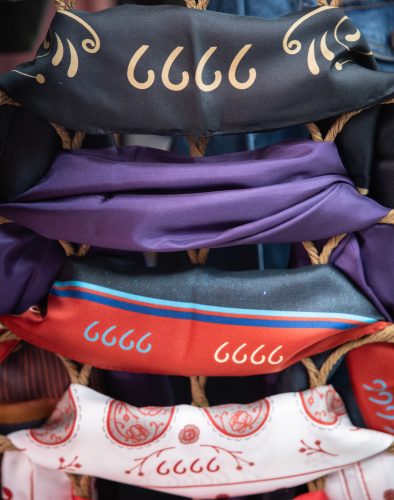
The ranch is working to become a Western lifestyle brand while protecting the heritage behind it. Photo by Glen E. Ellman
In Guthrie, Texas, a town of 150 people, the first structure that Samuel “Burk” Burnett built after he purchased the 260,000-acre Four Sixes Ranch still stands. The circa 1900 building is called the supply house: a working store where, for more than a century, ranch employees have bought their groceries, gas, wool coats. The original hardwood floors are still there.
For four years, Charcy Hardin has led tours of the property 90 miles east of Lubbock. It attracts more visitors now that Taylor Sheridan, who filmed scenes there for his revered Yellowstone TV series, is a co-owner.
Hardin will point out the back room of the supply house, which she manages, before she notes the 14,000-square-foot main house across the road.
Burnett intended the big house for his guests, including President Theodore Roosevelt and Quanah Parker, whose ancestral Comanche lands in part became the Four Sixes. Burk, Hardin said, “just slept in the back room of the supply house.”
Today, that same supply house contains cedar shelving lined with camp mugs and flour-sack towels and, recently, one clothing rack displaying a suede bomber jacket — army green, Four Sixes-branded and designed by Carys Ciobanu ’26, a TCU fashion merchandising graduate.
The Four Sixes has survived 150 years by taking its own inheritance seriously. Now, with new ownership, a Yellowstone-powered national profile and a TCU partnership that has moved student designers from the classroom into the work of brand stewardship, the ranch is attempting something harder: translating a working ranch into a modern Western lifestyle brand without betraying the heritage from which it grew.
A Familiar Name at TCU
Burnett passed the ranch to his granddaughter, who passed it to his great-granddaughter, and the alignment between TCU and the family runs deep.
The Mary Couts Burnett Library at TCU bears the name of Burk’s third wife. The Anne Burnett Marion School of Medicine at TCU carries his great-granddaughter’s name and thrives due to her generosity.
At the ranch and on campus, the Burnett family has held to the same philosophy: Take what is entrusted to you, protect it and build something that serves people beyond yourself.
At the Four Sixes, that philosophy remains in practice. The ranch does not purchase hay; instead, it allows the cattle to graze on the native buffalo grass. Burnett learned that bit of land stewardship wisdom from Parker, the last chief of the Quahadi Comanche. He and Burnett became friends, an unlikely alliance forged in the aftermath of dispossession and land deals.
The Comanche learned from watching bison. The animals were eradicated around the time the ranch fences were erected. Cattle took their place, and those grazing the land today, like the ranch’s famous horses, descend from the original herds.

The Davis family — cowboy Zane, his wife, Callie, and sons Orin and Tell — models the Four Sixes line on the ranch where Zane works. Courtesy of Four Sixes Ranch | Kylie Baker
Sheridan Stewardship
In 2022, writer and filmmaker Sheridan, whose Yellowstone brought the modern mythology of the American West to a national audience, purchased the Four Sixes Ranch with other investors.
His wife, Nicole Sheridan, who manages the ranch and its brand alongside him, describes the acquisition in terms of stewardship.
“I understood I was stepping into something iconic — one of the most respected ranches in the world, with a legacy built over generations,” she said. “What I didn’t fully understand yet was the emotional depth of it, the pride people feel, the connection cowboys and families have to this place. It’s not just land or a business; it’s personal to so many.”
Her approach to taking over a working ranch manned by the same longtime cowboys, she said, starts with that gravity. “You don’t reinvent something like this. You protect it, and then you carefully build on it. … The goal isn’t to change the Four Sixes — it’s to invite the world into it.”
The Frog for the Job
Carley Myers ’17 grew up on Long Island, New York, and came to TCU to join the equestrian team. A sports entertainment marketing class taught by Kevin Smith, an adjunct professor at the Neeley School of Business, shaped how she thought about partnerships. After graduating, she worked for TX Whiskey and the National Cutting Horse Association.
Then Myers got a call from the Sheridans. They offered Myers a job as senior vice president of marketing to help build the Four Sixes brand. She took it with a specific vision: Every touchpoint had to be cohesive, top notch and true.
“Everything that we do, we want to do it ethically, and we want it to be excellent,” Myers said, “first of its kind, best of its kind.”
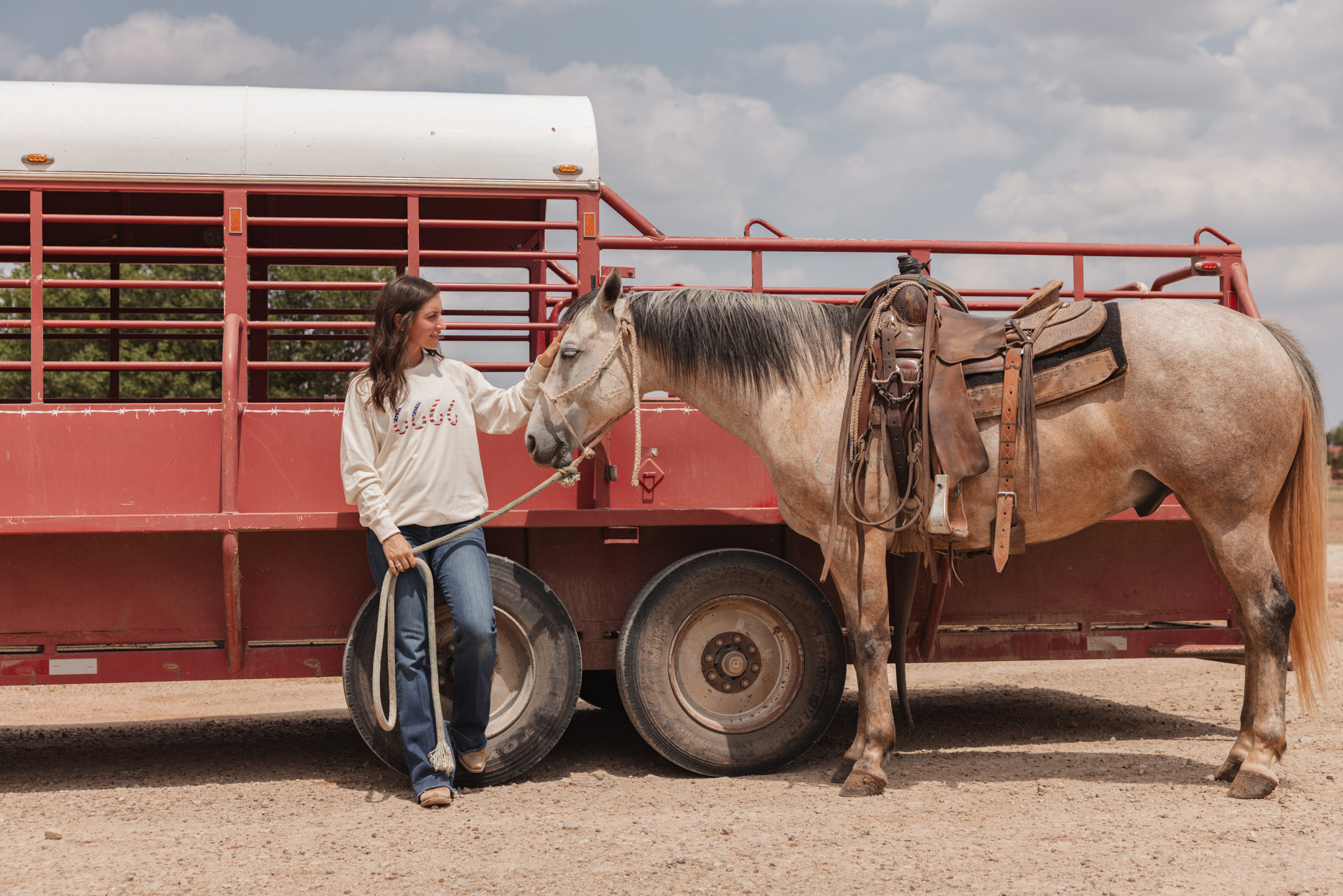
The Four Sixes brand line is versatile by design. “We want it to be something that not only regular everyday people can wear, but that will hold up to ranch life,” says Carley Myers, the ranch’s senior vice president of marketing. Courtesy of Four Sixes Ranch | Kylie Baker
When it came time to elevate the brand’s retail presence, she knew where to call.
“Everything I’ve ever worked on with TCU has been best in class and innovative,” she said. “They know how to take what they’re teaching in class and apply it in the real world.”
Myers reached out to Smith, who introduced her to Charles Freeman, professor and chair of fashion merchandising and director of research and creative scholarship initiatives in TCU’s College of Fine Arts. Freeman connected her with faculty colleagues Nicole Bettinger ’91, Rima Shrestha ’04 and Albert Marichal, who together had the skills and creativity to propel the ranch’s presence from the supply house to the wider world.
Pop-up Barn
The listening phase began in spring 2024 at the Sheridans’ smaller Bosque Ranch in Weatherford, Texas. Freeman spent time with Myers and Nicole Sheridan, learning the Four Sixes’ values, its history, what it needed to protect and where it wanted to go.
From there, TCU faculty turned strategy into form. Marichal, an associate professor of design, produced 3D renderings of a traveling pop-up shop based on the Four Sixes’ historic red horse barn. Interior design faculty and students contributed to the final design. Bettinger, instructor of fashion merchandising, worked with the team on inventory and forecasting for the supply house. Shrestha, also an instructor, guided the fashion merchandising of the finished space, which sells Four Sixes clothing, household items, spice mixes and more.
The result is a barn-style, reconfigurable cedar storefront. It debuted at the National Reined Cow Horse Association’s Celebration of Champions at Will Rogers Coliseum in Fort Worth.
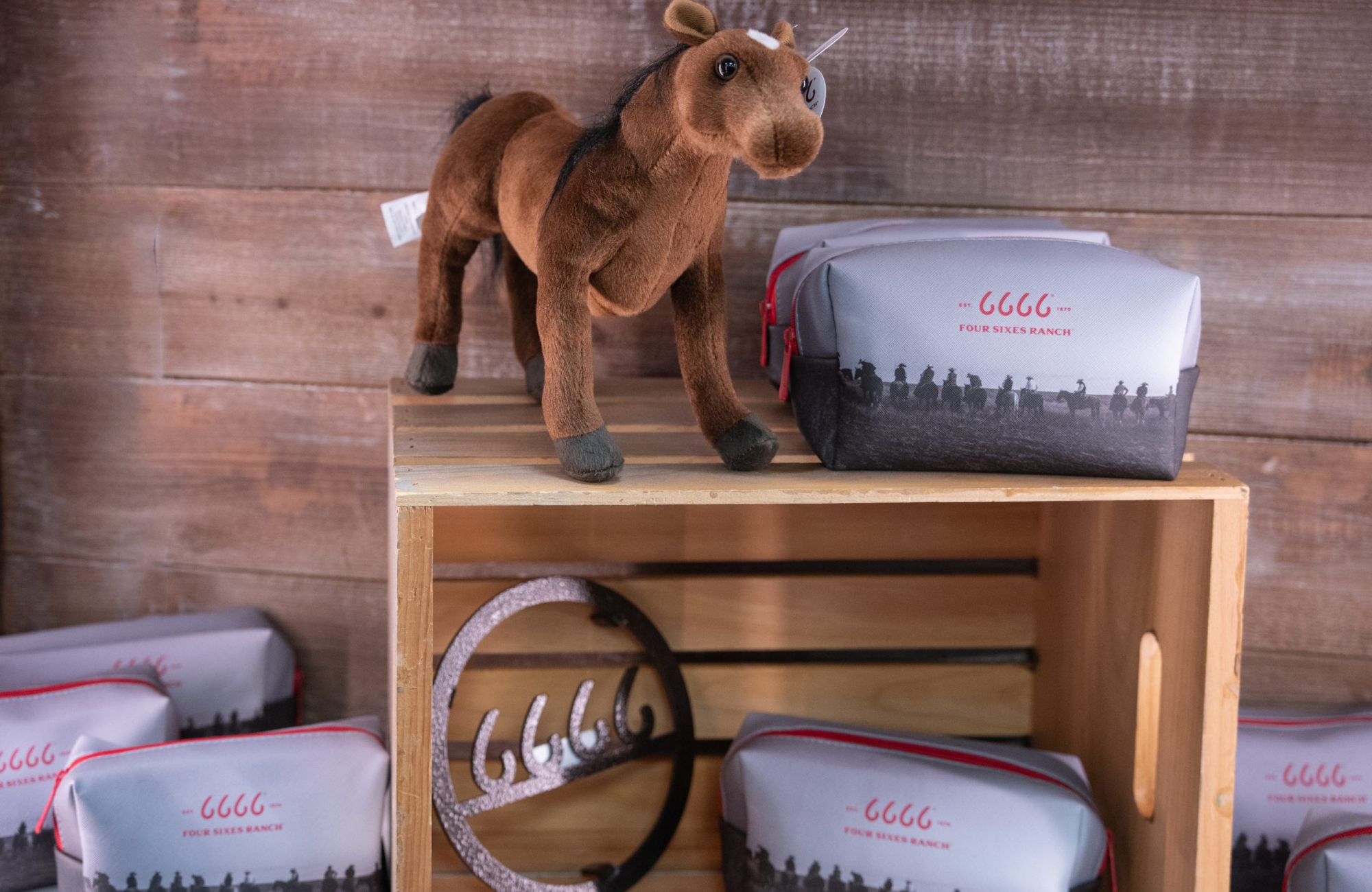
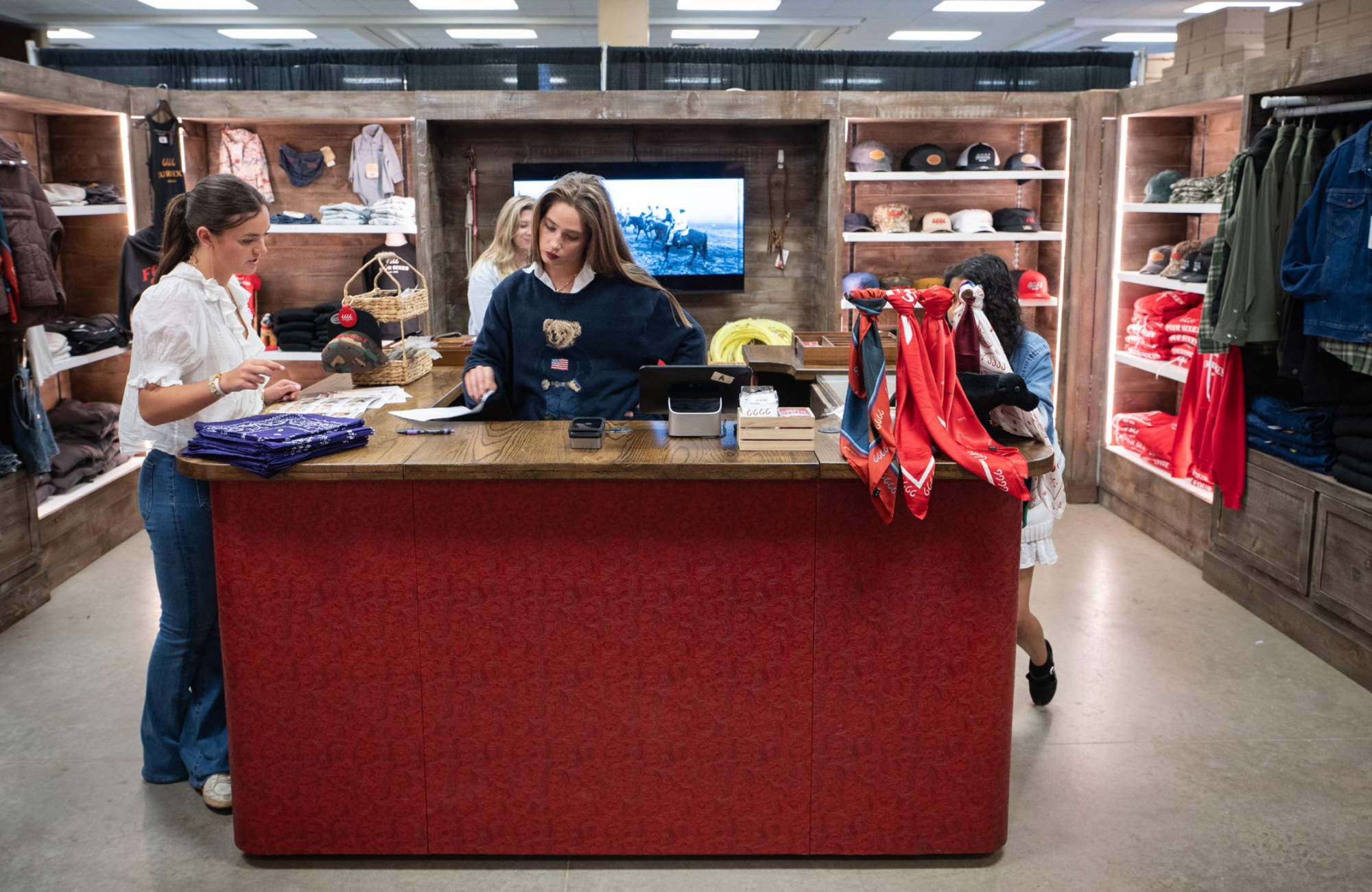
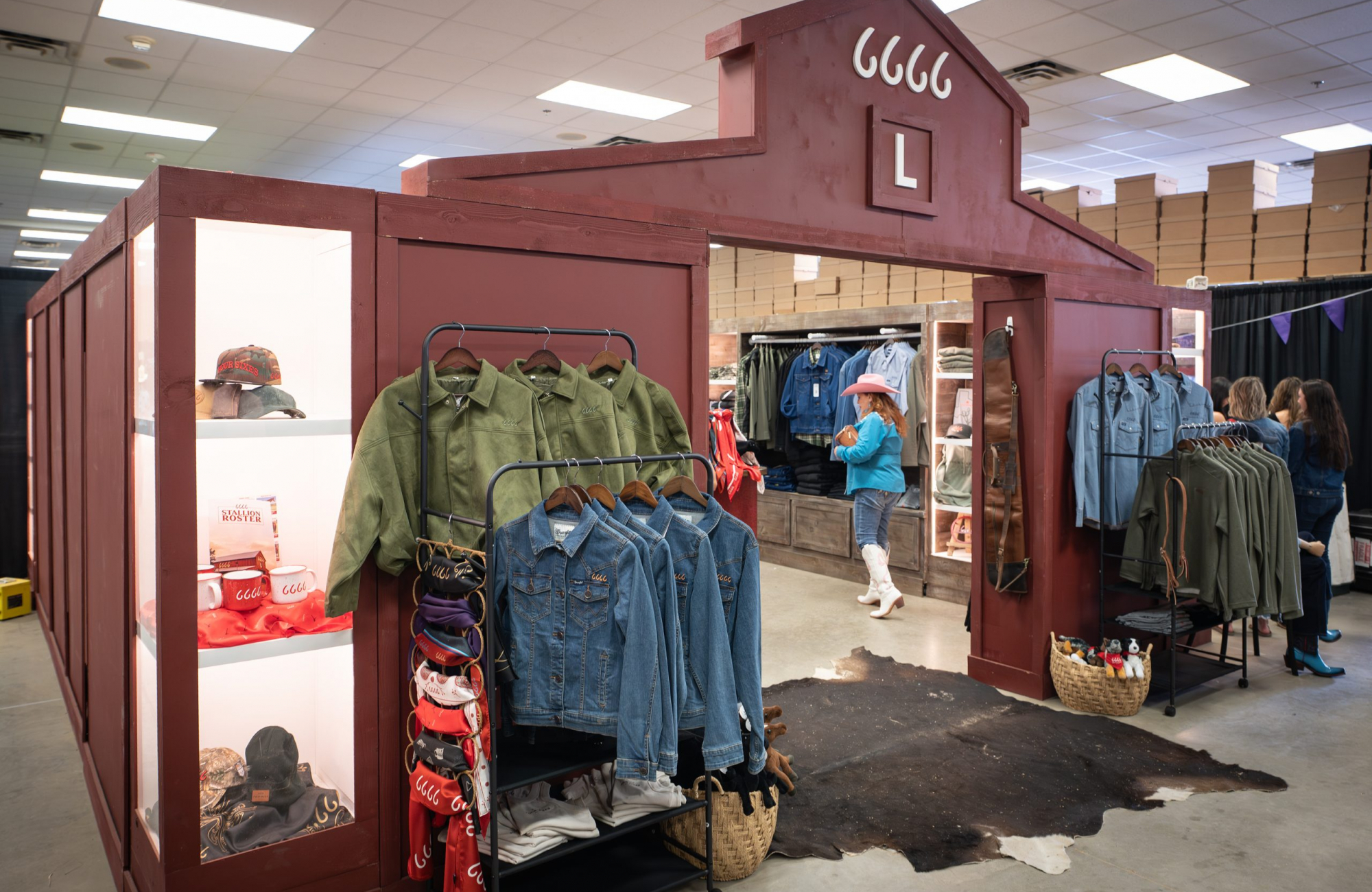
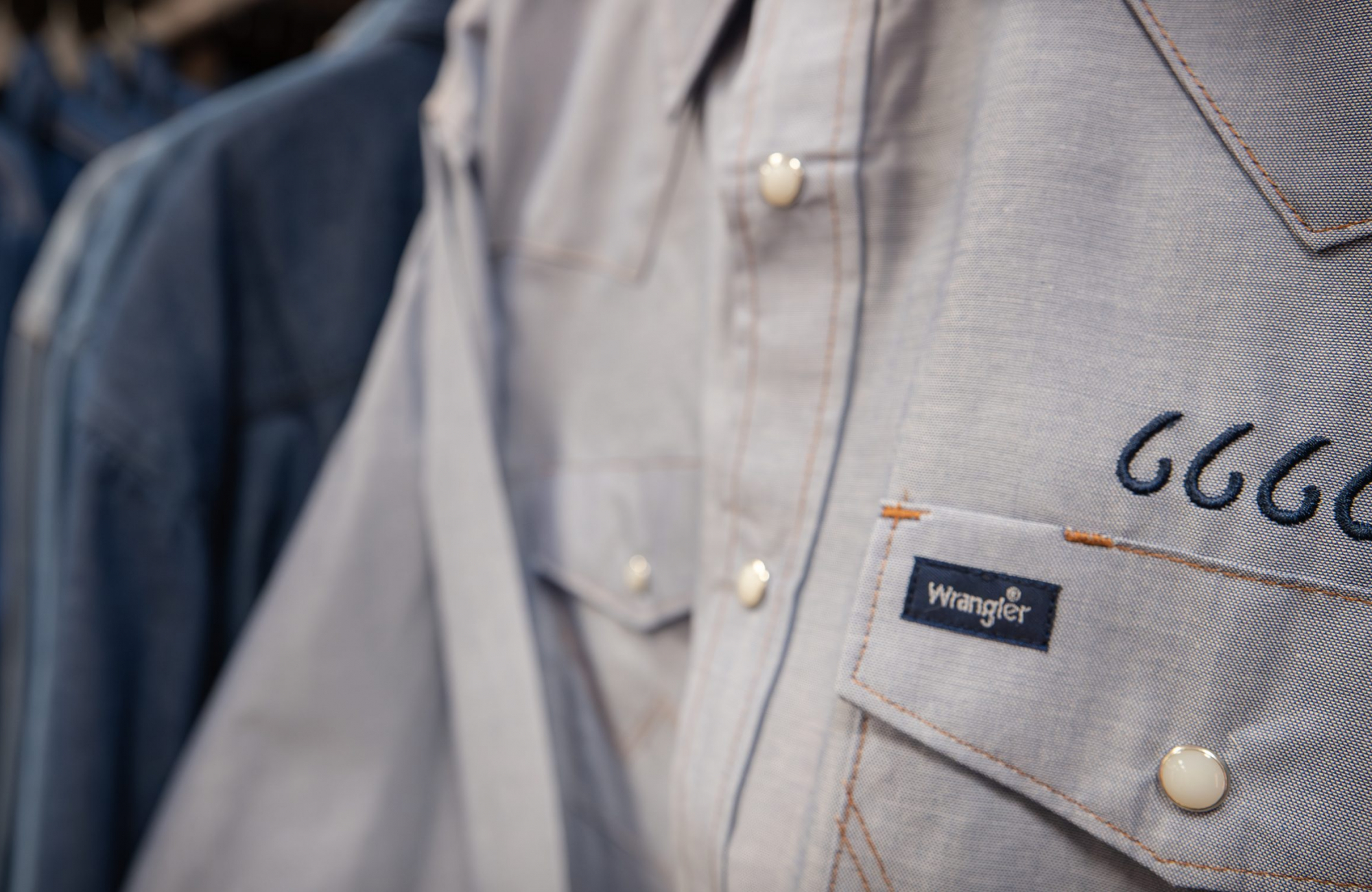
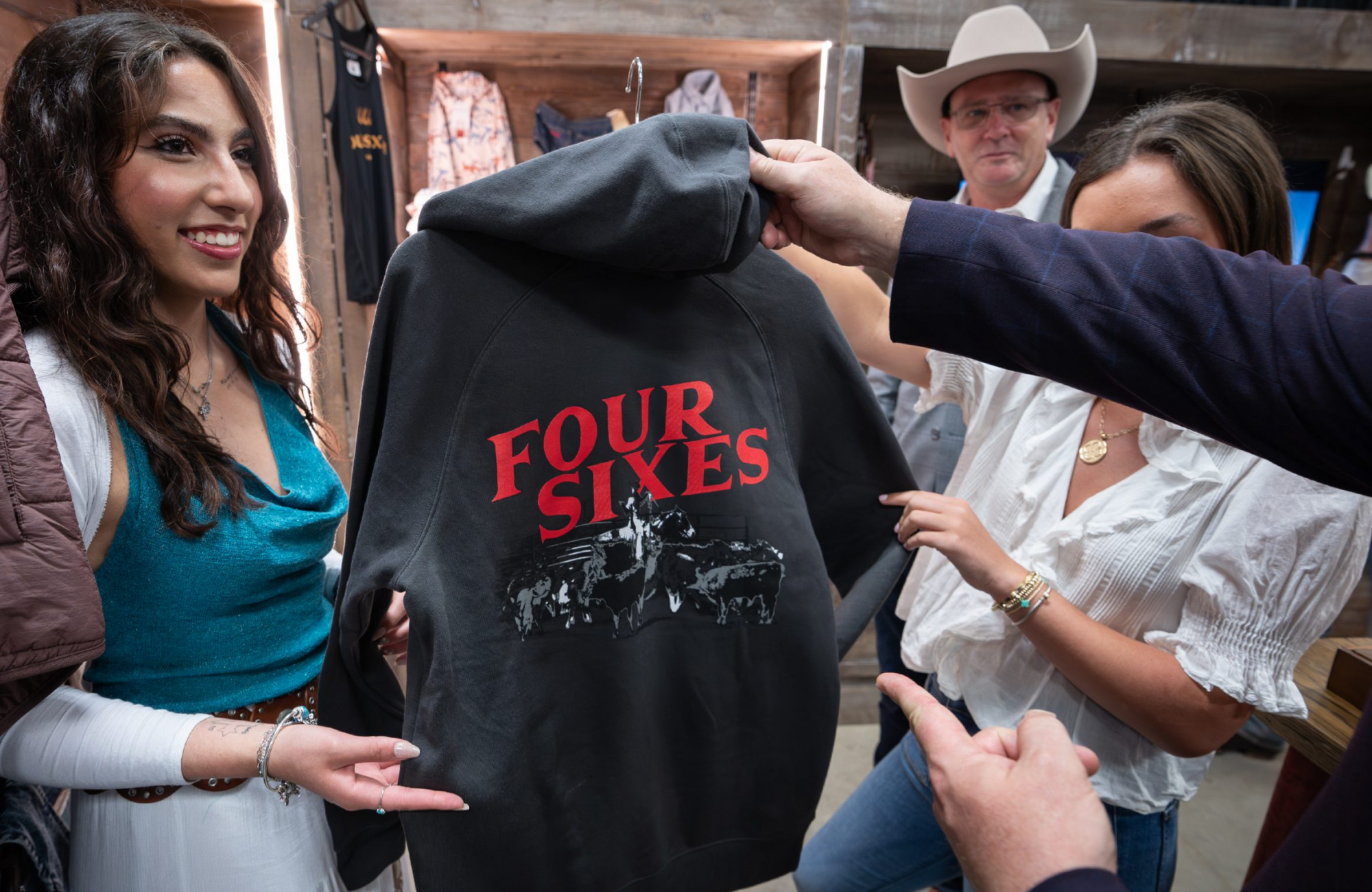
Photos by Glen E. Ellman
For the TCU students involved, the stakes felt unlike anything a classroom could replicate. Ciobanu spent nine months as an intern on product development and design. She came to the project from a fashion education built around heritage brands and recognized the Four Sixes immediately in those terms.
“Typically when you hear ‘heritage brand,’ you think of Hermès or Dior,” she said. “I’d use that exact same language to describe the Four Sixes Ranch, because the history dates back so far and the message has stayed so strong and just continues to build.”
Several of her clothing designs are now in production.
“If I had an internship at any other brand, there is no way they would truly take my designs and start producing them,” she said. “Carley and the Sheridans really trusted me, and that’s something I never would have had anywhere else.”
For Nicole Sheridan, watching that happen carried its own meaning. “It felt like a full-circle moment,” she said, “honoring where we’ve been while giving space for the next generation to be part of where we’re going.”
Freeman put the partnership in terms the ranch would recognize. “When you buy that merchandise, you’re carrying a piece of them with you and representing them,” he said. “We’re now written into the history of the Four Sixes Ranch, which is pretty amazing to me.”
“I am deeply gratified to see TCU students now writing their own names into this storied history,” said Kit Moncrief, chair of TCU’s Board of Trustees and a longtime friend of the Burnetts. “My family has always believed in service to others and shares a strong sense of responsibility to the legacy of Four Sixes and to TCU. … Involving Horned Frogs in this work is an inspiring continuation of a vision that started generations ago.”
Beyond the Logo
For any heritage brand, the danger is that authenticity becomes aesthetic, a story flattened into a logo. The Four Sixes is trying to avoid that by deciding what can travel and what must remain earned.
One caveat: The famous red western shirt, the one seen on Yellowstone, is reserved for ranch employees.
“We want to make sure that version of the brand is always someone who works for it,” Myers said.

The original Four Sixes supply house in Guthrie, Texas, has served ranch employees for more than a century. Its cedar shelves now display retail merchandise developed by TCU students. Photo by Caroline Collier
It is the clearest statement of what the Four Sixes brand is and isn’t: not a logo to slap on merchandise and sell, but a declaration of who you are and what you’ve earned.
“We have the best horses and the best cattle in the world,” Myers said. “Now it’s: How do we have the best lifestyle brand in the world?”
The answer starts in the back room of a supply house in a town some maps don’t bother to label — where a man who could have slept anywhere chose to stay close to the work. And it continues in Fort Worth, where the students he never could have imagined are helping build what comes next.
Your comments are welcome
Comments
Related reading:
Alumni
Brunner Brothers Break the Pattern with Fashion Line
Will and Robert Brunner find their own pipeline to success in golf clothing line.
Alumni
Pete Bonds Is Ranching’s Maverick
Alumnus rides the ups and downs of ranching.
Features
Sister Act
Sisters Lizzie Means Duplantis and Sarah Means find their niche selling artisan cowboy boots with their luxe line, Miron Crosby.