
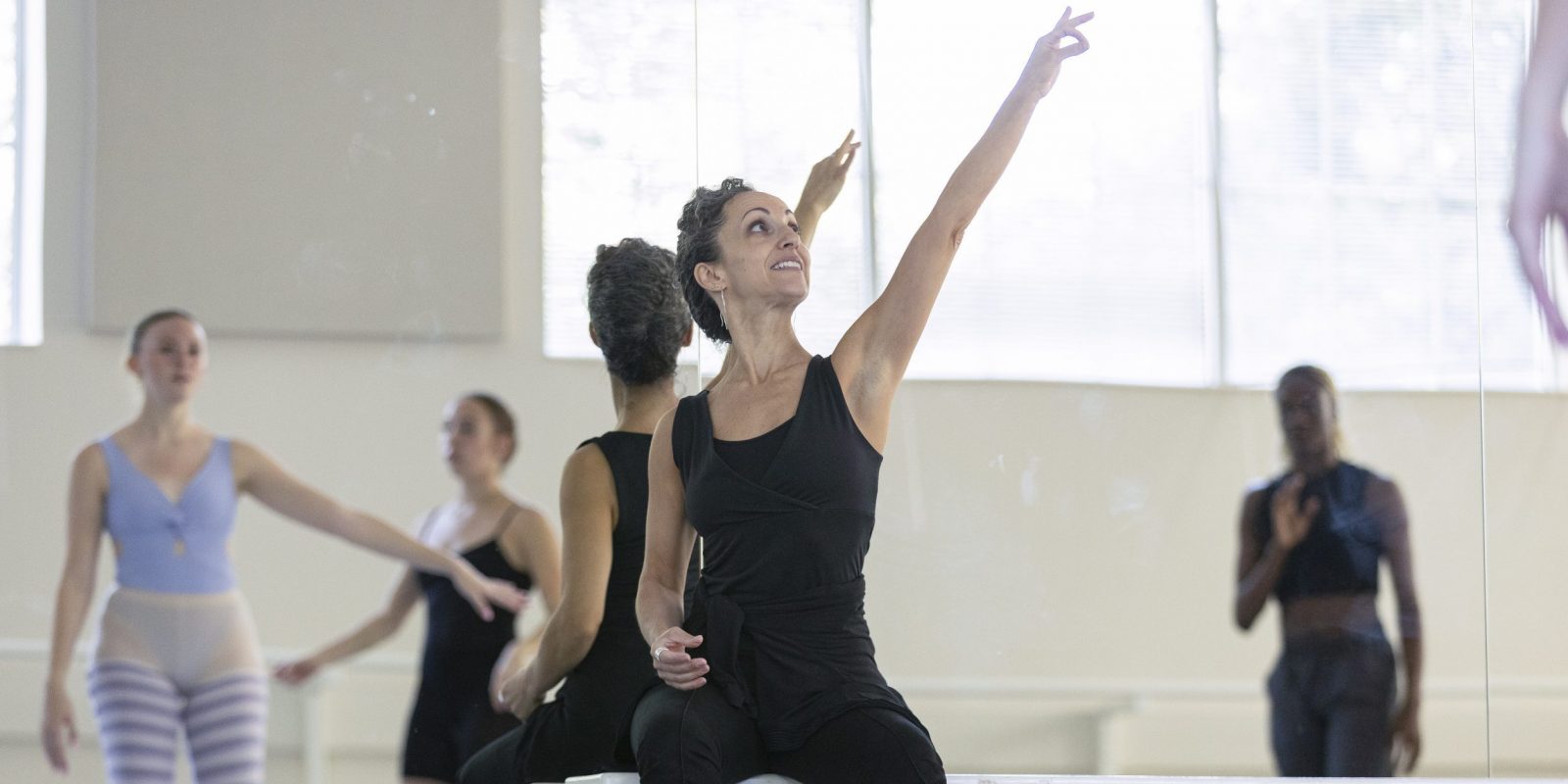
Zeller began teaching at age 11 as an apprentice to her ballet instructor, demonstrating steps for younger students.
Jessica Zeller’s Student-Centered Approach is Transforming Ballet Education
CLASSICAL MELODIES DRIFT from a piano as Jessica Zeller, professor of dance, checks in with her ballet students as they warm up. Some are energized, while others are struggling with an injury or fatigue.
In TCU’s auditioned Bachelor of Fine Arts ballet program — an intensive, performance-focused course of study that was the first of its kind in the country — Zeller encourages dancers to be in conversation not only with her, but also with their own bodies.
Zeller empowers students to adapt movements to their unique anatomy. She asks students what kind of feedback they want, letting them decide if she should physically reposition them or just give verbal instructions. And she often leaves a few bars of music unchoreographed at the end of an exercise so students can focus on what they need most — in today’s class, some lunge into a deep stretch, while others rise to their toes, arms raised, finding their balance.
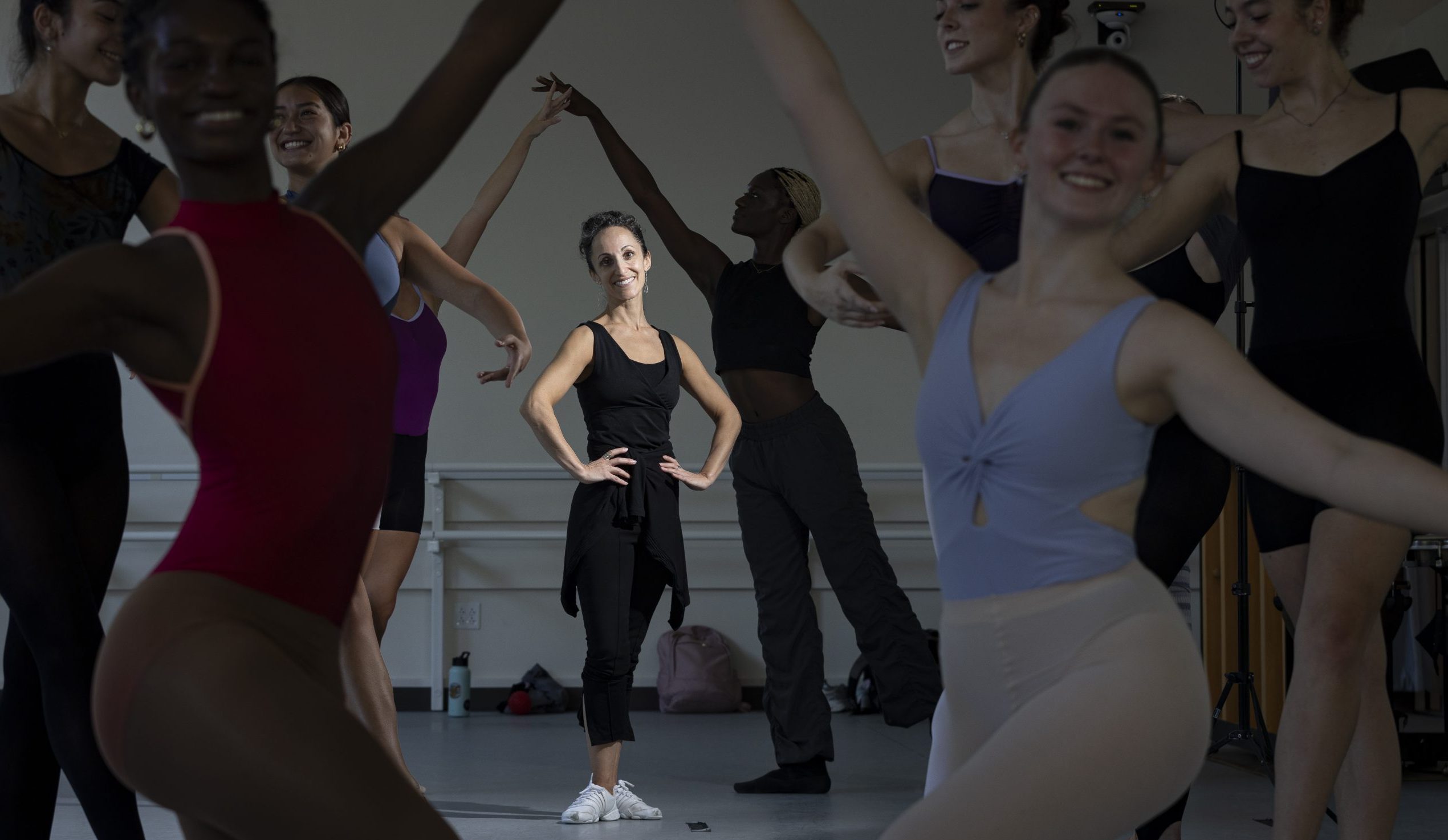
Zeller surveyed 120 ballet students and teachers for her book advocating the studio as a laboratory for trial and error over perfectionism.
In her book Humanizing Ballet Pedagogies: Philosophies, Perspectives and Praxis for Teaching Ballet, published by Routledge in 2025, Zeller combines decades of experience and study with student surveys and pedagogical influences to explore how traditional ballet teaching practices, which emphasize authoritative instruction and conformity, can cause harm.
She envisions instead a pedagogical revolution: student-centered approaches where equity replaces favoritism, trust supplants fear, and collaboration becomes the pathway to artistic mastery.
BREAKING HARMFUL TRADITIONS
Some ballet teachers ignore students who don’t meet the long-limbed, lithe ideals held by directors of professional ballet companies. Students who exhibit neurotypical, compliant behavior also find favor with strict teachers who believe that dancers should be silent, grateful recipients of their wisdom.
Zeller believes that ballet is for everyone, from children in Boys & Girls Clubs to adults at the YMCA. Her philosophy was already being shaped as a graduate student teaching ballet when she encountered Steven Ha, then an undergraduate and adult beginner. Despite his unconventional path — most dancers begin training in childhood — Zeller took him seriously as a student.
“She saw me as a whole person who just wanted to learn,” said Ha, now an assistant professor of dance history at the University of Oklahoma.
Alli Glasman, who earned a ballet degree from TCU in 2025, said Zeller helped her learn to work with her hyperextended knees, which boosted her self-esteem.
“She would say, ‘You’re sitting into your hyperextension, which then blocks all the energy and musculature from going all the way down your leg. You need to create a slight bend in your knees so that you have full access to your legs,’ ” Glasman said.
The approach is a stark contrast to many students’ experiences prior to coming to TCU. In Zeller’s teaching methods class, students often share stories from high school about feeling pitted against other dancers in competition for their teacher’s approval, with favorites chosen for having the longest legs or highest arches.
“That they could do class and study with their friends, and they could all support one another, has been revelatory for lots of them — that ballet didn’t have to be an antagonistic, competitive form.”
Jessica Zeller
“That they could do class and study with their friends, and they could all support one another, has been revelatory for lots of them — that ballet didn’t have to be an antagonistic, competitive form,” Zeller said.
“It could function inside of a community where dancers are valued for what they bring as individuals.”
Zeller writes about the ballet studio as being a laboratory where each student can learn from trial and error instead of being held back by perfectionism. Students in this environment, she has found, are eager to experiment and celebrate one another’s successes, snapping their fingers when someone hits the mark.
“It welcomes failure as part of the process,” she writes, “as a means for deeper understanding and informed revision.”
PROGRESSIVE OUTLOOK
In 2023, Zeller surveyed 54 ballet students and dancers and 66 ballet teachers to study perspectives on ballet pedagogies. While she found that some students and teachers echoed traditional ideas about who does and doesn’t belong in a ballet studio (“The gatekeeping piece of it was a little surprising to me,” Zeller said), those were the outliers.
One student wrote: “If teachers correct things you can’t change, like turnout amount or knees that don’t hyperextend, I can tell they have unhealthy expectations for dancers’ bodies.”
In the book, Zeller also references the work of bell hooks, a professor, author and educational theorist known for empowering students by honoring their lived experiences and addressing power dynamics, and Paulo Freire, a Brazilian educator and activist who believed that through collaboration, students and teachers become more self-actualized.
Zeller’s reading and reflection recently led her to embrace “ungrading,” which shifts assessment responsibility to students, with appropriate guardrails. Zeller meets with each student at the beginning of the semester to discuss their goals and again at the end of the term, when they discuss progress. Students submit their own grades with written reflections. Zeller, who reports the grades each semester, hasn’t had any pushback on the practice; in fact, she said that in some cases students give themselves lower marks than she would.
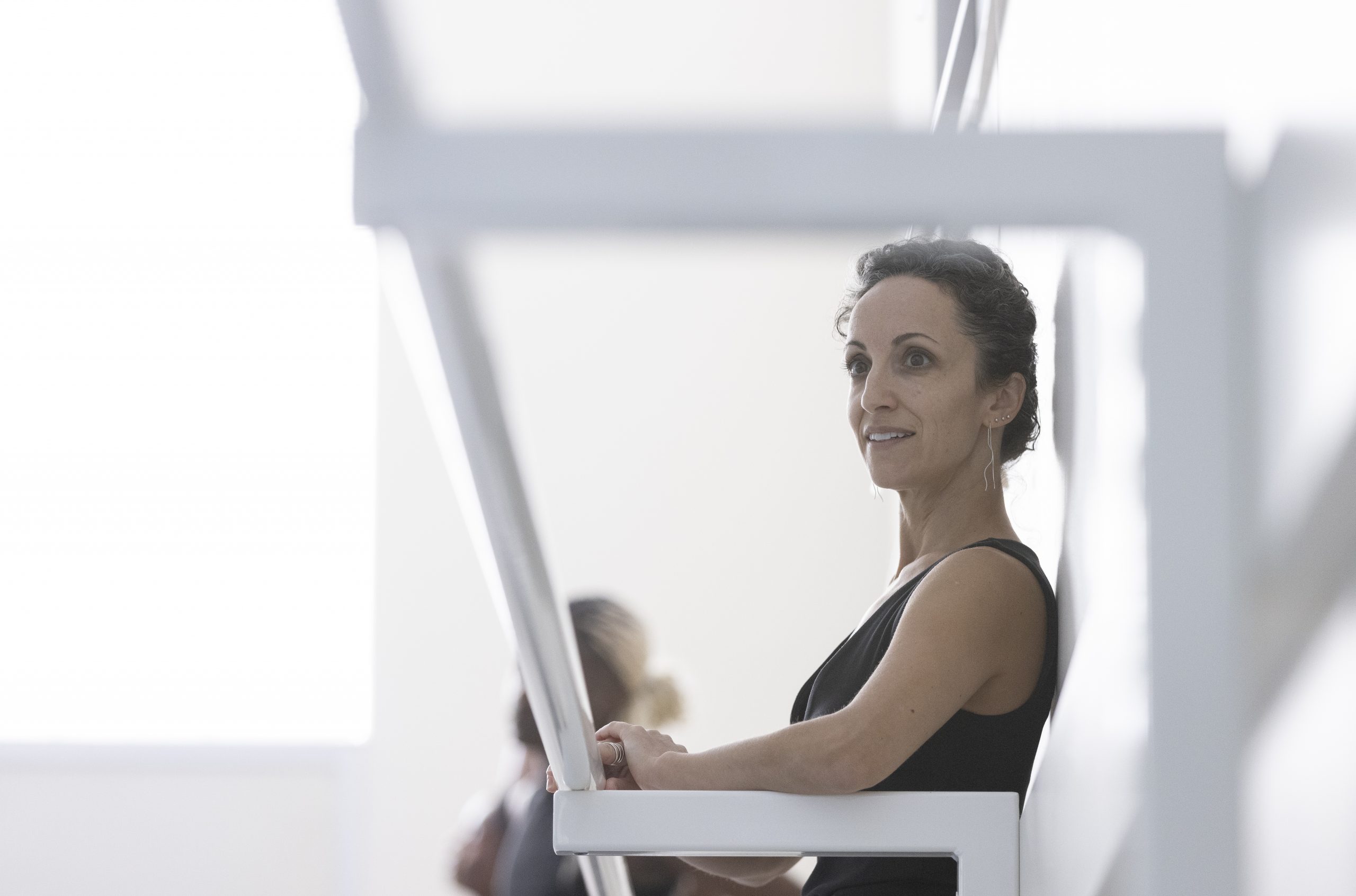
Jessica Zeller embraces “ungrading,” allowing students to submit their own grades with written reflections after discussing semester goals.
“When she explained, ‘I’m not going to grade you; you’re going to grade yourself,’ it was really kind of shocking,” said Glasman, who was a sophomore when Zeller implemented the change. “It was really revolutionary for me, because it put me in the driver’s seat and really made me take accountability for the goals that I wanted to reach.”
By yielding to student agency, Zeller said that she has become more at ease and consistent as a teacher. Her students are more relaxed, too, asking questions and showing greater comfort with vulnerability, a critical quality for artists. She’s mindful that some of her students will become ballet teachers who might carry on her work.
“She is an innovator in this industry,” Ha said. “Although she’s focused on the ballet classroom, it’s also trying to sow the seeds for changing the culture.”
Your comments are welcome
Comments
Related reading:
Features
Advancing the Arts
The Nordan Fine Arts Scholarship has long attracted talent to TCU.
Research + Discovery
Making the Mind-Body Connection in Dance
Jessica Zeller values student input and critical thinking over rote mimicry.
Campus News: Alma Matters
On Stage: Latin American Music Festival
The 11th biennial Latin American Music Festival in October 2017 featured guest musicians performing alongside TCU students and faculty.