

Early Greek organizations adopted elements of Greek democracy dating to the fifth century B.C., including regular meetings and elected leadership.
Beyond Parties: How Greek Life Is Training the Next Generation of Leaders
From building schools in Nepal to serving under-resourced communities, fraternities and sororities are embracing their civic origins.
POP CULTURE OFTEN CASTS FRATERNITIES AND SORORITIES AS SPECTACLES OF PRANKS AND PARTIES. Ashley Tull, chair of the department of educational leadership and higher education at TCU, sees a system with potential to cultivate civic engagement. His research highlights organizations that foster conversations on public concerns, invite altruism and spark political participation.
“Anybody who has studied the history of college fraternities,” he said, “would know that they were all very much built on value systems and democratic principles.”
Early Colonial groups encouraged debate between British loyalists and American revolutionaries at the College of William & Mary, where Phi Beta Kappa was founded in 1776 as the first Greek-letter fraternity. By the late 1800s, women’s Greek organizations emerged, many adopting elements of Greek democracy dating to the fifth century B.C., including regular meetings and elected leadership.
These traditions inform Tull’s analysis on the evolving significance of fraternities and sororities, which today number about 750,000 active members and more than 9 million alumni associated with 800-plus campuses.
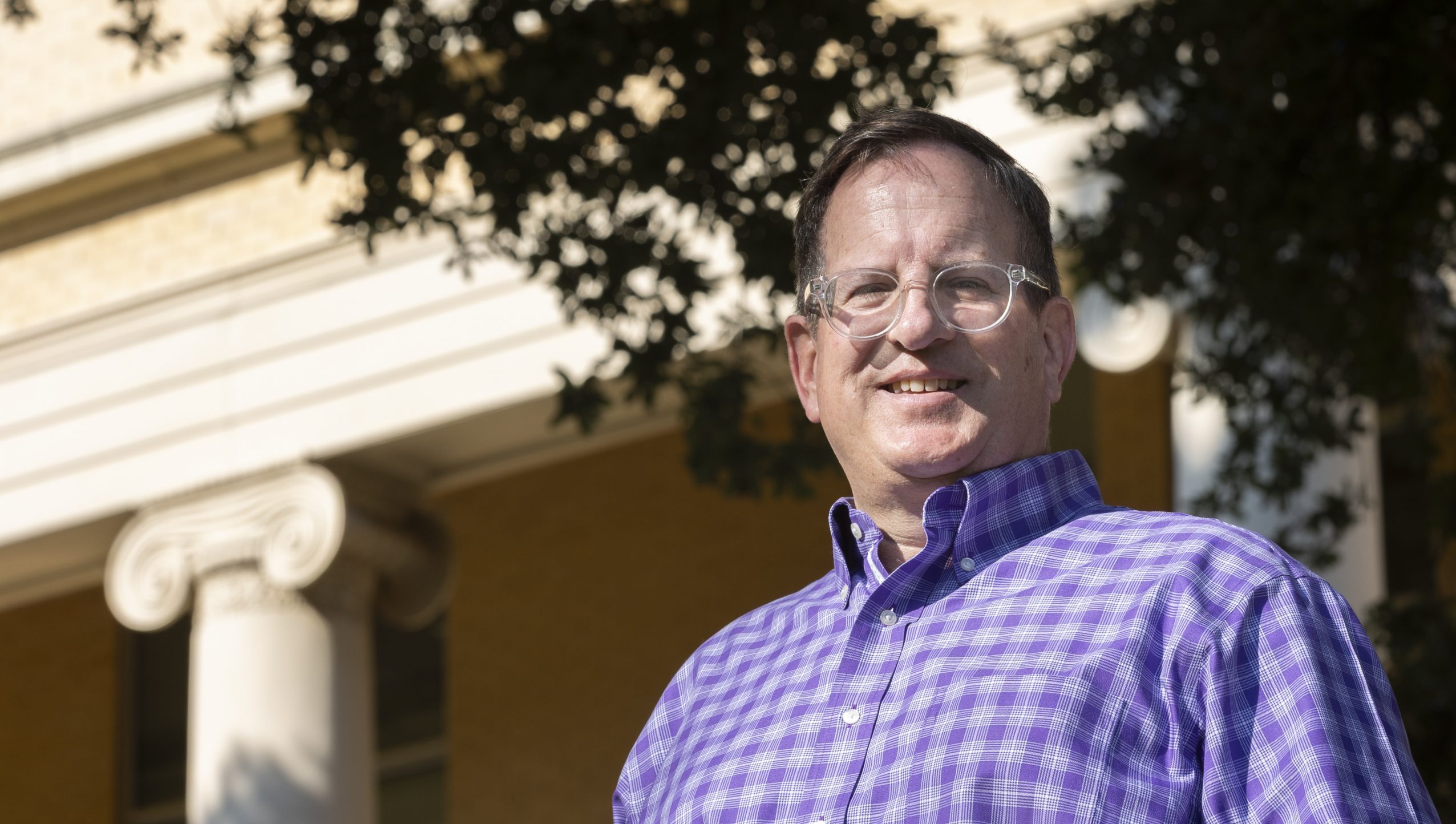
Ashley Tull sees service opportunities as chances for Greek members to learn about major national issues.
Tull, a professor of professional practice, examined how centuries-old fraternal values can unlock civic potential today. His findings appeared in a 2024 Journal of College and Character paper; Penn State’s Piazza Center for Fraternity and Sorority Research invited him to share his expertise.
“We wanted to return to examining the value of college fraternities and sororities as civil society organizations,” he said, “in a time at which they have kind of lost their focus.”
A BLUEPRINT FOR BELONGING
Stevan Veldkamp, executive director of the Piazza Center, said that fraternity and sorority members are breathing life into their organizations’ engagement identity and turning it into a living practice on campus.
“The organizations all have embedded statements, creeds and even their rituals all pointing to: ‘We’re going to take our accumulated strength, our capital and apply it in ways that the community really needs,’ ” he said.
At TCU, the Interfraternity Council’s annual recruitment service day sends hundreds of fraternity members to under-resourced Dallas-Fort Worth schools to paint benches and deliver supplies.
“We started talking about how we could give back,” said Brooke Scogin, TCU’s director of fraternity and sorority life. The initiative buses members to local campuses “in hopes of inspiring those children to go to college, to do the things they want to do.”
LOOKING BACK, MOVING FORWARD
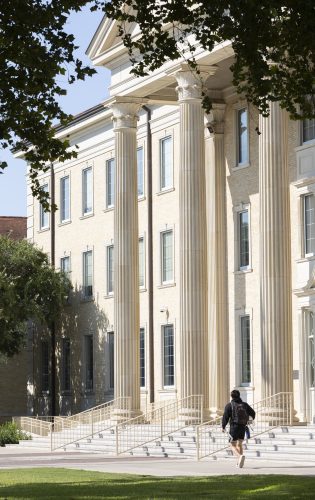
Fraternities and sororities, once rooted in debate and democratic practice, are reexamining their civic missions as they expand service efforts on campuses nationwide.
Tull’s research highlights Greek organizations’ potential to cultivate habits essential for democratic citizenship. Central to this is their longstanding commitment to national philanthropies, which most fraternities and sororities champion, supporting causes from health care to education.
Tull acknowledges some Greek organizations have historically caused harm — from racist acts to substance abuse and sexual assault. Fraternities such as Alpha Phi Alpha Inc., founded at Cornell University for Black and African American students, and Zeta Beta Tau, founded at Columbia University for Jewish students, arose because their members were excluded from Greek organizations dominated by white Protestants.
A 2019 study in the journal New Directions for Student Services reported that Black Greek-letter organizations and other fraternities and sororities founded by historically excluded people have maintained a civic character-building focus since their foundings, a legacy that resonates today. Members of the National Pan-Hellenic Council, which comprises historically Black fraternities and sororities, and the National Multicultural Greek Council, which brings together culturally diverse Greek organizations, are encouraged to focus on others, with public education and community service central to their mission.
The 2015 Harvard Press book Paying for the Party says most historically white Greek organizations have evolved away from their civic pasts, emphasizing social and career-focused functions.
Tull’s paper points to routes for reversing course. Fraternities and sororities could integrate civic discussions into chapter meetings, support voter registration efforts and create sustaining alumni connections.
Greek organizations at TCU continue to expand their impact. One Panhellenic Council initiative pairs TCU sorority chapters with Circle of Sisterhood, a national group breaking down educational barriers for girls and women worldwide. In recent years, members have built schools in Nicaragua and Nepal, with plans to break ground on one in Malawi this summer.
National Greek organizations also carry out good works. Pi Kappa Phi’s annual Journey of Hope sends about 50 members biking from the West Coast to Washington, D.C., raising awareness and funds for people with disabilities.
Taylor Weitzer, marketing director for Lambda Chi Alpha, said public perception is often shaped by negative headlines about fraternity life. Still, she added, “I think the value of Greek life is that you get to make your experience and what you want it to be.”
“We wanted to return to examining the value of college fraternities and sororities as civil society organizations, in a time at which they have kind of lost their focus.”
Ashley Tull
Tull said the promise of Greek life lies in its ability to connect historical purposes and principles with present actions.
“There are opportunities to volunteer at food pantries and food banks around the country,” he said, “where not only are they helping to provide labor and support for these organizations, but hopefully they’re learning something about major national issues as a result of their exposure to that.”
Your comments are welcome
Comments
Related reading:
Research + Discovery
Cinema as Service
Action! TCU’s nationally acclaimed documentary production class pairs service learning with hands-on skills development.
Campus News: Alma Matters
TCU Senior Mark Sayegh Builds One Shade Greener Into Multi-Campus Environmental Nonprofit
A student movement tackles food insecurity through campus cleanups and community gardens across seven universities.
Alumni, Features
Making a Difference Through Medical Nonprofits
Four alumni physicians have a heart for healing and work to make the world a better place — one patient at a time.