Menu

Author Archives: Caroline Collier

  1. John Devereaux Shines in Hamilton Spotlight

    Leave a Comment

    John Devereaux ’12, part of the supporting cast of the national tour of Hamilton, stepped into the leading role of President George Washington for opening night at Bass Hall in Fort Worth in January. He said he felt the gravitas of the moment. 

    “I just felt like everything I’ve done was leading up to this point,” he said of the opportunity to fill in as one of the musical’s primary performers. “And I was so honored and grateful to perform on that stage, on that night, as that character, in this show, in this city. It’ll go down in history as one of my top moments in my career.”
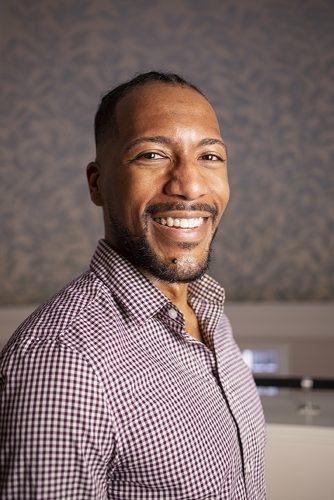
    Actor John Devereaux '12 in the lobby of the Bass Performance Hall where he performed with the touring cast of Hamilton. Photo by Mark Graham, January 31, 2022

    Actor John Devereaux is a member of the ensemble in the national tour of the hit Broadway musical Hamilton. He also is an understudy for three featured roles, including George Washington and King George III. Photo by Mark Graham

    The acclaimed musical tells the story of immigrant and revolutionary Alexander Hamilton. Actors of color typically perform the roles of the Founding Fathers and their entourage in the musical. The Grammy Award-winning soundtrack is a blend of hip-hop, jazz, R&B and Broadway. Hamilton picked up 11 Tony Awards and the Pulitzer Prize for Drama. 

    Devereaux’s path toward the tricorn hat and epaulets was long and uncertain. He auditioned for three years to earn a spot in Hamilton as Man 6. A member of the ensemble, he also covers three leading roles as an understudy. 

    Devereaux fit in Hamilton auditions between local and regional theatre gigs from a temporary home base in Los Angeles, where he moved soon after graduation. 

    “I did self-tapes. I auditioned in L.A. I auditioned in New York. I auditioned in open calls. I auditioned in small work sessions with the associate director for the show, the associate music director for the show. I’ve done every type of audition that you can do for Hamilton.” 

    Each time, Devereaux studied and incorporated feedback before the next audition. “I think that they saw how dedicated I was to it,” he said. When the good news arrived in an email from his agent, Devereaux called his mom, who cried. 

    And then, he said, “I was on my way.”

    “He was talented and prepared and motivated and lucky, because that’s how it works in that profession,” said Harry Parker, professor of theatre. “He waited a long time to get into Hamilton. He knew long before they did that he should be in that show.”

    The Room Where it Happens

    Devereaux, who grew up in Houston, was a freshman in high school the first time he was cast in a play. He was pressured by friends to join a production of Bed, Breakfast and Broadway after someone dropped out. At the time, he said, he saw himself more as a bookworm than a performer. 

    But on opening night, something changed. “When I stepped on that stage, it was just such a different feeling,” he said. “And it just continues, even today. I still feel so connected to the moment and to the work that’s happening and to the people I’m doing this with. It’s a feeling of being in the zone.” 

    Despite a high school career with several more productions, Devereaux said he didn’t intend to study theatre at TCU. He began college as a communication studies major and business minor.

    His talent was discovered by a classmate, Kelsey Milbourn ’12, who is now a professional actor and choreographer as well as a theatre instructor at TCU. The two, Milbourn said, met in a biology class and clicked as friends.

    One day while studying together, Milbourn suggested that they come up with a tune to help with memorization. 

    “I started singing some facts, and he starts singing with me, and I remember being floored,” Milbourn said. “I remember my mouth being agape and saying, ‘John, I didn’t know you could sing like that. Have you ever considered being on stage?’ ”

    Rise Up

    TCU’s theatre department hosts national auditions for prospective students. Department chair Jennifer Engler estimated the overall admission rate at less than 7 percent. “We say no every year to amazingly talented people,” she said. “So, it’s pretty rare that we have someone who comes into our program that we didn’t meet in the recruiting cycle.”

    Yet the theatre faculty encouraged Devereaux, who enrolled as a theatre minor before changing to a major. 

    Engler said Devereaux came to the department with a lot of natural talent and good instincts — and the sense that he had catching up to do. “The work ethic was just incredible,” she said.

    “I just was like a sponge,” Devereaux said. “I was absorbing everything. And actually, my communication studies courses were very beneficial to me in my acting courses. …  It gave me a way to understand why people do the things they do or why they say things the way they say them.”

    Among his favorite roles at TCU was playing Mitch Mahoney in The 25th Annual Putnam County Spelling Bee, which he said made him a more confident singer.

    Devereaux also performed in an existential play by Jean-Paul Sartre, No Exit, which required a lot of work as one of only three actors in the cast, Parker said. “It was a really difficult play and a really great performance.”

    “One of the things that I’ve always admired about John’s acting is that it seems pretty effortless. He doesn’t seem to be acting. And that’s usually the goal, but it’s also so difficult to achieve. There wasn’t a performative air about him, but rather one of great reality and truth.”
    Harry Parker

    “One of the things that I’ve always admired about John’s acting is that it seems pretty effortless. He doesn’t seem to be acting. And that’s usually the goal, but it’s also so difficult to achieve,” Parker said. “There wasn’t a performative air about him, but rather one of great reality and truth.”  

    Parker cast Devereaux in the musical Oklahoma!. “He played the sheriff,” Parker said. “And he was the sheriff, if you know what I mean — he commanded that authority and presence just the way it needed to be played.” 

    While acting and singing came naturally, Devereaux had less experience with dancing. He got a boost while rehearsing Oklahoma!, when the choreographer had him demonstrate a hitch kick and told the cast to emulate him. 

    “At that time, to get a compliment about dancing, I wasn’t comprehending it,” Devereaux said. “The entire faculty in theatre at TCU — every time I leapt, there was someone saying, ‘Come on, you can do it. Trust in yourself as we do.’ ”

    Following graduation, he booked a summer production of Ragtime with a regional theatre; afterward, he moved to Los Angeles. 

    While based in California, he did Rent and Dreamgirls with La Mirada Theatre; the latter included a tour to Japan. He booked a world premiere musical, Recorded in Hollywood, about the life of record label owner and music producer John Dolphin. He even performed in the Hamilton spoof, Spamilton. 

    While he went on auditions for big TV and film projects, theatre directors kept hiring him. “I felt like I didn’t spend a lot of time in Los Angeles because I was still doing regional theatre,” he said. “They would cast me, and then I’d leave for six weeks.”

    Devereaux decided to move to New York and had just arrived when he got yet another call to audition for Hamilton. “It was me, the dance supervisor for all the Hamilton companies, and one other guy was there. So I knew, like OK, this is the last one. This is it.”

    That Would be Enough

    One week after he was hired to be a part of Hamilton, Devereaux started rehearsals. Following 11 weeks of practice, he was ready to take the stage. His first performance was on June 6, 2019.

    “Creatively, it is everything I thought it would be,” he said. “My favorite part of being in the show is working with these incredible people — onstage, backstage, just knowing them and being with them. I feel like I get better by osmosis.”
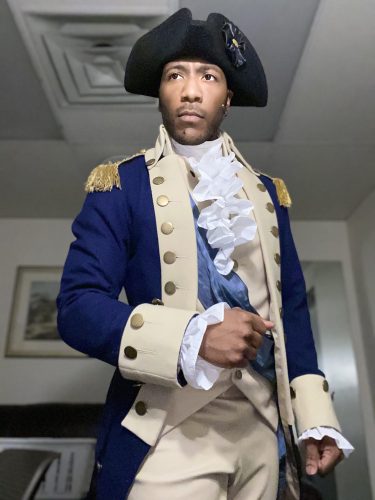
    John Devereaux '12 plays different roles in different performances during the hit Broadway musical Hamilton's national tour. He appears here in costume as George Washington. Photo courtesy of John Devereaux

    John Devereaux is an understudy for the role of George Washington in the Hamilton national tour. Courtesy of John Devereaux

    He said he looks up to Hamilton’s regular George Washington, Paul Oakley Stovall, as a performer and a person; both men have performed in Rent many times as well.   

    Devereaux said the joys of touring outweigh the challenges, but life on the road isn’t easy. He misses family and friends. The cast performs eight shows a week, with only Mondays off — and sometimes that day is used for traveling to the next city. “You’re a nomad; you just kind of move from place to place. … Some people don’t have a home address.” 

    He explores different cities by taking in the museums and eating at local restaurants. Devereaux unwinds by playing video games, reading self-help books and listening to his friends’ music. “They’re on repeat all the time,” he said. “I love listening to my cast mates’ music.”

    The tour was in Miami in March 2020 when Covid-19 shut it down; Devereaux went home to Houston, anticipating a couple of months off. But the cast of Hamilton would not return to the tour until August 2021.

    “I needed something to do, and that’s when a lot of people started getting on TikTok,” he said. “And I’m like, ‘Let’s see what this is about.’ ”

    He paid homage to Broadway, dressing up to look like show posters. He re-created his granny’s banana pudding. He did an unboxing video with a disappointing tortilla blanket. 

    “It’s kind of like what I do with theatre,” he said. “I just really want to entertain, and I want to perform, and I want to connect with people.” Today, his TikTok followers — 100,000 and counting — get glimpses of his backstage life and comedic musings.

    Devereaux also used his downtime to launch a candle company, Of Yours. While sleeping in different hotel rooms from week to week, he got into the habit of burning the same candle scent at every stop to feel at home. He was inspired to create the line of candles with scents named after family and friends; Joyce, a gardenia and tuberose candle, is named for his mother. 

    In June 2021, the touring cast of Hamilton found out in a Zoom meeting that they’d be taking the show on the road again. “Everyone was clapping and shouting, everyone was excited,” Devereaux said. “But it was also a little scary. Because when you’re out of practice for a year and a half, you start thinking, ‘Can I still do this?’ ”

    Rehearsals resumed, and yoga and meditation sessions helped soothe nerves. The tour picked up in August in Los Angeles, followed by dates crisscrossing the country. During the stop in Dallas in November, Devereaux came to TCU to give a class for theatre students.

    You Can be a New Man

    Devereaux said he’d like to stay on tour “until the wheels fall off,” but someday he plans to move back to Los Angeles. There, he wants to hone his TV and film skills. 

    “I feel like I’ve learned so much since being in Los Angeles,” he said. “And also I feel like the market is just more ready for me.”

    While he has grown accustomed to rejection, he’s not jaded. He said it’s important to remain comfortable being vulnerable. “I have to take this piece of truth in the script or the choreography or in the libretto. And I have to add that to the truth that lives within me,” he said. “It’s a much more compelling performance that way.”
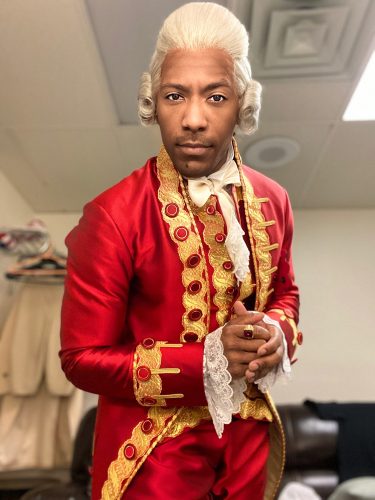
    John Devereaux '12 plays different roles in different performances during the hit Broadway musical Hamilton's national tour. He appears here in costume as King George III. Photo courtesy of John Devereaux

    John Devereaux plays different roles during the hit Broadway musical Hamilton’s national tour. He appears here in costume as King George III. Courtesy of John Devereaux

    He finds motivation to perform night after night by thinking about the audience and how someone in the seats is seeing a musical for the first time. The first Broadway musical he saw was the national tour of The Lion King in Houston, where even as a student, he said, he was thinking, “I want to make people feel how I feel right now.”

    When the Hamilton tour stopped in Houston in February, he was tapped to fill in for King George III, a comedic role, for four nights. The king treats the Founding Fathers as if they’ve broken up with him; among his solos is the wry “You’ll Be Back.” 

    The Houston Press called Devereaux’s performance “delightfully dippy,” while the Houston Chronicle wrote, “A highlight was watching John Devereaux as King George sing his deliciously comic numbers as the revolution evolves.”

    Devereaux said he felt both a sense of duty and elation performing the role in his hometown. “I love being a king onstage. … Also, I enjoy getting the opportunity to really take a character as far as I can because he is a mad king,” he said. “I really do get to stretch my work in this role.

    “Seeing King George III played by a Black man is going to affect how someone experiences the show, and I love that,” he said. “That, to me, is what theatre is about — offering new viewpoints, being challenged.”

     

  2. Is Working From Home More Productive?

    Leave a Comment

    Early in the pandemic, working from home was done out of necessity — for those whose jobs allowed it. Two years in, according to the Pew Research Center, Americans are more likely to be working from home by choice: Among those who have the option to return to office life, 61 percent are choosing to stay at home.

    Mike Caldwell, executive director of TCU’s Center for Career & Professional Development, offered some insights into the benefits and costs of the shift:

    For employees, what are some of the pros and cons of working from home? Which boundaries need to be set?

    Reduced commute time is a big factor. The ability to be flexible, to move from task to task.

    The challenges are being able to manage distractions, being able to manage projects and deadlines. And then also finding work-life balance because you may find yourself working at 7, 8, 9 p.m. — you may be drawn into work because you never leave. I personally experienced that.

    Treat work from home just like you treat your job — you’re going into work, you have that professionalism. Setting boundaries also can help you know that, OK, I’m shutting off the laptop. I’m no longer “at work” now.

    From a manager’s perspective, what are some of the pros and cons of allowing employees to work from home? 

    For some, it’s a retention strategy; you’re able to retain great talent. You may be able to be competitive if a candidate is reviewing two job offers. 

    You’re not as limited in terms of geography. If you are able to have some flexibility, you may open up your prospective candidate pool to a much wider net of candidates who may be willing to make a longer commute if they’re not coming in five days a week. 

    Mike Caldwell
    Mike Caldwell is the executive director of TCU’s Center for Career & Professional Development. For more information about careers, visit careers.tcu.edu

    Challenges are making sure that your policies are equitable among team members because some people, depending on their role, may have to be physically present. So how can you manage their expectations? How can you make sure that you have a balanced, fair option for all of your employees?

    Is working from home more productive? 

    That depends on the employee. Some people can be very productive and maybe more productive remotely; some people may need that structure — that specific parameter of, “I’m in the office, now I’m working.”

    The manager or the direct supervisor of the person has to make sure that there’s accountability. You don’t want someone just kind of floating out there without any support.

    If you’re a new employee, you may feel kind of alone, or you may feel like you don’t have anyone to go to with a quick question, and that may be a challenge to productivity.

    Understand things from your supervisor’s perspective, from your colleagues’ perspective. And just like in a salary negotiation, go in with as much data and as much detail as you can.

    What advice do you have for negotiating for flexibility in a job you are already in?

    Understand things from your supervisor’s perspective, from your colleagues’ perspective. And just like in a salary negotiation, go in with as much data and as much detail as you can. 

    What would be a benefit of working remotely? What could some challenges be and your approach to addressing those challenges? Is it going to be one day a week, two days a week? How can you flexibly manage that?

    When looking for a new job, is it a fair expectation to have the option to work from home?

    What is the flex work policy? The remote work policy? Employers expect to be asked those questions. Don’t be afraid to ask them what the policy is, and what the future looks like for the organization — is the expectation that everyone’s going to be back in the office or is the expectation that there’s going to be a hybrid flexible schedule?

    Are there any new skills needed to be effective working from home?

    Managing up — reporting things to your supervisor, to your colleagues, keeping everyone above you and around you informed. You have to let others around you know what projects you’re working on, what accomplishments you have.

    There’s also understanding what your supervisor’s expectations are, what your client or your colleagues’ expectations are, in terms of having your camera on in Zoom, or chatting during a meeting.

    In the office, unscheduled conversations occur naturally; when home, they’re far less likely. How important are those unplanned chats?

    They can be very important. You know, sometimes they can be kind of non-productive, but sometimes that’s what’s enjoyable about work.

    For people who are new to the workplace, those can be great opportunities to ask those random questions that they might not schedule a Zoom meeting for. It’s much easier to ask someone about how the event was handled last year just in the random hallway conversation.

    When you’re having those random hallway conversations, you meet people from other departments and from other areas; you can find out more about what they’re doing, what projects they’re working on, what goals they have.

    Conversations form that human connection. We have to interact with others to be productive and to feel valued, and I think that there’s something missed when we don’t have at least some opportunity to do that.

    Is the shift toward working from home here to stay? 

    I think some version is, in some roles in some industries with some employers. There are just too many benefits.

    We have employers who can recruit at TCU and they don’t have to drive or fly to Fort Worth. You see that in sales roles, you see that in a lot of technology roles; you can do something remotely at a much, much lower cost than bringing someone into an office.

    I think where there is a business case for hybrid work and for remote work, those opportunities will continue.

    Comment below with your career questions or email tcumagazine@tcu.edu. For more information about careers, visit careers.tcu.edu

    Editor’s Note: The questions and answers have been edited for length and clarity.

  3. Men’s Tennis Serves Up Success

    1 Comment

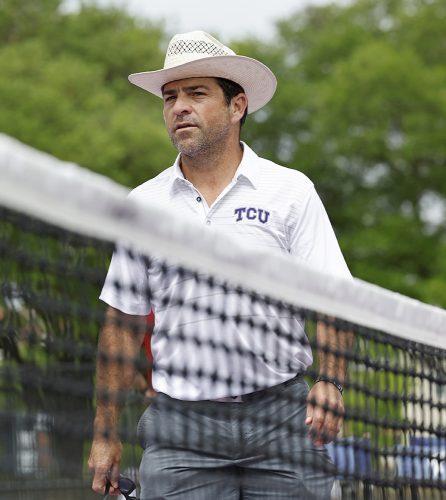
    During a break in the first set for Luc Fomba ’22 in the 2022 NCAA tournament, David Roditi ’96 used his trademark hat to shield his top player’s eyes. As the head coach spoke, the star player nodded. Fomba then returned to the court and served an ace, a ball his opponent couldn’t return.  

    Roditi was in his element that hot afternoon in early May when TCU faced the University of Utah. The Horned Frogs had entered the NCAA men’s tennis championship as the No. 1 national seed. The team had won the Intercollegiate Tennis Association’s indoor national championship earlier in the year.

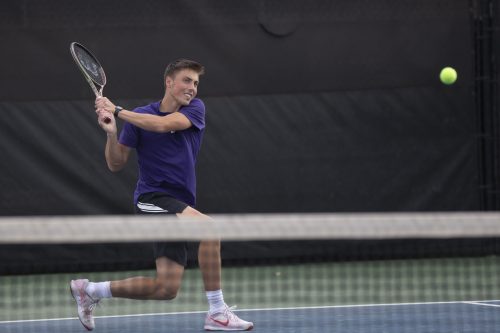
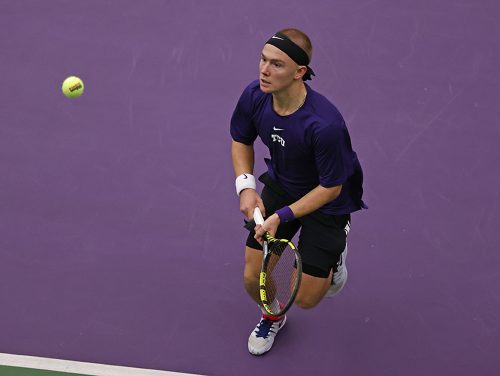
    The No. 1-seeded TCU men's tennis team vs No. 5-seeded Oklahoma in the semifinals of the 2022 Big 12 Championship on the TCU campus in Fort Worth, TX on April 23, 2022 Photo by Gregg Ellman

    Coach David Roditi ’96 used his marketing degree from the TCU Neeley School of Business to reinvent the college tennis atmosphere. Courtesy of TCU Athletics

    More than a thousand fans watched the Horned Frogs play on the purple courts of Bayard H. Friedman Tennis Center, where the team defeated Utah 4-0. Hosting so many spectators would be a rarity for almost any other college tennis venue — but not at TCU. 

    When Roditi, the winningest player in TCU tennis history with 250 victories, returned to coach at his alma mater in 2010, he set about reshaping the tennis culture.

    One of his first big moves was hiring former TCU teammate Devin Bowen ’94 as assistant coach. Like Roditi, his college roommate, Bowen had been successful playing professionally. During a dozen years on the pro circuit, Bowen hit a career high ranking of No. 39 for doubles.

    “They are the yin to each other’s yang,” said Jeremiah Donati, director of intercollegiate athletics. “David is the CEO, running the program and managing the ship, while Devin is extraordinary with player development. 

    “Then you have the crowds because of the great atmosphere, which was very intentional on David’s part. I can’t think of any other college tennis matches where music is being played and there is pizza or taco trucks. Players respond to that,” Donati said. “Anyone would.”

    A Winning Tradition

    As a 5-year-old in Guadalajara, Mexico, Roditi picked up a tennis racket while his mother took squash lessons at a private club. 

    During high school, Roditi, who has dual citizenship because of his American mother, moved to Orange County, California, to live with a tennis coach. There, he met Bowen, who planned to attend TCU and play tennis for legendary coach Bernard “Tut” Bartzen. 

    As an undergraduate at the College of William & Mary in 1948, Bartzen had been one half of a duo that won the NCAA doubles championship. The Korean War interrupted his pro career. He served as head coach of the TCU men’s team from 1974 to 1998, during which his teams were nationally ranked 19 times and won eight conference championships.

    On the recommendation of Bowen’s father, Bart, Bartzen recruited Roditi two years later. 

    Roditi, a three-time All-American at TCU, moved to the professional circuit after earning a degree in marketing. As a doubles player, Roditi played in all four Grand Slams — the Australian Open, the French Open, Wimbledon and the U.S. Open — and was on the Davis Cup team representing Mexico. Plagued by a shoulder injury, he quit the pro circuit in 2000. 

    Image Taken at the Oklahoma State Cowboys vs TCU Horned Frogs Tennis Match, Thursday, April 14, 2022, Greenwood Tennis Center, Stillwater, OK. Bruce Waterfield/OSU Athletics

    Sander Jong of the Netherlands earned the nickname the Landlord for his efficient style of play. Courtesy of OSU Athletics | Bruce Waterfield

    “The combination of the coaches — David, Devin and Derek [Siddiqui, the volunteer assistant coach] — and their experiences, a very good tennis program and a really tight group of guys made me know I wanted to be a part of this team,” said Sander Jong, a senior from the Netherlands whom Bowen nicknamed the Landlord. “He would say that I just went on the courts, collected the rent real quick, then got off the courts,” Jong said.

    “The coaches are both really competitive,” said Juan Carlos “Charlie” Aguilar, who competed for TCU in 2021-22 as a graduate student. “They have good chemistry with each other, and they set the tone for good chemistry with the team.”

    After retiring from professional tennis, Roditi began his coaching career at St. Stephen’s Episcopal School in Austin, Texas. He left to become lead national coach for the U.S. Tennis Association. 

    Roditi accepted his dream job as TCU’s head men’s tennis coach in August 2010. 

    Building Back

    Chris Price ’11 played for Roditi in the early years. He pointed to the “Keep It in the Purple Committee” as a major Roditi innovation. The head coach put his marketing education to use by assembling a group of local movers and shakers that comes up with ideas to generate excitement about matches.

    When the Frogs play at home, fans might enjoy everything from free pizza, popcorn and tailgates to face painting and Easter egg hunts. TCU never charges admission to regular season matches, where the bleachers sit under a canopy of oak trees.

    TCU vs Tennessee mens tennis in Fort Worth, TX on January 16 2022 Photo by Gregg Ellman

    TCU plays on purple courts at the Bayard H. Friedman Tennis Center on campus. Courtesy of TCU Athletics | Ellman Photography

    “We’ve tried everything, and all of it is mostly from David,” said Linda Lawrence Cappel ’80, a charter member of the committee. She also owns the pro shop by the outdoor courts and effectively serves as team mom. 

    Roditi’s goal is to flood the tennis center with more than 2,000 fans every time the Frogs play. In 2015, he lobbied Big 12 Conference decision-makers to allow the atmosphere to be more like a festival than the near-silent events associated with competitions like Wimbledon.

    That year the Big 12 adopted the so-called Roditi Rule as a change to its decorum policy, encouraging spectators to cheer on their favorite teams.

    “It’s good, the cheering,” said Fomba, who is from Paris. “It’s nice to hear people out there who like and support you.”

    Doing the Work

    A good number of Roditi recruits have followed in his and Bowen’s footsteps to play professionally, including Alex Rybakov ’20, Reese Stalder ’19 and Jerry Lopez ’18. In May, Alastair Gray ’21 cracked the top 300 players in the world and advanced to the second round of Wimbledon in July. Incoming first-year Sebastian Gorzny, who lives in the Texas Hill Country, won the 2022 Wimbledon Championship in boys’ doubles.

    “Coach Roditi is an incredible motivator,” said TCU Chancellor Victor J. Boschini, Jr. “I have personally witnessed him interacting with the players on many occasions, and I am always so impressed with his attitude of positive motivation.”

    The most successful Horned Frog so far during the Roditi-Bowen era is Cameron Norrie, who broke into the Top 10 men’s singles players in the world in April and made it to the Wimbledon semifinals in July. 

    “I think the biggest thing is that [Roditi is] a great person, a very genuine guy, and he’s looking out for you not only on the court but off the court,” Norrie said during a trip in February to train at TCU.

    Norrie said Bowen was crucial in molding him into a top player.

    Image Taken at the Oklahoma State Cowboys vs TCU Horned Frogs Tennis Match, Thursday, April 14, 2022, Greenwood Tennis Center, Stillwater, OK. Bruce Waterfield/OSU Athletics

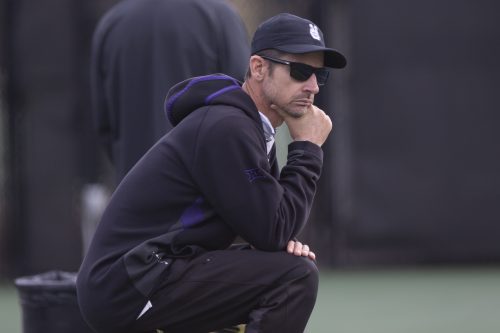
    Assistant coach Devin Bowen ’94 brings an intensity to the court during play and practice. Courtesy of OSU Athletics | Bruce Waterfield

    “Devin’s professionalism and his work ethic and attention to detail are amazing,” Norrie said. “He and David complement each other and helped me make good decisions on and off the court, always while doing what was best for my career.”

    Roditi and Bowen, meanwhile, said that having a player of Norrie’s caliber return to train at TCU helps motivate the current student-athletes.

    “There’s something about seeing a truly great player like Cam putting in the time that makes them work just that much harder,” Roditi said.

    Donati concurred. “Recruits want to go someplace with past success and where they can get better and have a great experience,” he said. “That’s the type of place that David and Devin have built here.”

    None of this surprises Ashley Fisher ’98, head tennis coach at the University of South Florida, which played TCU in Fort Worth in March. (The Frogs won 6-1.) Fisher, who was half of a No. 1-ranked doubles team while at TCU, counts Roditi and Bowen as friends. 

    “Even back when he was playing college tennis, David thought he was a coach,” Fisher said. “He had the uncanny ability to know everything that was happening on the other five courts while he was in the midst of a match.” 

    Siddiqui, who was named head men’s tennis coach at Grand Canyon University in July, arrived at TCU in 2018 to become the team’s volunteer assistant coach. Per NCAA rules, student-athletes can practice up to 20 hours a week. The three coaches typically split up the players and work with them individually on the courts. 

    “With a lot of teams, everyone does the same thing, but for us, player development is crucial to our program,” Siddiqui said. “We train them as pros.”

    TCU vs Florida mens tennis in Fort Worth, TX on January 14, 2022 Photo by Gregg Ellman

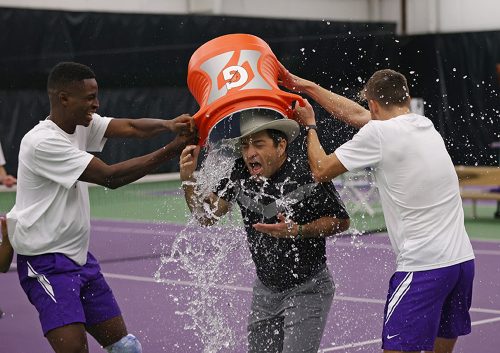
    Roditi, center, said he strives to keep his student-athletes in the moment. Courtesy of TCU Athletics

    They might practice on the courts two hours at a stretch. Each player also works with an on-staff nutritionist and receives coaching from a mental fitness trainer. Bowen, who has a reputation for extreme discipline in training and preparation, leads the group in mental prep practices as well.

    A National Title

    As the Frogs have succeeded, pressure has built — something the coaching staff works to counteract.

    “One of the things we want to do is keep the boys humble,” Bowen said. “There’s already enough pressure out there. We don’t want to add to that.”

    The Frogs entered February’s Indoor Tennis Association national championship ranked No. 4, with a single loss during the season. The No. 3 Tennessee Volunteers had defeated TCU in January in Fort Worth, 4-3.

    The teams met again in the championship in Seattle after TCU defeated No. 1 Ohio State in the tournament semifinals. 

    After the upset, Roditi and Bowen doubled down on keeping all eight members of the team focused but not stressed.

    “We did well at the indoors because we came in there with something to prove,” Bowen said. “We went in with an underdog mentality.”

    The players said they felt ready for the rematch against Tennessee.

    “It was just like any other match, though of course there were thoughts in your head like, ‘We could actually be national champions today,’ ” said Jong, who won his doubles match with partner Lui Maxted, a first-year from the United Kingdom. Jong proceeded to win his singles match in two sets.

    TCU vs Mississippi State mens tennis in Fort Worth, TX on February 11, 2022 Photo by Gregg Ellman

    Luc Fomba is one of TCU’s top competitors. Courtesy of TCU Athletics

    “I didn’t really think about the big trophy at the end,” said Fomba, who won his doubles match alongside sophomore Scotsman Jake Fearnley.

    That Monday in Seattle would see Fomba’s singles match end abruptly when the Frogs clinched the title, thanks to an ace on the championship point by Pedro Vives, a first-year from Spain. 

    “This one’s for Coach Bartzen,” Roditi said after hoisting the trophy. “This one is for all the coaches and all the alumni that have put their blood, sweat and tears into our program to get to this moment.”

    In May, the Horned Frogs made it to the Elite Eight of the NCAA championship for the fifth time in the last seven seasons. In the season’s final match against Kentucky, Cappel sat with Roditi’s sons, Max, 8, and Sebastian, 6, watching sophomore Tomas Jirousek from the Czech Republic win his singles match. The Frogs ended up losing 4-3.  

    When the stakes grow high, the coaches said, they strive to strike the right tone with the players — one that helps them correct any issues while keeping them in the moment.

    “It’s like parenting,” Roditi said. “It’s often more about praising what you want from them, but it’s hard because you constantly have to check yourself.”

    Months later, when talking about the indoor championship title, Roditi credited the tightknit atmosphere on and off the courts with helping tip the Horned Frogs over the top.

    “Devin and I are like brothers, which makes it so much more special to be able to share this season with him,” Roditi said. “In the end, it’s all about family. Our team loves each other and does the work.” 

  4. Katherine Beattie Breaks Down Barriers

    1 Comment

    When Katherine Beattie ’08 set out to forge a path in Hollywood, she dreamed more about seeing her name in the credits of a TV series than of becoming a disability advocate. Before her 30th birthday, she’d done both.

    By the time NCIS: New Orleans wrapped up its seven-year run in May 2021, Beattie had risen through the ranks to become one of the show’s producers.

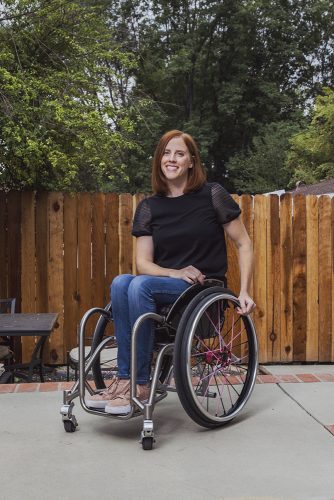
    Screenwriter / producer Katherin Beattie in her backyard in Altadena, CA.

    Screenwriter and producer Katherine Beattie has plans to turn her Altadena, California, backyard into her own skate park.

    Along the way, she won the Evan Somers Memorial Award from the Writers Guild of America West for on-screen representation of people with disabilities and for creating more opportunities for the disability community within the entertainment industry.

    Beattie, who was born three months prematurely, has spastic quadriplegia cerebral palsy. The disorder, which primarily impacts her legs and arms, causes muscle tightness and fatigue and makes walking difficult.

    In spring 2021, Beattie said, she was sad about the cancellation of NCIS: New Orleans, which she and her fellow producers had hoped would be renewed for one more season.

    But to her delight and relief, she was soon hired as a supervising producer on NCIS, the CBS cornerstone drama that recently ended its 19th season. This year, she was promoted to co-executive producer for season 20.

    The Hollywood Reporter describes the juggernaut crime show as the most-watched prime-time series of the 2020-21 season other than an NFL franchise.

    Some 12.7 million viewers in the U.S. tune in per episode. The global audience tops more than 55 million.

    “It’s incredible to work on a show that’s so loved around the world,” Beattie said, “and it’s something I’ll never take for granted.”

    To Texas and Back

    Little did Beattie know when she tagged along with her twin sister on a visit to TCU that she would spend four years in Fort Worth. (Sarah, meanwhile, attended the University of Wisconsin, their mother’s alma mater.)

    An inveterate sports enthusiast, Beattie went to every TCU football home game and lived on campus her first three years.

    Though she wanted a wheelchair to use on campus, insurance wouldn’t pay for it — and her parents weren’t convinced she needed it. 

    “There’s a stigma around wheelchair use, and my parents thought I’d be better off not using one,” Beattie said. “But I had to deal with other things not having a wheelchair brings to you.”

    Without the mobility aid, walking to and from classes was enough to tire her. She often didn’t have the energy to walk to an event or party, particularly in the Texas heat.

    Screenwriter / producer Katherin Beattie photographed during the workday at home in Altadena, CA.

    As a radio-TV-film major at TCU, Katherine Beattie was the executive director of the pilot of a department-wide production.

    Her friends knew she had cerebral palsy but often told her they didn’t think of her as disabled.

    “It’s not the compliment people think it is,” said Beattie, who never sought to hide the neurological condition caused by brain damage that occurs either before, during or shortly after birth. “It sounds like they think disability is a bad thing.”

    Despite the challenges, she said, she loved her experiences as an undergraduate, including her classes as a radio, television and film major and religion minor.

    “My first encounter with her really gives you a sense of who she is,” said Richard Allen, professor of film, television and digital media.

    Beattie thought she’d aced the first test in one of Allen’s introductory classes but ended up with a failing grade. She asked to go over the answers. 

    “I saw what I’d done right away,” she said. “It was a Scantron test, and I’d filled in two bubbles on the same line.”

    She didn’t ask for a grade change, however. 

    “She said that wasn’t what she was asking for, that she accepted responsibility but just wanted to see what was wrong,” Allen said.

    Allen told her he’d raise the grade nonetheless, an offer she accepted.

    He served as her mentor, then and now. She comes back to TCU to speak to his classes. And even today, she calls the former Hollywood screenwriter and Emmy winner for advice.

    “She’s actually changed the way I advise a lot of people,” Allen said. “My attitude used to be: take whatever job you’re offered because it’s so hard to break into the industry. But Katherine succeeded by following her dreams.”

    Upward Bound

    Beattie interned with The Ellen DeGeneres Show in Los Angeles the summer before her senior year of college. The daytime talk show was between seasons four and five.

    Armed with her degree, she returned to Southern California to work at the show full time but didn’t find the joy she thought she would. She quit the show in hopes of landing an assistant’s job on a comedy series starring DeGeneres’ wife, Portia de Rossi, called Better Off Ted. But the show was canceled before she had a chance to interview. 

    Beattie moved home with her parents, who lived in suburban Los Angeles, and began booking gigs as a background actor, which basically paid for her food and gas.

    “I love the extended nature of the storytelling for TV. It’s fun to watch your characters learn, grow, make mistakes and evolve over six, 12, 24 hours in a season versus two to three hours in a film.”
    Katherine Beattie

    “It’s a hustle, and there were many times I’d get home at 4 in the morning,” she said, “but I got to the point where I actually liked it.”

    She enrolled in screenwriting classes at the University of California, Los Angeles and then was hired for an entry-level job as an office assistant on Showtime’s Californication. In 2012, she was promoted to script coordinator, a job that includes proofing and formatting the scripts.

    During her off hours, she worked to refine her craft by creating a portfolio of writing samples.

    Beattie was hired as a script coordinator on NCIS: New Orleans, which debuted in September 2014. She moved up to staff writer in 2017. From there, she climbed the Hollywood writer’s ladder, first as a story editor, then executive story editor. In advance of what proved to be the show’s last season, she’d signed a three-year contract as a producer. 

    Beattie would spend 2½ to three weeks at a time in New Orleans when episodes she wrote were being shot. 

    “I love the extended nature of the storytelling for TV,” she said. “It’s fun to watch your characters learn, grow, make mistakes and evolve over six, 12, 24 hours in a season versus two to three hours in a film.”

    She also enjoys working with other writers. “I love the collaborative nature of television,” she said. “Being in a writers’ room can be exhausting, especially being very vulnerable and open about your life. Even if the ideas never make it to the screen, you have to be willing to share parts of your life.”

    Along the way, she established a close bond with series regular Daryl “Chill” Mitchell, who was paralyzed from the waist down after a motorcycle accident in 2001.

    Television writer  Katherine Beattie is an avid participant in wheelchair motocross (also known as WCMX), and is often on the hunt for new skateparks to try out. 

    “The most amazing thing about Katherine was that she knew how to catch my voice,” Mitchell said. “Other writers might be trying too hard, but she knew how to set up the frame and put up the canvas, and then she let me fill in the paint.”

    Extracurriculars

    Despite the rigors of writing for network television, Beattie finds time to serve on the Disabled Writers Committee at the Writers Guild and the Think Tank for Inclusion & Equity, a collection of TV writers from underrepresented backgrounds working to help the medium better reflect and honor the diversity of the real world.

    TV writer David Radcliff, who also has cerebral palsy, chairs the Disabled Writers Committee, which he described as a space for writers with disabilities of all kinds to champion one another’s work and to discuss what the industry could be doing better, both on- and off-screen.

    “Katherine always has both eyes open to recognize where gaps can be filled — whether in terms of racial or gender disparities or in terms of physical accessibility of space — and where representation can be better,” Radcliff said.

    “An episode of NCIS: New Orleans that she wrote shone a light on a talented disabled lead, loaded up its supporting cast with disabled actors and went on to win a Media Access Award for great disability representation on TV,” the writer said.

    “Katherine understands the power inherent in writing for television,” said Maha Chehlaoui, program director of the Think Tank for Inclusion & Equity. “She makes it clear that stories matter profoundly: who is in them, who is left out and how they are portrayed, and she makes the case clearly and repeatedly to hire more disabled writers both on camera and off.”

    Chehlaoui also describes Beattie, a member of the Think Tank’s steering committee, as a badass on wheels.

    An athlete and a professed adrenaline junkie, Beattie has always loved her wheelchair. She considers that a natural evolution of a lifelong obsession with all things on wheels, something that compelled her to teach herself to skateboard as a kid.

    While at TCU, she came across a picture of a wheelchair user “dropping into a quarter pipe,” she said. That image led her to the skate park not long after she began regularly using a wheelchair in 2013. 

    In 2016, Beattie became the first woman to land a backflip using a wheelchair.

    Beattie, meanwhile, remains active in Wheelchair Motocross International. 

    With characteristic modesty, she said that contrary to reports on the internet, the only time she ranked as the No. 1 female wheelchair motocross rider “was the early days when I was the only woman competing!” On the Dew Tour competition in May 2021, she finished third.

    In November 2021, Beattie was invited to join the USA Para Surfing Team at the International Surfing Association World Para Surfing Championship in Pismo Beach, California. She won a copper medal (fourth place) in Women’s Prone Surfing and a gold medal with Team USA.

    Not long ago, she bought her first home near Pasadena, California, and has plans to build a skate ramp in her backyard.

    She’s also developing a comedy that she’s pitching to various streaming services. 

    “Not a lot of comedies are looking for people who know how to establish a clue trail,” she said with a laugh, “but I am so lucky to have the NCIS experience and to be a part of the [new] golden age of TV.” 

  5. Sonny Dykes Kicks Off a New Era

    2 Comments

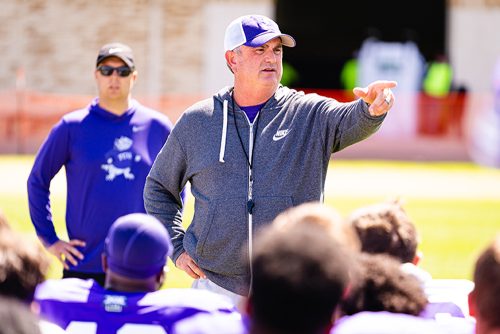
    Bringing experience from coaching in a handful of conferences, Coach Dykes said he chose TCU because of alignment at the top and support from the community. The former SMU coach will focus on acquiring talent, developing players and building culture.

    TCU football spring game at Amon Carter Stadium in Fort Worth, Texas on April 22, 2022. Photo by Gregg Ellman

    Coach Sonny Dykes has worked with hundreds of football student-athletes through his career. Courtesy of Ellman Photography

    Why is TCU for you?

    Number one is alignment and support. At the top with Chancellor Victor J. Boschini, Jr. and Jeremiah Donati, they are incredibly aligned in terms of what they want TCU Athletics to look like, specifically football. They’re both supportive and have made significant investments in football: We have beautiful facilities; our student-athletes have great access to everything they need to become better players and perform better in the classroom. The alignment and the university’s commitment to football and to the student-athlete are where it begins for me.

    The city of Fort Worth and TCU have done an incredible job of working together. That true partnership was attractive to me. Even though greater Fort Worth is the 12th largest city in the country, it’s still a college town at heart. TCU is really the only show in town.

    It’s a great time to live in Fort Worth. From a family standpoint, it just felt like it was the right move for us.

    I’ve had some success in Dallas at SMU, and when that happens to you, a certain level of comfort and complacency sets in. I’ve always tried to make sure we don’t become complacent. I wanted to see if my model of football would work at the very highest level — at TCU in the Big 12 — as we compete against some of the best universities in the country.

    Was TCU’s position in the Big 12 a factor in your decision to work here?

    A big part of it. That was very appealing. Having grown up in Texas, I think the Big 12 Conference is really representative of Texas college football. We have the opportunity to compete against some of the old rivals dating back to the Southwest Conference days. Those natural rivalries have really flourished in this league.

    Even with the changes coming, I think the league is incredibly well-positioned to continue to get stronger and stronger. The Big 12 Conference is the premier league in college basketball now. I think it’s going to continue to become one of the premier leagues in college football.

    The resources that come with being in the Big 12, from a financial standpoint and a fan base standpoint, are so different than being in another conference.

    How do you see the next few years playing out in the Big 12 Conference?

    A lot of changes are coming. I don’t think that any of us really know what it’s going to look like, which I think is good. Sometimes you can get caught up in that. Your focus needs to be the 6 inches in front of your own face: making sure you’re doing everything you can to improve your program, continuing to recruit and acquire talent at the very highest level, developing that talent and creating a great culture.

    The three keys to success are talent acquisition, player development and the culture that sustains those two things.

    What does that actually look like?

    It’s recruiting 24/7. Fortunately, we’re in a great metropolitan area that I think has the best high school football anywhere in the world. We’ve been able to recruit locally, which is going to be critically important to us as we continue to grow our brand. Being known as DFW’s Big 12 team is important for us. It means gaining not only the support of TCU fans, the metroplex and the state, but also college football fans. People who might have gone to another institution, we want to make sure that if they live in DFW that they’re coming and supporting their local team.

    What about nationally?

    It begins by recruiting in our own backyard and recruiting in the state of Texas. Some of the more national things will take care of themselves as our brand grows. It’s like anything else — you’ve got to be successful. Our goal is to win as quickly as possible and continue to improve our roster year-round, every single day. We try to find a creative way to improve, to find players, to get guys here, to trim the fat in the roster. As we do that, the brand becomes more appealing; as the brand becomes more appealing, your reach becomes a little bit greater and more significant.

    Coach Sonny Dykes stands in front of the TCU football team.

    “We feel like we’re constantly having an opportunity to teach,” says Sonny Dykes. Courtesy of TCU Athletics

    From your experience at Navarro College, what kind of perspective advantage do you think you have regarding the transfer portal?

    I’ve seen it from every different angle. Coaching not only at a junior college, but coaching in the SEC, Pac 12, WAC, American and the Big 12 conferences, I’ve had a chance to see a lot of different perspectives. A great feather in our cap is being a great institution — getting a degree from TCU is very meaningful. That certainly appeals to older players and graduate transfers. When you start talking to student-athletes about having an opportunity to get a degree from TCU, that moves the needle. We’re constantly trying to sell the academic strength of this university.

    When it comes to recruiting, our players are the best salesmen that we have because they have great experiences going to school here.

    You were an English teacher early in your career. Do you still feel like you’re in that role?

    I feel I teach life in a lot of ways. Our students come from so many different backgrounds. We’re trying to get all the people to come together and to sacrifice for each other. We feel like we’re constantly having an opportunity to teach.

    One lesson we try to teach more than anything else is to try to put yourself in other people’s shoes. Each student views the world differently based on their background. Perspectives are valuable and need to be respected. We try to get them to take more of a worldview on issues, step outside their comfort zone and change their perspective.

    How are you balancing that desire to shift to a bigger perspective as a team in this era of name, image and likeness rules?

    It’s hard. We’re telling our guys the most important thing is the team. We all want to make sacrifices for the team, and that begins with me. None of this is about me; it can’t ever be about me. We talk to our coaches about that all the time — about the importance of working together and being collaborative — because our players pick up on that. It’s hard when the world is saying “get yours,” “get what you can.” At the same time, there’s that whole idea of sacrificing for each other. But I do think those two ideas could coexist. There’s a time and a place for everything, and student-athletes, in my opinion, deserve a lot of the things and a lot of the opportunities that they’re being afforded now. At the same time, there’s danger to the team concept.

    “This is TCU’s team. This team belongs to the alumni, to the student body and to the players.”
    Sonny Dykes

    Part of our job as coaches is to manage our players’ expectations when it comes to opportunity. We want our players to feel like they’re being compensated, but at the same time, we want to build the strongest team culture that we can.

    What is the vision?

    We talk about accountability, about being accountable to each other. We all have a job to do, and to do our job the very best we can. The standard of excellence is really where it starts. We tell our student-athletes: If you can make an A in a class, it’s really important that you make an A. The idea of getting by doesn’t need to exist. We want to try to achieve at the very highest level that we’re capable of achieving, whether it’s in the classroom or in their interactions with each other and with fellow students.

    We talk about investing in each other. When the players are so invested in each other and in the program that they begin to coach and inspire each other, the true magic starts to happen. That’s when success starts.

    TCU football coach Sonny Dykes at Amon Carter Stadium in Fort Worth, Texas on November 29, 2021. Photo by Gregg Ellman

    TCU Chancellor Victor J. Boschini, Jr., Director of Intercollegiate Athletics Jeremiah Donati, Coach Sonny Dykes and family were welcomed by a crowd at Amon G. Carter Stadium. Courtesy of Ellman Photography

    Will your family be attending games?

    Oh, yeah. The kids have already been to basketball games and football practices. One thing I love about being in higher education is that you feel like you’re part of a big family. Having a chance to support the other sports is a lot of fun. It’s really fun to see other sports have success. It’s fun to go share in those victories and invest in the university. There’s so much going on at TCU and so much to be excited about. I think it’s really inspiring for our kids.

    You can feel the energy walking into Amon G. Carter Stadium. You can feel the love from the students that they have for this university.

    Will your kids be Bleacher Creatures?

    Without a doubt, yes. My youngest son is 5. He’ll definitely be the most excited guy to be out there running the field before the game.

    You’ve opened practice to media and to spectators. Why is that something you chose to do?

    No. 1: This isn’t my football team. This is TCU’s team. This team belongs to the alumni, to the student body and to the players. We want them to be able to see it and be a part of sharing in those experiences.

    The second thing is that I’m really proud of the way we run our program. We want people to see our guys practice — to see how hard they work, how unselfish they are, how much they invest in each other. I want people to see how our coaches engage players, try to motivate them and try to improve.

    The third thing is when fans have a chance to come to practice and be around these young people, they’re always incredibly impressed with what kind of character they have, how hard they work, how much they sacrifice for each other. That’s how supporters are born. Name, image and likeness opportunities come to players when business owners come to practice and find out how impressive they are as young people — their character and work ethic. They’re going to want our athletes to represent their brand.

    Who is your favorite coach?

    It’s probably a pretty lame answer, but I’d say my dad.

    TCU football coach Sonny Dykes at Amon Carter Stadium in Fort Worth, Texas on November 29, 2021. Photo by Gregg Ellman

    Coach Sonny Dykes arrived at Amon G. Carter Stadium via helicopter on November 29, 2021. Courtesy of Ellman Photography

    Spike Dykes is a Texas Tech legend.

    I got a chance to watch him in his career. I had a real appreciation for the relationships he made with the players, fans and staff. He was a really, really good football coach, but he was great at relationships.

    Who else has influenced you in your career?

    My Coronado High School baseball coach, John Dudley — I was impressed with what kind of man he was. He had a tremendous work ethic — was always consistent, never wavered. That made a big impression on me as a high schooler.

    In football, I was lucky to work with Hal Mumme and Mike Leach, two outside-the-box thinkers who had a lot to do with my development as a football coach. They had unwavering confidence in our system and believed if you did things the right way that there was a pot of gold at the end of the rainbow.

    You were on the coaching staff at Arizona when Rob Gronkowski was on the team. Did you stay in contact?

    We’re still talking fairly regularly. He’s had a great career. I’m proud of him. He’s an interesting character. He’s just like he looks in real life. He’s a super fun guy to be around.

    Your arrival at TCU was a big event. Whose idea was the helicopter?

    Certainly not mine. I’m a little bit more low-key than that. I thought that it was creative and cool. My kids thought it was awesome.

    — Trisha Spence

    Editor’s Note: The questions and answers have been edited for length and clarity.

  6. Lessons From Teacher Pensions

    2 Comments

    Even before Covid-19 burnout prompted some teachers to retire earlier than they’d planned, Dongwoo Kim had been researching how better retirement savings options could stem such career departures.

    Kim, an assistant professor of economics, has co-authored three recent peer-reviewed papers on how pension plans help — or hurt — the retention of public employees.

    The pandemic has made Kim’s research more relevant. From August 2020 through February 2021, midyear retirements surged 44 percent in Michigan public schools over the year-earlier period, according to state data reported by Crain’s Business Detroit. In Texas, early retirements of teachers, support staff and administrators rose 28 percent for the September 2020 to May 2021 period, compared with the previous school year, state data show.

    Most teachers participate in state-managed pension plans, which provide regular, defined benefits after retirement, but 40 percent are excluded from collecting Social Security benefits.

    States usually have one pension plan covering educators and support staff. For retention, that means a retirement plan is unlikely to keep a teacher from jumping in-state to another district. On the flip side, participating in a state retirement plan may dissuade some teachers from pulling up stakes for another part of the country, Kim said.

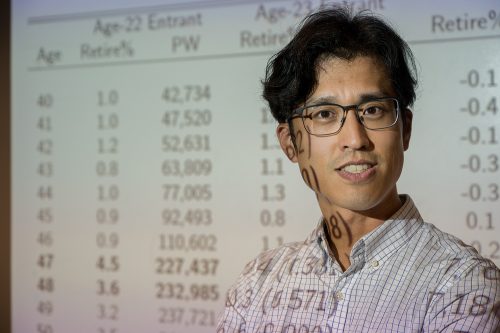
    Dongwoo Kim, assistant professor of economics in TCU's AddRan College of Liberal Arts, discusses his research into correlations between public employee pension plans, salaries and employee retention. Photo by Leo Wesson, October 19, 2021

    Dongwoo Kim, assistant professor of economics, said fewer teachers lead to bigger workloads for those who remain and reduce educational services for students. Photo by Leo Wesson

    Kim examined state teacher pension plans from 2001 to 2015 to see how well their investment portfolios weathered ups and downs over time. In many cases, plan managers, feeling increased confidence from boom times, overestimated the rate of investment returns and found they could not meet their financial obligations.

    State plans can increase benefits to adjust for inflation but not reduce them. To stem the financial losses, some states created tiers, which offer lower benefits for newly hired teachers while keeping better benefits for veteran teachers.

    Education authorities responded to the instability of pension funds not by reducing teacher salaries but by culling the workforce. As a result, “salary expenditures are reduced when pension costs rise,” Kim and his co-authors wrote in the 2021 article “The Trade-Off Between Pension Costs and Salary Expenditures in the Public Sector,” published in the Journal of Pension Economics and Finance.

    Fewer teachers lead to bigger workloads for those who remain and reduce educational services for students, Kim said.

    In another 2021 study, Kim explored nontraditional benefits that might keep public school educators in the classroom longer. Most U.S. districts are required to participate in their state’s pension plan for teachers, so administrators are restricted from experimenting with alternate retirement plans.

    Kim and his co-authors focused on how late-career incentives, including cash bonuses and deferred-retirement option plans, might persuade high-need teachers — like those in science and mathematics — to keep shaping young minds.

    They tracked 2,131 Missouri science and math teachers between ages 48 and 65 for three years starting in 2011. Their study projected that a $30,000 bonus to educators in their 31st year of employment would triple the number of teachers postponing retirement versus a $10,000 incentive.

    Several states offer a deferred-retirement option, which permits teachers to collect their regular salary along with their pension, which is put into escrow while they are working. But in every case that the researchers reviewed, those options were not targeted to encourage specialized teachers to stay in the classroom.

    Kim has proposed research on how providing Social Security benefits to Texas public school educators would affect the state’s teacher labor market.

    Kim said he hopes his economic research will lead to improved retirement savings options and serve the public good.

    His pension research struck a chord with Ryan Peterson, a journalist-turned-public schoolteacher now working on a doctorate in curriculum studies at TCU. “Kim’s research on predicting how a late-career bonus would help entice teachers to stay in the field is definitely eye-catching and something I think many teachers would like to see implemented,” Peterson wrote in an email.

    “To be rewarded with a shaky-at-best future is disappointing to say the least. It will be continually hard to retain strong teachers and recruit competent new teachers to the craft until we start placing educators on the same compensation level as doctors and lawyers,” Peterson said. “Well-funded pension systems are a step in the correct direction.”

    Kim is interested in exploring other ideas on teachers and pensions, such as how offering both Social Security and a state pension plan might affect attracting and retaining teachers. 

  7. Closing the Covid Vaccination Gap

    Leave a Comment

    Throughout the Covid-19 pandemic, Jie “Jackie” Zhuang has been puzzled about why so many Black Americans appear reluctant to get vaccinated even though they have been disproportionally impacted by the virus.

    “I need to make sense of what I see on TV every day, hear on the news and see in people around me,” said Zhuang, an assistant professor of communication studies at TCU. “The vaccine is an effective tool and has been made widely available to the public. So, what is the problem? What’s missing in health communication?”

    The answers, she said, lie in delivering the right messages through the right messengers to persuade a population inclined to mistrust the health care system.

    While Black Americans face about the same odds of getting Covid-19 as white people, they’re roughly three times as likely to be hospitalized and twice as likely to die, according to the U.S. Centers for Disease Control and Prevention. And as more transmissible variants such as delta and omicron have surged, hospitalizations and deaths have risen mainly among unvaccinated people.

    Low vaccination rates hurt efforts to achieve broad protection nationwide and exacerbate racial health disparities and the virus’s greater impact on people of color.

    Preliminary results of Zhuang’s study show Black adults perceive a low prevalence and low social acceptance of Covid-19 vaccinations in their immediate social circles and among all Black Americans. But perhaps the biggest surprise, she said, were indications they were more likely to get vaccinated if their family doctors supported it.

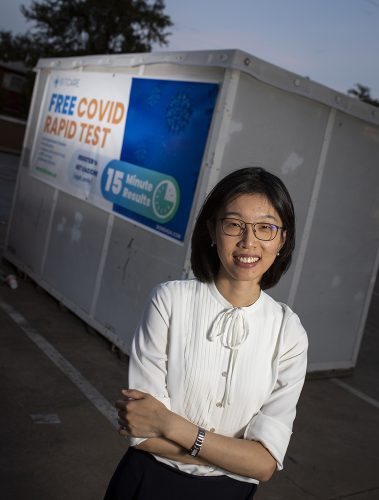
    Jie Zhuang, assistant professor of communications studies is researching the acceptance of Covid vaccine in the African-American community. She is posing at a sign, in Fort Worth, advertising free Covid testing.

    Jie Zhuang, assistant professor of communication studies, is researching the acceptance of the Covid vaccine in the Black community. Photo by Rodger Mallison

    “We focus a lot on media reports and CDC alerts, but I think we probably unintentionally neglected the role played by family doctors,” she said. “While it’s important to have a large-scale, message-based intervention, our health care providers need tools to initiate a conversation with their patients.”

    A Legacy of Mistreatment

    Many Black Americans have long mistrusted the health care system because of past medical racism, as illustrated by the case of Henrietta Lacks and the Tuskegee experiment, in which the U.S. government studied syphilis among 600 Black men from 1932 to 1972 without telling them of their illness or treating them for it. In the Lacks case, doctors took cells from her without her consent shortly before she died of cervical cancer in 1951. Lacks’ cells have been bought and sold to use in medical research.

    While history cannot be ignored, more recent incidents and personal experience may be larger factors in explaining current medical skepticism and vaccine hesitancy. In a 2020 Facebook video that went viral, Dr. Susan Moore of Indiana accused her doctors of withholding Covid-19 treatment and pain medication because she was Black. “I put forward and I maintain, if I was white, I wouldn’t have to go through that,” she said in the video. Moore died later that year.

    As of mid-July 2022, 10.1 percent of Black adults were fully vaccinated against Covid-19 and 10.3 percent had received at least one dose, according to CDC data.

    Getting the Message Across

    For her study, Zhuang surveyed the same group of unvaccinated Black adults nationwide three times in 2021. The first survey in early June included over 1,200 people, the second was roughly 400 people in early July, and the third included about 260 people in late July. She received a TCU Invests in Scholarship grant of $20,000 to help fund the research.

    Collecting data from the same group of people over multiple points in time “will always provide more and better information than a one-time, cross-sectional survey,” said Paul Schrodt, the Philip J. & Cheryl C. Burguières Professor of Communication Studies at TCU and Zhuang’s mentor. “The thing that has impressed me the most about Jackie’s research is her thoughtfulness, precision and care of how she thinks through all aspects of research and design.”

    Zhuang’s research found that changing people’s perception of social acceptance may affect their behavior, but who delivers health messages and what the messages are can be crucial.

    Personalizing easy-to-understand information may be more effective than supplying blanket information or comparing them to other racial/ethnic groups, she said.

    Karen Lincoln, founder of Advocates for African American Elders and an associate professor of social work at the University of Southern California, agreed.

    COVID-19 vaccines waiting to be administered during a drive-through vaccine clinic held at TCU.

    Covid-19 vaccines waiting to be administered during a drive-through vaccine clinic held at TCU. Photo by Mark Graham

    “It’s very important to tailor health messages to certain groups based on culture, ethnicity, race, language and literacy levels,” Lincoln said. “We need to focus more on crafting the message and who the messenger is.”

    Useful Information

    Mary Bresnahan, a professor emeritus in Michigan State University’s department of communication who advised Zhuang on her master’s and doctoral degrees, said Zhuang is on track to be a leading health communications scholar.

    “She commands a range of analytical skills and a deep understanding of statistics” to interpret large pools of data, said Bresnahan, who has collaborated often on research with Zhuang. “No stone goes unturned when working with Jackie. In scholarly research, that’s a good thing.”

    Zhuang said she hopes to expand her Covid-19 research to a larger database or further explore the doctor-patient relationship.

    In other research, Zhuang tends to tackle practical topics that are useful to the public, not just other academics, such as misperceptions of how HIV spread in her native China, Michigan residents’ perceived risks of dioxin pollution, stigmas toward veganism and various aspects of breastfeeding.

    “I don’t want my research to stay in the journal,” she said. “As a health communications scholar, I’m not as interested in changing people’s attitudes as changing their behavior.”