
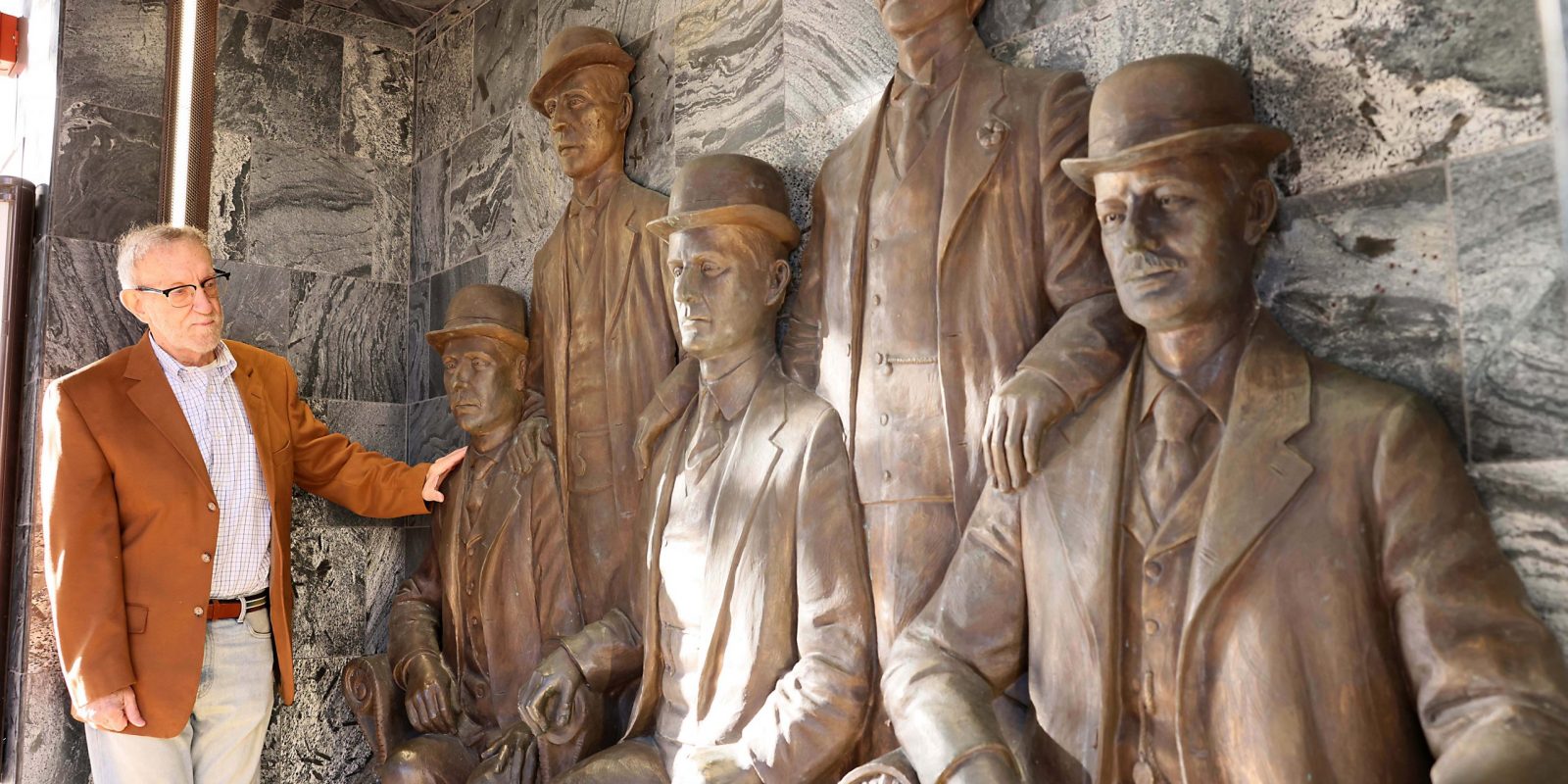
Texas historian Richard Selcer has spent decades uncovering Fort Worth’s hidden stories.
Discovering Fort Worth’s History with Richard Selcer, Who Wrote the Book on Hell’s Half Acre
Richard Selcer ’80 PhD may be the most important Texas historian you’ve never heard of. Selcer has written more than a dozen books that dig deeply into the region’s past, from Texas frontier history to notable Fort Worth characters.
Over the last half-century, he has also achieved an impressive, peripatetic career in education, and treasured every moment.
“My motto may have been, ‘have degree, will travel,’ ” Selcer said. “I followed the opportunities where they led me. I learned something everywhere I taught and tried to contribute meaningfully at every educational post I held.”
Teaching, Near and Far
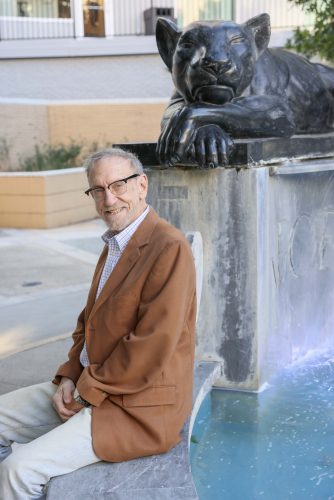
Richard Selcer earned a star on the Texas Trail of Fame in 2024 for his contributions to regional history.
Selcer’s early teaching posts include serving as a history professor at Jarvis Christian College in Hawking, Texas, which is among the nation’s historically Black colleges and universities. Selcer next headed the history department at Yankton College in South Dakota, and served as the academic dean of the all-women’s Cottey College in Nevada, Missouri.
Though an American historian, Selcer taught critical thinking, philosophy and international relations in Vienna, Austria; Kyiv, Ukraine; Bratislava, Slovak Republic; and Pravetz, Bulgaria; over the course of two decades. Meanwhile, he also taught as an adjunct history professor in the U.S.
“I split my time teaching in the States with lecturing abroad. It continually informs my perspective,” Selcer said. “My academic stints stateside have been varied and also uniquely rewarding.”
His educational endeavors have been characterized by spontaneity and pluck. Selcer once took a group of students from Austin College to Williamsburg, Virginia, to study colonial history, and wound up chaperoning them to the inauguration of President Richard Nixon. He also led a dozen undergraduates overseas to study the great capitals of Eastern Europe in person — Vienna, Budapest and Prague.
“Seeing a lot of the world gives you multiple perspectives and broadens your understanding,” Selcer said. “It’s rewarding personally and professionally, and it adds depth to what one has to offer in front of any classroom.”
Since 2018, Selcer has taught popular music history classes for TCU’s Silver Frogs, a continuing education program for adults over 50.
“I have about nine or 10 different courses focused on different types and eras of music — with audio-video accompaniment,” Selcer said. “They always fill up.”
“He had the credentials to do the typical, big university stuff,” said Tim Taylor ’73, one of Selcer’s childhood friends. “But he’s always been focused on the Fort Worth locale. He could have gone a lot of places for his postgraduate work, but he decided to return home and complete it at TCU. And, from the beginning, he took a very focused approach rather than using broader strokes of the brush.”
Think Globally, Write Locally
Selcer’s first book, Hell’s Half Acre, published by the TCU Press in 1991, delves into the bawdy truth behind Fort Worth’s late 19th-century red-light district, a favorite haunt of Butch Cassidy, Wyatt Earp, Doc Holiday, Bat Masterson and other Wild West figures.
At publication, a Capital Times reviewer wrote, “Selcer successfully separates fact from fiction, myth from reality. … Hell’s Half Acre is far more than just local history. It is a gripping microcosm of the American past, warts and all.”
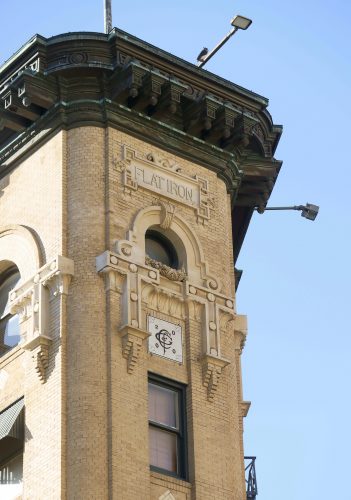
Selcer leads walking tours of downtown Fort Worth and the Stockyards to share the city’s lesser-known stories.
More than 30 years later, Hell’s Half Acre remains TCU Press’ all-time bestseller. Dan Williams, director of TCU Press and an honors professor of humanities, said it’s rare for a book to remain in print for multiple decades — and rarer still for one to remain a steady seller.
“TCU Press has happily reprinted copies multiple times. My colleagues and I are proud of the book and its author,” Williams said. “Combining a historian’s skill and a writer’s craft, Rick tells the engaging story of Fort Worth’s early days, when the railroad attracted a colorful array of saloons, gambling halls and bordellos. … I still recommend the book to anyone interested in early Fort Worth and/or the Wild West.”
Selcer hasn’t just focused on “warts” or obscure Lone Star history. For the last four decades, he has also traversed military history in books including Lee vs. Pickett: Two Divided by War (1998) and Civil War America (2006).
In 2015, Selcer published A History of Fort Worth in Black & White: 165 Years of African-American Life. Ronald Goodwin, a respected scholar at Prairie View A&M University, lauded it in The Western Historical Quarterly, calling it “masterfully” written.
“His examination of Jim Crow detailed the tenuous relationship between the city’s Black and white communities. The reader will immediately ‘feel’ the cultural tensions between the two and gain a surprising glimpse into a seldom-seen aspect of Black life that is too often ignored by outsiders,” Goodwin wrote. “The use of city directories, census data and personal letters reinforce the commitment by Fort Worth’s Black community to achieve social and political equality, often at great personal challenges.”
In Service to History
Selcer’s books are complemented by work that’s etched in bronze. He served on the Tarrant County Historical Commission from 2006 to 2023 and worked on the narratives of several monuments around the city, including a marker commemorating Cowtown’s first Black policeman, Hagar Tucker, and a marker and statue for the last chief of the Comanche Nation, Quanah Parker.
“Look at what he’s been able to do, what he’s written about,” said Clara Holmes, who served with Selcer on the commission. “He’s really the go-to person for any history in Tarrant County.”
In 2023, Selcer returned, again, to TCU Press, with Fort Worth, Texas, That’s My Town! A Young People’s History. The book — the first children’s history of Cowtown since 1967 — received a Will Rogers Medallion Award for “Best Non-fiction Illustrated for Young Readers.”
Selcer’s cumulative contributions to regional history earned him a star on the Texas Trail of Fame, located in the Fort Worth Stockyards National Historic District, in 2024.

“There are a million stories out there,” says Richard Selcer, whose “Hell’s Half Acre” remains TCU Press’s all-time bestseller more than 30 years after publication.
“What he’s done, no one else has done,” Holmes said. “He continues to go where others fear to tread, even when he knows he’ll take some licks. He cares, and people respect him.”
Selcer is currently doing research for More Fort Worth Stories, a follow-up to his 2021 spotlight on noteworthy Cowtown residents and visitors.
“I try to find ground that hasn’t been plowed,” Selcer said. “There are a million stories out there. I was very fortunate to stumble upon some that let people know a little bit more about where they live.”
Your comments are welcome
1 Comment
ER…I love your article…YOU GOT IT RIGHT…thank you for creating a story that really reflects my friend and mentor. Would love to meet with you and of course the Professor and chat.
Clara Ruddell Holmes
Related reading:
Features
A Look Inside Special Collections
The library’s vault of historic writings and artifacts chronicles the history of TCU and Fort Worth.
Features
A New Story on Ancient Land
TCU’s Native American and Indigenous Peoples Initiative builds curiosity, knowledge and relationships.
Features, Research + Discovery
Cecilia Hill Brings Awareness of Mexican American History to Fort Worth Schools
Texas schools have an opportunity to embrace a culturally diverse history curriculum.