
Student Researchers at TCU Take On Real-World Problems
TCU graduate students are tackling impactful research on topics ranging from heart disease genetics to deepfake cyberbullying.
Student Researchers at TCU Take On Real-World Problems
TCU graduate students are tackling impactful research on topics ranging from heart disease genetics to deepfake cyberbullying.
WHY DOES A HEART BREAK?
By studying DNA, a medical student hopes to reveal how inflammation and immunity shape heart health.
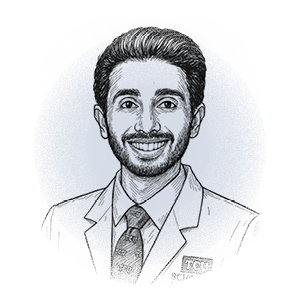
Parminder Deo
Cardiovascular disease is the world’s leading cause of death, claiming an estimated 18 million lives each year. It disproportionately affects South Asians.
In fact, “South Asian individuals have among the highest per capita rates of cardiovascular diseases when compared to other groups around the world,” said Dr. Mohanakrishnan Sathyamoorthy, academic chair of internal medicine at the Anne Burnett Marion School of Medicine at Texas Christian University and a practicing cardiologist.
Exactly why South Asians are at greater risk remains unclear, making early diagnosis and targeted treatment a challenge. That’s why third-year medical student Parminder Deo has made it his mission to uncover a genetic explanation. Through a community-based clinical study, he is analyzing blood samples from South Asians in North Texas to search for patterns that could offer lifesaving insight.
Sathyamoorthy, who serves as Deo’s mentor through the Scholarly Pursuit and Thesis program, added: “We are proposing that a specific group of variants in these ‘cellular orchestrators’ of atherosclerosis [when plaque buildup damages arteries] are far more prevalent in South Asians than in other populations.”
One key genetic variant may send out signals that trigger an overreaction in the immune system, potentially leading to inflammation, clotting and other complications. If the study confirms such a link, clinicians could begin diagnosing and treating patients before cardiovascular disease takes hold.
Outside the lab, Deo is also engaging the community through educational outreach and screening events.
“There are three things I am really passionate about: community, cardiology and communications,” he said. “Those three C’s have been my guiding force in medicine.”
— Nicholas J. Ferrandino
THE INJURY GAP
A medical student tests whether a training method for male athletes works for women, too.
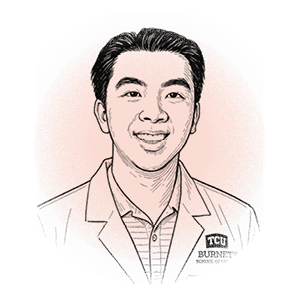
Davis Le
Davis Le, a second-year student at TCU’s Burnett School of Medicine, is studying whether a specialized warmup routine can help reduce concussions and other injuries in female athletes.
The method, known as proprioceptive neuromuscular facilitation, is widely used in professional sports as both a rehabilitation tool and an injury prevention strategy. Organizations such as soccer’s FIFA incorporate it into training programs.
“Proprioceptive neuromuscular facilitation has to do with the mind-body connection,” Le said. “You put your body into the positions where injuries are likely to occur to train your mind on what could happen.”
One example is the ACL tear, a common knee injury in soccer. With this training technique, players rehearse intentional knee movements and stretches during warmups, mentally preparing themselves for the kinds of actions that could cause damage.
“It has been fairly well studied in male athletes that this method can be beneficial for lower extremity injuries as well as helping prevent concussions,” said Dr. Michele Kirk, TCU Athletics’ team physician and Le’s faculty mentor. “But there have been no studies on its effectiveness for female athletes yet.”
That gap in research is widespread. A 2022 systematic review found that only 9 percent of sports medicine studies prioritized women, and just 20 percent included them at all. Because physiological differences between men and women can affect injury risk and recovery, findings from male-focused studies cannot always be applied to women with confidence.
Le said he hopes his project will help close that gap. “We want to see if implementing these warmups for female athletes will show the same reduction in the rate and severity of injuries as it does for male athletes.”
— Nicholas J. Ferrandino
ANTS AND PLANTS
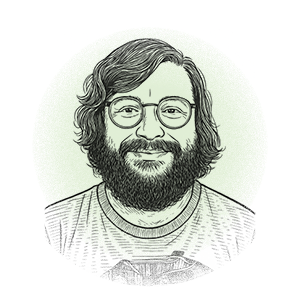
Spencer Levings
An insect intruder is shaking up the food web on North Texas prairies, and a PhD student is documenting how.
Spencer Levings, working on his doctorate in biology, is investigating how red imported fire ants (Solenopsis invicta) are disrupting an ancient partnership between native ants and a local wildflower. Red imported fire ants, an aggressive invasive species from South America, have fewer natural enemies to keep them in check and are able to thrive under human disturbance.
Levings studies under Annika Nelson, assistant professor of biology, whose lab investigates mutualisms, relationships where both species benefit, particularly those involving insects, plants or microbes.
The threatened partnership involves the partridge pea plant (Chamaecrista fasciculata), which secretes sugar-rich nectar on its leaves to lure native ants. In exchange for this reward, the ants become bodyguards, attacking herbivores like caterpillars and grasshoppers that would otherwise devour the plant.
Enter the fire ants, now competing with native ants for that same nectar.
To understand how the invaders are reshaping the relationship, Levings established study sites at Elmer W. Oliver Park in Mansfield, home to a thriving partridge pea population.
Levings poisoned fire ant colonies in some plots while leaving others untouched. He used pitfall traps and sugar baits to measure ants’ abundance and measured the fitness of plants by counting their flowers and seed pods.
Then came the surveillance. Levings documented which ants visited the plants, tallied attacking herbivores and measured leaf damage. Levings’ research could reveal an ironic twist: Because fire ants are more aggressive than most native ants, Levings expects partridge pea plants might fare better when fire ants are present. If the invasive ants drive away native ants, “I imagine they would have the same impact on herbivores that would damage the plant.”
Partridge pea plants thriving under fire ant guard duty could aid the invaders’ spread, threatening native ant diversity. Such a change may also affect other species in the ecosystem. Partridge pea is “also an important food source for other ants,” Levings said, “and species of birds and field mice that eat their seeds.”
“Understanding the impacts of invasive ant species on ant-plant mutualisms may inform conservation efforts of native prairies in North America,” Nelson said, “and help us to understand the potential impacts of invasive species on native prairies in North Texas.”
— Camilla Price
FALSE REALITIES
A former teacher examines fake images that create real trauma for students.
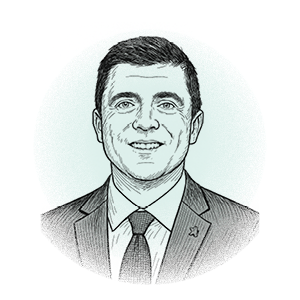
Sergio Alexander
Sergio Alexander, a doctoral student in educational leadership and a former middle and high school teacher, has witnessed how quickly cyberbullying has spread in schools.
His research focuses on deepfake cyberbullying, which involves AI-generated images and videos that, while bogus, are highly realistic, portraying students in embarrassing, harmful or even criminal situations — often of a sexual nature.
Likes, reactions and shares can cause false content to spread to millions of people within days, Alexander said. Even if the content is later proven to be false, the emotional and social harm has often already occurred. The psychological trauma, he said, is deeper for teens than adults because of how intensely they perceive cyberbullying. Effects can be severe, sometimes leading to depression and suicidal thoughts.
While conducting his research, which included reviewing legal cases, district policy analyses, previous studies, news articles and social media stories, Alexander found that K-12 schools are largely unprepared to deal with the problem. Deepfake cyberbullying can start as early as fourth or fifth grade and peaks in middle and high school. Many schools lack the knowledge, training and funding to properly address this type of harassment.
“Schools need to realize that it’s not some sort of science fiction that is going to happen. It’s actually happening now, and it’s getting worse and worse,” Alexander said.
After combing through hundreds of school district policies in search of any language addressing deepfake cyberbullying, Alexander was surprised to find how few schools even acknowledged the issue in their bylaws. He underscored the need for training so that staff and counselors can recognize deepfake technology and understand the proper steps for responding to it.
“His focus on strategies that empower both students and educators to navigate the evolving digital landscape in response to AI-driven harassment demonstrates a proactive approach to maintaining a safe educational environment,” said Nishala Silva, TCU assistant director for institutional effectiveness and one of Alexander’s supervisors. “Schools also have to invest in media literacy,”
Alexander said, “because really one of the first or best things we can do is to actually teach students not to believe everything they see online.”
— Addison Thummel
HIDDEN STORIES
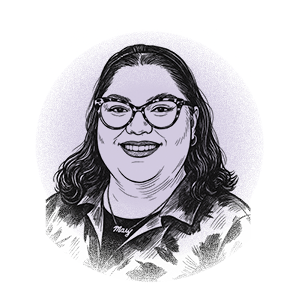
Riley Ford
A footnote in history inspires a PhD researcher to delve into war brides.
While reading a book on World War II, Riley Ford, a PhD candidate in history, was inspired by a footnote about war brides. A full-page spread about bride schools in Stars and Stripes, a military newspaper, drew her in even more.
As part of her dissertation, Ford is examining the impact of gender, race, identity and immigration on post-World War II Japanese and Korean war brides and their lives in the United States. Many of these women met American servicemen stationed overseas; the women later immigrated, often facing isolation and struggling to find community as they adjusted to their new homes.
“Riley’s research reminds us that even in the midst of massive, global events like war, history is always about people — and often people whose stories remain untold for many years,” said Kara Dixon Vuic, Ford’s faculty adviser and the Lance Cpl. Benjamin W. Schmidt Professor of War, Conflict and Society in 20th Century America.
In her research at the National Archives in College Park, Maryland, Ford focused primarily on bride schools — an initiative between the U.S. military and the Red Cross that aimed to “Americanize” foreign wives.
During their time in the schools, the brides were taught how to cook, dress, speak and act to fit into American culture and community life.
Ford explored correspondence between the military and the Red Cross, along with reviewing newspapers, to piece together how these schools functioned, how many women graduated and how they were perceived not only by the public but also by the women who attended. She also sought to situate the schools in the larger context of military history and American culture.
The Army Heritage Center Foundation awarded Ford the 2025 Robert L. and Robert C. Ruth Fellowship, which allowed her to participate in a summer research program. During her three weeks there, she gained experience in archival research, reviewing newspapers from Army camps as well as personal papers.
“I want to be able to tell the story holistically,” Ford said. “I want to be able to really give a voice as much as possible to these women and put their story into the context of this larger history.”
Your comments are welcome
Comments
Related reading:
Research + Discovery
Facial Recognition Has Made It Nearly Impossible to Disappear
Sharrona Pearl explores the link between physical appearance and identity and how technology threatens privacy.
Research + Discovery
How AI Deepfakes and Bias Threaten Elections, Health Care and Public Trust
TCU researchers expose how artificial intelligence is spreading political misinformation, worsening medical disparities and eroding confidence in institutions.