

TCU researcher Don Thushara Galbadage investigates the gut-brain connection, exploring how intestinal bacteria influence neurodegenerative diseases. Photo by Rodger Mallison
How TCU Scientists Are Stopping the Body From Harming Itself
TCU researchers are on the trail of treatments for deadly fungal infections, Parkinson’s and more.
THE MICE SHOULD HAVE BEEN DEAD. Their immune systems were compromised. They’d inhaled a dangerous fungus. Yet there they were, thriving, even outliving genetically normal mice exposed to the same pathogen.
TCU Provost Floyd L. Wormley Jr. was baffled. When he and his then-PhD student Natalia Castro-Lopez examined the mice in their 2017 experiment, they confirmed that the infections had taken hold. The animals’ brains teemed with yeast.
Meningitis or meningoencephalitis — deadly brain infections — should have killed them. “But the [immunocompromised] mice lived,” Wormley said, “and you couldn’t even tell that they were infected. … We were kind of perplexed.”
WHEN LESS IMMUNITY MEANS MORE SURVIVAL
Wormley and Castro-Lopez had discovered a counterintuitive truth: Sometimes, weakening the immune system protects rather than harms.
Their experimental mice lacked 5-lipoxygenase, an enzyme that triggers inflammatory responses to Cryptococcus neoformans — a fungus that causes pneumonia and fatal brain infections, particularly in people with AIDS.
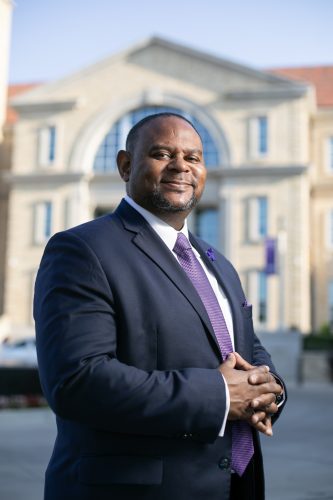
TCU Provost Floyd Wormley’s research revealed that blocking immune overreaction can protect against deadly fungal brain infections. Photo by Rodger Mallison
Wormley expected these mice to fare worse than normal animals. Previous experiments with other fungi had suggested as much. Mice without this enzyme had been more vulnerable, not less.
But with Cryptococcus it was different. Without the enzyme, the mice’s bodies were slow to launch the typical inflammatory assault. That turned out to be lifesaving. The usual response spirals out of control, causing brain swelling that kills quickly.
Normal mice given zileuton, an asthma drug that blocks the same enzyme, showed comparable protection.
The implication: Immune overreaction can be deadlier than the fungus itself. By blocking 5-lipoxygenase, zileuton could buy time for the body to mount a more measured defense.
Cryptococcus lurks everywhere, including in soil, decomposing vegetation and pigeon droppings. Typically, healthy immune systems handle inhaled spores easily. Specialized cells engulf and destroy the fungus or release chemicals that puncture its cell walls.
But when HIV or other conditions weaken immunity, Cryptococcus establishes itself in the lungs or brain. Treatment is difficult. Antifungal drugs typically used to combat these infections are somewhat toxic, and the fungus often resists them. Meanwhile, a runaway inflammatory response can damage tissues before medications can work, outpacing the body’s slower, more beneficial immune pathways.
Millions worldwide face this risk, including people with AIDS or certain cancers or those taking immunosuppressive medications.
BEYOND STEROIDS
Doctors have tried controlling inflammation before. But when researchers tested steroids to treat cryptococcal meningitis, an inflammation of the brain’s protective membranes, the steroids interfered with antifungal drugs. More patients died or suffered complications, Wormley said.
Zileuton offers something different. It doesn’t counteract antifungal medications or suppress other immune functions. And it’s already approved by the U.S. Food and Drug Administration and available.
Wormley said he hopes to see human trials soon. After two decades studying Cryptococcus, he would mark another major milestone in his research career. Wormley started his career at Louisiana State University Health Sciences Center in New Orleans researching Candida, the yeast behind common infections, and “fell in love with the fungal community.” While pursuing postdoctoral research at Duke University in 2011, he proved that a vaccine could protect even mice lacking T-cells, critical immune cells, from infection.
That research, he said, “actually led to proof of concept that vaccines could be produced to induce protection against this infection.”
What fascinates him is the intricate dance between host and invader. “Disease is not just what the host does or what the pathogen does,” he said. “It’s how they interact with each other.”
THE GUT-BRAIN CONNECTION
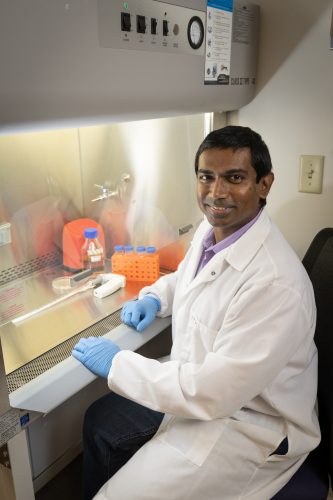
Don Thushara Galbadage studies how bacterial metabolic byproducts disrupt the cellular processes that keep neurons healthy, using worms as windows into brain disease. Photo by Rodger Mallison
That same principle of host-pathogen interaction may extend beyond infections. Microorganisms might influence neurodegenerative diseases too.
Don Thushara Galbadage, an associate professor in TCU’s department of applied health sciences, suspects intestinal bacteria contribute to the development of Parkinson’s and Alzheimer’s diseases.
Trillions of bacteria inhabit our digestive systems. Their metabolic byproducts include vitamins, gases, neurotransmitters and immune-modulating signals. Some may interfere with cellular housekeeping — the processes that neutralize toxins and clear abnormal proteins that otherwise accumulate and trigger disease.
Gut microbes influence how bodies regulate iron and copper, essential metals for mitochondria, the cellular powerhouses that energize neurons.
“It’s a fine balance,” Galbadage said. “When this balance is disrupted, mitochondria can generate excess oxidative stress, leading to the cellular damage we often see in conditions such as Parkinson’s disease.”
WORMS AS WINDOWS
Galbadage wants to understand how bacterial signals might disrupt mitochondrial metal regulation and damage brain cells.
He studies this using C. elegans, a microscopic nematode (a type of worm) favored by researchers for its well-mapped genome, transparent cellular structure and short lifespan.
He’s shown that exposure to a compound that causes oxidative stress shortens the worm’s life and that antioxidants — similar to vitamin C in humans — provide protection. (The compound he studied came from the lab of TCU chemistry professor Kayla Green.)
Next, he’ll expose worms to certain bacterial strains to identify ones that shorten lifespans in ways antioxidants can prevent. Then he’ll trace which compounds those bacteria produce and how they cause damage.
Understanding these gut-to-neuron pathways could reveal early intervention points for brain diseases.
People genetically predisposed to neurodegenerative disease might reduce their risk through targeted microbiome modifications.
It could be specific dietary changes, certain probiotics or even new drugs developed for high-risk populations, Galbadage said. “The goal is to intervene early, to stop the disease process before it starts or at least slow its progression.”
BUILDING TOMORROW’S SCIENTISTS
Both researchers emphasize training the next generation. It’s central to TCU’s strategic plan to pursue R1 research classification, the highest tier, within a decade.
“In everything I do, I want students, especially undergraduates, to be involved,” Galbadage said. “It’s about giving them firsthand experience and helping them appreciate why we do research. C. elegans’ short lifespan makes experiments feasible within an undergraduate timeline, and its biology often mirrors key aspects of human systems.”
Wormley celebrates the scholars — undergraduates through postdoctoral researchers — working alongside him.
“We do these studies because they’re to help our society from a biomedical and medical standpoint,” he said, but “what’s important is that it’s not just me in a laboratory doing this.”
The research enriches classroom learning and student experiences. “This quest for R1, it’s not just so we can say we’re an R1 institution.”
Your comments are welcome
1 Comment
Hi there to all, for the reason that I am genuinely keen of reading this website’s post to be updated on a regular basis. It carries pleasant stuff.
Related Reading:
Research + Discovery
TCU Professor Michael Faggella-Luby Reimagines Disability Support in Higher Education
New research and global collaboration are helping colleges improve outcomes for the 3.5 million American students with disabilities.
Research + Discovery
Director of Bands Bobby Francis Brings New Music and Opportunities to the TCU Wind Symphony
The director of bands reflects on 25 years at TCU, guest-conducting military bands and why respect matters as much as talent.