Menu

Author Archives: Caroline Collier

  1. U.S. Supreme Court Justices Use Social Science Research in Rulings

    Leave a Comment

    In criminal court cases, bigger is considered better.

    The assumption is a result of a 1978 case in which the U.S. Supreme Court relied on 25 evidence-based studies on the effect of group size on jury deliberations.

    In that case, Ballew v. Georgia, the court determined that a five-person criminal jury was unconstitutional, which turned the tide to allow for today’s 12-person juries. Justice Harry Blackmun wrote in the court’s opinion that “a criminal trial to a jury of less than six people substantially threatens Sixth and 14th Amendment guarantees” to a fair and speedy jury trial because research suggested smaller juries are “less likely to foster effective group deliberation.”
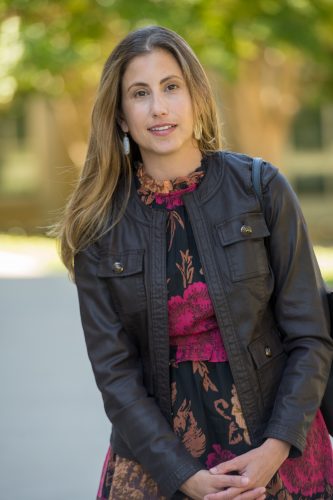
    Michele Meitl, associate professor of criminal justice in TCU's AddRan College of Liberal Arts. Professor Meitl's recent research focuses on how the US Supreme Court uses social science research when deciding issues of constitutional law. Photo by Leo Wesson, October 18, 2021

    In a 2020 study, Michele Meitl found that U.S. Supreme Court justices often use social science research to add credibility, transparency and accountability to their decisions. Photo by Leo Wesson

    For more than 100 years, the U.S. Supreme Court has been using social science research to support its decisions. Michele Meitl, an assistant professor of criminal justice, found that justices are using insights from psychology, sociology, criminal justice, economics and political science much more often in the 21st century.

    From 2001 to 2015, 40 percent of written opinions from the nation’s highest court included a nod to social science research, according to Meitl’s 2020 study, which was published in Social Science Journal. That’s up from 14 percent in 1990 and 10 percent in 1978.

    Realizing their decisions can have far-reaching impacts on Americans’ daily lives, the justices often turn to academic research to help them better understand complex issues and lend more credibility, transparency and accountability to their opinions, Meitl said.

    “They’re experts in law and precedent, but they may not be experts in brain development or [jury] deliberation,” she said. “They look to the outside world … to inform them of these things.”

    Justices have turned to academic research to support their views on issues like the risk of discrimination in the jury selection process and the ability of young people to understand their Miranda rights.

    In a 2005 ruling requiring police enforcement of restraining orders in domestic violence cases, the Supreme Court cited data from the Pace Law Review that mandatory arrests in New York City from 1993 to 1999 rose 114 percent for misdemeanor domestic violence, 76 percent for violation of protection orders and 33 percent for felony domestic violence.

    Meitl noted in the study that some justices even “took a trip to the law library to look at the difficulty kids might have getting onto inappropriate websites” in relation to an internet obscenity case.

    Far-Reaching Impact

    While Meitl analyzed written opinions only in criminal procedure cases, she said her findings on the relationship between research and law are relevant to all cases.

    To illustrate: In 1954’s landmark Brown v. Board of Education case, the Supreme Court opinion referenced several psychological studies that showed how racial segregation caused social and psychological harm to Black schoolchildren.

    In a 2021 free speech case, the concurring written opinion used data from the National Center for Education Statistics to support the court’s decision that a Pennsylvania high school’s disciplinary measures taken because of a student’s off-campus social media posts violated her First Amendment rights.

    During the current term, which ends in June 2022, the high court is reviewing Texas and Mississippi cases that could overturn much of Roe v. Wade, the 1973 decision affirming a woman’s right to abortion. If the justices rely on research to examine the impact of abortion restrictions, Meitl said, “they could use studies to show that more restrictions mean women may seek more dangerous methods.”

    She also said the U.S. Supreme Court has become more conservative since 2015, which may make a difference because “Republicans generally use social science less frequently.” 

    Her study found that Democratic justices, such as Stephen Breyer and Sonia Sotomayor, cited social science in 34 percent of their opinions, compared with 20 percent for Republican justices, such as Clarence Thomas and Antonin Scalia.

    A Different Point of View

    Meitl, a licensed attorney, worked for nearly a decade in the legal profession in Washington, D.C., including as a staff attorney for the American Bar Association’s Death Penalty Representation Project.

    “I knew I wanted to stay in that lane [for research] and look at courts and appeal,” said Meitl, who often visited the Supreme Court to listen to oral arguments. “I love the court.”

    Nicole Leeper Piquero, a professor of sociology at the University of Miami in Florida and Meitl’s dissertation chair while both were at the University of Texas at Dallas, said it’s rare for a criminal justice professor to also have a law degree. The combination allows Meitl to look at criminology in a fresh way and makes her good at asking questions, which is important to research, Piquero said.

    “She’s approaching the same question from different angles,” Piquero said. “She has a unique view to bring those worlds together. She sees both perspectives and how they can help each other.” 

    A Library for Law

    In 2020, Meitl delved deeper to examine what types of research justices cited most often.

    “Social science is always open to interpretation and building on studies to clarify something. With law, it’s precedent: This is how it was done in the past and how it should be followed.”
    Michele Meitl

    She found that every justice cited social science research at least once in 168 cases between 2001 and 2015. She also discovered the No. 1 type of research cited by justices appeared in law journals (37 percent), followed by peer-reviewed articles (24 percent), government reports (17 percent) and books (14 percent).

    Justices tend to rely more on law journal articles because they “are more comfortable” with that format, Meitl said. “That’s what they read in law school. … Many of the other citations we’re starting to see more of, the justices consider them to be more wishy-washy.”

    The Supreme Court can still be skeptical about the relevance of academic work to its rulings, Meitl said, citing 2017’s Gill v. Whitford. In that case, plaintiffs charged that a Wisconsin redistricting plan adopted by the state’s Republican-controlled legislature was unconstitutional because it unfairly favored the ruling party. During oral arguments, a lawyer implored the justices to use data analytics to show that such partisan gerrymandering could become a “more serious problem.”

    Chief Justice John Roberts called the attorney’s numbers “sociological gobbledygook.”

    “Social science and law are very different,” Meitl said. “Social science is always open to interpretation and building on studies to clarify something. With law, it’s precedent: This is how it was done in the past and how it should be followed.”

    Meitl’s research shines a light on how well academics and scientists communicate the validity of their research. But the jury still is out on whether Supreme Court justices will continue to rely more on research to support their decisions.

    For that to happen, Meitl said academic research must be more accessible to a wide swath of people. “Quality research is important and can make a big difference,” she said. “It’s important that we make it understandable and accessible to the outside world if we want it to have an impact on the court and policy.” 
  2. Extroverted CEOs May Make Investors Nervous

    Leave a Comment

    Whether quiet and conscientious or extroverted and egotistical, a CEO’s personality influences investor confidence.

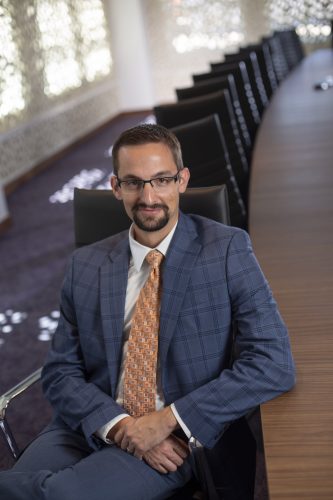
    Joseph Harrison, assistant professor of strategy in the Management and Leadership department of TCU's Neeley School of Business, photographed in the Neeley Building boardroom. Harrison's current research looks at how a CEO's personality influences investors and affects stock prices. Photo by Rodger Mallison, October 4, 2021

    Joseph Harrison, assistant professor of strategy in the management and leadership department of TCU’s Neeley School of Business, looks at how a CEO’s personality influences investors and affects stock prices. Photo by Rodger Mallison

    Joseph Harrison, assistant professor of strategy in the management and leadership department at TCU’s Neeley School of Business, theorizes that a CEO’s personality traits are linked to stock performance. He was lead author on a related study first featured in the Harvard Business Review and later published in the Academy of Management Journal.

    “We’re not saying there’s a direct relationship between personality and stock price,” Harrison said. “All we’re saying is there’s a relationship between how the market perceives an executive’s ability to translate risk into value and actual shareholder returns.”

    Harrison cited Elon Musk, the eccentric Tesla CEO who has spoken of nuking Mars. Market responses to Musk’s outlandish statements might not have anything to do with Tesla’s electric cars, but they could prompt investors to wonder if his actions create value for the company.

    “I think it can be a deterrent to investors: ‘Hey, this guy’s a little unstable. Maybe we shouldn’t be investing right now,’ ” Harrison said.

    Jon Maietta, founder of CEORater, agreed. “The key takeaway from Joseph’s study is that it is another data-supported effort that demonstrates that a given CEO’s personality affects company performance,” said Maietta, whose platform allows people to anonymously assess companies and their chief executives.

    Harrison said traditional economic theory tends to ignore the human aspect of running companies.

    He and his co-authors, Gary Thurgood of Utah State University, Steven Boivie of Texas A&M University and Michael Pfarrer of the University of Georgia, focused on the big five personality traits: Conscientiousness refers to the degree to which a leader exhibits dependability and cautiousness. Neuroticism includes emotional instability and impulsiveness. Extroversion means a person tends to be gregarious, ambitious and dominant. To a lesser extent, they evaluated a CEO’s openness to experience as well as agreeableness.

    To quantify their ideas, the researchers enlisted psychology doctoral students to rate about 200 CEOs on the five traits by watching videos of the CEOs in interviews or other public exchanges using the International Personality Item Pool, a well-established survey instrument. The validated scores were used to train an algorithm to assess those traits based on the CEOs’ spoken language during quarterly earnings calls with stock analysts.

    The algorithm analyzed more than 100,000 transcripts of CEOs speaking with equity analysts between 1993 and 2015.

    The researchers then linked those personality assessments to shareholder returns.

    “In financial markets, where every percentage point matters, the fact that any given trait on its own is associated with such a bump could be very meaningful for firms and investors.”
    Joseph Harrison, Gary Thurgood, Steven Boivie and Michael Pfarrer, in their Harvard Business Review feature

    On average, the firms of relatively more conscientious CEOs experienced 2.59 percent lower stock risk.

    Publicly traded corporations of more neurotic (relative to more emotionally stable) CEOs had 2.04 percent higher stock risk on average, and this increasing risk did not yield any returns, while returns of emotionally stable CEOs were 2.68 percent greater.

    And the more extroverted CEOs saw their firms experience 2.4 percent higher stock risk, with returns reduced 3.3 percent. At firms of their introverted counterparts, returns rose 5.43 percent when compared with companies led by those with extroverted traits.

    “In financial markets, where every percentage point matters, the fact that any given trait on its own is associated with such a bump could be very meaningful for firms and investors,” Harrison and his co-authors wrote in the Harvard Business Review.

    For an average firm in their sample — with a market capitalization of about $7 billion — a 2 percent to 5 percent change in return could mean $140 million to $350 million in value created or destroyed, they wrote.

    Publicly traded companies should avoid selecting highly neurotic individuals as a CEO, and they should also pay attention to extroverted candidates, who tend to be promoted to higher positions more than introverted rivals, the Review article concluded.

    Harrison’s findings suggest that introverts may manage risks better, which in turn inspires investor confidence.

    Key to the study was the Open Language Chief Executive Personality Tool, which Harrison developed with Alexander Gedranovich, a Belarusian machine-learning expert and programmer. The test crunches an executive’s spoken language that is observable to market participants. 

    Harrison had long suspected that some type of quantifiable explanation was missing in the quest to evaluate corporate performance. By linking CEO personality traits to shareholder returns, he is shedding new light on factors that might be moving the invisible hand in the market economy. 

  3. Summer 2022: Coming Soon

    1 Comment

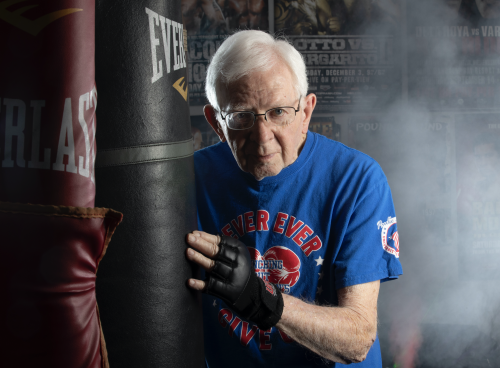
    Fort Worth-area people diagnosed with Parkinson’s disease are fighting their symptoms and building community while exercising with a world champion boxer. The exercise program, Punching Out Parkinson’s, is led by southpaw Paulie Ayala.

    “If they can change their perception, they can change what they can do,” Ayala said. “There’s no cure for Parkinson’s, but I don’t want them to have that frame of mind in my gym.”

    Joe Browder has been attending Paulie Ayala's Punching Out Parkinson's exercise classes for six years. Photo by Joyce Marshall

    Joe Browder has been attending Paulie Ayala’s Punching Out Parkinson’s exercise classes for six years. Photo by Joyce Marshall

    The group of boxers said they experience relief from disease symptoms, avoid upping medication dosages and feel their quality of life has increased. Chris Watts, the Marilyn and Morgan Davies Dean of Harris College of Nursing & Health Sciences, and a team of TCU researchers are putting data behind the boxing exercise program to quantify the results of attending the classes for one year. Through tests that mimic everyday mobility limitations for people with Parkinson’s, the researchers measure task performance to show whether or not boxing improves symptoms over time.

    Another feature story will highlight the influence of introverts in the work force. Though often overshadowed, they bring a deliberative quality to their work.

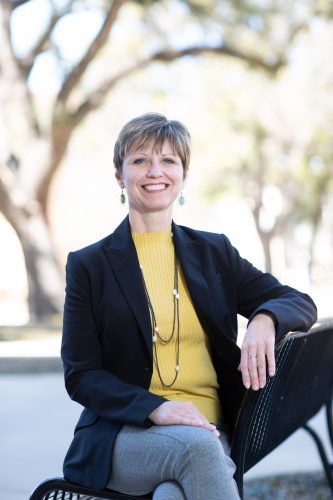
    Jeannine Gailey, professor of sociology and anthropology in TCU's AddRan College of Liberal Arts. Professor Gailey's research focuses on sociology of the body, fat studies, gender and sexuality. Photo by Carolyn Cruz, March 16, 2022

    Jeannine Gailey’s research focuses on sociology of the body, fat studies, gender and sexuality. Photo by Carolyn Cruz

    In a research spotlight, Jeannine Gailey discusses her work studying the toll of body shaming. The professor of sociology found that societal judgment against women considered fat filters into health care, career options and more.

    Alumni spotlights include Marshall Harris ’79, a former TCU football player and artist, who worked with young people in Paris. The former NFL defensive lineman also taught American rules football to the kids. On the East Coast, Laura Phipps ’04 uses her experience as a painter in a curatorial career at the Whitney Museum of American Art. Back at home in Fort Worth, Arnie Gachman ’64 is fostering strong community partnerships and leading the recycling industry.

    On the baseball diamond, Kirk Saarloos is leading Frogball in his first season as head coach. He talked to TCU Magazine about his vision for the team and the importance of family.

    The Summer 2022 issue will be live online May 18.

  4. John V. Roach Changed the Tech World and TCU

    Leave a Comment

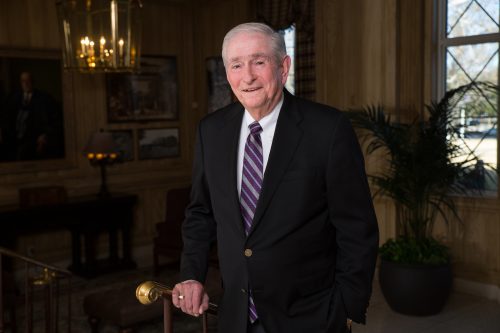
    John Vinson Roach ’61 (MBA ’65), born in 1938, died March 20 at 83.

    His many accomplishments include becoming one of the youngest CEOs in the U.S. when he took on the role at Tandy Corp. in 1981. Two years later, Roach was named chair of the Fort Worth-based company, the parent of RadioShack.

    “He was a doer who made things happen by using his business success to help the city, to help TCU and to help others,” said longtime friend Dee J. Kelly Jr. “Having the honors college named after him was one of the highlights of his career.”

    When Roach was 4, his family relocated to Fort Worth from his native Stamford, Texas, just north of Abilene. As a schoolkid, he would sweep floors, work the cash register and stock shelves at the small grocery store his father ran. 

    Roach studied physics and math at TCU and earned a master’s degree from the Neeley School of Business. 

    Soon after graduating, he joined Tandy as a data processing manager. His rise through the company ranks dovetailed with the emergence of computing. He was on the forefront of the microprocessor and the ensuing tech revolution.

    During his time at Tandy, Roach earned a reputation for spotting talent. That perception only grew in the late 1970s and early 1980s when he hired two young coders, Bill Gates and Paul Allen, to design software for one of the first personal computers.

    “John’s vision and his ability to get early computers, like the TRS-80, into people’s hands through RadioShack made him one of the true pioneers of this industry,” Gates said. 

    In 1990 Roach was elected chair of TCU’s Board of Trustees. He spearheaded the 1990s Project, credited with steering the university into the new millennium. Solid fiscal management and sound growth became his touchstones. 

    TCU officially launched the John V. Roach Honors College in 2009, funded by a $2.5 million gift from Paul and Judy Andrews of Fort Worth. The endowed gift pays tribute to their friend John Roach, longtime Fort Worth civic and business leader and former chairman of the TCU Board of Trustees.

    John Roach was CEO of the Fort Worth-based Tandy Corp., parent company of RadioShack. Photo by Amy Peterson

    “His leadership of the Board of Trustees and university during a time of unprecedented change and growth has made TCU the top national university is it today,” said Chancellor Victor J. Boschini, Jr. “Personally, Megan and I will be forever indebted to him for bringing us to Fort Worth and TCU 19 years ago.”

    The university launched the John V. Roach Honors College in 2009 with an endowment from Paul and Judy Andrews, who asked to name the college after their longtime friend. 

    “The students in the honors college are so smart, and they have the talent to achieve a lot and the motivation to do it,” Roach told TCU Magazine in November 2020. 

    Roach wasn’t content merely to have his name attached to the college. 

    Rob Garnett, associate dean and honors professor of social sciences, recalled that after the 2016 presidential election, Roach became concerned with what he saw as a growing trend among young people to embrace socialism. He wanted TCU to offer a course that provided students with a positive view of capitalism.

    Garnett and Samuel Arnold, associate professor of political science, proposed an honors colloquium on capitalism and socialism in which students would learn the strongest arguments for both systems. Roach endowed the course.

    “Our spring 2022 students are dedicating their end-of semester presentations to Mr. Roach, who more than anything wanted students to exercise and appreciate their personal freedom, including the freedom to think for themselves about economic and political issues,” Garnett said.

    Roach is survived by his wife of nearly 60 years, Jean Wiggin Roach ’66, who Kelly described as a true partner in his civic and TCU-related endeavors. Other survivors include the couple’s daughters, Amy Roach Bailey ’89 and Lori Roach Davis ’96.

  5. Celebrating Black Leadership at TCU

    Leave a Comment

    TCU officially welcomed people from all races as students on January 23, 1964, when the university was 91 years old. Featured panelist James Cash ’69 was the first Black scholarship athlete in the Southwest Conference and at TCU. A two-time Academic All-American, he became a professor at Harvard Business School and eventually the first tenured Black professor there. Today a building on that campus bears his name.

    Integration into all corners of TCU has continued to unfold for the past 50 years. Every time someone stepped into the role of being the first, they opened doors for others to follow. That work continues in the 21st century.

    In the 2021-22 academic year, TCU’s 149th, the presidencies of the Student Government Association and Graduate Student Senate are — for the first time — held by Black people.

    Panelist Leslie Ekpe is president of TCU’s Graduate Student Senate. She is a third-year doctoral student in the higher educational leadership program from Lewisville, Texas. She intends to join the professorate in higher education after graduating.

    Panelist Lau’Rent Honeycutt is a junior marketing major at TCU and president of the Student Government Association. The Huntsville, Alabama, native ran on a campaign with the theme “Let’s Do More.” He plans to become an executive in the television industry.

    Moderator and TCU Magazine contributor Brandon Kitchin ’18 starts the conversation with a look back to the earliest days of campus integration, discusses the many benefits of Black leadership, and ends on an inspiring look at the next steps in the university’s evolution into true inclusivity.


    Question for James Cash: Why did you choose to attend TCU and how was the experience with your mom, who was unable to attend due to segregation, a factor when making that decision?

    Question for James Cash: How did you navigate the segregation as a student athlete at TCU and who was your support system? 

    Question for Leslie Ekpe and Lau’Rent Honeycutt: What made you want to attend TCU and how would you compare your experience to Dr. Cash? 

    Question for James Cash: What does it mean for you as a TCU alum to see these barriers being broken? 

    Question for all panelists: How are people responding to the Race and Reconciliation initiative on campus and what can we continue to learn from it? 

    Question for James Cash: What can you say about the importance of knowing black history and how we can lean on that to build a more just future?

    Question for Leslie Ekpe: When is an event considered history? 

    Question for Lau’Rent Honeycutt: How will you use this experience as president in your career? 

    Question for James Cash: How have you continued to stay motivated and by that motivation for someone else?  

    Question for all panelists: What does black excellence mean to you? 

  6. From the Depths of History

    Leave a Comment

    Now on view in the Mary Couts Burnett Library is a world map drawn through a 15th-century understanding. Illustrations of legendary, not-quite-human characters, as journaled by classical and medieval explorers, tile vertically down the left side. Puff-cheeked “wind heads” represent Ptolemy’s twelve winds; Noah’s three sons hold up the map’s edges. The world as it was understood in Germany in 1493 is on a slightly stained piece of paper, once a part of the Liber Chronicarum, also known as the Nuremberg Chronicle, which recorded history in text and illustrations.

    “It’s just a very strange looking map … it’s a really unique piece,” said Tracy Hull, dean of the library. Other features on the page include Latin in blackletter typeface and hand-colored details on the Ptolemaic projection.

    Though it was printed just after Christopher Columbus landed in the New World, the map does not include the Americas. This was surely a facepalm moment for Nuremberg publisher Anton Koberger, since word of the discovery had not yet made it to Germany, making this the last printed world map with this exclusion.

    This recent acquisition was made possible through the Sumner Family Endowment. The reason for this map’s purchase by the library? “It was a combination of factors,” said Julie Christenson, rare book librarian. “The maps get a lot of use, and this complements the maps we already have but is unlike any of them.”

    The George T. Abell cartographic collection in the library’s special collections serves undergraduate classes ranging from history to English to music to the Brite Divinity School. “There’s a lot that students can get out of a map without having any specialized skills,” Christenson said. “Students today are very attuned to visual rhetoric, and early maps were works of art as well as geographical representations of space.”

    Consult the special collections hours before wandering up to the library’s third floor to visit the map. (You will also be asked to leave your Starbucks drink outside).