
TCU’s Schmidt Symposium Explores the True Cost of War
The event traces how war reaches into homes — and remembers a Horned Frog who never returned.
Photo illustration by Kim Baker | Kanin | AdobeStock
TCU’s Schmidt Symposium Explores the True Cost of War
The event traces how war reaches into homes — and remembers a Horned Frog who never returned.
The American Revolution often inspires images of men fighting in fields with muskets and bayonets. But as panelists at the 2026 LCpl. Benjamin W. Schmidt Symposium on War, Conflict, and Society explained, the fight for independence also divided neighbors and upended the order of civilian life.
If a business owner didn’t accept the newly printed American currency, he was considered a traitor to the cause. Homeowners who didn’t place candles in their windows following victories by the revolutionaries had their windows broken. British soldiers could move into a colonial family’s house regardless of their allegiance.
Indigenous nations, too, were torn over whether to remain neutral or to side with the British or the revolutionaries. TCU history professor Kara Dixon Vuic said such perspectives “blow out of the water” the notion that soldiers were the sole participants — or that the young nation unified behind a single cause. “Even within the same so-called sides, the loyalists don’t always agree about everything, the patriots don’t agree about everything.”
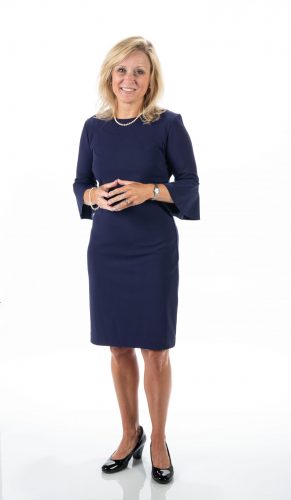
Kara Dixon Vuic holds the professorship the Schmidt family endowed in their son’s honor. Photo by Glen E. Ellman
A QUESTION WITH NO TIDY ANSWER
Since 2016, students, civilians and academics from across the country have gathered at TCU for the Schmidt Symposium on War, Conflict, and Society. The question attendees seek to explore: What is the true cost of war?
Vuic began the programming with a lecture in 2016, then expanded it into a symposium in 2017 to commemorate the centennial of the U.S. entry into World War I. Subsequent symposia, which bring together historians for panel discussions and question-and-answer sessions, have explored conflicts including the Korean War and the Afghanistan War, with other military history lectures in intervening years.
The 2026 theme was America’s Revolutionary War in honor of the nation’s 250th anniversary. The keynote speaker was Sarah Botstein, co-director and producer of the Ken Burns documentary The American Revolution. Several of the panelists were advisers and other experts in the film.
Benjamin Schmidt was a Marine and former TCU student who died during a 2011 deployment to Afghanistan. His parents, Dr. David R. and Teresa Schmidt, have sponsored the event since Day 1 and endowed a professorship, which Vuic now holds, in their son’s honor. They said the audience grows every year, even garnering national attention since C-SPAN began airing video of the symposium starting in 2023.
The Schmidts said discussion about the impact of war is personal, adding that the symposium nudges participants to engage with academics and think critically about warfare.
“The most important thing that I like to see is people ask questions,” David Schmidt said. “If it’s sparking an interest and raising concerns or questions in their mind, I think we’ve been successful.”
Keeping death and personal sacrifice top of mind can inspire people to think about what military service means, Vuic said. Politics and overseas combat become more real to civilians when they start to ask, “Is this worth sacrificing my child?”
CHAOTIC, PERSONAL, RETALIATORY
Historian Lorri Glover, the John Francis Bannon Endowed Chair of History at Saint Louis University, described the event as scholarly and collegial, punctuated with reminders of what brought everyone together. “There is some solemnity to it,” she said, “because [Schmidt’s] folks are sitting right there and some of his teachers from the university are right there. … It’s quite a thing to enter that space.”
Glover, who participated in the 2026 symposium, specializes in the American Revolution and said many Americans might not realize how brutal that conflict was. The revolution turned into an exercise of desperation, leading combatants to “lower the threshold of acceptable violence.”
“We kind of picture the minutemen with their tricorn hats and their muskets,” she said. “A lot of it was much more chaotic and personal and retaliatory.”
“The most important thing that I like to see is people ask questions.”
David Schmidt
Glover said people should learn about the nation’s military history to remember the soldiers and civilians whom time would otherwise forget, such as the colonial women who set up camps and provided food and medical care and the enslaved people who took up arms in hopes of crossing British lines to find freedom.
Colonial Americans possessed a more visceral understanding of warfare, Glover said. Back then, the nation was the battleground, with soldiers fighting everywhere from Boston to rural Pennsylvania. With Americans’ experience of recent wars largely centered overseas, she said, civilians at home are more detached from the realities of combat.
In the 21st century, death and conflict can feel almost theoretical, she said. “When it’s too much to bear, we can turn that [TV] off and go back to our lives. And in the Revolutionary War period, Civil War period and in war zones today … there’s no turning that off. There’s no stepping away from it because you’re in it. You’re surrounded by it.”
Letters and other surviving documents from the Revolutionary War reveal emotions familiar today, Glover said. Those left behind grieve and grow bitter, lovers write across long distances, and families work to ensure their loved ones’ sacrifices are remembered.
The latter was especially evident when Glover presented alongside a panel of speakers at the symposium, where she saw David and Teresa Schmidt among Benjamin’s many other loved ones.
“There are a hundred things that are different [today],” she said of the Revolutionary War, “but it seems to be the humanity of dealing with the stakes of war … that is transcendent.”
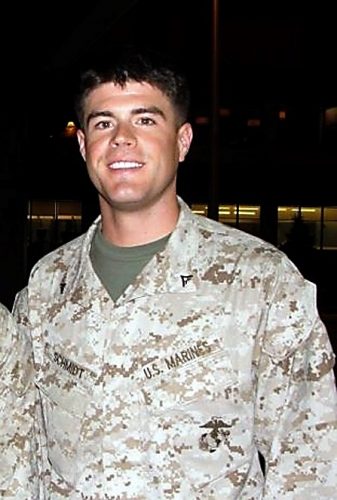
Benjamin Schmidt planned to return to TCU for a PhD. Courtesy of AddRan College of Liberal Arts
THE MARINE AND HIS LEGACY
Benjamin Schmidt enrolled at TCU in 2006. A voracious reader who loved history, he did not fully apply himself during his three semesters as a Horned Frog. In 2008, he left school to join the Marines and get his “act together,” said his father, Dr. David R. Schmidt.
Benjamin brought stacks of books on his first deployment to Afghanistan. He planned to return to TCU and pursue a PhD. When his battalion was called into combat duty and the military had him write down his final wishes, he left half of his death benefits to the history department, requesting the $200,000 be used to create a scholarship in his name for graduate students in history.
When he reached the end of his enlistment and was about to return to college, he learned that the incoming team of snipers shipping off to Afghanistan had no combat experience. He decided to volunteer one last time to support the new recruits. He died in a friendly fire incident in Afghanistan’s Helmand province on Oct. 6, 2011. He was 24.
The young man’s death left his former TCU professors shocked. Kara Dixon Vuic, the LCpl. Benjamin W. Schmidt Professor of War, Conflict, and Society in 20th-Century America, said faculty members were also surprised to learn that a student who hadn’t even finished his degree had left money to the department. He expressed immense self-reflection and maturity in his final wishes.
“This unserious student who wasn’t focused during his time on campus,” Vuic said, decided to support sober-minded graduate students because “he didn’t want to support any knuckleheads like himself.”
On Dec. 13, 2013, the school awarded Benjamin a posthumous honorary doctorate.
Combined with other donations made in honor of Benjamin’s wishes, the funds were turned into the Benjamin W. Schmidt Memorial Scholarship, now the department’s most prestigious award. The award grants $25,000 and frees the student from other responsibilities, such as working as a graduate assistant, to support the completion of their doctoral dissertation.
Your comments are welcome
Comments
Related reading:
Leading the Change: Bequest Allows Professor to Examine Costs of War Through Liberal Arts Lens
Professor Kara Dixon Vuic never met former Horned Frog Benjamin Schmidt. But she honors the U.S. Marine every day in her work at TCU.
Features
ROTC at TCU: 75 Years, From M.E. Sadler to Combat Nurses
From President Sadler’s 1940s lobbying effort to an Army nurse deployed to Helmand Province, TCU’s ROTC has educated officers through seven decades of American conflict.
Alumni, Research + Discovery
Women in Peace and War
Professor Kara Dixon Vuic helps the world understand. Swanee Hunt ’72 helps the world recover.