
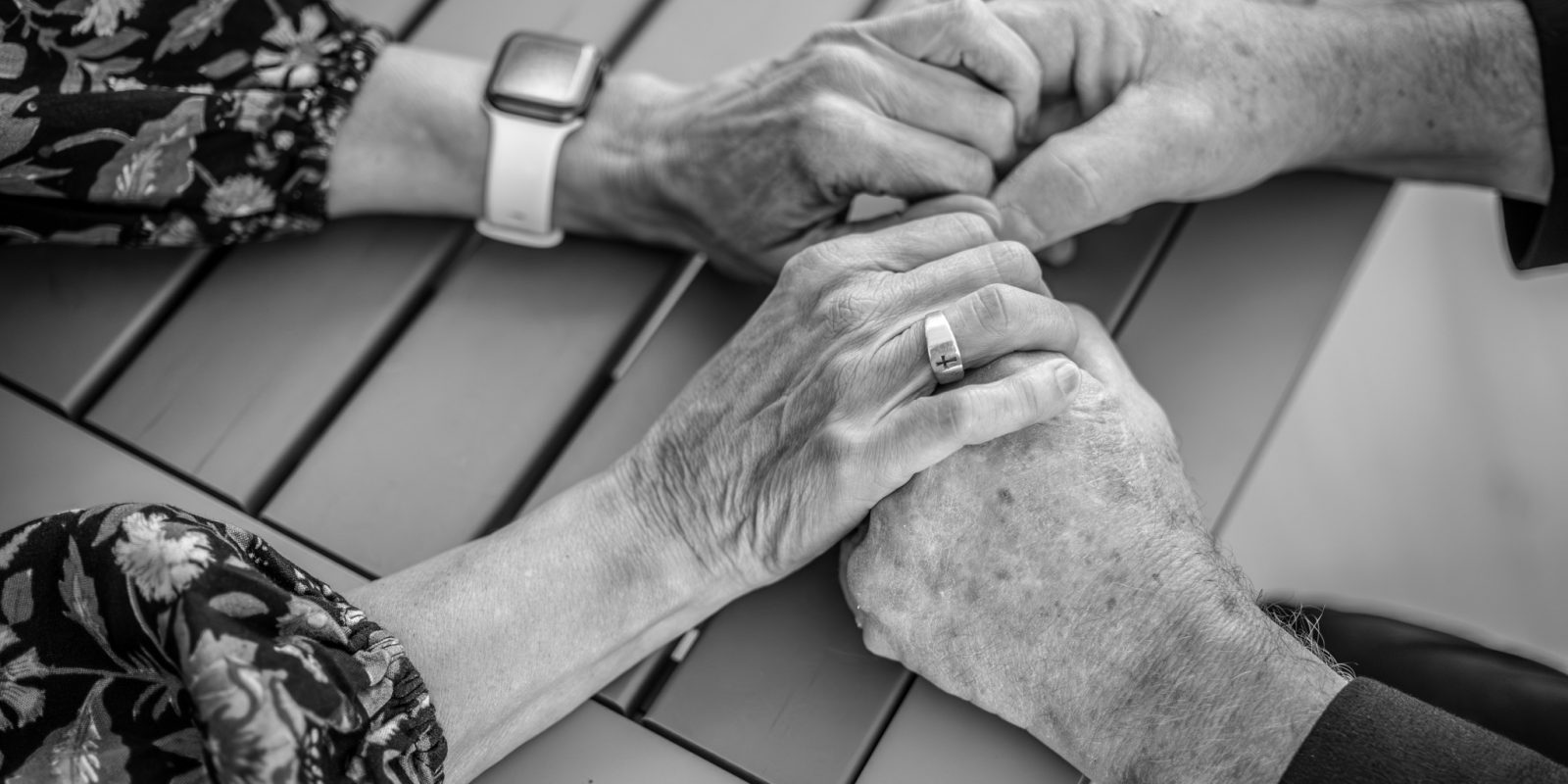
From dementia storytelling projects to groundbreaking Parkinson’s studies, TCU’s work is redefining what it means to live well — and age well — with progressive diseases. Photo by Olaf Growald
Advancing Elder Care
TCU researchers seek to improve patients’ quality of life.
The median age of Americans has risen sharply, and the numbers tell a compelling story: The Population Reference Bureau projects that the number of U.S. residents 65 and older will increase to 82 million, or 23 percent of the total population, by 2050, up from 58 million in 2022. Other countries, including Japan, Germany and Canada, are seeing a similar aging trend. As of 2020, 33 countries had a higher share of older residents than the United States.
As the world grays at unprecedented rates, the surge in age-related ailments demands attention. Alzheimer’s, the most common type of dementia, affects more than 7 million people in the U.S. alone, with total costs topping $384 billion, reports the Alzheimer’s Association. Parkinson’s disease, the world’s fastest-growing neurodegenerative condition, affects about 1.1 million U.S. adults, with total costs of about $52 billion a year, per the Parkinson’s Foundation.
Don Kent could be a poster child for this demographic shift. The 73-year-old Tyler, Texas, resident has Parkinson’s disease and Lewy body dementia, which is linked to abnormal deposits of a brain protein that can cause problems with thinking, movement, behavior and mood.
Yet he proudly recalls completing a recent climb to the 3,000-foot summit of Guadalupe Peak, the highest point in Texas, on a calm, sunny day. The 8.4-mile hike took him 11 hours — nearly twice the typical time — with several stumbles and falls, plus help from two of his three sons.
“I may have Lewy body dementia,” he said, “and it definitely changes things, but I can still do things.”
Kent participates in TCU’s aging-related research, and his determination demonstrates why this work is important.
BUILDING A CENTER FOR CHANGE
Reflecting this landscape, TCU aims to be a leader in the research and education of age-related neurodegenerative diseases, such as Alzheimer’s and Parkinson’s, that affect the nervous system. Faculty across the university are conducting research to help people age better through new treatments, teaching students to better care for an older population and providing crucial support and resources to patients and their caregivers.
“Neurodegenerative diseases are a huge problem internationally,” said Floyd L. Wormley Jr., TCU’s provost and vice chancellor for academic affairs, who is a microbiologist. “It’s part of what we’re trying to do to create excellence in research and creative activity that has a community and global impact. It fits well into our overall teacher-scholarship model, in which excellence in scholarship and teaching is not only encouraged but expected.”
A prime example is TCU’s new research lab, the Center for Neurodegenerative Disease, which was co-founded by two professors in the Harris College of Nursing & Health Sciences in 2024. TCU’s other centers that focus on aging-related research include its Memory and Aging Lab, Motor Behavior Lab and Neurobiology of Aging Labs.
The center’s creation was jumpstarted by a gift of $1 million from Murray Zoota, who died at 80 in December, and his family, including son Andrew Zoota ’98 MS (PhD ’00). The former Fort Worth resident was diagnosed with Parkinson’s in 2013.
“Parkinson’s can stop you in your tracks,” Murray Zoota, a former mortgage company CEO, said in a Zoom interview last May. “It’s frustrating. It’s not what I planned for.”
He wanted to preserve his legacy by increasing awareness of Parkinson’s. His family’s gift funded an endowed professorship and a Parkinson’s speaker series.
“We’re participating with TCU to grow the school’s reputation” and that of Fort Worth, he said.
Christopher R. Watts, the Marilyn & Morgan Davies Dean of TCU’s Harris College of Nursing & Health Sciences and co-founder of the Center for Neurodegenerative Disease, said he saw the center as a catalyst to better understand neurodegeneration through research, education and community engagement.
“The world is aging, and the United States is aging, and dementia and Parkinson’s disease are significant problems of aging,” Watts said. “And guess what? TCU is doing something about it.”
Watts died of cancer in January, four months after he was interviewed for this article.
His colleagues will carry on the center’s research, which focuses on Alzheimer’s and Parkinson’s, the two most common neurodegenerative diseases. Both incurable diseases mainly affect adults age 65 and up.
Finding a cure was “the holy grail” for Watts, who began studying Parkinson’s about 30 years ago. While some new treatments for Alzheimer’s target the underlying biology, such as amyloid plaques in the brain, most Parkinson’s treatments address symptoms, not the cause.
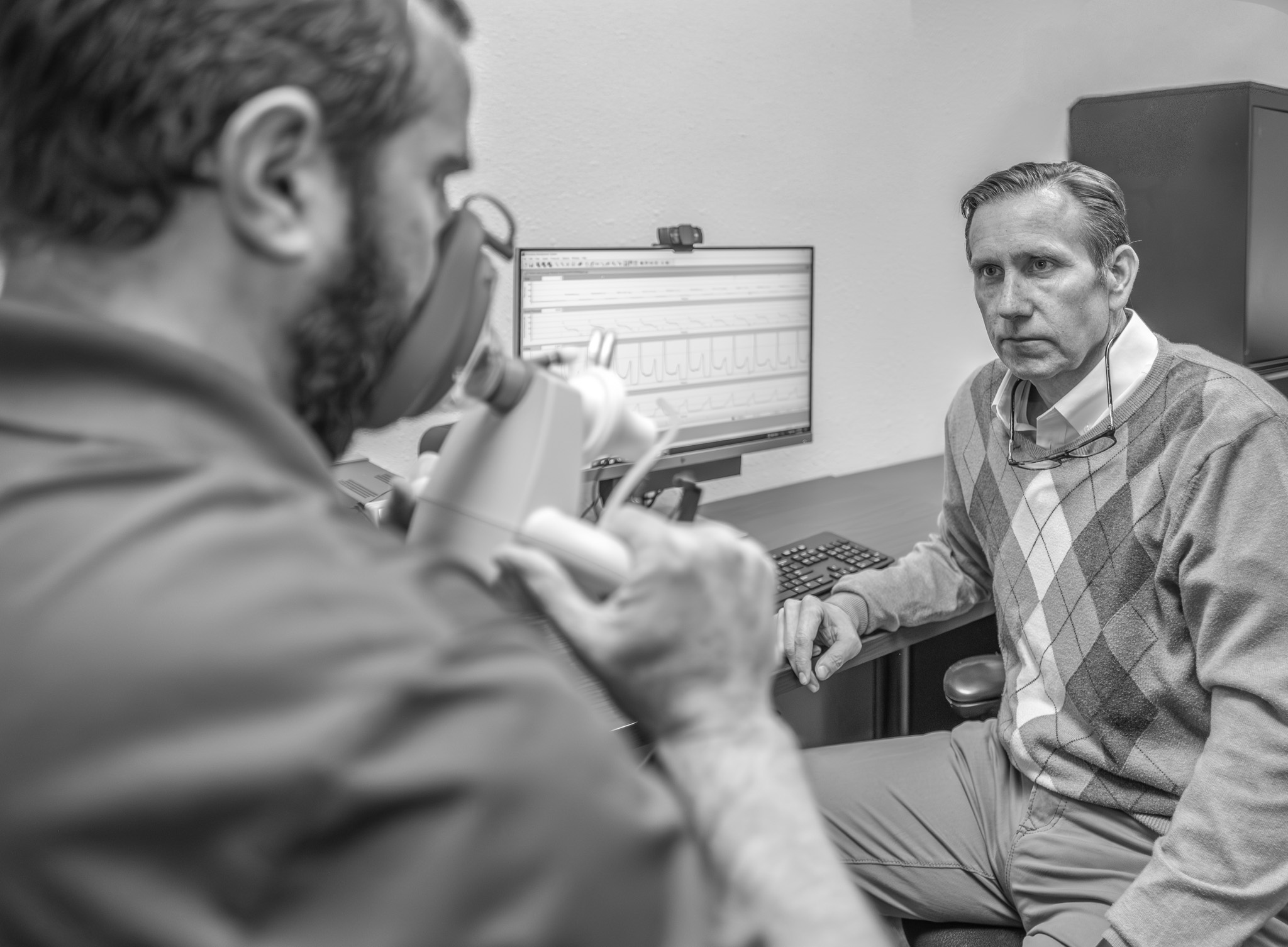
Christopher R. Watts’ research focused on developing exercise programs to prevent voice and swallowing problems in Parkinson’s patients. Photo by Olaf Growald
Aging-related research is part of TCU’s goal to become a top-tier research university by 2035. The university’s pursuit of R1 — the highest research level designated by the Carnegie Classification of Institutions of Higher Education — means it must boost total research spending to at least $50 million and the number of doctoral research degrees to 70.
Courtney Kloske, director of scientific engagement for the Alzheimer’s Association, which funds over $450 million in research in more than 1,200 projects across 56 countries, sees a need for more aging-related research at the university level.
“As the prevalence and cost of Alzheimer’s and related dementias continue to rise, there is a growing urgency to better understand these diseases and neurodegeneration more broadly,” she said. “Aging-focused research centers like TCU’s Center for Neurodegenerative Disease are important hubs for collaboration, innovation and education.”
Watts and Michelle Kimzey, co-founder of the center and an associate professor of nursing at Harris College, already had done extensive research on neurodegenerative diseases before joining forces. Their projects — Watts’ Endeavor Parkinsonology launched in 2016 and Kimzey’s Rethinking Dementia started in 2020 — now are wrapped into the center.
“There are a lot of similarities and overlaps between dementia and Parkinson’s,” Kimzey said.
FROM BOXING TO DIET
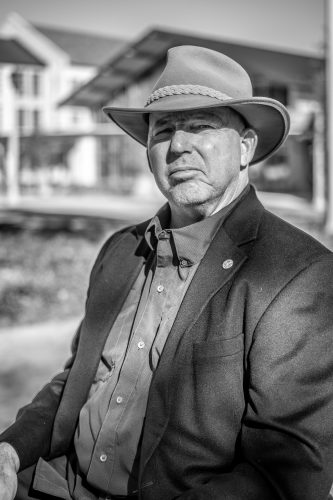
Dan Novak credits daily exercise, particularly noncontact boxing, with helping him lead an active life despite his Parkinson’s diagnosis. Photo by Olaf Growald
Dan Novak of Westworth Village, Texas, received a Parkinson’s diagnosis in 2008. A few years later, the one-time adjunct professor of marketing for the Neeley School of Business stopped teaching “because I was so physically exhausted,” he said. He also experienced muscle stiffness, slowness and loss of balance.
Regular exercise, he believes, enables him to lead an active life. Novak, who is founding president of the South Central Chapter of the Parkinson’s Foundation, does some type of daily exercise, including walking, noncontact boxing and using elliptical and rowing machines.
Novak credits the Punching Out Parkinson’s boxing program with improving his motor coordination, flexibility and muscle strength. Fort Worth-based world champion boxer Paulie Ayala began the program in 2011 to help people with Parkinson’s.
Noncontact boxing is “one of the best exercises you can do for Parkinson’s,” Watts said, because it addresses impairments caused by that disease, such as balance, strength and cardiovascular health.
When Watts recruited Novak and Zoota for studies, they told him about Punching Out Parkinson’s, which became part of his research. He published a study in the Journal of Clinical Medicine in 2023 on how noncontact boxing helped men with Parkinson’s breathe better. The study found the men’s respiratory muscle strength increased 60 percent or more after a year of biweekly resistance training.
Watts, who was a speech pathologist, also researched how boxing influences swallowing and vocal health in people with Parkinson’s. His goal was to develop exercise programs that prevent voice and swallowing problems.
“We know about 90 percent of people with Parkinson’s disease will have changes to their voice at some point,” Watts said. “We really don’t have a good idea as to when those changes happen. If we know when those problems occur, we can better design preventions.”
TCU’s aging-related research also takes an interdisciplinary approach. Michael Chumley, professor of immunology and co-director (with TCU neurobiologist Gary Boehm) of the Neurobiology of Aging Labs, collaborates across departments and universities.
Last year, Chumley co-published a study in the Journal of Alzheimer’s Disease suggesting a largely plant-based Mediterranean diet helps prevent Alzheimer’s biomarkers associated with cognitive impairment and aids with learning and memory.
Chumley said switching from a typical American diet to a Mediterranean diet rich in olive oil and proteins from fish and plants may reduce or eliminate inflammation in the body, which can increase the risk of Alzheimer’s disease. His study found that about three times less amyloid beta, an important component of Alzheimer’s, accumulated in the brain’s cortex and about two times less in the hippocampus of mice on a Mediterranean diet versus a typical American diet.
A traditional American diet fed to mice results in inflammation throughout the body, causing blood vessels in the brain to leak, Chumley said. If shifting mice to a Mediterranean-style diet can restore proper vascular function, it may prevent or slow the progression of Alzheimer’s disease in humans, he added.
TRAINING THE NEXT GENERATION
For Kent, a dementia diagnosis in 2017 and Parkinson’s in 2024 were devastating. The former lawyer, who often defended health care providers, had to end his career and stop driving.
Kent wants to reduce the stigma he sees associated with dementia. He recalled an incident soon after his diagnosis: He and his wife, Cynthia, visited their financial adviser, whom Kent had dealt with for 25 years, to relay the news. The adviser, he said, “just turned to my wife and didn’t talk to me anymore.”
“I’d like to see some change in how the ordinary person views people with dementia,” Kent said. “TCU’s efforts are going to help reduce what I call the stigma of dementia diagnosis.”
Kent decided to relay his life story to a TCU nursing student as part of Kimzey’s research on dementia. An abstract of that study, published in Innovation in Aging in 2024, found that storytelling can help people with dementia find meaning and purpose in life and adjust to their diagnosis. “The older person with dementia still plays the role of a mentor” with students, Kimzey said.
Normalizing dementia care is one of Kimzey’s goals. She began studying the condition a decade ago after watching her mother-in-law navigate Alzheimer’s disease. Since then, she has helped Harris College earn a dementia friendly designation, meaning it has pledged to educate students on how to be empathetic and proactive with people living with the condition.
Since joining TCU in 2017, Kimzey has designed simulations of what it’s like to live with dementia. When she began the simulations in 2017, she had five students. Last year, there were 35 students plus a waiting list.
In 2020, Kimzey began offering a dementia elective course for nursing students, making TCU one of the first colleges of nursing to do so. Students in that class become certified through the National Council of Certified Dementia Practitioners. While the class is mostly made up of nursing students, students in speech pathology, pre-med and social work also take the course if they expect to work with people with dementia.
Now Kimzey offers a second elective, Dementia in the Community, in which students volunteer at dementia care communities.
She also invites people with dementia, including Kent, into her classroom as guest speakers. Kent speaks about living with Alzheimer’s; Cynthia talks about being a spouse and caregiver of someone with a neurodegenerative disease.
Kimzey even co-teaches a nursing class with North Texas resident Jim McLarty, who has a rare dementia that affects brain tissue and results in problems with memory, concentration, mood and walking. She co-published a paper with social work faculty last year in the Gerontology & Geriatrics Education journal about the benefits of having people with dementia as co-teachers or guest speakers. Such arrangements provide purpose to the people with dementia and give a real face to students, Kimzey said, showing them that such a diagnosis isn’t necessarily “the end stage.”
One student transformed by this education was Jeni Green, ’24, of Arlington, Texas. During her first semester at TCU, her father had a stroke and was later diagnosed with vascular dementia.
After his stroke, Green changed her major to applied health sciences and enrolled in dementia-related courses. She also volunteered at an assisted living facility and at a support group through Dementia Friendly Fort Worth.
“We talk about how having a sense of humor or singing can help, how much love is still important, and how to approach different conversations, like having an advance directive, with family,” Green said. “I realized I wanted to work with people with dementia and their caregivers to help ease their burden.”
Her TCU education and family experiences led her to enroll last summer in a Master of Public Health program at Louisiana State University Shreveport.
“My goal is to make life as easy and as pleasant as possible for people living with dementia and their caregivers,” said Green, who wants to return to TCU for a PhD in health sciences. “I’m focused on anything I can do to help people with dementia retain personality, dignity and respect.”
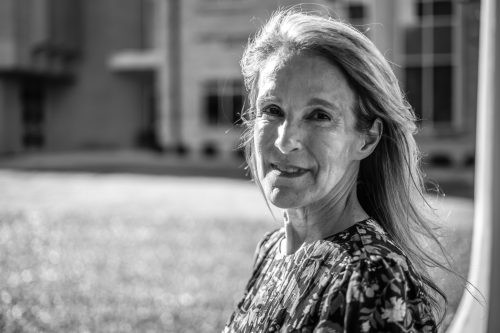
Michelle Kimzey co-founded TCU’s Center for Neurodegenerative Disease after watching her mother-in-law navigate Alzheimer’s disease — an experience that reshaped her approach to nursing education and sparked a mission to normalize dementia care. Photo by Olaf Growald
Student involvement in research is important to the future of health care. “Funding to help talented early career scientists establish themselves in the field has long been a priority for the Alzheimer’s Association,” Kloske said. University research centers “play a key role in building up the next generation of dementia researchers by providing students and early-career scientists a role in conducting cutting-edge science.”
As the nation faces a shortage of health care workers, Kimzey envisions more TCU students turning to aging-related majors and professions as they’re exposed to more related illnesses among their family members. She already sees that happening.
“Students get very passionate about it; their grandparents are living with dementia,” Kimzey said. “Now some students not only want to do research but want to work in memory care.”
This fall, she plans to offer a dementia elective course to TCU medical school students.
BEYOND THE CLASSROOM
Every Thursday at Brookdale Westover Hills, a senior living community in Fort Worth, a handful of TCU students sit and talk with residents or participate in activities like bingo and crafts. Jada Tezeno, the Clare Bridge program manager at Brookdale, said the visits provide major benefits to residents. Clare Bridge, Brookdale’s memory care program, offers people with dementia several daily activities ranging from a morning cognitive workout and brain games to dancing and music programs.
“It’s very impactful because a lot of the residents don’t have visitors who come all the time,” Tezeno said. “It makes the residents feel important and loved. They seem happier and are very responsive.”
TCU also contributes to healthier communities through education and outreach programs like the Zoota Family Leaders in Parkinson’s Disease Speaker Series and the biennial Hogstel Symposium on Healthy Aging; both bring world leaders on dementia and Parkinson’s to speak on topics such as medication, frailty and resilience. Speakers have included brain stimulation expert Dr. Michael S. Okun, executive director of the Norman Fixel Institute for Neurological Diseases at the University of Florida, and Dr. Rachel Dolhun, principal medical adviser of the Michael J. Fox Foundation for Parkinson’s Research.
Dakota Schumacher, a neurologist and movement disorder specialist at the Texas Institute for Neurological Disorders in the Dallas-Fort Worth area, is impressed with what TCU is doing to keep the community engaged and informed about neurodegenerative diseases.
“Other similar conditions like dystonia [a movement disorder] don’t have that kind of support, and that’s a detriment to the patient,” Schumacher said. “Patients in Parkinson’s support groups tend to be more engaged and do better with their disease course.”
One TCU psychology professor, Uma Tauber, aims to help families and caregivers in supporting people with dementia.
Tauber, who is also the director of TCU’s Memory and Aging Lab, is studying a learning strategy called structured retrieval practice. It involves quizzes and feedback to help family caregivers of people with dementia retain information they need to learn — from new prescriptions and their side effects to stress management and coping strategies. Data show these family caregivers retain more information 10 minutes later, two days later and even a year later.
As caregivers retain more information, Tauber hopes they’ll “feel more confident in their care roles and make good decisions” that lead to improved health for people with dementia. The long-term goal is to create a free app to help them be effective helpers.
“Most caregivers are thrust into their position without a lot of training,” Tauber said. Her vision is to support caregivers by helping them whittle down the “overwhelming mountain of information” they receive into “clear, accurate, memorable and actionable concepts,” she said. “We want to not only help improve their caregiver role but help them improve the quality of care.”
Andrew Zoota valued TCU’s support.
“As a caretaker, it’s hard not to get frustrated,” he said of the last few years of caring for his father. “The more that we can educate those who are suffering but also those who are supporting the sufferers, the better. I see a lot of that from TCU now. Keep doing it. Keep providing us tools — whether it’s on diet, how to react emotionally or what to say.”
The proof, he said, is in audience reactions in TCU’s Parkinson’s speaker series. The room “really lights up” when the discussion turns to what he calls the touchy-feely stuff, such as what it’s like to live with Parkinson’s on a daily basis.
“That’s tangible, right?” he said. “It’s a very holistic view. That’s what’s going to connect to the community. We obviously need the hard science, but the other part is needed, too.”
LOOKING AHEAD: GROWTH AND IMPACT
So far, TCU’s Center for Neurodegenerative Disease has raised more than $1 million along with pledges of just over $500,000 toward its $17 million fundraising goal for research and educational programs.
The center doesn’t have a physical home on TCU’s campus yet, but it may end up housed in a planned STEM facility as part of TCU’s Campus Master Plan, Wormley said.
The Zoota family’s gift to create the Eleanor & Murray Zoota Endowed Professorship in Neurodegenerative Research led to Brad Cannell joining TCU in that role in August, adding a specialization in elder mistreatment.
Like other TCU researchers, Cannell’s motivation is personal. His great-grandmother, he said, developed dementia and “had an end-of-life experience that most of us do not want.”
Cannell, who is an epidemiologist, is in year four of a five-year study evaluating a clinical screening for elder mistreatment, including people living with dementia. “We know there’s such a strong connection between elder mistreatment and Alzheimer’s disease and other neurodegenerative diseases,” he said. “My goal is and always has been to help people live and die how they want to live and die — to live as happy and healthy as possible for as long as possible.”
An essential piece of helping older adults live longer and better lives often involves their family, paid caregivers and the greater community.
“Ultimately,” Kloske said, “collaborations, idea-sharing, clinical trials, community engagement and stewardship of the next generation of researchers are critical to speeding the rate of progress in Alzheimer’s and dementia research.”
TCU’s interdisciplinary collaboration “reflects how broad of an impact dementia and Parkinson’s has,” said Kimzey, who has collaborated with social work faculty and speech-language pathology students on studies about patients’ life stories as well as the empathy skills needed to care for people with dementia.
The work matters now more than ever. As baby boomers age and neurodegenerative diseases affect more families, the demand for research, trained health care professionals and community resources will only intensify.
In November, Texas voters approved using $3 billion to fund the Dementia Prevention and Research Institute of Texas, which will be the nation’s largest state-funded initiative dedicated to dementia research and prevention.
And TCU’s investment in this field positions the university to make meaningful contributions to a crisis affecting millions.
“My goal is and always has been to help people live and die how they want to live and die — to live as happy and healthy as possible for as long as possible.”
Brad Cannell
For Don Kent, these efforts represent something larger than academic achievement or institutional goals. They represent hope — not necessarily for a cure in his lifetime, but for a future where people with dementia are understood, supported and empowered to live fully.
Kent’s Guadalupe Peak climb wasn’t just a personal triumph. It was a statement about possibility and resilience, the same qualities driving TCU’s aging-related research. His message resonates with researchers’ collective belief that people living with neurodegenerative diseases deserve dignity, community and the chance to keep reaching new heights.
“I wanted to try to encourage people,” Kent said. “Stay active. It’s good for you.”
That encouragement flows both ways — from people like Kent to researchers and students, and back again. As TCU builds its reputation as a leader in aging-related research and education, the university isn’t just preparing for the future of health care. It’s helping write a new story about what’s possible for the millions of Americans who will face these diseases in the coming decades.
This story is dedicated to the memory of Murray Zoota, whose advocacy jumpstarted the creation of TCU’s Center for Neurodegenerative Disease.
Your comments are welcome
Comments
Related reading:
Latest News
Christopher R. Watts, Pioneering Researcher and Beloved Dean, Devoted His Career to Improving Lives Through Science
The longtime educator built nationally recognized programs at TCU that transformed research into care for Parkinson’s patients.
Features, Research + Discovery
Can Boxing Strike a Blow Against Parkinson’s?
A pilot study will put data behind the idea that an exercise program can delay symptoms of the disease.
Features, Research + Discovery
Kristof Pota Manipulates Metals to Treat Alzheimer’s
The chemist also uses metals to better the contrast agent for MRIs.