Menu

Author Archives: Jeff Wilson

  1. Building a Legacy

    Leave a Comment


    As secretary of commerce for the Chickasaw Nation, Dan Boren ’97 leads 7,000 employees who work in virtually every industry to generate revenue for the Native Americans in south-central Oklahoma.   

    “We’re engaged in over 60 different business lines, including gaming and hospitality, banking, government contracting and other diversified businesses,” Boren said. “We even have a chocolate factory.” 

    Boren’s work for the nation is informed by his years in the banking industry, diplomacy forged in his four terms in the U.S. House of Representatives and a willingness to push limits. Chickasaw Gov. Bill Anoatubby, the nation’s highest ranking official, appointed Boren to his position in June 2022.  

    “Dan Boren is a valued member of our leadership team whose education, experience and wisdom have played an important role in our highly successful economic development, business diversification and community engagement initiatives,” said Anoatubby, who has led the nation since 1987. 

    Dan Boren drove the Chickasaw Nation to become the primary investor in Good Springs Capital, a private investment firm that focuses on investing in entrepreneur-led companies with high potential for growth. Courtesy of Jarrod Presley, David Riffle and the Chickasaw Nation

    After Congress passed the Indian Removal Act on May 28, 1830, Chickasaw ancestors and other Southeastern Native Americans were forcibly removed from their ancestral homelands. With more than 77,000 citizens, the Chickasaw Nation today is a democratic republic with executive, legislative and judicial departments that are run by officials elected by its citizens.  

    The treaty territory of the tribe includes 7,648 square miles of south-central Oklahoma and encompasses all or parts of 13 Oklahoma counties. The Chickasaw Nation contributes more than $5.5 billion to the Oklahoma economy each year. Under Boren’s leadership, business revenue provides most of the funding for more than 200 tribal programs and services, such as health care, housing and education for Chickasaw citizens and other Native Americans. 

    Legacy of Public Service 

    Boren, who majored in economics at TCU, credits Jim Wright, the famed Texas politician turned TCU political science professor, with inspiring him to pursue a career in politics. Wright’s congressional connections — he served in Congress for 34 years, including two years as speaker of the house — gave his students access to regular guest speakers.  

    “He really motivated me to want to get involved in public service,” Boren said. “He was a great friend.” 

    Boren comes from a well-known political family. David Boren, his father, is a former U.S. senator, Oklahoma governor and president of the University of Oklahoma. Lyle Boren, his grandfather, worked as a teacher in Oklahoma and represented the state for 10 years in the U.S. House of Representatives. 

    Dan Boren’s own public service started in November 2002, when he was elected to the Oklahoma House of Representatives. He became the first freshman state lawmaker ever to be elected as caucus chairman. 

    After two years in that role, Boren was elected to represent Oklahoma’s 2nd Congressional District in the U.S. House of Representatives for four terms. He retired in 2013.  

    While in Congress, Boren introduced legislation to help Native Americans; H.R. 5862 sought to protect resources for members of the Quapaw Tribe of Oklahoma, and H.R. 4154, the SAVE Native Women Act, would have closed a jurisdiction gap to hold offenders accountable for their crimes against Native women. While serving as the ranking member of the House Natural Resources Committee’s Subcommittee on Indian Affairs, Boren helped pass the Native American Heritage Day Act of 2008 

    In response to the 2008 national recession, Boren helped shape key national economic recovery policies as a member of the House Financial Services Committee. He helped pass H.R. 1424 into law, which amended the Internal Revenue Code to provide incentives for energy production and conservation and provided individual income tax relief. 
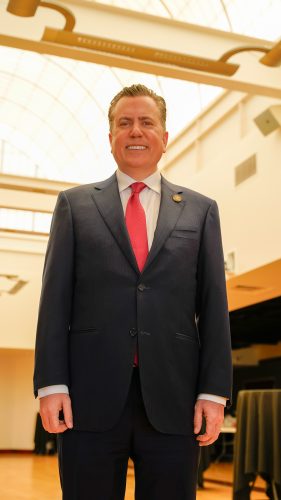
    Dan Boren is in his second stint with the Chickasaw Nation, returning in 2022 after working as chief banking officer and president of First United Bank in Oklahoma. Courtesy of Jarrod Presley, David Riffle and the Chickasaw Nation

    Life After Washington 

    Boren’s work in Congress made an impression on Anoatubby and other leaders. The Chickasaw Nation hired him as president of corporate development in the Department of Commerce in 2013. 

    “I spent a large part of my time in Congress working with tribes, tribal governments, not only in my home state of Oklahoma, but also across the country. It was very natural for me to be here,” Boren said. “And, of course, the Chickasaw Nation was within my congressional district.” 

    The six years Boren spent as president of corporate development taught him the value of diversifying investments for the Chickasaw people. He served on numerous boards within the nation, spanning the technology, health, financial services and energy sectors. 

    The position also allowed Boren to form strong partnerships with the business community, which ultimately led to his move in January 2020 to become the chief banking officer and president of First United Bank in Oklahoma. 

    Boren returned to work for the Chickasaw Nation in 2022, this time as secretary of commerce. His focus is on diversifying investments for the Chickasaw Nation to provide long-term financial stability while still growing their largest property, WinStar World Casino and Resort. 

    Last year the Chickasaw Nation unveiled a multimillion-dollar expansion of the resort located near the Texas-Oklahoma border off Interstate 35. Its new 6,500-seat venue has already attracted such acts as country music star Brad Paisley and R&B group Boyz II Men.

    “I spent a large part of my time in Congress working with tribes, tribal governments, not only in my home state of Oklahoma, but also across the country. It was very natural for me to be here.”
    Dan Boren


    In June 2023, Boren led the Chickasaw Nation in signing a deal to become the primary investor in Good Springs Capital, a private investment firm named for the area where the nation began to rebuild in the mid-1800s.  

    The new firm focuses on investing in entrepreneur-led companies with high potential for growth. Boren said the move is a progression in the Chickasaw Nation’s history of developing gaming, hospitality and health care business enterprises.

    Connecting with People 

    Colleagues who know Boren best compliment both his business knowledge and people skills. 

    “Dan has consistently demonstrated impeccable character and strong leadership skills throughout his career,” Anoatubby said. “He continues working relentlessly to ensure that our mission to enhance the quality of life of the Chickasaw people also enhances the quality of life of our neighbors.” 

    Greg Massey, CEO of First United Bank, said Boren’s core talent is “his ability to see potential in others and draw it out, connect with others no matter their background, and his high emotional intelligence.” 

    Recently, Massey traveled with Boren to Washington, D.C., to lobby for the Chickasaw Nation and talk with the chairman of the Federal Deposit Insurance Corporation. “It was incredible to witness Dan interacting and connecting with the group,” Massey said. “Within 15 minutes, he had built trust with the entire room and had everyone feeling comfortable and relaxed.” 

    Boren credits his lifelong inquisitiveness for his willingness to take business risks. Calculated risks fall in line with the career advice he often gives others.   

    “Try as many things as you can, especially while you’re young,” Boren said. “Go through every door open, as you never know where your path may lead. Don’t limit yourself.” 
  2. The Voice of the Brand

    1 Comment

    In February 2023, SuperFrog and Amy Peterson, assistant director of social and multimedia strategy, were in Los Angeles for the unveiling of the TCU mural featuring Katherine Beattie ’08. Peterson escorted the mascot to the famous sights — the Hollywood sign, the Griffith Park Observatory — to capture photos and video for the university’s social media channels.

    “We went inside a little souvenir shop,” Peterson said, “and he held a ‘world’s best student’ Academy Award.” Peterson edited the photos, and Mya Thatsanaphon, TCU’s social media specialist, edited short videos for TikTok. Within hours, the duo was pushing out content to TCU’s 487,000 followers on six social media platforms.

    While Peterson and Thatsanaphon have fun with the less serious side of university life, they’re strategic in balancing whimsy with posts that highlight scholarship and creative activity, working with TCU’s schools and colleges and TCU Magazine to elevate news from all corners of campus.

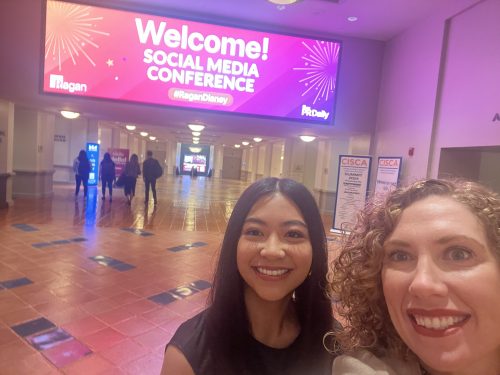
    Mya Thatsanaphon, left, and Amy Peterson have struck the right balance in keeping TCU’s social-media channels fun while also promoting the university’s academic achievements. Courtesy of Amy Peterson

    A single week in January saw Facebook content about a partnership between the Anne Burnett Marion School of Medicine and Mercy Clinic of Fort Worth to provide health care for underserved community members; a day in the life of senior film, television and digital media major Victoria Woodworth; and insights into democracy and its role in American politics from Keith Gaddie, the Hoffman Chair of the American Ideal and professor of political science

    In August 2023, Rival IQ ranked TCU’s main social media channels third in the nation. The social media data company noted that TCU posted twice as much on Facebook as the average Division 1 school and earned an engagement rate on the platform — meaning posts that were liked, commented on or shared — about three times higher than average.

    Peterson said the multiple celebrations during the 2022-23 school year helped. TCU’s sesquicentennial, winning the Fiesta Bowl and going to the National Championship Game, graduating the first class of medical students and welcoming President Daniel W. Pullin were legitimate reasons for audiences to show appreciation to the university.

    While TCU’s main social media channels are run by a two-person team, Peterson has built broader support. Eight student interns, who act as eyes and ears on campus, cover events, produce content and share the student perspective.

    Frog Squad, a social media ambassador program, is a group of more than 100 alumni, students, faculty and staff who help share TCU’s stories on their personal social media accounts. Peterson also stays in touch with TCU-connected social media influencers — people with about 100,000 or more followers. Broadway legend Betty Buckley ’68, Hamilton cast member John Devereaux ’12, podcaster and journalist Kirbie Johnson ’09, cookbook author Alex Snodgrass ’10 and physician-musician J. Mack Slaughter ’09 have all posted about TCU.

    Twenty years before the Rival IQ recognition, TCU didn’t have official social media accounts.

    Tracy Syler-Jones, now vice chancellor for Marketing & Communication, noticed the growing role of citizen journalists reporting news on social media platforms, the rise of around-the-clock news coverage and the fact that TCU students had started to use social media to share news faster than her department’s weekly newsletter could.

    When a fire destroyed the TCU bookstore in 2006, Syler-Jones said, some students took to social media to suggest that TCU had set the blaze for insurance money. “It was evident that we needed to have a foothold in that space,” Syler-Jones said. “Information was traveling, and we really didn’t have a way to insert the university’s perspective.”

    In 2008, Syler-Jones hired Peterson, a former photojournalist with the Fort Worth Star-Telegram, as the university’s first digital media coordinator. “I felt very strongly about hiring somebody who had the ability to tell stories with video and photos,” she said.

    Peterson got to work managing the university Twitter and YouTube accounts that Jess Price, who then worked in TCU’s Center for Instructional Services, had started on his own. (Price is now the coordinator of records and registration for TCU’s Burnett School of Medicine.) A few months in, Peterson added Facebook.

    While Amy Peterson, right, and Mya Thatasanaphon, second from right, lead TCU’s social-media team, interns such as Ryan Thorpe and Marina Magnant cover events and help fuel engagement with students. Courtesy of Amy Peterson

    TCU’s Facebook account “grew very rapidly. … Within a week or two, we had thousands of followers,” Peterson said. “And then by the end of the year, we had many, many thousands. And so that was very clear: People were really looking to that space to connect with TCU.”

    At first, Peterson said, she felt overwhelmed by the responsibility of being the voice of the university. As she grew more confident in her role, she shifted from writing just-the-facts photo captions like she’d done as a photojournalist to perfecting TCU’s voice. The resulting tone has helped define the university.

    “Her work over many years reflects back to our audiences the traits that are found in the people of TCU — warmth, authenticity, intelligence, positivity and spirited enthusiasm,” said Merianne Roth, associate vice chancellor of communication. “People who don’t know TCU as well, especially future Horned Frogs, can get to know TCU via our social channels’ focus on our values, academic excellence and campus experience.”

    Behind the cheerful tone are tough experiences managing the thornier side of social media. During the early Covid era, when decisions about whether to hold classes in person brought differing opinions, constituents took to their favorite platforms to complain.

    “I know, in my brain, that it is not me that they’re directing their displeasure with, but I’m reading it and they’re tagging TCU,” Peterson said. “It was hard, because I would internalize a lot of that.”

    In 2022, the social media team grew to include Thatsanaphon, a Gen Z professional who is passionate about the university’s diversity, equity and inclusion work — and being more intentional about spotlighting women’s sports.

    Peterson said Thatsanaphon excels at staying on top of trends and creating short videos, boosting TCU’s efforts on Instagram Reels and TikTok, where current and prospective students interact with the university.

    When Taylor Swift announced the rerelease of her Speak Now album, which fans associate with a deep purple color, Thatsanaphon was ready. “This trend is going to die if we don’t get on it right away,” she said. “I made that video with her old recorded song and then at midnight when [Taylor’s Version was] released, I attached the new sound.”

    The 20-second video set to Swift’s “Sparks Fly” is filled with scenes from TCU football games, drone shots of campus and, of course, fireworks. Peterson said the post was the best performer of that quarter.

    “Even though some of it might seem kind of like frivolous,” Peterson said, “in reality, it really does have more weight to it.” The ability to jump on or even anticipate such trends resonates with younger audiences, like current and prospective students, who see TCU’s voice as modern and relevant.

    Comments included “This is, and I cannot emphasize this enough, everything to me” and “Oh I’m REALLY going to love it here” followed by a string of purple heart emojis.

    In the 15 years since Peterson originated her role managing social media, she has adapted to a steady stream of new platforms, most notably Instagram and TikTok. But Peterson said much has stayed the same.

    “What’s at the core of social media is really just storytelling.”

  3. Making Dreams Reality

    2 Comments

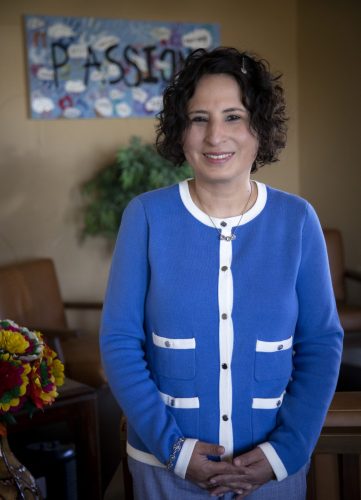
    Gabriela Garcia ’94 was in high school when she first noticed how many patients in her community were struggling with untreated anxiety and depression. She was assisting primary care provider Dr. Alex Guevara, serving Fort Worth’s Northside, through a medical magnet program at her school. Despite the patients’ needs, Garcia said, many did not see counseling as an option.  

    While financial constraints were a big factor, so were attitudes; it was a time when seeking mental health services carried a stigma.  

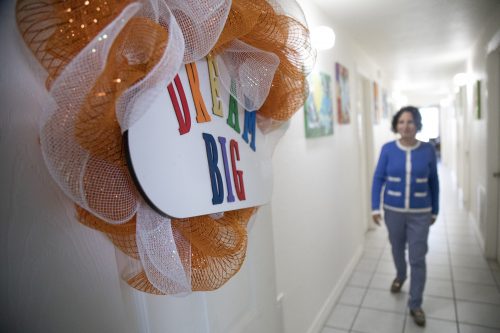
    Today, through Dream Big – PSP Counseling, Garcia works to fill the mental health needs of insured and uninsured Northside clients, with about 500 counseling sessions a month. While 75 percent of those sessions are run through Garcia’s original business, PSP Counseling, the rest are dedicated to uninsured or under-insured clients served through its nonprofit side, Dream Big.  

    Garcia first recognized her heart for serving others in middle school, while volunteering for organizations such as Key Club, The WARM Place and Presbyterian Night Shelter.  

    Dream Big is a nonprofit that tends to the uninsured or under-insured, while PSP Counseling offers care for those with insurance. Photo by Joyce Marshall

    When the time came for college, she chose TCU for its small classes and proximity to home and decided to major in psychology. As a Horned Frog, she was active in the Organization of Latin American Students, co-founding the Sigma Lambda Alpha Sorority chapter on campus.  

    “In college I learned to be a leader. If there was something that I wanted to do that wasn’t available, TCU gave me the background to be able to say, ‘Go for it. Try it out,’ ” Garcia said.   

    While working toward a master’s degree in psychology at Texas Woman’s University in 1999, Garcia began helping with a Spanish-speaking support group for non-offending parents at Alliance for Children, which advocates for young survivors of abuse. Garcia has continued volunteering for the organization for more than 20 years. 

    After earning her doctorate from the University of Southern California, and her counseling license, Garcia opened her own practice in 2005, which she named PSP Counseling for her dogs Pupster, Spunkie and Penutt. 

    Along the way, she was reminded of the need for mental health services for those with limited or no health insurance.  

    “I started working with [TCU] master’s level interns, and they would come to our office to complete their hours,” Garcia said, “and that’s how we were able to help the community through volunteering before starting Dream Big.”  

    Intent on creating an official nonprofit side to her counseling business, Garcia turned to longtime friend Rose Mary Alvarez ’89 for guidance because of Alvarez’s leadership experience and heart for nonprofits. The women had served together on the board of the Fort Worth Hispanic Association, of which they are still members.  

    Gabriela Garcia’s volunteerism dates to middle school with organizations such as Key Club, The WARM Place and Presbyterian Night Shelter. Photo by Joyce Marshall

    “We met one afternoon at her house. Gaby said she had an idea and presented it to me,” Alvarez said. “Her son, Alfred, was very young at the time, but he basically said it would be called Dream Big. I said, ‘Let’s do it. How can I help? What do you need?’ ”  

    Garcia enlisted Alvarez to provide administrative guidance. Together, Alvarez, Garcia and Alfred del Castillo, Garcia’s husband, serve as Dream Big’s co-directors; they launched the nonprofit in 2018.  

    Through Dream Big, uninsured patients or those with high deductibles — ages 5 and up — are eligible to receive free private or group therapy.  

    “Our mission is to provide mental health services to anybody who needs them,” Garcia said. 

    “She always asks herself how she can help other people help themselves, and how she can make an impact on the community,” Alvarez said. “I’m excited for what she’s done and most excited about what she’s going to continue to do in the near future.” 

    Through Dream Big – PSP Counseling, Garcia contributes to the community in other ways, too. After learning from Dolores Huerta Elementary School principal Carla Coscia ’97 about students in need, Garcia lined up donations.  

    “Gaby was able to get coats and shoes donated for the kids,” Coscia said. “She even went above and beyond and asked for donations to provide gift cards for the teachers.”  

    In addition to its individual and group sessions, Dream Big – PSP Counseling also supports clients and other local families by providing day camps during spring break and summer. The camps encourage kids to be physically active while also teaching mental health-supportive exercises like emotional regulation and social skills.  

    “We had one insurance company that liked what we were doing when we first started. They were paying for the camps and would track the kids’ health progress,” Garcia said. “They told us when the kids came to the camps, they noticed a 68 percent reduction of needing inpatient care or more intensive counseling.”  

    To support the services offered by Dream Big, Garcia and her team participate in several fundraising events, including North Texas Giving Day. In May 2023, Dream Big was one of two local nonprofits to win a $5,000 grant from the event’s Mental Health Awareness Challenge.  

    Roughly 90 percent of all proceeds from Dream Big fundraisers directly fund patient care. Garcia hopes that future grants and donations will someday fund a separate building for the nonprofit.  

    “I would really like for Dream Big to grow into a place where it could stand as being its own entity and continue even after me,” she said.  

    Garcia shared lessons she has learned while helping others. 

    Gabriela Garcia founded the nonprofit Dream Big in Fort Worth’s Northside after witnessing many people dealing with mental health issues. Photo by Joyce Marshall

    Set boundaries for yourself. It’s hard being a professional in the helping field because you can get consumed by it. One of my graduate school professors said, “At the end of the day, you pray for your clients, and you leave them in God’s hands.” That’s always stayed with me. I need to be able to be healthy for my family as well as my clients. 

    Stay motivated on tough days.  I am wired in a certain way where I don’t slow down. Even when I was young, I always wanted to be doing things and learning how to maximize my time. Finding what motivates you to make a difference makes the tough days rewarding.  

    Anybody and everybody who’s willing to do it can benefit from counseling. Many people think you must have had some type of trauma or a difficult childhood if you seek counseling. But PSP gives clients coping, social, relaxation and self-care skills. Counseling is about being able to connect with yourself to be the best version of yourself.  

    Make sure your counselor is someone you’re comfortable with. One of the things I always tell my clients after our first session is whether I feel like I’m qualified to work with them, or I ask them if they feel like we’re a good match. You can base your preference on personality or other specific qualities in a therapist. Also, if you are looking for something specific, make sure the therapist feels like that’s something they are qualified to help with.  

  4. Frank Windegger 1934-2024

    2 Comments

    Frank Windegger ’57 of Fort Worth is best known as TCU’s longest serving athletic director, retiring in 1998 after 23 years. Those defining years, however, are just part of his Horned Frog story.

    Windegger, who died March 8, first made his name as a TCU student-athlete. He played football but excelled at baseball — his number was the first retired at TCU in the sport. His first weeks at TCU were also pivotal personally: He met Barbara Leatherman at Howdy Week. “It was love at first sight,” said his wife of 68 years.

    After two years in the U.S. Army, Windegger was back at TCU as assistant baseball coach and assistant ticket manager, beginning his rise in athletics.

    From the start, Windegger’s priority was the student-athletes, said Jack Hesselbrock ’82 (MBA ’86), retired senior associate athletic director. Named head baseball coach in 1962, Windegger guided the Frogs in 1963 to a Southwest Conference championship, the youngest head coach to do so and the first of his four conference titles.

    His longevity as athletic director came from “a steady, steady hand,” Hesselbrock said, despite “a lot of up and down times with the NCAA landscape, conference landscape, even our own landscape.”

    Athletic programs expanded greatly during Windegger’s tenure, especially with Title IX, the 1972 law that required universities to add women’s sports or forfeit federal funding. But as sports were added, sometimes “we didn’t have the [TCU] funding to go along with it,” Hesselbrock said.

    When TCU’s football program faced harsh penalties from the NCAA in the mid-1980s, “he captained the ship through that,” Hesselbrock said. “He backed his coach, he backed the football staff, and we backed the players — all had the opportunity to come back.”

    His heart for people extended to his staffers. “He hired a number of people who just needed a chance, and they turned out to be tremendously loyal, long-term, good employees,” said Hesselbrock, who counts himself among the lucky.

    His steady strength was no different at home, said daughters Dana Windegger Dirksen and Sherry Windegger Mitchell.

    “The two most important values I learned from my dad, through example, were the importance of putting others before ourselves and to give without ever expecting anything in return,” Dirksen said

    For Mitchell, “he taught me to love, pray and be a loyal person to my friends and family.”

  5. A Legend in the Dugout

    Leave a Comment


    The story of how Nolan Ryan became a volunteer assistant baseball coach for TCU 30 years ago — like everything else the right-handed ace did during his Hall of Fame baseball career — has grown into legend.

    Ryan was at the peak of his popularity in 1994, his first year of retirement after 27 seasons in Major League Baseball. The native Texan spent the final five seasons of his career with the Texas Rangers, collecting his 5,000th career strikeout and throwing the final two of his seven career no-hitters; he was also the national poster boy for Advil and the regional face of Whataburger.

    With no more hitters to strike out, Ryan prioritized watching sons Reid ’95 and Reese ’99 play baseball. Reid, who went on to serve as a Trustee, was then pitching for TCU, and Reese soon would be.

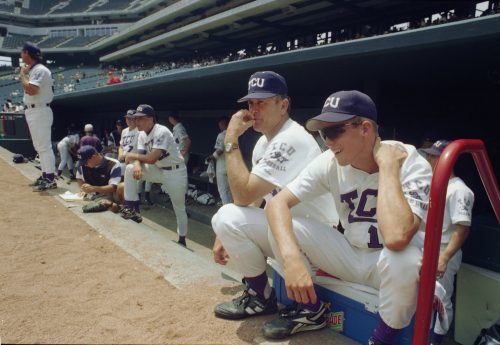
    Ryan was so beloved that he couldn’t watch his sons play without being asked for an autograph or a handshake. Reid Ryan said that on the weekend of April 8, 1994, his father was too popular for the old TCU diamond. Texas was in town for a three-game series, and the crowds swelled to the point that Ryan needed a place of refuge to watch the games.

    Nolan Ryan created an individual plan for each TCU pitcher he coached as a volunteer from 1994 to 1997, including son Reese.

    Coach Lance Brown ’64 had a place in mind — the Frogs’ dugout.

    Brown and Ryan had become friends years before, when Brown, who was an All-America pitcher for TCU in 1963, would throw batting practice for Ryan’s Houston Astros and Rangers teams.

    “He was getting hounded,” Reid Ryan said. “So he sits in the dugout in street clothes.”

    The celebrity sighting didn’t go over well with Longhorns coach Cliff Gustafson, especially after TCU swept Texas back to Austin. Gustafson filed a complaint with the Southwest Conference, saying that TCU had violated a rule against having nonuniformed personnel in the dugout.

    TCU responded by explaining, uh, yeah, Ryan was a volunteer assistant coach.

    “Jokingly, I just said, ‘I know you’re out of work, and I want to try to help you out a little,’ ” Brown recalled.

    Brown was content to let Ryan watch games from the bench, but Ryan said he wasn’t going to sit by idly.

    “That lasted for about a day, and Dad just couldn’t help himself,” Reese Ryan said. “So he jumped in with both feet.”

    Ryan wasn’t just his sons’ No. 1 cheerleader from the bench. He was the pitching coach from 1994 to 1997, a duty he found more difficult than he had expected. The role required digging into each pitcher’s mechanics and breaking some bad habits.

    Brown said Ryan crafted an individual plan for each pitcher and never talked about how he had done things during his career. Brown also said Ryan was a key factor in the ’94 team winning the Southwest Conference regular season title.

    “He would know what they lacked and what they needed to do to get over that,” Brown said. “I know very few people that design programs for individuals, and he did.”

    Nolan Ryan was in his first year of retirement from Major League Baseball when he started as a volunteer assistant at TCU, almost by mistake.

    Most listened to every word Ryan said. They were almost all Texas kids learning from a Texas legend.

    “But there’s always one or two kids who think they have it figured out,” said Ryan, who was inducted into the National Baseball Hall of Fame in 1999. “They’re going to do it their way, and that’s a challenge that sometimes you can’t overcome.”

    Ryan said he had never experienced the atmosphere of a college game. The ballparks were smaller, and screaming fans were closer to the field. In comparison, major league fans seated in massive ballparks were relatively docile.

    When Ryan made a trip to the pitcher’s mound to calm Reese during a game at Texas A&M, fans started calling Nolan “Barney” because of his large, purple TCU jacket.

    Another time, also at A&M, the ’94 team was eating a postgame meal when a student approached Ryan and asked for an autograph.

    “He’s like, ‘Weren’t you the guy just yelling at me?’ ” Reid Ryan said.

    “I found it interesting that fans were so enthusiastic and passionate about their team and about trying to intimidate the other team,” Ryan said.

    Reid, Reese and sister Wendy Ryan Bivins ’99 saw their dad often during his professional baseball seasons, especially when he played for the Astros near their home in Alvin, Texas. He helped his sons fashion proper mechanics in the offseason and when they joined him during the season. But Reese Ryan said their mother, Ruth, served as the baseball support system in Little League while Ryan was traveling the country playing ball.

    Each cherishes the shared time in the TCU dugout and on the diamond.

    “It was definitely an awesome experience and probably something that I took for granted,” Reese Ryan said. “Twenty-five years later, I’m able to look back on it and say, ‘Oh, wow, that really was a pretty special time in our lives.’ ”

  6. A Professional Platform

    Leave a Comment

    LinkedIn offers high-quality content related to an individual’s professional interests, relevant job openings, networking and no drama. Yet the social media platform is “100 percent underappreciated,” according to Mike Caldwell, executive director of TCU’s Center for Career & Professional Development. He shared insights into how to make the most of LinkedIn, taking online networking to the next level. 


    What is important to remember about LinkedIn versus other social media platforms?  

    It’s definitely a professional place — professional photo, professional content — it is not necessarily a place you’re going to post fun-related things, though some people will kind of veer into that territory. It’s basically like your online résumé, and you can include your portfolio if you’ve got content.  

    Just remember that it’s the place that future employers are looking. Every recruiter that I have ever met is always actively using LinkedIn to source candidates. So if you’re that passive candidate who maybe is not in the middle of a job search, it’s a great place for people to find you. And it’s a great place for you to always stay connected professionally to colleagues and others. 

    Why do you think LinkedIn is undervalued as a tool?  

    Sometimes what we see for students or recent grads is that they might not yet have friends or peers who are using LinkedIn or talking about LinkedIn. They’re seeing social media as more of a place that has other values rather than the professional piece. But LinkedIn is undervalued and underutilized. Once you get into your first job two to three years, you realize that everyone is using this tool, and you can find so many connections there. If you need to research — find a sales lead, a connection, a trend in the company — it really gives you the broadest set of knowledge.  

    What are some of the basics of LinkedIn? 

    Complete your profile; fill it out in as much detail as possible. Also, add your professional photo. We do professional headshots at our career expos for students. And then begin connecting with your professional network of people that you know. LinkedIn works by degrees of separation: The more people you’re connected with, the easier it is going to be for you to find people — and the easier it is for people to find you if they are recruiting.

    Should you use the “open to work” setting if you are searching for a job?  

    It’s controversial. Some people believe that you should not necessarily put “open to work” — that you want to be that passive candidate, that person that someone’s finding and recruiting away. But there are a lot of recruiters who like knowing that a person is open to messaging from them. You can put “open to work” and make it visible only to people outside of your organization. 

    I’ve heard some success stories of people who’ve been “open to work.” If I see an alum who puts that on, sometimes I’ll reach out to them and say, “Hey, if we can assist you with your search, let us know.” Otherwise, I wouldn’t have known. Sometimes I’ll tell alumni to do both — put “open to work” for a couple of weeks and see how it goes. If you feel like it’s not really getting anywhere, then you can turn it off. 

    How can you access TCU’s alumni network in LinkedIn? 

    Go to TCU on LinkedIn, click “alumni” and then search by employers. You can see the alumni who are at Lockheed, Alcon or BNSF, and then you can see how you’re connected to them. If you’re applying to any company, that’s a great way to look and see if you’re connected to someone or to see if there are any TCU alumni there. You can see what they majored in, you can see what year they graduated. Start with a peer — those people who might be closer to you professionally.  

    You can also see where they live. So if you’re wanting to relocate to Detroit, you can see any alumni in Detroit, where they work, what types of jobs they have. A lot of our alumni go to grad school; if you’ve got two alumni networks, use both.  

    How should people use LinkedIn when they’re not looking for a job? 

    If you’re not looking for a job, be that passive candidate and update your profile. I was just reading an article talking about when you do your performance review at work, that’s a great time to go in your LinkedIn profile and highlight accomplishments. Updating your profile and keeping it updated is going to make it much simpler if you are searching in the future, and it’s going to make you open and accessible to potential employers or recruiters who are looking for passive candidates. I also encourage people to be a mentor to others. Make your profile active so that current students can find you, reach out to you and ask you for advice.

    How important is it to interact with posts or post your own content? 

    It depends on what you want to get out of LinkedIn. If you want LinkedIn to be that place where you’re really a social connector, you’re generating interest and you’re trying to rise to the top, interacting with posts can be helpful. If you’re a person who’s passively looking, it’s not necessary.  

    Give visibility to what you’re creating. If you’re someone who does graphic design or someone who does music, having some of that content posted is very helpful. Follow people in the industry that you’re in, and find people who are doing things that you want to do.

    What are some of the more advanced features for maximizing what you can get out of LinkedIn?  

    Change your URL; it’s this long, unwieldy series of letters and numbers. You can customize that to make it shorter and make it much easier to share. It’s free and easy to do. (Go to your profile; on the YUS | ADOBE STOCK right, click the pencil icon by “Public profile & URL.”)

    If you find yourself between jobs, LinkedIn has resources and tools that you can pay for, but they also have trial options that are free. One of the biggest advantages of the premium version is you can search and find almost anyone, even people you’re not connected with. If you’re looking at a company, you can see more detail about that company.

    LinkedIn has great creator tools that are free and available to almost anyone once you get established on the platform — you just have to be connected to enough people. I have several colleagues who have weekly or monthly newsletters that they publish through LinkedIn. You can also see and follow co-worker content from the employee page of your company.

    Is there anything to avoid as a LinkedIn user? 

    Like anything, watch out for spam. But I think that LinkedIn is one of the better resources because it’s very easy to block, report and ignore people.  

    If you start trying to connect with everyone, some people might say “I don’t know this person,” and that can basically get you blocked. But I think that’s a feature, not a bug, because it keeps people from going a little bit haywire. That’s why it’s a good option to start early while you’re at TCU. Then by the time you graduate, or one or two years out, you’ve got this established profile and you don’t have to worry about that at all.

  7. Guitar Hero

    Leave a Comment

    As a core member of Snarky Puppy, a jazz-fusion collective founded in North Texas, guitar virtuoso Mark Lettieri ’05 performs all over the world, from the Longhorn Ballroom in Dallas to Royal Albert Hall in London. In 2021, a fan captured video of Lettieri onstage in Dubai, his sound evoking ’80s guitar legends before slipping into joint-gyrating funk.

    Snarky Puppy, which has won five Grammy Awards and captures more than 450,000 monthly listeners on Spotify, has roster flexibility that gives Lettieri time to pursue other musical projects. Lettieri, who earned a Grammy nomination for his solo album in 2022, also is a member of the funk band the Fearless Flyers, and he leads the Mark Lettieri Group, a trio-turned-quartet.

    Lettieri describes his sound as instrumental music for people who might not think they like instrumental music. “It’s high energy, but it’s sensitive,” he said. “It’s melodic. It grooves really hard.”

    Strumming

    The guitarist, composer, producer and instructor, originally from the San Francisco Bay Area, considered colleges in his home state, but none of them felt right. TCU did.

    News that he was admitted and a conversation with Darryl Anderson, TCU’s former head track & field coach, sealed the deal. Lettieri walked on as a long jumper.

    Music was only in Lettieri’s periphery during college, he said. He decided to follow in his parents’ footsteps and studied advertising and public relations.

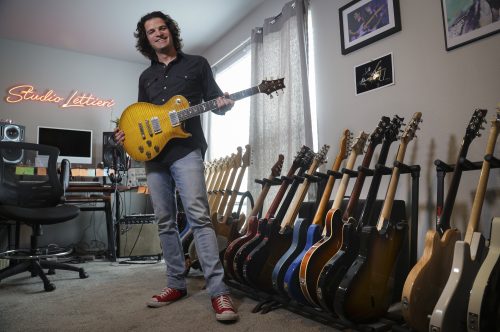
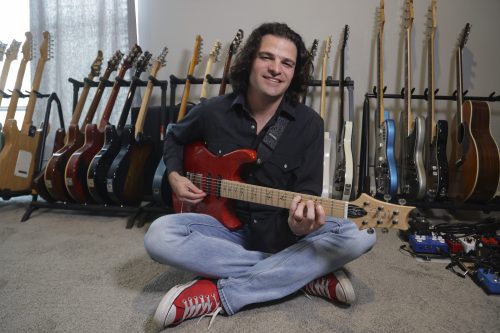
    Feb. 27, 2024. Guitar effects pedals and synthesizers fill a rack in the home studio of Grammy winning guitarist and composer Mark Lettieri '05 in Fort Worth, Texas. (Photo by Ralph Lauer)

    Guitar effects pedals fill a rack in Mark Lettieri’s home studio in Fort Worth.

    While settling into life as a Horned Frog, he kept an ear out for classmates he could start a band with. Drummer and classmate John Wesley Sargent caught Lettieri’s attention. Sargent was the only instrumentalist in the TCU Gospel Choir; Lettieri asked if he could join as a guitarist.

    That connection led to playing in churches, along with R&B, hip-hop, gospel, soul and jazz gigs in Dallas and Fort Worth. “I loved the music, I loved the faith, and it was a really cool community to be welcomed into,” Lettieri said. “I owe a lot to deciding to join the gospel choir.”

    Sargent and Lettieri also formed a band called the League, with Lettieri on guitar, Sargent on drums, Fabian Morice ’04 on bass and Vincent Guerin ’03 on keys. The group played at TCU functions, the Aardvark and all the usual haunts. The summer before his senior year, Lettieri interned at a public relations firm his father had worked for. “It was fun, but very clearly not where my heart was,” Lettieri said. “I knew deep down it wasn’t really going to work.”

    Nonetheless, Lettieri finished his degree in advertising and public relations. Shortly after, he met Shalyn Sutton Lettieri ’07 (BSN ’09), a Bedford, Texas, native. The couple married in 2012 and welcomed a daughter in 2017.

    Changing Tune

    For two years after graduation, Lettieri worked for a custom promotional products company by day. By night, he was building connections in the DFW music scene. He started a couple of bands that included other TCU alumni. Eventually he quit his day job to pursue music full time.

    “When I was younger and had no responsibility, I said yes to everything,” he said. “You take any gig with anybody for any amount of money because you’re hungry, and you want experience, and everything can be positive in some way.”

    As his network grew, Lettieri met musician Michael League, who had formed jazz-fusion band Snarky Puppy with University of North Texas classmates in 2004. The two played various gigs together, and in 2008 League asked Lettieri to fill in on guitar with Snarky Puppy.

    “Mark was really coming from this funk and church thing. He’s obviously more than that — he’s very versatile — but it was a flavor that we did not have in the Snarky Puppy guitar section,” League said. “He has an incredible groove and feel.”

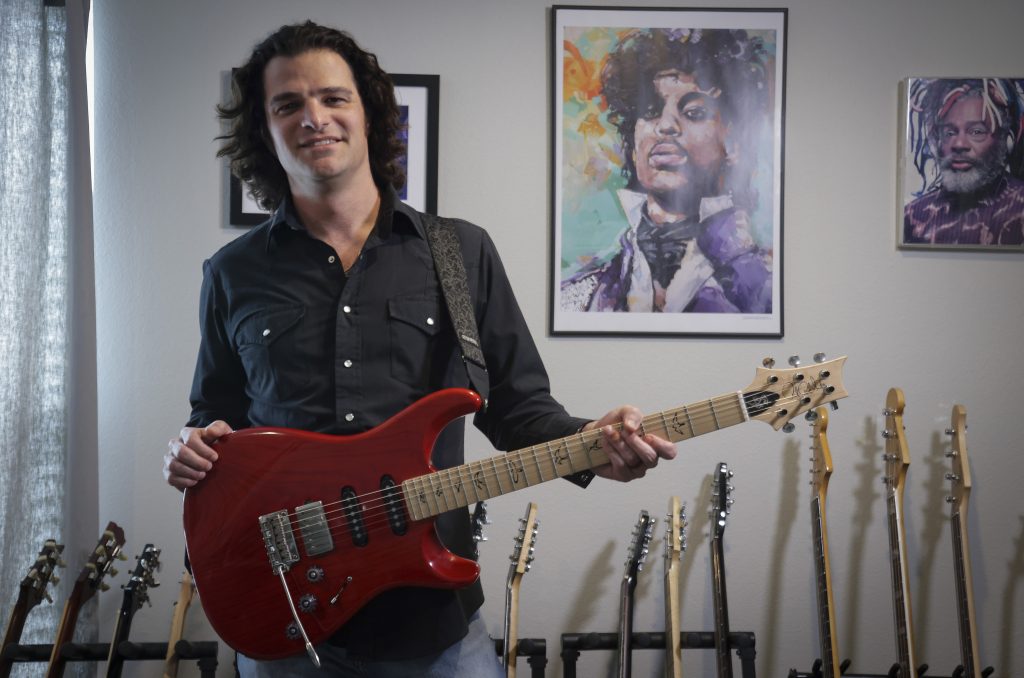
    Feb. 27, 2024. In his home studio in Fort Worth, Texas, Grammy winning guitarist and composer Mark Lettieri '05 holds one of the guitars from his extensive collection. (Photo by Ralph Lauer)

    In 2008, Mark Lettieri started playing with musician Michael League, who helped formed Snarky Puppy. By 2014, the group was picking up its first Grammy award.

    Lettieri became a core member of the band, which has amassed dozens of musicians who rotate in and out of shows depending on availability. “Anytime a musician plays with a group, they move the music in a certain direction, and that imprint is always there,” League said. “Mark has definitely left an imprint.”

    Snarky Puppy won its first Grammy Award in 2014 for best R&B performance, followed by a quartet of Grammys for best contemporary instrumental album in 2016, 2017, 2021 and 2023.

    The most recent win was for the collective’s 15th album, Empire Central. Lettieri wrote the record’s first single, “Trinity,” a gently building groove named for the Texas river.

    During Snarky Puppy shows, the sounds flow easily among the musicians. Lettieri plays his eight-string, locking grooves with League, changing effects with pedals and tossing back his curly hair.

    “Onstage, he has rock star energy,” League said. “Mark is like an ’80s rock star that just was born a couple of decades too late.”

    Beyond Snarky Puppy

    When he’s not onstage, Lettieri often records himself playing guitar in his home studio. He posts videos to Instagram, including freestyle jams trying out new pedals or an attention-grabbing intro to promote an upcoming performance. Careful viewers might notice that his fingernails are sometimes painted, compliments of his daughter.

    People in Lettieri’s circle are quick to point out riffs that have album potential. The guitarist said he catalogs ideas in his phone, computer and mind. He goes back through his notes and gathers the “little sparks” to flesh them out and “make a statement in the form of an album.” He calls his wife his muse.

    Feb. 27, 2024. In his home studio in Fort Worth, Texas, Grammy winning guitarist and composer Mark Lettieri '05 plays a red version of the “Fiore” model Paul Reed Smith guitar he designed for the company. (Photo by Ralph Lauer)

    Mark Lettieri’s line of electric guitars is named Fiore, the Italian word for flower.

    Lettieri has his own line of electric guitars with Paul Reed Smith Guitars. His daughter helped name the line Fiore, which is a nod to his Italian heritage. Because Lettieri didn’t want his name on the front of the instrument, his mother, visual artist Marianne Lettieri, designed a tapestry-inspired symbol for the base of the guitar’s headstock.

    In November 2017, when Vulfpeck guitarist Cory Wong was forming the Fearless Flyers and looking for a third guitarist, he remembered Lettieri’s Instagram videos. Wong told his bandmates about “this dude on the internet doing a baritone funk thing.”

    Wong said his vision for the Fearless Flyers was to have four musicians — three guitarists and one drummer — at “Olympic-level funk.”

    “Not everybody gets excited about two rhythm guitar parts interweaving and breaking up and then coming back together. Mark and I are both equally excited about that,” Wong said. “He’s got a lot of forward momentum in his time, and he’s just an incredible player.”

    As a solo artist, Lettieri garnered a 2022 Grammy nomination in the same category Snarky Puppy has dominated — best contemporary instrumental album — for Deep: The Baritone Sessions Vol. 2.

    “Just to have it even be recognized on that level … I felt a lot of validation,” he said. “It’s like, wow, I should be doing this. This is why I’m here. These songs are important. The stuff that I’m creating is reaching people, and I’m moving them in some way.”

    Up Next

    While Lettieri finds his collaborations gratifying, the artist said performing in three bands takes sacrifice. Lately, he said, he’s been more strategic about selecting which tours he goes on and how long he stays on them, while also balancing his work as a solo artist. His fellow musicians respect his approach and talents.

    “It’s inspiring to see how committed and connected he is to his family and how grounded and down-to-earth of a person that he is,” League said. “The way he plays has inspired me … to get certain elements of my musicianship better in shape.”

    “Mark is going to go down in history as one of the greats on guitar,” Wong said. “I love watching everything that he does because he does it with excellence.”

    In August 2023, Lettieri released a live Mark Lettieri Group album, Out By Midnight: Live at the Iridium, recorded at the New York City jazz club where guitar legend Les Paul performed weekly for more than a decade.

    “I have the most fun playing music onstage,” he said. “It’s a great feeling to have response for something that you created. … I like being up there and playing loud and making people pay attention.”

    Feb. 27, 2024. In his home studio in Fort Worth, Texas, Grammy winning guitarist and composer Mark Lettieri '05 holds a red version of the “Fiore” model Paul Reed Smith guitar he designed for the company. (Photo by Ralph Lauer)

    How good is Mark Lettieri? “Mark is going to go down in history as one of the greats on guitar,” Vulfpeck guitarist Cory Wong said. “I love watching everything that he does because he does it with excellence.”

  8. The New Big 12

    5 Comments

    The exits of Texas and Oklahoma from the Big 12 Conference, along with the departures
    of Pac-12 powers Southern California and Oregon to the Big Ten, thrust college sports into a new era of realignment.

    The Big 12, the home of TCU’s athletic programs since 2012, moved swiftly to land a lucrative TV deal to
    solidify its status as a Power Five conference.

    A 14-team Big 12 will grow to 16 for the 2024-25 school year, even with Texas and Oklahoma departing for the Southeastern Conference. The Four Corners schools — Arizona, Arizona State, Colorado and Utah — will join sophomore members Brigham Young, Central Florida, Cincinnati and Houston.

    And the conference might not be finished growing.

    “There’s nothing imminent, but I do explore all options that come to me,” Big 12 commissioner Brett Yormark said in October. “And if it creates value for membership, both short and long term, I’m going to pursue it even further.”

    Until the next round of expansion occurs, get to know the eight newest teams in the Big 12.

    Brigham Young University

    Location: Provo, Utah

    Fall 2023 enrollment: 34,937

    Team nickname: Cougars

    Year joined: 2023-24

    BYU, founded and guided by the Church of Jesus Christ of Latter-day Saints, brings fans wherever it travels.

    The church counts nearly 7 million members in the United States and some 378,000 in Texas. Of the 83,000 Mormons living in the Dallas-Fort Worth area, the church estimates that 33,000 live in Fort Worth.

    “Having fans everywhere and they embrace us as soon as we get there, it’s just so fun,” said Kody Epps, a wide receiver on BYU’s football team. “It’s just so loving to know that you have people that care about you even outside of your city limits.”

    Teams that visit Provo find themselves up against frenzied crowds. LaVell Edwards Stadium can fit 63,470 fans for football games, and the Marriott Center is the 10th-largest college basketball arena in the country, with room for 18,987 spectators.

    University of Central Florida

    Location: Orlando, Florida

    Fall 2023 enrollment: 69,320 across 12 campuses

    Team nickname: Knights

    Year joined: 2023-24

    One goal for Big 12 commissioner Brett Yormark in expanding the conference was to feature teams in more states and time zones than when he took the job in 2022. Central Florida is part of that plan.

    The new Big 12 has teams in 10 states. Yormark likes to celebrate how the conference spans four time zones, with Arizona staying on Mountain Standard Time from March to November while most of the rest of the country observes daylight saving time.

    One concern, though, is travel for teams that play multiple games per week.

    “If you’re going out to play West Coast teams … you may have to just play multiple games before you return, and I think vice versa if they come east,” Central Florida men’s basketball coach Johnny Dawkins said.

    University of Cincinnati

    Location: Cincinnati

    Fall 2023 enrollment: 50,921

    Team nickname: Bearcats

    Year joined: 2023-24

    Several Big 12 athletic departments boast alumni who have blossomed into the best of the best in their respective sports.

    TCU produced the first true passing quarterback in NFL history, Sam Baugh. Basketball legend Wilt Chamberlain first starred at Kansas.

    Cincinnati is no different. Oscar Robertson revolutionized basketball’s point guard position. In his second NBA season, Robertson became the first hoopster in history to average a triple-double — double figures in points, rebounds and assists. He entered the Naismith Basketball Hall of Fame in 1980.

    Sandy Koufax, one of the best left-handed pitchers in baseball history, arrived at Cincinnati in the early 1950s to play basketball. He tried out for the freshman baseball team and pitched for the varsity squad in 1954. From 1962 to 1966 with the Los Angeles Dodgers, Koufax threw four no-hitters, won three Cy Young Awards, had the best earned-run average five times and established a single-season record with 382 strikeouts in 1965.

    Nolan Ryan, a former TCU volunteer assistant coach, broke the strikeout mark by one in 1973.

    University of Houston

    Location: Houston

    Fall 2023 enrollment: 46,676

    Team nickname: COUGARS

    Year joined: 2023-24

    Houston ranks as the fifth-largest metro area in the country, one spot behind Dallas-Fort Worth. High school teams across the Houston area, stacked with talented athletes, routinely play for state championships.

    Now that they’re in the Big 12, the Cougars hope to keep that talent home and give their athletic programs a boost.

    “The best football in the nation is played in the state of Texas,” football coach Willie Fritz said. “Being in the great city of Houston and surrounded by outstanding student-athletes, we’re going to make this a No. 1 priority.”

    The Cougars’ volleyball team, which reached the second round of the NCAA Tournament in its first Big 12 season, knows the wealth of Houston-area talent could help it sustain success.

    “We’re not there yet,” coach David Rehr said, “but hopefully we’re building our brand enough that we get one or two” top high school players who want to stay and play.

    Arizona State University

    Location: Tempe, Arizona

    Fall 2023 enrollment: 57,144

    Team nickname: Sun Devils

    Year joined: 2024-25

    No offense to Sun Devils superstars Phil Mickelson (men’s golf) and James Harden (men’s basketball), but Arizona State is a baseball school.

    All-time home-run leader Barry Bonds and Mr. October, Reggie Jackson, are among the long list of major league players who launched their careers at Arizona State.

    Third-year baseball coach Willie Bloomquist is also on the list after becoming an All-American in the late 1990s.

    Arizona State has reached the College World Series 22 times and won five national championships. But the Sun Devils haven’t played in the College World Series since 2010 and haven’t won it all since 1981.

    College baseball has more parity than it did during the Sun Devils’ heyday, but “that doesn’t change the goal and the expectation here,” Bloomquist said. Winning “will always be the expectation.”

    “The program is one that, in my mind, is on the rise,” he added.

    Joining the Big 12 should help with more exposure on national TV and open a recruiting pipeline from Texas.

    “I love the kids from Texas,” Bloomquist said. “Those kids are most often tough and still the ‘yes sir, no sir’ kids.”

    University of Arizona

    Location: Tucson, Arizona

    Fall 2023 enrollment: 46,932

    Team nickname: Wildcats

    Year joined: 2024-25

    The Big 12 has ranked as the best conference for men’s basketball, statistically and anecdotally, for at least the past three seasons.

    TCU men’s basketball coach Jamie Dixon previously worked in the Big East and Atlantic Coast conferences, which at various times were thought to be No. 1. He has seen Big 12 programs hire better coaches, improve facilities and make investments to sustain the success.

    “We’re better than we were 10 years ago,” Dixon said. “Baylor’s better, Texas Tech’s better, so you start there and then make some additions, and it just adds up.”

    The competition should remain heated as the conference expands to 16 teams. The main reason is Arizona, which frequently is a high seed in the NCAA men’s basketball tournament. The Wildcats were the No. 1 overall seed in 2022, when they edged TCU to advance to the Sweet 16.

    “We’re not half-stepping into this deal,” coach Tommy Lloyd said. “Tons of respect for that conference and what they’ve been able to do basketball-wise.”

    University of Colorado

    Location: Boulder, Colorado

    Fall 2023 enrollment: 37,153

    Team nickname: Buffaloes

    Year joined: 2024-25

    The coolest thing about the University of Colorado is the buffalo, Ralphie, who runs around Folsom Field before each half of home football games.

    Though Deion Sanders has made waves as Coach Prime, football isn’t the best athletic program at Colorado.

    Skiing is king and has been for decades.

    “It really is something that people continue to be proud of and are proud to be a part of it,” Alpine coach Ian Lochhead said.

    Colorado claims 21 national championships, second only to the University of Denver, but has the most individual national champions with 105. The Buffs count 561 All-America honors from more than 200 skiers, with 322 first-team selections.

    While another Big 12 newcomer, Utah, had won four straight national titles, Colorado reclaimed the crown in 2024.

    University of Utah

    Location: Salt Lake City

    Fall 2023 enrollment: 35,310

    Team nickname: Utes

    Year joined: 2024-25

    Public perception is that Big 12 football is going to lose stature as Texas and Oklahoma depart. TCU head coach Sonny Dykes respectfully disagrees.

    “It’s going to be better than people think,” he said. “It’s a very good, competitive league [with] a lot of large institutions that can go out and recruit.”

    Dykes’ outlook is buoyed by Utah, a perennial Top 25 team that won Pac-12 titles in 2021 and 2022. Since 2018, the Utes are 51-23 overall and 37-13 in conference games.

    TCU fans remember critical matchups against Utah that helped decide Mountain West Conference championships and send both to Bowl Championship Series games. Utah lost three conference games from 2008 to 2010, two of them to TCU. The Frogs lost once, by 3 points in 2008 at Utah.

    “That program has probably been as consistent as any in college football over the past two decades,” Dykes said. “They just have a good formula for winning.”

  9. Life’s a Beach

    1 Comment

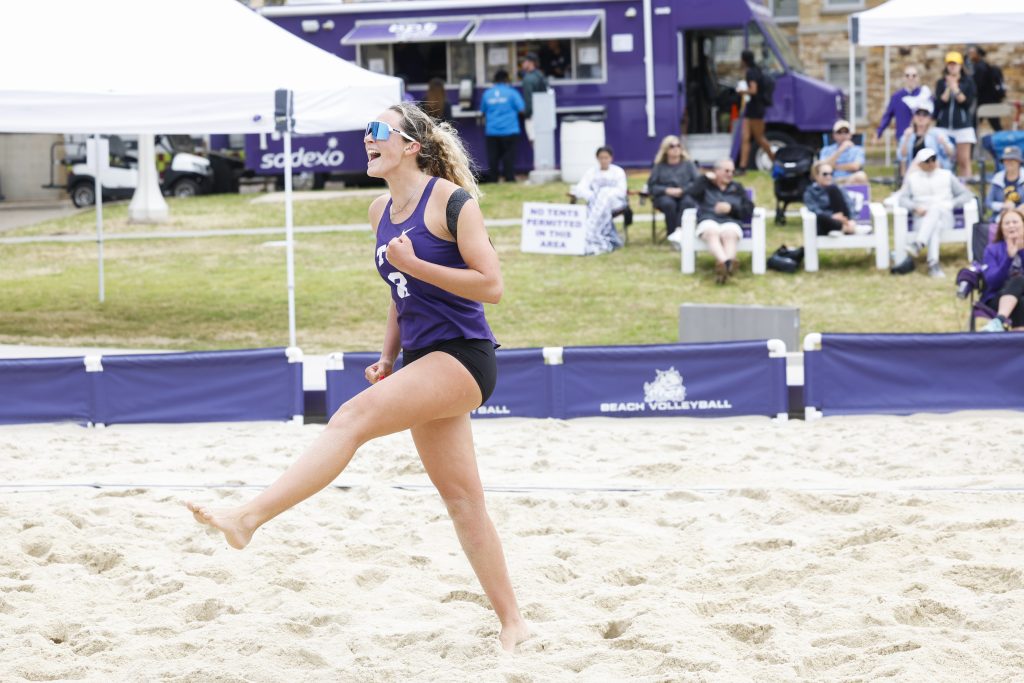
    Hailey Hamlett stepped into the college beach volleyball spotlight in November when she and partner Lina Khmil went undefeated in eight matches at the AVCA Collegiate Beach National Pairs Championships to become the first TCU duo to win the national title.

    Hamlett, a 5-foot-11 junior from Bulverde, Texas, just north of San Antonio, said the victory was a surprise as she and Khmil were playing as a team for only the second time in tournament play. They continued the success during the spring season for coach Hector Gutierrez and the nationally ranked Frogs.

    How does a player transition to beach volleyball from indoor volleyball? 

    It’s just up to your tastes, basically. Texas is probably a hard place to start. I feel like in California and Florida, it’s probably more normal. But with Texas, you have to seek it out because there’s not really any beaches around. But it’s different. When you’re younger, you can just play for a club, you can pick your own schedule and pick your own partner. You play whenever you want. But with indoor, you have a coach and you have a club, and they tell you who plays, when to play, your schedule and everything. So if you want a more relaxed sport, you just go play beach. It’s way more chill.  

    Why did you make the transition? 

    I played indoor, and I stunk. So I was like, “Well, you know what? I’ll play beach and touch every ball whenever I want.” 

    Aren’t you being hard on yourself? 

    I didn’t grow until my freshman year of high school. When I first started indoor, they put me on the top team, but I had never played. My mom was like, “Can we put her on a lower team?” And they were like, “No.” Then I just rode the bench. Yeah, I didn’t like it. 

    Where in Central Texas did you find a beach? 

    Hailey Hamlett said that she developed her beach volleyball skills at a volleyball-friendly bar in San Antonio where college coaches flock to find talent.

    There’s a bar called Sideliners Grill in San Antonio. It has 11 courts. It’s really big. It’s this food and bar place. That’s how chill it is. Adult tournaments will be going on, too, and they’ll be drinking and then they’ll go play and then they’ll have beer and then play. We would do college clinics. College coaches would go there, and we’d play in tournaments and they’d watch. Usually they’ll tell your coaches when they’re interested, but Hector gave me a business card. That’s the only thing I’ve ever gotten from a coach. I think I still have it somewhere. I was like, “Oh my gosh.” He was my first college interest, too, so that was cool. 

    In a beach match, there are only two of you playing, and you need to know your partner’s tendencies. How did you build that relationship with Lina for the national pairs tournament? 

    I feel like when we got there, we were still learning each other. When the games got tough, that’s when we really had to cater to each other’s needs. Just being positive with each other really helps. She also came home with me for Thanksgiving, so that was fun, and we got some team bonding there. 

    You played with a different partner, Maria Gonzalez, last season. How did you get paired with Lina? 

    I don’t know because they didn’t even try us last year. I never even practiced with her, and we usually switch partners all the time. I think they just tried it one time, and we did really well, and they kept us. They switch around our partners a lot, but I’m hoping they keep us together this year. 

    Probably the game that I thought we had a chance was after beating UCLA in the semis because we lost the first set so bad and then came back and beat them with the same score. It was like, ‘Whoa.’
    Hailey Hamlett


    Because you hadn’t played together much, were you surprised to win the championship?  

    Yes. I wasn’t in that tournament last year. Lina was with another girl. I’d never even been to the tournament. It was really awesome. It was really fun. Just knowing that this tournament was, literally, the top pairs from every college was really scary, and I never go into a tournament or a game thinking I’m going to win. I feel like that just is not beneficial for me because I need to be on my game.

    You and Lina went 8-0 at the tournament. At which point did you think you had a chance to win it?  

    It was nice during pool play that we were beating teams really well. Probably the game that I thought we had a chance was after beating UCLA in the semis because we lost the first set so bad and then came back and beat them with the same score. It was like, “Whoa.” If we can be destroyed mentally and physically in the first set and then come back and win in the next one and then the third one, I was like, “We can do anything.” It was just really nice knowing that we won’t give up or get down. 

    Do you think you two are one of the best pairs in the country? 

    It’s hard to say that out loud, but I think we did really well together. You never know what will happen. I think that’s cool that people know who I am, at least now. Everybody knows Lina. She’s awesome. She’s a world champion. She is on the Ukrainian national team and has won some big achievements, which is really cool. 

    The Frogs were one of the final four teams last season but this season will be without All-Americans Daniela Alvarez ’23 and Tania Moreno and your partner last season. Do you still expect to be one of the top college teams? 

    They’re coming back next year, but they took a year off to try to qualify for the Olympics. Good for them. So sad that they left, but I feel like we always expect to go all the way.  If you look at the past winners of NCAAs, it’s never the team that you expect to win. Ever. I feel like people are probably going to think we’re the underdogs this year, and that’s when we’re going to win — when they least expect it. We’re still going to be good, and I expect to go to the championship. 

    Hailey Hamlett said she expects TCU to be one of the best college beach volleyball teams in 2024 even though the Frogs are playing without some top players from 2023. Courtesy of TCU Athletics | Ellman Photography

  10. Passing the Torch

    Leave a Comment


    TCU’s Flame of Knowledge, a symbol for academic learning, wisdom and unity, is the university’s newest ceremonial element. The slim wooden sculpture, measuring 3 feet long, made its debut at the spring 2023 commencement ceremony, carried by Faculty Senate chair Jill Havens, a senior instructor in British literature and director of undergraduate studies and British and postcolonial studies.

    The flame joins the mace for use in all commencement ceremonies. The mace, which represents the university’s administration, was introduced during Michael Ferrari’s inauguration as chancellor in 1999.

    The first steps Raymond Huyge took in creating the Flame of Knowledge were to cut wood from a live oak and create a solar kiln to dry it for six months. Courtesy of Robert Huyge

    Margaret Kelly, former executive director of community projects, suggested that TCU commission the flame in 2019.

    “The sesquicentennial was our next big historic moment,” she said. “It was a perfect time to introduce the Flame of Knowledge.”

    Woodworking artist Raymond Huyge, who previously installed lettering for TCU buildings including the King Family Commons, was tapped to create the flame.

    Huyge cut wood from a live oak and created a solar kiln to dry it for six months. He carved a fluted handle from the wood and embedded a penny from 1873, the year TCU was established, into the bottom.

    Atop the handle, a squared-off section holds gold university seals on two sides and plaques, bordered by inlays of legacy wood from a red oak on campus, on the other sides. One plaque, written by faculty members, explains the flame’s symbolic meaning, while the other bears TCU’s Native American land acknowledgement. The flame, carved from cypress, sits at the top.

    “To me, a flame just brings people together,” Huyge said. “Overall, I’m very proud. This is a high-profile piece, and I’m honored to be the one to make it.”

    When not in use, the Flame of Knowledge is on display in the Heritage Room in the Mary Couts Burnett Library, across from the mace.

    Woodworking artist Raymond Huyge was picked to design the Flame of Knowledge based on previous work he had done on campus. Courtesy of Robert Huyge