Menu

Author Archives: Corey Smith

  1. TCU Nursing Professor Lori Borchers on Frog Supply, Food Insecurity and Community Cafes

    Leave a Comment

    Lori Borchers ’21 PhD, assistant professor in the Harris College of Nursing & Health Sciences, teaches Public Health Nursing and Clinical Reasoning and Simulation, among other classes. Her research examines efforts to address food insecurity through pay-what-you-can community cafes. Borchers serves on the board of One World Everybody Eats, a nonprofit that supports a national network of such restaurants. She also established a pay-what-you-can supply store for TCU nursing students.

    What did your career look like prior to joining the TCU faculty?

    I’ve been a nurse for over 30 years, and for the first third of my career, I worked in inpatient hospitals and home care. I focused on rehabilitation, specifically patients with spinal cord injuries, brain injuries and strokes.

    For the second part of my career, I started on the postpartum unit, then got pulled to the nursery more often and eventually became the breastfeeding educator. After that, I transferred to Texas Health Resources in Bedford, where I completed much of my lactation consultant training.

    I worked a lot in the outpatient center and became friends with Laura Thielke, who was a TCU nursing faculty member at the time. I started working with her students, and we kept in touch. One day she said, “Hey, Lori, if you ever want an adjunct position, we always need instructors.”

    I started as an adjunct in summer 2009 and continued in that role for about five years. During that time, I worked as a lactation consultant while also teaching, which gave me the flexibility to manage a good work-life balance. Then, in January 2014, I joined full-time. The last third of my career has primarily focused on education.

    What inspired your interest in pay-what-you-can community cafes like Fort Worth’s Taste Community Restaurant?

    I applied to the PhD program here at TCU in education leadership, but I didn’t really know what I wanted to study yet. Around that same time, I heard something about this community restaurant and thought, Oh, now that’s a good idea!

    My advisor Don Mills ’72 MDiv, formerly vice chancellor for student affairs, was the one who said, Why don’t we look at food insecurity and a sense of community in college students who dine or volunteer at a pay-what-you-can cafe? So that’s how I got interested in my research.

    Also, like all good moms, I was trying to find volunteer opportunities for my kids. For a while, my husband, my boys and I were all volunteering at Taste. 

    “I don’t think you can take care of your mental health if you’re not fed.”
    Lori Borchers

    How has volunteering at a pay-what-you-can cafe shaped your understanding of food insecurity at the community level?

    You can’t tell who’s hungry and who isn’t, and you cant really tell who has financial means and who doesnt. You could have some clues that maybe somebody may not have financial means, but youre also assuming a lot there. It’s a silent epidemic.

    To be able to go in, sit down at the restaurant, be treated with dignity, order off the menu, have wonderful food and truly only pay what you can — that’s amazing, right?

    With so many places, if you can’t afford it, you can’t even walk in the door. But at these pay-what-you-can restaurants, everyone gets to enjoy the better cut of steak. When you think about human beings, we all need food to survive. I think these restaurants are doing a great thing. 

    You connect food insecurity with mental health outcomes in your research. How do these areas overlap?

    I don’t think you can take care of your mental health if you’re not fed.

    I think the other thing the cafes do is provide that social connection piece. You have a community table, and many times, if you’re dining alone, you might sit down, and then someone you never would’ve interacted with sits down next to you. All of a sudden, you’re talking.

    So a connection builds. I’ve heard stories  like a lawyer down the street sitting next to someone who’s having trouble finding housing, and they start talking. And then, lo and behold, the lawyer knows someone who’s hiring, and so on.

    I think it’s about putting everyone on the same playing field. Everyone can participate if they want to.

    What has been your experience with food insecurity among college students?

    Well, it exists. When you look at all the research together, about a third of students are food insecure. And that’s across the board — it doesn’t matter if it’s private, public, two-year — it’s pretty consistent when you look at all the studies combined.

    Suzy Lockwood, the associate dean for nursing and nurse anesthesia, tasked me with starting a food pantry for nursing students. So I tasked my spring 2024 Public Health Nursing class with designing Frog Supply, a pay-what-you-can supply store. They worked on it, then my summer group worked on it, and finally my fall 2024 group officially opened it in October 2024. We’ve tried to stock semi-healthy, nonperishable foods, and we’ve also got a freezer full of food and other supplies.

    Weve got a code up where people can scan to donate what they can. If the idea of pay-what-you-can can catch on, then its truly equitable, right? Maybe this time they can’t pay, maybe next time they can. Everybody can come in and benefit from it.

    How has Frog Supply evolved?

    We have four students who are interns in an honorary nursing society, and they wanted to take more of a leadership role. They give me the shopping list, and the students take what I buy and restock the pantry. One of the things I want the students to work on is, towards the end of the spring semester, when everybodys getting ready to move out, how can they publicize donating unused nonperishable food to Frog Supply?

    Ive got some items that always go, like beef jerky. The protein shakes — theyre a big hit, too. Ive got individual meat packets — tuna, chicken, salmon — when I went in this week, they were all gone.  

    We have toiletries and personal hygiene items in addition to food items. And we do have freezer that has a variety of frozen meals: beef and pork entrees, chicken entrees, vegetarian entrees, Hot Pockets, Uncrustables, burritos. 

    I had a student last semester who said, “Could I ask other seniors to donate used uniforms?” So she organized a collection, and she got over 120 items, because they’re probably not going to wear purple where they work. It’s just another way of reducing, reusing and recycling.

    Ive got a comment board so they can write suggestions; we get a lot of thank-yous. My hope isin a future study, I can interview the students and see what a difference its made. 

    You created an online course that helped students develop their own pay-what-you-can cafe concepts. What kind of tasks did the students complete?

    I created that course while I was working on my PhD. It was part of the Master of Liberal Arts program at TCU, which is primarily online. 

    I designed the course to let students develop their own pay-what-you-can cafe concepts. I had them pick a community — their hometown or wherever they felt connected — and do a community needs assessment. They used tools like census data and information from local food banks to identify challenges related to food insecurity in that area. Then I had them create a mission and vision statement for their cafe and come up with a name.

    Another part of the course focused on food waste. I asked students to visit a grocery store and talk with a manager or employee about what they do with leftover foodmany discovered that it’s often thrown away when new shipments come in. They also interviewed their favorite restaurant to learn about how it handles food waste and spoke with a nonprofit involved in food recovery or distribution. These assignments were submitted as discussion posts, and I think they were really eye-opening for the students.

    What are some hands-on opportunities you’d like TCU students to have?

    My dream is to start a community cafe on campus someday. I truly see it as an interdisciplinary project. I see business students helping with the nonprofit side. I see nutrition and nursing students working together to plan healthy meals. I see design students designing the space. Then maybe engineering students could work with the design students, figuring out where the electrical outlets go and things like that. Could we build a plant bed and grow food to use?

    I really see it as a multidisciplinary effort. And I see it as a way to bring people together who wouldn’t normally cross paths. There are so many learning opportunities and real-life skills that students could take with them.

    I did study abroad with Anne VanBeberwho’s a nutrition professor, and she had three or four students who were really excited about this idea because they volunteer at Taste. They’re food management majors, and part of their program requires volunteer hours at places like Taste. So, who knows — maybe one day.

    What potential do you see in the pay-what-you-can model to address food insecurity on both a local and national scale?

    I think it could make a difference in a lot of communities. When I talk about a community cafe, I’m specifically talking about cafes that are part of the One World Everybody Eats network.

    Yes, we’re a nonprofit, but really, we’re more like a network of cafes that help each other. It just takes like-minded individuals who have the dream and the idea to get it off the ground.

    There are going to be ups and downs and roadblocks, but if more communities could come together and do something like this, I think everyone would benefit. Our dream that we often joke about on the board of One World is to have a community cafe by every McDonald’s — community cafes everywhere.

    But we also know it’s just a drop in the bucket. Some of our cafes are only open limited hours, and people get hungry more than once a day. So, it’s a help and it’s meeting a need, but it’s not meant to replace everything.

    Tell us about your recent research.

    The One World Everybody Eats team finished a national community cafe survey. We ran it from November 2023 through June 2024. Anyone who dined at a cafe in the One World Everybody Eats network was able to participate. I presented some of the findings at the Association for Community Health Nurse Educators conference.

    We worked on the I-HEAL (Improving Health Equity Among Low-Income Adults) research project. A local pay-what-you-can cafe was applying for a Texas Health Resources Community Impact grant; they wanted to start offering additional services — including health assessments — to culinary apprentices and guests. And they got the grant; it was about $750,000 over two years and started in January 2023.

    By April 2023, my nursing research assistants and I began seeing patients and collecting data. We provided individualized health education — things like, “Your blood pressure is high. Do you know how often to check it? Do you add a lot of salt to your food? That can raise it,” and so on.

    I worked with two pre-med students and our statistician to write up the program results, and we have written a journal article with that data. It’s under peer review right now.

    Were still trying to do additional studies with the community cafes. Im part of an interdisciplinary research team that involves Texas A&M AgriLife and UT Dallas. 

    Editor’s Note: The questions and answers have been edited for length and clarity.
  2. Jessica Hylander Explains the Science of Sports Nutrition at TCU

    Leave a Comment

    Jessica Hylander’s journey into sports nutrition began almost by chance during her undergraduate years, when she spoke to her university volleyball team about eating well. This simple nutrition education experiment ignited a genuine passion.

    Roles at Northwestern University and later at the University of Florida plunged her into the high-stakes world of collegiate athletics, revealing the crucial role nutrition plays in athletes’ performance and success. Those experiences shaped her holistic philosophy, one that transcends physical nourishment to include mental wellness.

    Since joining TCU in 2019 as a sports nutrition graduate assistant, Hylander has elevated the program through personalized athlete consultations, team education and staff mentorship. Her role has taken on new dimensions with the recent opening of TCU’s state-of-the-art Human Performance Center, which is transforming how nutrition services are delivered and integrated into athletes’ daily lives.

    As the current assistant athletics director for sports nutrition, Hylander focuses on practical, sustainable nutrition, supporting athletes with pre-game meal planning, hands-on learning at the Performance Athletics Dining facility and off-campus dining guidance.

    What is your typical workday like?

    Something I love about my job is that it’s different every day. I attend interdisciplinary meetings with the sports medicine team, academics team, administration, and strength and conditioning to provide holistic care and enhance support for athletes.

    I spend a lot of time one-on-one with the athletes I oversee, specifically the baseball and swimming and diving teams. I lead team talks and educational sessions covering broad topics, but since nutrition isn’t one-size-fits-all, I often meet individually to tailor advice on hydration, pre- and during-competition eating, and what that looks like for each athlete.

    Much of my time is also spent on meetings to keep the department running smoothly, managing budgets and ensuring systems and inventory are in order so we can provide consistent support.

    What are some of the main nutritional challenges college athletes face?

    Often, it’s the basics that are the hardest to grasp. For student-athletes, the biggest issue I see is skipping meals. Their schedules are packed, and they have very little time to prepare food or even grab something to eat. Many of my meetings focus on figuring out how to fit in three meals a day, which I always say are non-negotiable. Every human needs three meals a day, athlete or not.

    Hydration is another big one. Being in Texas comes with a different level of heat, and many of our athletes come from different parts of the world where they are not used to this type of weather. I work with them on individual hydration plans. We focus on small goals, and I meet them where they are so they can reach what they are trying to accomplish through nutrition.

    What role does the Performance Athletic Dining facility play in athlete performance and wellness? 

    The facility is incredible. It gives athletes hands-on access to the same concepts we cover in one-on-one meetings and team education. It is an interactive learning space they can use in the moment, and they can also carry those concepts into any other eating environment, whether they are dining out, eating at the Brown-Lupton University Union or cooking for themselves. 

    One model is our red, yellow, green system. Red foods are the most calorie-dense, yellow are moderate, and green are the lightest. When we meet with athletes, we talk about their goals and how to use that system. If an athlete needs more calorie-dense meals to support performance, we might tell them to choose mostly red and yellow foods. They can then visualize what that plate looks like. Outside the performance dining facility, they may not have the color coding, but they can still build meals that look similar. The goal is longevity. We want them to use these tools to be successful athletes, but also successful humans at TCU and beyond. 

    The Performance Athletic Dining facility also plays a big role in building community. All athletes eat there, not just specific teams. It is great to see a soccer player sitting with someone from tennis, or swimming and diving mixing with a triathlon athlete. It helps them get to know each other, and it gives dietitians a relaxed space to mingle, talk and build the relationships athletes need in order to trust us.

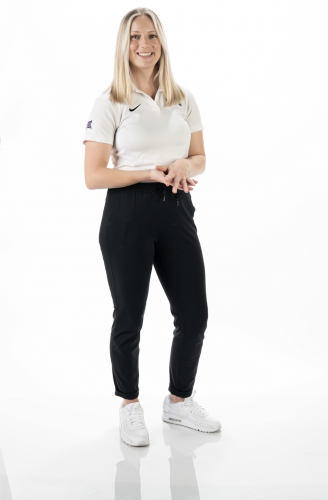
    Studio portrait of Jessica Hylander, TCU assistant athletics director for sports nutrition, smiling with hands clasped, wearing a white Nike polo with TCU and Big 12 logos, black pants and white sneakers.

    Hylanders approach to nutrition counseling extends beyond the plate, drawing on intuitive eating tools and close coordination with mental health professionals. Photo by Glen E. Ellman

    How do you incorporate mental health and overall wellness into your nutrition counseling?

    I always say you cannot make progress with nutrition if you are not doing well internally and mentally. As dietitians, we often reach a point in a consultation where something is beyond our scope. If an athlete needs a mental health professional to move forward, we involve one. We refer to mental health services all the time so the athlete can address what they need to address. 

    We use concepts like intuitive eating, which focuses on how a person feels rather than how they are perceived or what a number says, whether that is a scale number or a performance metric. In sessions, an athlete might say they want to be 200 pounds. Instead of staying focused on that number, I will ask if they have been 200 pounds before and how they felt at that weight. Did they perform well? Did they feel slow? Did they feel better at a different weight? It is about helping them connect with their body, brain and emotions rather than anchoring everything to a number, which athletics often do.

    We also care for many athletes who struggle with eating disorders or disordered eating. We make sure they are supported nutritionally and connected with the right mental health professionals. We have seen these issues grow more prevalent since Covid. A lot of this work also involves celebrating different meals and helping athletes build a healthier overall relationship with food.

    What’s one go-to recipe or snack you would recommend for athletes that might also appeal to non-athletes?

    I always want to make sure it is a balanced snack, so I look for something with a carb and a protein. We do a lot of smoothies because they are easy and great in the Texas heat. I always add protein powder and fresh or frozen fruit. It is simple but really refreshing.

    I know this sounds odd, but I have also been loving scrambled eggs with cottage cheese over toast or a bagel. I will eat it for breakfast and then use it as a snack later too.

    Are there any food trends, like plant-based eating, functional beverages or recovery snacks, that you see crossing over from mainstream dining into sports nutrition?

    Our athletes are really tuned in to Instagram and the latest trends, especially with NIL, because they’re constantly approached to represent brands or products. Energy drinks are definitely one of the biggest trends I see. Probiotic drinks are another popular one.

    What role does Fort Worth food culture play in how you educate athletes about making smart dining choices off campus?

    Our off-campus athletes receive extensive education on how to eat out. We also partner with Red Card, a company that works with select Fort Worth restaurants to offer our athletes healthy options. The administration can load money onto a card that’s used only for food, ensuring athletes get good meals rather than spending per diem funds elsewhere.

    We educate athletes on the restaurants in this program and guide them on what plates to choose for regular days versus before or after competition. Beyond that, with tools like the performance dining facility, athletes can apply these concepts at any restaurant they visit.

    We also partner with local restaurants to highlight cultural events, like Hispanic Heritage Month in October and Black History Month in February. During these times, we feature predominantly Black-owned or Hispanic-owned restaurants to showcase the rich and diverse food culture Fort Worth offers.

    How do you envision the Human Performance Center transforming the way TCU approaches sports nutrition?

    It allows us to do much more for our athletes. For example, we can now provide collagen shots. We can also customize smoothies and improve food preparation thanks to the larger space.

    The new center has helped our department evolve by improving the ease of service and flow. Nutrition stations are spread throughout the facility, so athletes have easy access to vitamins, pre-fuel, hydration and recovery options.

    It takes our collaboration to the next level. For me, being in the new facility means I’ll get to see athletes more often while they’re lifting and using the nutrition stations.

    Will the new facility allow you to track and personalize nutrition for student-athletes in ways that weren’t possible before?

    Definitely. We now have a program that lets us track smoothie orders by team and individual. This helps us see who’s participating and recovering well, and who’s taking advantage of the free resources we offer.

    When it comes to individualizing nutrition, we can now spot trends in what athletes choose. Before, it was more of a free-for-all. Now, during meetings, I can pull up their choices and say, “It looks like you picked this smoothie, but if your goal is to gain weight, let’s try this one instead.”

    “A big misconception is that lighter equals faster.”
    Jessica Hylander

    How do you see technology such as body composition scans or other data analyses shaping your work?

    We have a new body composition machine called a Dual-Energy X-ray Absorptiometry (DEXA) scanner. It measures body composition more accurately than before and also tracks bone mineral density.

    One key use is with the swimming and diving teams. Because swimming is a low-impact sport, athletes’ bones can become less dense. The DEXA helps us monitor their risk for stress fractures and other bone injuries.

    Additionally, body composition data helps us assess soft tissue and prevent related injuries, allowing us to individualize care and recommendations.

    What excites you most about the future of sports nutrition at TCU?

    We’re actively working to partner with on-campus researchers, and that progress excites me most. I’m looking forward to building a sports science side where different groups come together to provide even more holistic care and help our athletes perform at a higher level.

    What are some of the common misconceptions you encounter about sports nutrition?

    A big misconception is that lighter equals faster. Many athletes believe weighing less will make them faster, but I’ve seen plenty succeed when they’re a bit heavier because they carry more muscle and power.

    What advice would you give your younger self when you were just starting out in sports nutrition?

    It’s not always like the textbooks say. Give yourself grace and focus less on following the textbook perfectly. Instead, meet the athlete where they are and be more in tune with their individual needs.


    Editor’s Note: The questions and answers have been edited for length and clarity.
  3. How TCU Alumnus Chris Reale is Leading Paris Coffee Shop Into its Next Century

    1 Comment

    WHEN CHRIS REALE ’17 NEEDS SPACE TO RECHARGE, he visits his rustic property in rural Whitney, Texas, camping in his Airstream travel trailer. At 35, the chef, gym owner and now operating partner of the nearly century-old Paris Coffee Shop in Fort Worth admits he’s never liked sitting still. Decompressing, for him, consists of hunting deer — which he’ll process, cook and eat — with a compound bow while harnessed high in a tree.

    Tough pursuits, whether by choice or by necessity, have defined Reale’s entire life, so it’s no surprise he thrives on them.

    Reale described a somewhat unstable upbringing in Haltom City, Texas, where he said he “grew up super poor.” He shared a tiny three-bedroom, one-bathroom home with two older siblings, a volatile father who was in and out of prison, his mother and whichever “random aunt or troubled teen” she would take in.

    “At one point we had nine people living in the house,” he said.

    Fast-forward to Reale’s time at TCU. He enrolled in his mid-20s after earning an associate’s degree from Tarrant County College and while busy working directly with one of Texas’ most notable and sought-after chefs, Lou Lambert.

    While Reale’s fellow nutrition students were just learning the ins and outs of the food industry, he had already racked up nearly 10 years of restaurant experience in upscale kitchen management and operations. That included high-profile catering for millionaire ranchers, musicians and even the Bush family. (Lambert and Reale provided the cuisine for Jenna Bush Hager’s 2008 nuptials in Crawford, Texas.)

    Anne VanBeber, professor of nutritional sciences, called Reale one of her most impressive students.

    “His skill set in the kitchen was so advanced,” she said. “When working with other undergraduate students in the kitchen lab setting, he was a leader and role model. He understood that he possessed a lot of street smarts, but he valued what he was gaining in his education at TCU.”

    For Reale, it was the ultimate pursuit: completing a college degree while working upward of 60 hours a week.

    “I could have been a doctor for how long I was in school,” Reale joked. “It wasn’t from lack of good grades, but some years I could only take six hours. But not once did I think, ‘This isn’t going to work’ or ‘This is going to be too hard.’ This is just what it has to be.”

    FEEDING HIS CREATIVITY

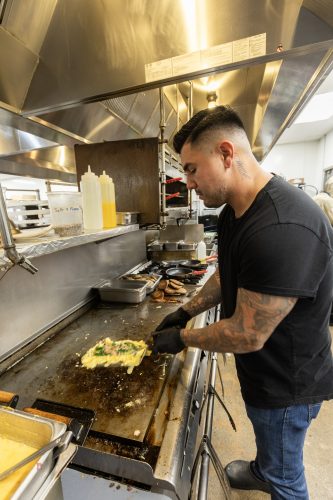
    Reale works the flat-top griddle at Paris Coffee Shop, folding an omelet as sausage patties and bacon cook nearby.

    “I’m a restaurant guy,” Reale says. “I just love the idea of feeding someone.”

    At 8 years old, Reale proclaimed his desire to become a chef. He described his mother as a phenomenal cook who would prepare authentic Italian dishes ideal for feeding a crowd. Standing on a chair helping her stir marinara or Bolognese sauce fed his hunger for serving others.

    “Communion, family time and eating together was a huge aspect of my upbringing,” he said.

    Reale was 15 when he got a job working nights in the kitchen at Del Frisco’s Double Eagle Steakhouse downtown, where his mother worked as a server. The hottest fine dining establishment in town at the time, with a regular customer base of Fort Worth elite, it’s where he learned the importance of systems in the kitchen.

    At Del Frisco’s, Reale was a high school student working alongside Fort Worth restaurant royalty: Adam Jones, who now owns Grace, 61 Osteria and Little Red Wasp; Anthony Felli, now executive chef at Jon Bonnell’s Waters Restaurant; and Martin Thompson, who owned and operated Cat City Grill for 15 years. Reale credits each for industry insights and life lessons learned while on the job.

    “All three of those men have been so crucial to my success,” he said.

    Reale was also moonlighting as a drummer in metal bands, playing gigs in Dallas and at the Ridglea Theater in Fort Worth.

    “I got my first drum set at 9 years old and mowed lawns to save $350 to get it,” he said.

    Eventually, Reale craved a more creative kitchen than offered at Del Frisco’s, a chain that adhered to corporate recipes. He found that outlet at Zambrano Wine Cellar one block away.

    “I started making pizza by hand, prime rib and experimenting with fancy plating for dishes like caprese salad with beefsteak tomatoes,” he said. “Del Frisco’s was such a machine, and you’re doing the same thing every day. Now I was creating features, wine dinners and expanding a little more.”

    THE BIGGER PICTURE

    Things changed quickly for Reale when he applied for a line cook position at Lambert’s Steak, Seafood & Whiskey, opened by seventh-generation Texan Lou Lambert in 2008. Buzz surrounded the new establishment during a time when Texas-inspired cuisine was trending.

    “As we got to know him, he showed the tenacity of wanting to learn and being willing to work,” Lambert said. “He asked questions, kept his head down and started exhibiting characteristics of creativity but also understanding the business. Over the years, I became more invested in him in business and personally. He became part of the family.”

    Lambert said it’s rare to find an employee who can showcase innovation in the kitchen while knowing how to control important operational factors such as labor, food costs and inventory.

    Reale credits Lambert for pushing him out of his comfort zone and expanding his culinary vision beyond “banging pots and pans” forever.

    “He asked, ‘Have you ever thought about being a manager or opening your own restaurant?’ I said no,” Reale said. “My bar was set pretty low. The thought of ‘big picture’ didn’t correlate in my head.”

    Lambert soon entrusted Reale with some of his biggest business endeavors. Reale took on leadership positions in both the front and back of the house at Lambert’s. When the restaurant closed in 2012, Lambert made Reale the point person for his ongoing catering business and included him in his Campo Smokehouse food truck, among other projects.

    After a stint at Grace, where Reale led the bar program while still assisting Lambert with big events, the duo reunited to reincarnate Roy Pope Grocery after its pandemic-induced closing in 2020. The landmark grocer, butcher shop and café on Fort Worth’s West Side had been open since 1943. At the time, Reale was rediscovering his love for music, drumming for an alternative metal band, My Perfect End. But he put down his drumsticks for what he calls the hardest project he’s ever encountered.

    “It was the height of Covid. There were construction delays, we couldn’t get any purveyors. I was drowning,” he said. “I was sleeping in the booths, working over 100 hours a week. I put every last hour in this thing.” It reopened in 2021.

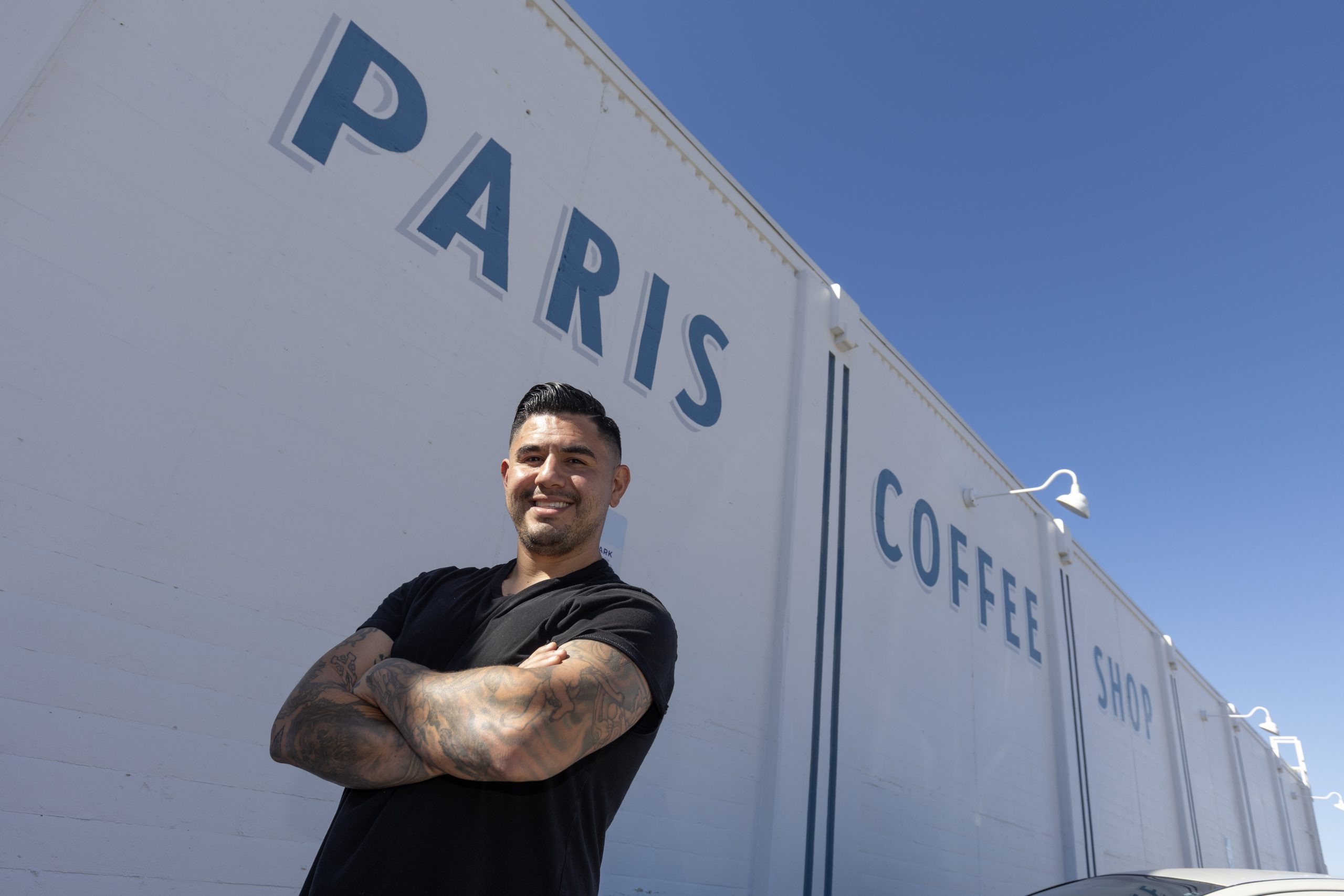
    Chris Reale stands with arms crossed outside Paris Coffee Shop, with the diner's large blue “PARIS COFFEE SHOP” lettering painted on the white exterior wall behind him.

    When Paris Coffee Shop came up for sale in 2020, Reale and his mentor, chef Lou Lambert, stepped in to keep the diner from being converted into apartments.

    That same year, Paris Coffee Shop came up for sale, and Lambert and his partners wanted to save the iconic diner from being converted into apartments.

    “I said, ‘No way,’ ” Reale said. “But Fort Worth is full of heritage and culture, and that was the driving force that we had to do it.”

    Reale said gutting Paris Coffee Shop, which he described as being held together by “grease and memories,” was necessary to continue its legacy for more generations in Fort Worth. He and Lambert wanted to showcase a refreshed, bright and airy version of the historic eatery while keeping as much of the original equipment, fixtures and decor as possible. Reale admitted that restaurant regulars weren’t initially happy with the changes.

    “But they quickly gave us grace,” he said.

    SETTING A NEW PACE

    Reale and Lambert eventually stepped away from the day-to-day operation of Roy Pope Grocery and are now fully dedicated to seeing Paris Coffee Shop through its 100th anniversary this year and for years to come, Reale said.

    The 2:30 p.m. closing time is well-suited for Reale’s newest role as a father to his 2-year-old son and for a somewhat slower pace that includes regular visits to Westfork Fitness, a full-service gym he opened with Lambert in Fort Worth’s River District. Reale has used his hospitality background to instill high-end customer service principles at Westfork and even creates healthy retail meals labeled with protein, macronutrient and carb contents, using concepts from his education in nutrition.

    Reale also now serves on TCU’s Nutritional Sciences Advisory Board. He’s visited campus as a Green Honors Chair to speak to nutrition students on food and beverage topics, such as the origin and types of tequila, the butchering process and cuts of beef, and the ins and outs of the restaurant business.

    “Chris knew the importance of networking and giving back to the community,” VanBeber said. “You always remember the students who have initiative, perseverance and positive attitudes. Chris created a life for himself and his family that he was not given as a young person.”

    Finding more time to bow hunt or practice drumming is a challenge, but Reale has maintained his boyhood desire to serve others.

    “I’m a restaurant guy,” he said. “I just love the idea of feeding someone. I have a heart for service. I want to make people happy with whatever works I can do.”

  4. Lorie Fangio on French Cooking, Curated Travel and A Taste of Paris

    Leave a Comment
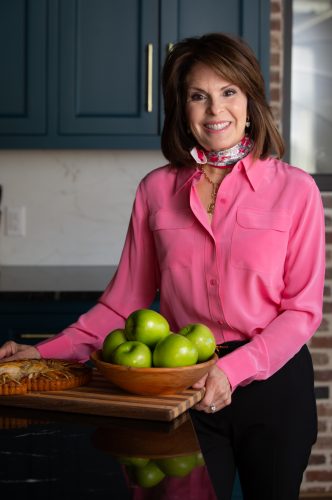
    Lorie Fangio smiles in her kitchen, holding a wooden bowl of Granny Smith apples next to a freshly baked apple tart on a cutting board.

    Fangio adapts her French recipes before teaching them. American ingredients and ovens, she says, are different. Photo by Joyce Marshall

    Before Lorie Fangio ’84 founded A Taste of Paris, her culinary business that’s been taking small groups of foodies to France since 2014, she was teaching cooking classes in her home and craving a new adventure. One day, as she was describing an apricot almond tart recipe inspired by a visit to a Parisian bakery, a longtime student asked, “When are you going to take us with you?”  

    This question opened Fangio’s mind to her next big career step. It was a surreal moment, she said. “I felt like the whole world kept moving, but I wasn’t movingAnd that night I had this dream in vivid color about bringing my love of France and food together and sharing that with the people that were in my classes and in my world.”

    PROFESSIONAL PATH

    Fangio, who graduated from TCU with a home economics education degree, began her career in the apparel industry. She was accepted into a competitive Dillard’s executive training program right out of college and learned how to manage people. She went on to work for a garment manufacturer, where she managed the design room, and then worked in textile design, where she headed a department.

    Twelve years into her career, Fangio became a stay-at-home mom. With her newfound freedom, she began throwing themed get-togethers for friends and family, experimenting with new recipesShe also began traveling to France to take culinary classes.

    With a nudge from a friend, Fangio began teaching French-inspired cooking classes in culinary schools throughout North Texas. In 2012, when her favorite cooking school closed, Fangio began welcoming students to her home kitchen in McKinney, Texas, for culinary instruction.

    “I like [teaching at home] so much better because the classes are more intimate,” Fangio said, “they can be truly hands-on, and I get to know my students.

    Her home cooking classes, held once or twice a month for groups of no more than a dozen, include aever-changing variety of dishes created by Fangio, often adapted from French recipes.

    “I made all of the modifications to be geared toward the American home chef,” she said, “because our ingredients, our ovens, everything is different.” Her repertoire includes European breads, Italian pastas with homemade sauces and pastries like pavlova, a meringue and fresh fruit confection.

    She also uses her college training in presentation and food chemistry — what happens when you bring ingredients together — to correct errors and improve student efforts.

    “I want people to have the hands-on, eyes-on experience,” she said. “​​I focus on French technique, and I think sometimes just touching something, seeing something and actually doing it helps a person feel confident.”

    “Amazing things happen when you break bread in France.”
    Lorie Fangio

    Fangio said the primary goal of her classes is for students to be able to go home and create food that brings people together around a table, connecting with each other. Sometimes, that’s as simple as cookies.

    My children would say my chocolate chip cookies are the best in the world, Fangio said. The recipe, which Fangio has altered and perfected, originally came from her grandmother.  

    Fangio’s success with cooking classes brought more opportunities over the years, such as starring in the Home Hints With Lorie Fangio radio programbeing a spokesperson for Zoe’s Kitchen and Ziploc, making TV appearances on Good Morning Texas, writing for local publications and blogging. 

    A UNIQUE TASTE OF FRANCE

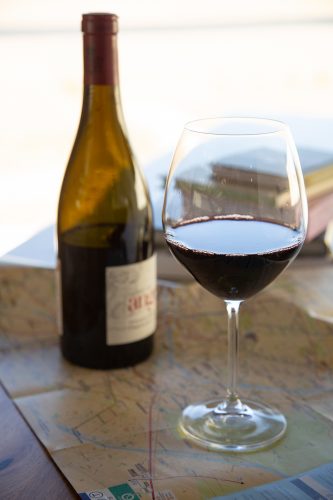
    A wine bottle with a partially obscured label and a full glass of red wine sit on top of an unfolded Paris transit map, with soft, warm light filtering in from a window in the background.

    Wine and a map: the everyday tools behind Fangios curated French excursions. Photo by Joyce Marshall

    Fangio continued her culinary studies in France and earned several wine certifications. Prompted by that student’s question — “When are you going to take us with you?” — she began leading weeklong culinary excursions to France in 2014Paris is Fangio’s flagship trip, but she also takes small groups to Provence, the Loire Valley and the Burgundy and Champagne regions 

    Activities, which vary based on the destination, always include cooking classes with the best local chefs, as well as food and beverage tastings and excursions. “It’s a white glove treatment,” said Nancy Driver, a cooking class student who has gone on multiple trips with A Taste of Paris. Fangio “has taught me how to live more abundantly.”  

    One of Fangio’s goals is to guide her travelers toward experiences they would not be able to find on their own. Participants have attended wine tastings in caves where the Knights Templar once gathered and taken a cooking class at Le Cordon Bleu“It’s a very unusual, curated travel experience,” said Janis Wells, A Taste of Paris trip attendee, “because shes very concerned about making sure that what we do is unique.

    “I always say amazing things happen when you break bread in France. Stories of triumph great and small tend to tumble out. … What I did not expect was how spending time with these remarkable individuals would impact me,” Fangio said. “Connection is so important and in our rapidly paced lives  I believe the greatest gift we have is to share ourselves with each other in an honest and open way.”

    With so many trips to France under her belt, Fangio has developed a few guidelines for a smooth travel experience:

    Take your pictures and then put the phone up and be present. This is how the best experiences happen.

    When you’re in a very touristic area, do not sit down to eat. Get off the beaten path, look and see where you see people you know are locals, and go there because that’s where you’re going to find good food.

    Don’t worry about calories. Just realize that you burn a lot when you’re traveling and be in the moment, taste something different and new and just enjoy.

    Learn a few words of French. The French are a very polite society and expect you to speak to them. Hello, bonjour; and thank you, merci: These two little words will get you very far. 

    Travel must-haves: An umbrella, but always expect sunshine; a great blazer because it cleans up any look; and a fantastic pair of jeans that can be dressed up or down.

    Edited for length and clarity.

  5. Remembering Mike Harrison ’64: The West Texas Businessman Behind The Harrison Building, TCU’s Middle-Income Scholarship Program and Horned Frog Athletics

    Leave a Comment
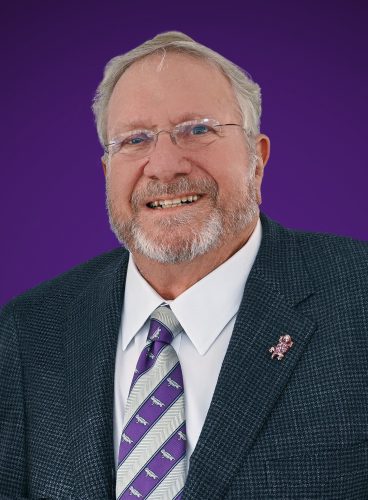
    A smiling older man with a white beard and rimless glasses, wearing a charcoal blazer, white dress shirt, and purple-and-silver striped tie patterned with horned frogs, with a matching horned frog lapel pin, photographed against a solid purple background.

    Harrison wore purple the way he gave to TCU: without ceremony and for most of his life. Photo by Glen E. Ellman

    When Texas Christian University prepared to name its new administration building in honor of Mike and Brenda Harrison, Chancellor Emeritus Victor J. Boschini Jr. had to do something he rarely does with major supporters. He had to argue.

    Harrison didn’t want his name on the building.

    “I basically had to force him to let us use their name,” Boschini said. The reaction was consistent with everything he knew about the man. Many times over the years, Harrison had handed Boschini a check, sometimes for millions of dollars, with instructions that could not have been simpler: “Just do something good with this on campus, Victor.”

    He meant it. All the Harrisons ever wanted, Boschini said, was for TCU to prosper.

    Michael Anderson “Mike” Harrison ’64 died April 30, 2026, in Midland, Texas. He was 84.

    Armed with a Bachelor of Business Administration from TCU, Harrison began his professional career at First National Bank in Fort Worth, but when his grandmother passed away, he returned to Pecos, Texas, at his mother’s request to manage the Anderson family estate. What began as an obligation became a calling. As managing partner of Anderson Enterprises and, later, Anderson Ranches in Midland, he spent more than five decades in West Texas agriculture and business. He became a trusted resource in oil and gas, lauded across the region for sharing hard-won expertise in pipeline operations.

    His civic commitments in Reeves County ran deep. He served on the Pecos City Council, as a director of Security State Bank and as an elder at First Christian Church. Elected Reeves County Judge in 1991, he served in that role until 1994. He was appointed by Lieutenant Governor Bill Hobby to a state commission on rural economic development.

    TCU was never far from Harrison’s thoughts. The sentimentality went back generations.

    Harrison’s father, W. Oliver Harrison ’32 (BDiv ’35), had enrolled at TCU at 16, working as a janitor to pay his way. He ultimately earned three degrees from the university. Mike’s brother, William O. Harrison Jr.graduated in 1967. Mike’s son Michael Harrison Jr. earned his degree in 1991 and daughter Christina Harrison Pittman in 1994. Last May, Abby Harrison ’25 crossed the stage with a degree in Communication Studies, becoming the fourth generation of Horned Frog Harrisons.

    In 2019, the Harrisons gave $10 million to TCU to establish the Brenda and Mike Harrison Endowed Scholarship Program, a permanent need- and merit-based scholarship for students from middle-income families priced out of private university tuition. Every major philanthropic decision was made together, a true partnership from the start.

    At the building dedication of The Harrison in 2020, Mike told the story of a secretary, Suzie Kerley, who had worked for him in Pecos, a woman whose daughters were exceptional students, who applied to TCU, who were accepted but who couldn’t afford to go on a middle-income family salary.

    “When we had a chance to do something to help TCU, we were going to make sure middle-income families had a chance to go like we did,” Harrison said. “I couldn’t afford [the scholarship program] then, but now we hope we made a difference.”

    Hundreds of TCU students have benefited from that scholarship since its creation. In recognition of the gift, TCU named its new administration building The Harrison, a decision that required some persuasion.

    “Mike and Brenda have quietly made TCU a better place for all Horned Frogs. It is a rare privilege to have seen their generosity in action across campus,” TCU Chancellor Daniel W. Pullin said. “Most profoundly, they have made a positive mark on the everyday lives of students, with their inspired gift for middle-income students and their investment in our student-athlete experience.

    The Harrisons’ generosity to TCU left a mark on nearly every corner of campus. They regularly supported the Neeley School of Business and Brite Divinity School, among other projects and initiatives. In 2025, the Mike & Brenda Harrison Football Performance Center was dedicated in recognition of their lead gift to TCU’s $50 million Athletics Human Performance Center project, the latest expression of a lifetime of devotion to Horned Frog athletics.

    “Brenda and Mike have been unwavering in their support of TCU and have always stepped in to strengthen our programs and the student-athlete experience,” TCU Football Coach Sonny Dykes said. “Mike’s loyalty, sincerity and generosity will be missed.

    In 2023, TCU honored Harrison with its Royal Purple Award, the university’s highest recognition for alumni service and generosity.

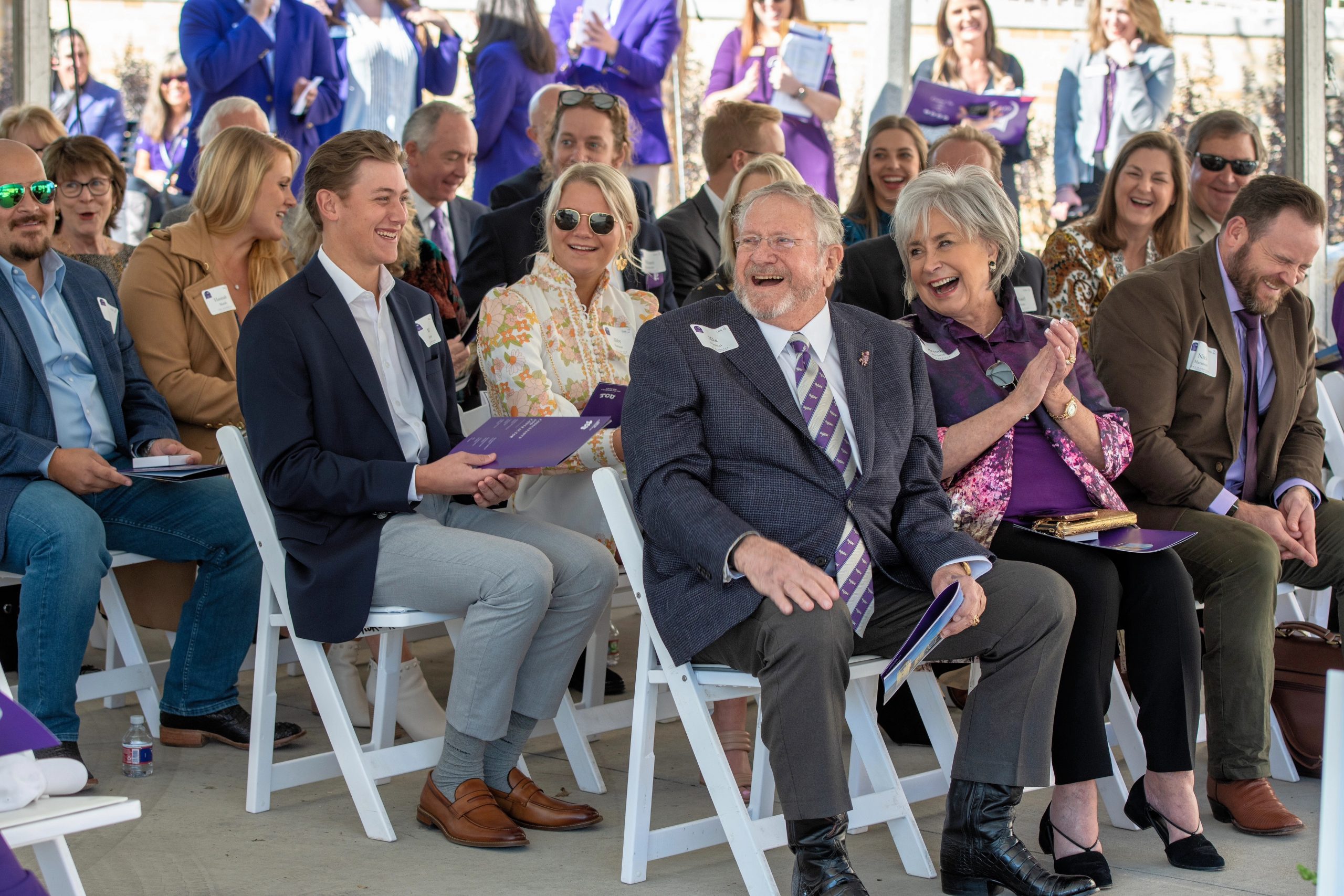
    Mike Harrison laughs alongside his wife, Brenda, while seated in the front row of an outdoor TCU ceremony, surrounded by family members and a crowd of attendees in purple.

    A 1964 graduate, Harrison, center, carries a Horned Frog legacy that reaches across four generations. Photo by Glen E. Ellman

    At the Harrison Football Performance Center dedication, Mike’s granddaughter Abby rose to offer remarks. She prefaced what came next by saying it was a story told “in the clear Mike Harrison fashion.”

    She lives in Augusta, Georgia, deep in Georgia Bulldog territory. On her first day at a new job, her colleagues hung a printout of the Georgia-TCU national championship score above her desk.

    She went home that evening, gathered every piece of TCU gear she owned and walked back in the next morning with a bag full of purple. A Hypnotoad now hangs by her left monitor, flanked by TCU towels.

    Im known as the TCU girl, she said. But I wouldnt want to be known for anything else.

    She learned that loyalty from her grandfather.

    Those who knew Mike well said his priorities were simple: God, family and TCU, in that order. To Boschini, who first met Harrison during a 2003 trip to Midland, the measure of the man was straightforward. He was understated, funny without trying to be and entirely uninterested in credit. Speaking of the students whose educations Harrison made possible, Boschini said: He was a kind and decent man and a hard-working person, and those are all qualities they should try to emulate.

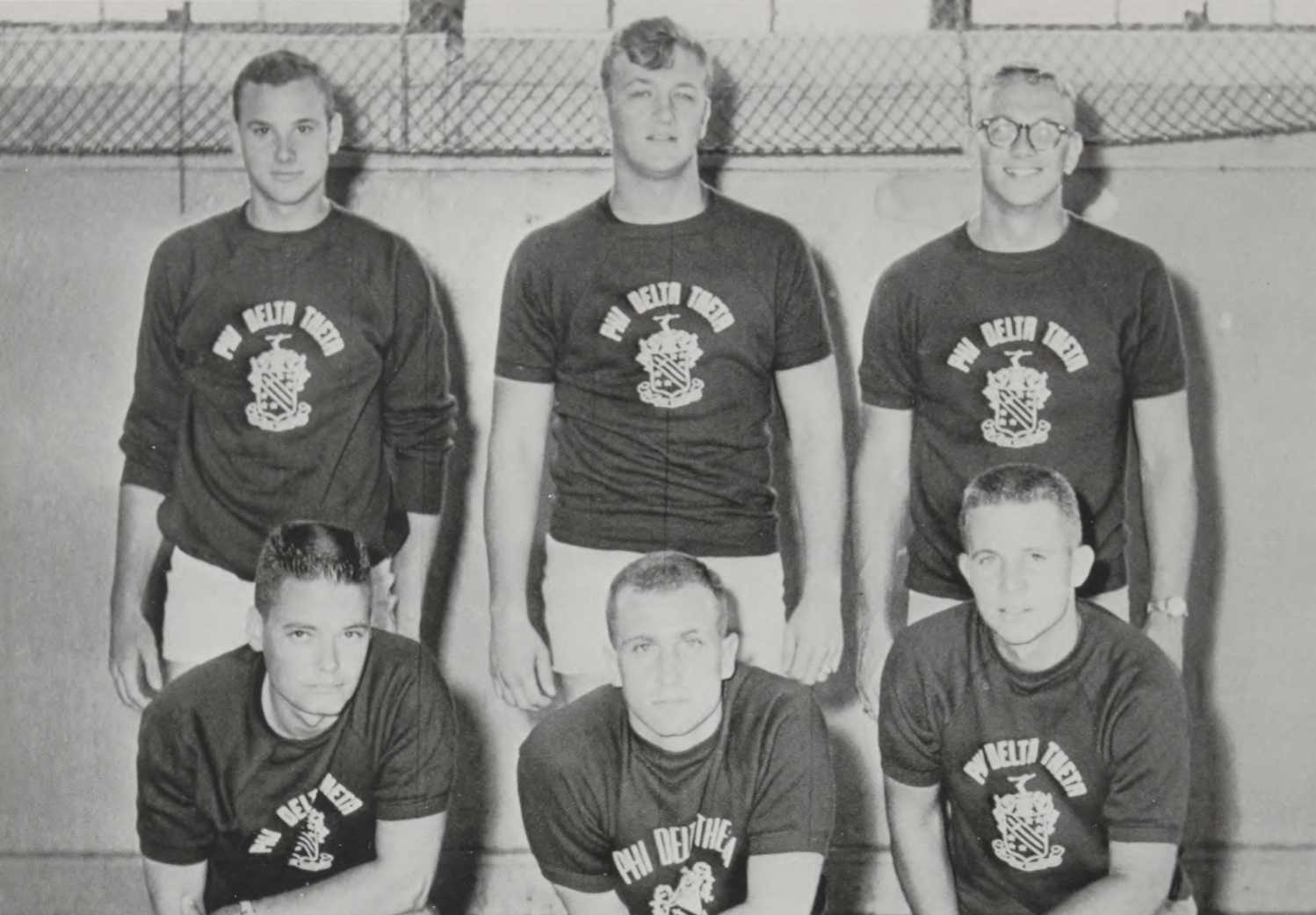
    Black-and-white yearbook photo of six young men posed in two rows in front of a chain-link fence, all wearing Phi Delta Theta t-shirts with the fraternity’s crest.

    Harrison, top right, with his Phi Delta Theta swimming teammates during his senior year at TCU. He remained a competitive athlete well into his later years, particularly on the golf course. 1964 Horned Frog Yearbook

    Harrison was a gifted athlete long before he became a patron of TCU athleticsa high school basketball player whose competitive drive never faded. He was also a formidable golfer. He recorded five holes-in-one, won the Senior Club Championship at Riverhill Country Club in Kerrville, Texas, six times and claimed the Pecos Men’s Golf Association Senior Club Champion title eight times between 2001 and 2012. His golfing friends will remember the sparkle in his eye when the game was on the line.

    Mike Harrison is survived by his wife, Brenda; his sons, Michael Harrison Jr. and wife Penny, Gray Harrison and Nicholas Harrison; his daughter, Christina Harrison Pittman; and five grandchildren, Ben, Will and Abby Harrison, and Carolina and Harrison Pittman.

    We are honored to continue to celebrate Mike’s life in the daily life of campus as students, faculty and staff enjoy their namesake, ‘The Harrison,’ ” Pullin said.To Brenda and their many generations of Horned Frogs, we are grateful for Mike, for you and for your family’s legacy at TCU.

    On the day of his memorial service, the TCU flag outside Sadler Hall flew at half-staff.

  6. How TCU’s Tom Gordon Built Slim Chickens Into a Global Chain

    Leave a Comment

    As an undergrad at TCU, Tom Gordon ’97 never envisioned building a company that would employ more than 12,000 people around the globe. But within three decades of earning a degree from the Neeley School of Business, the entrepreneur and innovator behind Slim Chickens helped grow the fast-casual chain, best known for its hand-breaded tenders and range of dipping sauces, to nearly 400 restaurants — and counting.

    “I believe in leadership and taking care of people and doing the right things,” said Gordon, who co-founded Slim Chickens in 2003 and serves as its CEO. “But in some ways, I still don’t know how we pulled it off.”

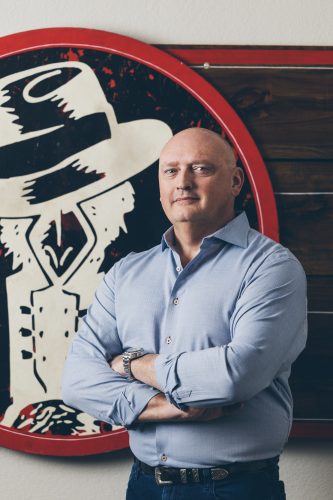
    Tom Gordon stands with arms crossed in front of a large circular Slim Chickens logo featuring the brand’s cowboy mascot illustration in cream and black on a red background.

    Gordon still tests every new item on the Slim Chickens menu himself, a hands-on approach that’s been constant since the first location opened in February 2003. Photo by Iron Lotus Creative / Stephen Ironside

    His college friends, however, express anything but surprise at Gordon’s astonishing success.

    “Here was this 18-year-old kid from Little Rock who believed in himself even then,” said Cary Tremper ’96, a Sigma Chi fraternity brother who is president and CEO of Tremper Capital Group in Dallas. “Tom is also one of those folks you meet in life who wants to give more than he receives.”

    “Tom’s always been a very charismatic guy who works really hard,” said John Kuykendall ’97, a fellow Neeley grad and fraternity brother who’s now a Dallas-based senior vice president and managing director at MidFirst Bank. “When we were younger and we’d all go on boys trips and bachelor parties, he couldn’t go. He was busy building his business.”

    Build it Gordon did. In 2025, the brand opened more than 70 restaurants and is on pace to have 600 by 2029. Not bad for a guy who, along with co-founder Greg Smart, invited friends in the early 2000s to taste-test chicken and sauces in Smart’s garage, then tweaked recipes based on their feedback.

    “I’m still a hands-on leader who sees and tests any new item on the menu,” Gordon said. In addition to tenders, Slim Chickens serves wings, sandwiches, wraps, salads and more with an emphasis on Southern flavors and hospitality. Meals are often served with Texas toast, mac and cheese and a TikTok favorite, fried pickles.

    At the same time, Gordon is a visionary charting the future of the brand alongside Smart, Slim Chickens’ chief marketing officer.

    “Our goal,” Gordon said, “is to grow and build out the organization to a worldwide restaurant powerhouse and a cultural phenomenon.”

    BRIGHT BEGINNINGS

    Gordon grew up in a tight-knit middle-class family that valued sitting down together and sharing a meal. While at TCU, where he studied finance with a concentration in real estate, he envisioned a future as a stockbroker or wealth manager. An internship at Merrill Lynch in Fort Worth following graduation changed his mind — money in and of itself never really lit his fire.

    Gordon moved home and went to work at Macaroni Grill. “I needed to repay my student loans, and I did every job in the restaurant: waited tables, tended bar, was the sous chef, manager and a trainer,” he said. “It was my first formative operational experience in the world of restaurants.”

    He was hooked.

    Gordon moved to Los Angeles, where he tended bar while honing his understanding of the hospitality business. He kept asking himself the big questions about the guest experience: How do you make someone feel welcome, and what do you do to make them want to come back?

    Three years into his tenure in Southern California, Gordon got a call from Smart pitching a plan to start a fresh chicken tender restaurant in northwest Arkansas. The location was key to the conceptMore than a billion chickens are raised each year in Arkansas, mostly in the state’s northwest corner, which is home to Tyson Foods, one of the largest food companies in the world.  

    With input from those early homegrown focus groups, longtime friends Gordon and Smart perfected a marination process that used buttermilk, plus their seasoned breading, a proprietary blend they concocted. The business partners then leased space in an old building on College Avenue, two miles from the University of Arkansas flagship campus. They opened the first store in February 2003, not long after Gordon’s mother came up with the catchy company name — a play on Slim Pickens, the actor and rodeo performer.

    “We borrowed money from family,” Gordon said. “We borrowed money from friends. We applied for every credit card we could get and maxed them all out. We used all our savings. Borrowed money against vehicles. Even still, we started on a shoestring budget, a wing and a prayer.”

    “I believe in leadership and taking care of people and doing the right things. But in some ways, I still don’t know how we pulled it off.”
    Tom Gordon

    Two years later, they opened a second location in Rogers, Arkansas. By the end of the decade, they had built nine Slim Chickens restaurants in Arkansas and Oklahoma.

    “Those early years were hard and money for payroll at times was tight,” said Ianni Palandjoglou ’97, a longtime sounding board for Gordon who serves as a managing director at Brown Brothers Harriman’s Houston office. “But Tom was always fun, social, hardworking and adaptable, and he surrounded himself with good people. He was going to find a way to make it work.”

    “In those early days, close to 10 years, it seems that we both did about everything and anything needed to support and grow the business,” Smart said. “With a startup business you have to learn everything you can and learn how to operate at all functions in order to make the best decisions.”

    ACCELERATED GROWTH

    Gordon and Smart recognized early on that growth would include franchising, which would enable the chain to expand more rapidly thanks to outside capital. The first Slim Chickens franchise opened on the Arkansas side of Texarkana in 2013. By mid-2026, the eateries, all decorated in a Mardi Gras palette of purples, greens and golds, can be found in 32 states.

    Tom has always been good at recruiting and encouraging the right people to join our team,” Smart said. Success is a team effort and finding the right people is critical. People want to work for leadership that supports individual and team growth with clear expectations.

    In March 2018, the company unveiled its London location, the inaugural store in the United Kingdom. A strong relationship with the British Boparan Restaurant Group and a perceived void in existing options for made-to-order tenders and other quality Southern fare spurred the expansion. A year later, Slim Chickens opened in Cardiff, Wales, and Bristol, England. Today, there are more than 70 stores around the UK, including Edinburgh and Glasgow, Scotland, and in London’s famed Leicester Square.

    “I was in London last summer and had no idea there were so many Slim Chickens there,” Kuykendall said. “The British really love Slim Chickens, and I couldn’t be happier for Tom. It’s an amazing success story.”

    Franchisees travel to Northwest Arkansas, where Slim Chickens uses its 10 area stores as a base of training. Gordon anticipates the company, which also has stores in Ireland, Germany and Malaysia, will expand to one or two countries a year for the foreseeable future.

    Gordon spent three years bartending in Los Angeles asking himself what makes someone feel welcome and want to come back. Those questions shaped Slim Chickens’ approach to hospitality. Photo by Iron Lotus Creative / Stephen Ironside

    “Wherever we move into new markets, we try to find ways to understand what the community wants, what they need and what they like about the brand,” Gordon said, noting they expect to grow by at least 50 stores annually. “Seeing franchisees meet with success and seeing general managers rise to the occasion and create a career — those are great moments for me.”

    Another great moment was sending his older son, Will, to TCU in fall 2025. Gordon and his wife, Leslie, also have a 16-year-old sonLuke, a competitive tennis player who trains and attends school in Murcia, Spain.

    “I tell my kids that the only currency any of us really have is our integrity and our name,” said Gordon, who noted the company partners with organizations — from local PTAs to the national campaign No Kid Hungry — for frequent fundraisers. “We talk around here about life-changing chicken. Slim Chickens should change lives for our guests and our team members. It should change lives for our community, and it’s changed lives for all of us in the corporate office.”

  7. Realsy Founders Sophia Karbowski and Austin Patry: How It Started … How It’s Going

    Leave a Comment
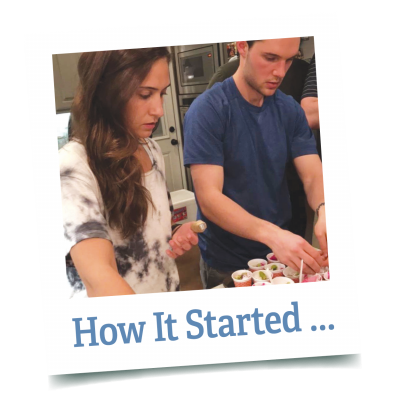
    Sophia Karbowski and Austin Patry assemble açaí bowls in a kitchen as college students, shown in a tilted polaroid-style frame captioned “How It Started…”

    Sophia Karbowski and Austin Patry started their first business, Rollin’ n Bowlin’, out of Karbowski’s kitchen while they were seniors at TCU. Courtesy of Sophia Karbowski and Austin Patry

    Sophia Karbowski ’17 and Austin Patry ’17, business partners since their senior year at TCU, were named to the Forbes 30 Under 30 List in 2025. Their company, Realsy — a line of nut butter-stuffed dates — was the first product of its kind, with revenue jumping from $1.7 million in 2024 to $7 million in 2025.

    Karbowski and Patry met in a class at TCU and bonded over a shared love of healthful foods. As seniors, they started Rollin’ n Bowlin’, an acai bowl business, out of Karbowski’s kitchen.

    When they mentioned the project to Lin Nelson, then a lecturer in the Neeley School of Business who taught their entrepreneurship class, she gave them a $100 bill from her own wallet and sent them home to make acai bowls for the class, which they served while pitching their business idea. Nelson allowed them to continue working on the business during class time, provided they stopped by to give a weekly update.

    After a short stint operating a food truck, Karbowski and Patry opened Rollin’ n Bowlin’ cafes in brick-and-mortar locations at 10 college campuses, including in the University Recreation Center at TCU. During the pandemic, as some of the stores temporarily closed, they launched a line of frozen fruit blends so customers could make acai bowls at home.

    “That was pivotal for us, because that was when we realized we really enjoyed that CPG space — consumer packaged goods,” Karbowski said. Patry added, “We were having a lot of fun, but realized frozen is really challenging, and we also wanted to have something … we could take on the go.”

    Austin Patry and Sophia Karbowski throw Horned Frog hand signs on the TCU campus in 2017.

    Patry and Karbowski’s business partnership began at the Neeley School of Business, where a professor handed them $100 and told them to start cooking. Courtesy of Sophia Karbowski and Austin Patry

    Inspired by the social media trend of making dates filled with nut butter and determined to create a version they could package, they tested their recipes on family before launching Realsy in October 2022. The business partners developed their own supply chain, with the snacks produced and packaged at a family-run date farm in Sonora, Mexico. Made with organic Medjool dates, Realsy snacks are filled with almond butter, peanut butter, chocolate peanut butter or strawberry peanut butter.

    Karbowski described Realsy as resembling a Snickers bar in flavor: “Dates are known as nature’s candy.”

  8. A TCU Chemist’s Case for Teaching Science Through Whiskey

    Leave a Comment

    Since grade school, Eric Simanek had imagined becoming a science teacher. The deeper he got into the scientific material — chemistry, biology, “what have you” — the more he wanted to share it. A research career at Harvard did nothing to change that passion. What he lacked when he arrived at TCU in 2010 as the Robert A. Welch Chair of Chemistry was a subject worth teaching to students who hadn’t signed up to be scientists.

    He found it in a hallway, talking to Rob Arnold, a Fort Worth-based distiller who was hunting wild yeast.

    That encounter, and the decade that followed, produced Arnold and Simanek’s Shots of Knowledge: The Science of Whiskey, published by TCU Press in 2016, and Whiskey: Science and History, a course that drew students from across campus.

    But the whiskey, Simanek said, was almost beside the point. The real story is about a chemist who believes making science accessible is not just good teaching, it is essential citizenship. “I think it’s the responsibility of any professional in any field to make knowledge available.”

    Whiskey was the door that happened to be open.

    THE RIGHT SUBJECT

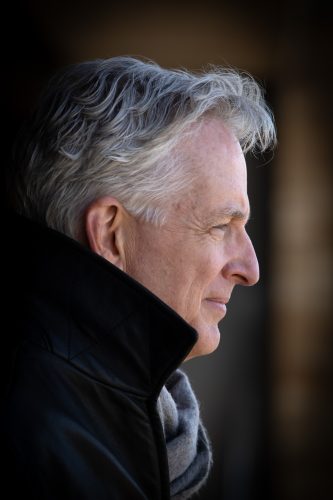
    Eric Simanek photographed in profile, with silver hair and a black jacket over a gray scarf, looking off to the right against a dark background.

    Eric Simanek’s book “Shots of Knowledge” turns the whiskey distilling process into chemistry lessons that are palatable to non-scientists.

    Simanek was building a science course for non-majors with a specific set of requirements: a subject within his expertise, broad enough to draw students from any corner of campus and compelling enough that someone with no obligation to care about chemistry might actually want to engage with it. “All one needed,” he said, “was a topic.”

    At the time, Arnold was the master distiller at Firestone & Robertson Distilling Co., makers of TX Whiskey. He was working on a yeast isolation project in a TCU biology lab. The two met just outside Simanek’s office — the same office he still occupies — and within 10 minutes had decided to write a book together.

    What Simanek saw was a distiller doing something no one had attempted since the years just after Prohibition in the United States: hunting a wild yeast strain to use in an original distillation project, applying genetic techniques to confirm what he found.

    Arnold joked that when Troy Robertson and Leonard Firestone asked in his job interview whether he could isolate a wild yeast strain to produce whiskey, he had no idea if he could. But he said he could anyway because he wanted the job.

    “I figured it was not that different than isolating marine bacteria from ocean sediment, which is what I was doing in grad school,” said Arnold, now CEO of Advanced Spirits and co-founder of Unreined Whiskey. “It’s a lot of the same techniques.”

    TCU provided the bridge. Through a chain of introductions, Arnold secured lab space with Dean Williams, a TCU professor of biology. Together, they worked through the methodology needed to confirm whether yeasts isolated from the collected samples were Saccharomyces cerevisiae, the species predominantly used to make whiskey, and whether any candidates could deliver the spicy, fruity and floral notes suitable for Firestone & Robertson’s whiskey.

    Arnold spent weeks gathering specimens from across North Texas — grasses, fruits, bark and other indigenous vegetation — and positioning beakers of nutrient solution across the Dallas-Fort Worth area to capture airborne yeasts. Among his stops was Rancho Hielo Brazos in Glen Rose, where ranch manager Rhett Johnson spent most of a day showing him around.

    Genetically characterizing the strain to determine how unique it was compared with other known strains formed the basis of undergraduate Lizzy Do’s honors thesis. Do ’15, now an intellectual property attorney in California, said working in Williams’ lab was “one of the highlights of my college years.”

    The ultimate test was sensory analysis. Over several days, Arnold, Firestone and Robertson each evaluated the five strains by flavor and nose. In every round, all three chose the same one: a yeast taken from a pecan at the Glen Rose ranch. Firestone and Robertson still use that strain today in TX Bourbon Whiskey, which the distillery describes as carrying flavor notes of vanilla bean, honey butter and caramel.

    “I think it’s the responsibility of any professional in any field to make knowledge available.”
    Eric Simanek

    For Simanek, the yeast hunt was not just Arnold’s story. It was a story he could teach: science as it actually happens, unpredictable, dependent on institutional support and culminating in a result that could be tasted. That kind of narrative, he said, was exactly what non-scientists needed to understand what the science was.

    The book he and Arnold wrote put that principle into practice.

    PANCAKES, POWER PLANTS AND PEDAGOGY

    Shots of Knowledge describes chloroplasts as “a pouch of pancakes in syrup,” a way into the photosynthesis that converts sunlight, carbon dioxide and water into the organic molecules that eventually become grain starch. Yeasts become “coal-fired electric power plants,” burning sugar for energy. A teacher moving children through a museum by linking them hand in hand shows how nature bonds glucose into starch — and how mashing later breaks those chains back into the simple sugars that the yeast can ferment.

    The book’s approach was directly informed by Simanek’s training. His PhD adviser at Harvard, George Whitesides, has written books communicating scientific ideas to the general public. “The format for these books was a compelling visual image, which people would look at,” Simanek said, “and as few words as possible, which people may or may not read.”

    Following that model, Simanek and Arnold complemented each essay with a very short “shot of knowledge” included as a margin note.

    The theoretical case for the approach was equally deliberate. “Much of what any professional does exists in the abstract, in fragments of knowledge that can’t be communicated in context efficiently without cutting a lot of corners,” Simanek said. “The advantages to metaphors are, one, that they facilitate communication, and two, lead to really fundamental questions that the non-scientist can pose, which can completely shatter paradigms and serve as inspiration for future inquiry.”

    Arnold brought the distilling knowledge; Simanek provided the pedagogical framework. And the collaboration ran both directions.

    “I learned that from Eric,” Arnold said of the teaching approach. Understanding the science behind flavor profiles, he added, elevates the drinking experience: “You have a real connection to the people that were involved going all the way back to the farm.”

    THE CLASS AND THE LESSON

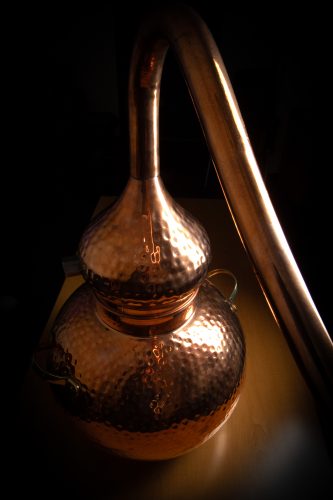
    Inside a copper pot still, alcohol-rich vapor rises, cools in a condenser and emerges as the raw spirit that, after aging, becomes whiskey.

    Arnold and Simanek ended up touring the country to share the science of whiskey, appearing at distilleries, museums, bars and universities. At the Culinary Institute of America in Napa, California, they spoke to an audience bonded by a shared passion for food and drink. The most memorable stop, Simanek said, brought them to a historic theater in Louisville, Kentucky, “the breadbasket of whiskey,” where their book was nominated for an award by the International Association of Culinary Professionals.

    Arnold went on to write The Terroir of Whiskey, published by Columbia University Press in 2020 and translated into Japanese in 2024.

    Simanek’s course, which is not currently being offered, evolved over its run. What began as more than 60 students boarding buses to visit local distilleries became an intimate seminar of 11 students gathered around a single table.

    “It started off being a very science-heavy course and rapidly morphed based on input from students into something that was a little bit more balanced between science and history,” Simanek said. The smaller format allowed for field trips beyond distilleries: a sommelier at a local seafood restaurant, annual end-of-semester visits to a craft ice cream store. Some students went into the whiskey industry. Years later, former students still reach out when they’re in town.

    What Simanek built was not a course about whiskey. It was a course about what science is, why it matters and how to think with it — taught through a subject that gave students a sensory, historical and human reason to pay attention. That, too, was Simanek’s grade school ambition finally realized.

    In the book’s final pages, Arnold and Simanek address what they could not in good conscience ignore: that whiskey enhances pleasure rather than inducing it and that the substance at the center of their collaboration does real damage in the world.

    “I do sometimes struggle with the fact that I’m so involved intellectually and professionally in something that does cause a lot of harm to people and society,” Arnold said. “When it is handled responsibly, it can be a wonderful thing. … There’s no way to rationalize it one way or the other. There’s good and bad that come from it.”

    Simanek, who gave up drinking two years ago, describes the course with only slight exaggeration as “a semester-long public service announcement for the evils of drink.”

    “Addiction is a disease,” Simanek said, “and everyone, almost everyone, I suspect, is crippled by an addiction of some kind or other.”

    It is a blunt statement from a man who spent a decade teaching people to love what he has since set aside. But it fits the larger argument. Science literacy, for Simanek, is not cheerleading for any particular product or field. It is about being able to look clearly at what things are and what they do — the beautiful and the harmful at once.

  9. Recollections: What Was Your Favorite TCU Late-Night Snack?

    2 Comments
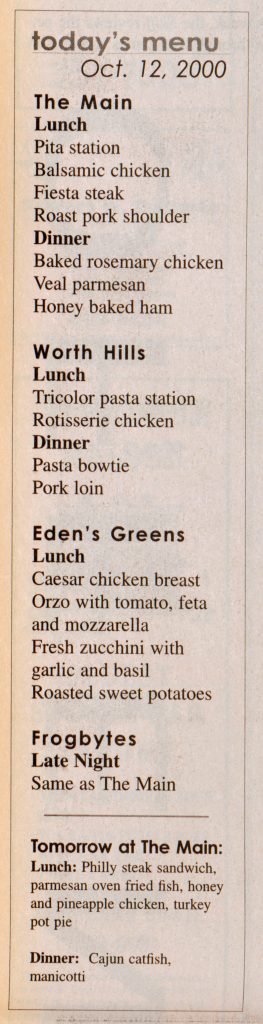
    Scan of a Skiff “today’s menu” column dated Oct. 12, 2000, listing lunch and dinner options at The Main, Worth Hills and Eden's Greens, with a Frogbytes Late Night section noting the menu was the same as The Main.

    Today’s menu, circa Oct. 12, 2000: dining options across The Main, Worth Hills, Eden’s Greens and Frogbytes. Courtesy of TCU Special Collections | The Skiff

    Peanut butter crackers and orange drink from the vending machines in the basement of the dorm.

    BETH SHELTON ’69

    The sandwich shop that was at the corner of University and Berry, close to what was then the Math and Sciences building, had the very best buttermilk pie!

    DENISE HEAP ’77

    I am not sure that there was anything better than popcorn in your dorm room from your own popper. Sometimes we stuffed a towel under the door so no one could smell it and come to mooch. My roommate, Elaine Crowley ’79, and I liked to dip the popcorn in Pace Picante Sauce.

    DEBBI ALEXANDER SCHNEIDER ’79

    Class of 1986 — not many choices back then! Chili dogs from 7-Eleven or Benito’s on Magnolia (they used to stay open until 4 a.m.).

    LEE GIBSON ’86

    I was an RA in the summer of ’85. Back then, TCU campus was a ghost town during summer break. All the dining options (both!) closed early. I would use my Phillips 66 gas card at the station (Berry at University, before it was a Texaco, before it was a Chase Bank) to get late-night snacks. A bag of Doritos and a jar of queso dip hit the spot, every time!

    JOE JORDAN ’87

    Breadsticks from Perrotti’s Pizza.

    KERRY JERNIGAN JACOBS ’91

    In 1994, I met my husband (at 1873 Sports Grill and Café) in the Pit. So it will always be my favorite!

    ANGIE LEFTWICH TABAT ’96

    Jack in the Box, a sausage croissant sandwich for the late-night run!

    CHANDRA MATTHEWS ’01

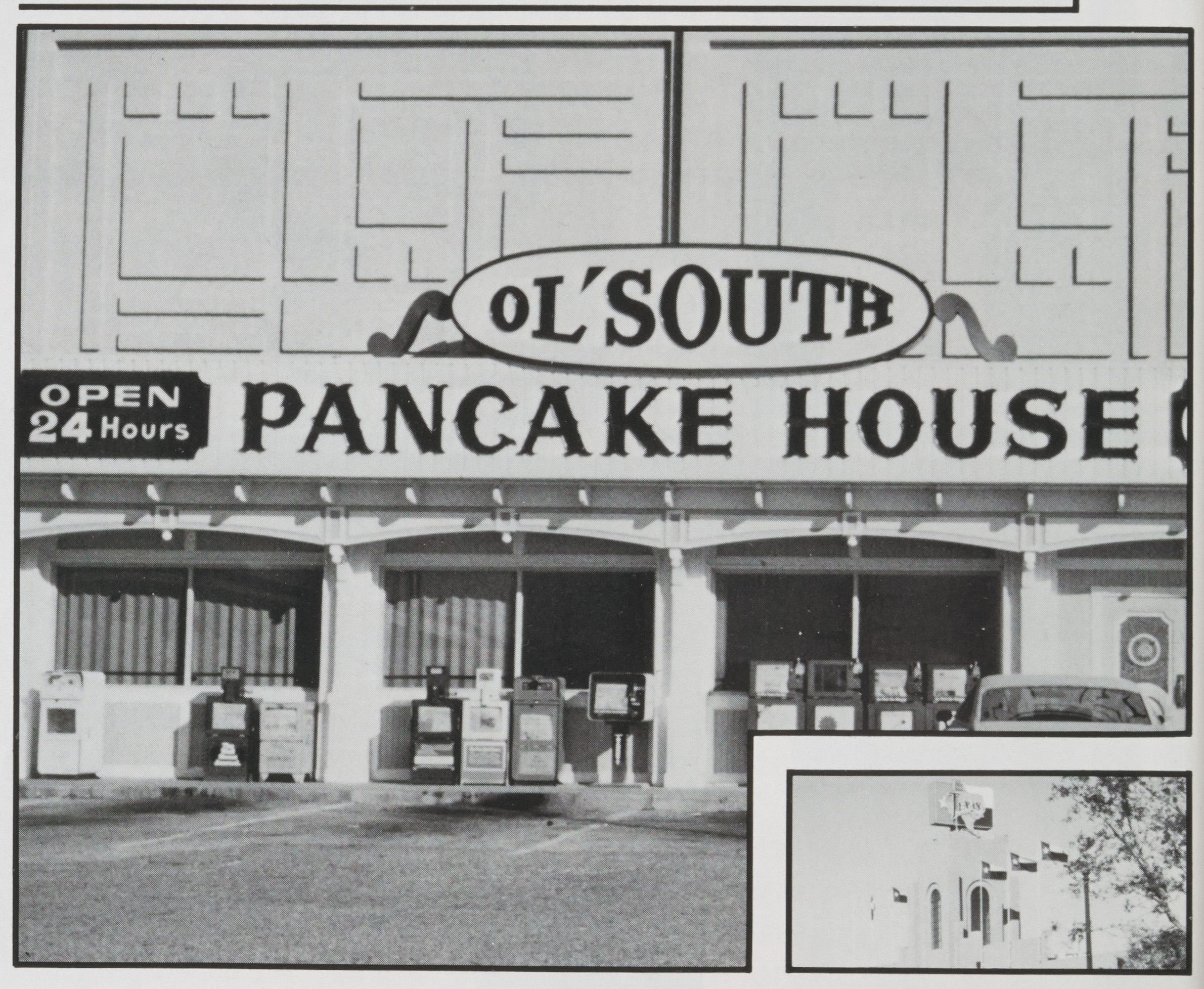
    Black-and-white photo of the Ol’ South Pancake House storefront from the 1988 Horned Frog yearbook, featuring the restaurant’s oval logo sign above large block lettering and an ‘Open 24 Hours’ notice. A row of newspaper vending machines lines the sidewalk under the awning, with an empty parking lot in the foreground.

    The sign hasn’t changed much. Neither have the hours. Ol’ South Pancake House has been serving Horned Frogs around the clock for decades. Courtesy of TCU Special Collections | 1988 Horned Frog Yearbook

    Ol’ South breakfast tacos were the best! On campus, Pizza Hut from Frog Bytes.

    MEREDITH HOLBERT MILLIK ’03

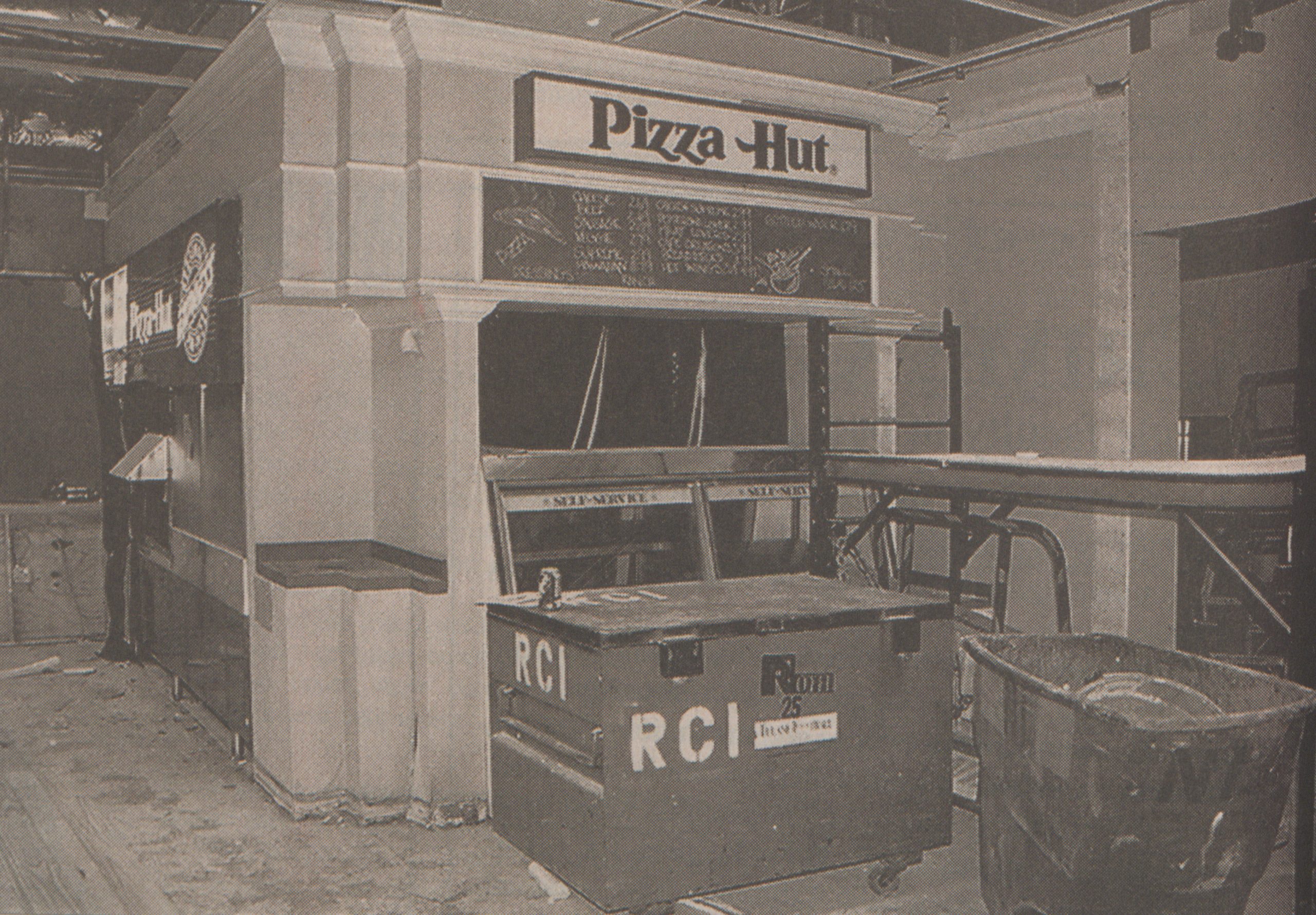
    Black-and-white photo of a Pizza Hut counter under construction in the TCU Student Center, with the Pizza Hut sign and menu board mounted above empty shelves, a self-serve display and a construction dumpster marked "RCI" in the foreground. Published in The Skiff, Sept. 10, 1999.

    The Pizza Hut counter takes shape in the Student Center in September 1999. It would soon become a late-night home for personal pizzas and breadsticks. Courtesy of TCU Special Collections | The Skiff

    On campus were Pizza Hut personal pizzas and cheese sticks in Frog Bytes. Off campus, late night was usually Fuzzy’s, Ol’ South or Whataburger, unless we were studying at IHOP.

    LOREN NEWSOM ’04 (MBA ’08)

    Any Recollections article that doesn’t talk about Monday nights at The Aardvark, Tuesday nights at The Cellar, Karaoke Wednesdays at Snookie’s, The Moon, The Pub or two-dollar you-call-its on Sundays at Snookie’s would truly be tragic.

    SHELDON PEARSON ’06

    When I think about some of my core TCU experiences, I still think about Deco Deli, which used to be located in the basement of AddRan. Absolutely amazing sandwiches. There was always a long line, and you wouldn’t even get past the corner of the hallway before someone was yelling for your order. ‘What bread, baby? What spread, baby?’ I can hear that kind woman in my head. It’s long gone now, but I still think about their sandwiches. I know some of my classmates had similar feelings about Eden’s, which was on the other side of the basement. My parents told me that when they were students, that was the cafeteria for athletes. When I was there, they still had old framed TCU football pictures from the ’90s on the wall. It still remains my favorite eating spot, although it was only open for lunch.

    J. WASSNER ’10

    Whataburger on Berry. I remember running into many friends and classmates on a Friday night.

    AMANDA KRUSE MARTINEZ ’10

    1873 Sports Grill and Café underneath the cafeteria. The chicken tenders were amazing, and we got to play pool down there. I spent many hours and late nights there from 2011 through 2013 using all my Frog Bucks.

    JANSON OYLER ’14

    The patty melt and curly fries from 1873!

    TAKYRA MORGAN ’15

    The curly fries and chocolate milkshakes from 1873!

    ERIK CALZADA ’16

    Toppers, for sure.

    NATHAN LOWE ’20

    A large fry and chocolate shake from Chick-fil-A!

    LILLIE DAVIDSON ’25


    Editor’s Note: Answers have been edited for length and clarity.
  10. How to Travel to Dublin and Beyond for TCU’s 2026 Aer Lingus Classic Game

    Leave a Comment
    The bright red facade of The Temple Bar pub on a cobblestone street in Dublin, Ireland.

    The Temple Bar Pub anchors Dublins namesake nightlife district, where live music spills onto cobblestone streets a short ride from Aviva Stadium. Courtesy of On Location


    Horned Frogs are hopping the pond for the 2026 Aer Lingus Classic, when TCU takes on UNC in Dublin. To help fans make the most of the trek to IrelandTCU has worked with official partner On Location to offer more than a dozen travel packages centered on the August 29 season-opening football game at Aviva Stadium.

    All trips include tickets to the game and the TCU Guinness Storehouse Welcome Experience in Dublinplus 3- to 5-star accommodations with a full Irish breakfast each morning, commemorative gifts, a pass that offers entry to some of Dublins top attractions and a ticket for a hop-on hop-off bus with stops throughout the Irish capital.

    Participants can select from itineraries ranging from three nights in Dublin to nine nights that expand the trip to Kerry and Galway (or, for those who want to see more of the UK, to Edinburgh and London)Irish highlights include touring Blarney Castle, home to the Blarney Stone, and taking in the views at the dramatic Cliffs of Moher on Ireland’s west coastA seven-night golf trip presents an alternative: a round of golf at each of three different courses in Southwest Ireland.

    The Gap of Dunloe cuts through a glacier-carved valley in County Kerry, a postcard stretch of Ireland’s rugged southwest. Courtesy of On Location

    Travelers may also customize their plans with optional excursions and add-on destinations, like Cork or even Rome.

    To learn more about travel packages, visit frogs2ireland.com. For football tickets, visit gofrogs.evenue.net/events/ALCFC.