Menu

Author Archives: Caroline Collier

  1. Let There Be Light

    Leave a Comment

    I admire the words of civil rights activist Ella Baker: “Give light and people will find the way.” 

    A passion to uplift others is rooted in my research and in my practice of building pathways for first-generation college students. Advocating for educational opportunity is fundamental to who I am as a person. My parents, family and community gave me light at every stage of my journey. Obtaining a doctorate in higher education leadership at TCU and now using my voice to empower others are possible because of this gift of light.
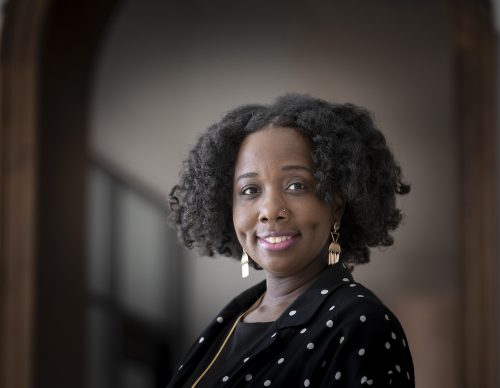
    Whitnee Boyd

    Whitnee Boyd ’17 EdD is a passionate advocate for first-generation college students. The TCU community has a responsibility to help these students succeed, she says. Photo by Joyce Marshall

    While I am not a first-generation college student, I have committed my work to advocating for people who are. 

    In the Palko Hall office of Cornell Thomas, a former professor of education at TCU, I made the declaration to study first-generation college students. Thomas, my adviser, listened to my passionate tales of serving such students. 

    I told him about working with students and families in the Morningside community in south Fort Worth through a fellowship intended to build a college-going culture.

    I told him stories of bringing kids to tour TCU. I mentioned a girl named Shannon, who upon visiting the Mary Couts Burnett Library shared her love for books and told me she could not wait to go to college.

    I told him about working with a student and her mother to help them understand financial aid packages. 

    He helped me work through frustrations with the roadblocks first-generation college students face — understanding financial aid and housing, utilizing campus resources, growing accustomed to university jargon — while accessing and navigating a university system. He encouraged me to become an advocate for these students’ success. 

    The value of a bachelor’s degree makes this type of advocacy essential. According to the Association of Public and Land-grant Universities, people who hold a bachelor’s degree will make an average of $1.2 million more in lifetime earnings compared with peers who have a high school diploma. 

    A college degree shifts the earning potential and social mobility of students and their families for generations to come. 

    SUCCESS BEGINS ON THIS CAMPUS 

    First-generation college students are not a homogenous group. Almost 17 percent of current TCU undergraduates identify as the first in their families who expect to obtain a bachelor’s degree. Several top leaders at the institution are first-generation college graduates, including Chancellor Victor J. Boschini, Jr. 

    About 60 percent of TCU’s first-generation college students identify as people of color. About 34 percent of TCU’s first-generation students are eligible to receive Pell Grants, while only about 13.5 percent of all students are eligible. The federal government awards these grants to people who have exceptional financial need. 

    The maximum Pell Grant is $6,895 for the 2022-23 academic year. Eligible students need additional financial help to succeed in college. Institutions such as TCU must provide supplemental aid to make education accessible. 

    Beyond financial assistance, universities must focus on developing the holistic student. They must foster belonging through college readiness programs, mentoring and advising initiatives, and communication campaigns that are relevant to first-generation student experiences. 

    The majority of these first-generation Horned Frogs hail from Texas — and North Texas specifically. Including them in the TCU community helps the university strengthen connections to its own backyard. 

    The university is a First-Gen Forward Institution, an honor designated by the Center for First-Generation Student Success. TCU is one of 277 U.S. institutions recognized for this commitment. The designation gives faculty and staff access to a library of best support practices, professional development opportunities and a network of other advocates for first-generation student success. 

    ADVOCACY THAT AMPLIFIES 

    From years of working alongside and building community with first-generation college students and their families, I know their stories deserve a voice — one that can share the complexities of their experiences. 

    Research on first-generation college students tends to center on what they need instead of what they add to college campuses.
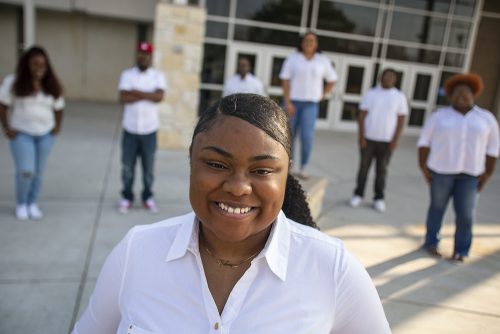
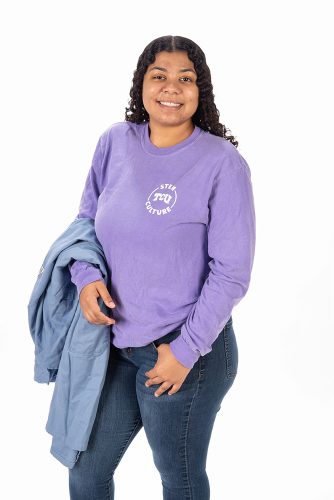
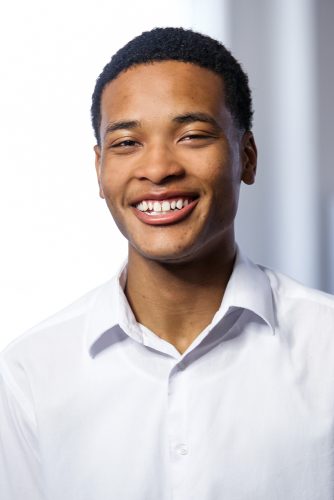
    “Being a first-generation college student carries a lot of weight in my family,” Edriana Cofer says. “We face obstacles along the way, but when you find your community and resources, you can thrive in college.” Photo by Mark Graham

    The data does not tell triumphant success stories like that of Edriana Cofer, a first-generation college student and senior education major. She said TCU’s Community Scholars program and staff mentors across campus helped her navigate college and become a leader. Cofer now serves as president of Alpha Kappa Alpha Sorority and vice president of the Black Student Association and is a mentor to younger students. 

    The tenacity first-generation students display when in a supportive community shows how they can enrich a campus, their community and all those they encounter in the future. “When I first started college, I wanted to go into the medical field because I was focused on how I could make a lot of money and be financially stable,” Cofer said. “Over time, I realized that I wanted to do something I enjoy, and for me that is education and building a path to becoming a principal.” 

    Now I advocate for students like Cofer by using my voice, time, resources and professional network. 

    I have served as the chair of the advocacy group for the national Center for First-generation Student Success. 

    I have gone to the passport office with a student and his family to ensure he had his clearance to attend Frog Camp in Scotland. 

    I have spent time in churches, community centers, restaurants and more helping students revise essays for scholarship applications. 

    I have talked with countless students about how to choose a graduate school program. I have reviewed offer letters for a first job. 

    When supporting the student, I am also supporting the family.

    “Being a first-generation college student carries a lot of weight in my family,” Cofer said. “We face obstacles along the way, but when you find your community and resources, you can thrive in college. Being a senior, I am confident in being prepared to be an educator.” 

    Faculty and staff are key components to the success of first-generation students. Tyler Grijalva ’20 (MBA ’22) was a Chancellor’s Scholar and student assistant in the chancellor’s office throughout his undergraduate years. “Working on campus and knowing that I had people who cared about my well-being was crucial,” he said. 

    People across TCU’s campus are building the necessary systems for holistic student support. 

    Cynthia Montes ’05 (MEd ’11, PhD ’22) oversees the Student Support Services program at TCU, which provides a range of personal and academic resources for many of the university’s first-generation college students. “Advocacy is the willingness to procure resources,” said the first-generation college graduate and recent Chancellor’s Staff Award winner. 

    The need for those resources is growing at TCU. Between the fall 2019 and fall 2021 semesters, the university added 408 first-generation students — a growth of more than 32 percent in this population in just two years. 

    “We have created a shift in the culture,” Montes said, “and need to continue this work.” 

    A growing number of intervention programs are also helping build a college-going culture among area high school students. 

    TCU is home to a chapter of the national College Advising Corps. The program relies on recent college graduates to serve in schools across Tarrant County and help support students with college and career readiness. 

    Grijalva, who majored in political science at TCU, found a path to advocacy while serving as a college adviser at Fort Worth’s Diamond Hill-Jarvis High School. “When we advocate for the student,” he said, “we have to advocate in their best interest, not our idea of what their best interest should be. Support is then connecting people to resources, even if you yourself are the resource.” 

    The College Advising Corps expanded to 64 advisers for the 2021-22 year, made possible by a grant from the Rainwater Charitable Foundation, which also helped create the Tarrant To & Through Partnership. 

    A SENSE OF BELONGING 

    The biggest cheerleaders for first-generation college students are often those they have known throughout their lives, such as family members, friends, neighbors, teachers and mentors. 

    “It’s been helpful that my immediate family is very supportive,” Cofer said. “No matter what route I wanted to go, they support me. I also stay in touch with my teachers at Dunbar High School who mentor me on my path to becoming an educator.”

    After students enroll, institutions of higher education are responsible for ensuring they can find a path and a place in the campus community. 

    Cofer said being part of a college community means “connecting with people that make you feel like you are at home and that you can be yourself around.”
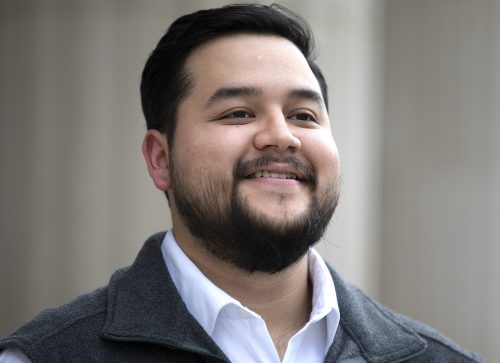
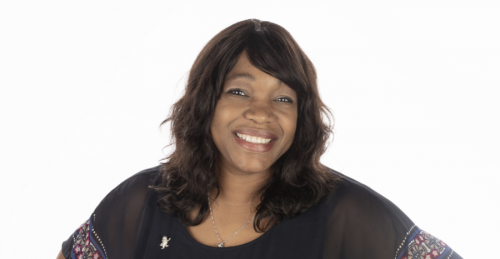
    “Having people who checked on me, got to know me and showed a genuine concern for me was priceless,” says Tyler Grijalva ’20 (MBA ’22). “It helped me to become more comfortable asking questions about things I did not know. I took that same care to the students I worked with.” Photo by Joyce Marshall

    To build academic community, TCU offers federal TRIO programs, which include Upward Bound as well as Student Support Services and the Ronald E. McNair Post-Baccalaureate Achievement Program. These efforts are designed to provide equitable college opportunities. 

    Montes said she is committed to being the supportive type of person she found during her student years. “There were multiple times when administrators at TCU would ensure I had what I needed financially and academically because they saw that I was working to be my best academic self while balancing jobs and being involved in student organizations.” 

    We as individuals connected to the TCU community also have a responsibility to help ensure the success of first-generation college students. Every bit of support helps. 

    “Having people who checked on me, got to know me and showed a genuine concern for me was priceless,” Grijalva said. “It helped me to become more comfortable asking questions about things I did not know. I took that same care to the students I worked with.” 

    Grijalva now works for Boeing as a supply chain specialist. He said his success at TCU has been a driver for his younger siblings. “You think you are all alone at times and then you realize, ‘I’m not the first person to do this, and I will not be the last person.’ My younger brother and sister can now know that college is possible, and they have me as a resource.”

    He plans to mentor younger first-generation and Latinx students at TCU as well. “I want them to see people who look like them working at places like Boeing. I want to be a resource who can hopefully create internship and job opportunities for them.” 

    The opportunity to give light to others is often an intrinsic motivation for first-generation college students, Montes said. “I did not get here alone, and I must pay it forward. I have had God, my mom, family, professors and others pour into me. As a first-generation college student, it is often hard to see myself in certain spaces. We must let students know they belong here.” 

    Ella Baker understood the power of using what we possess to contribute to the greater good. Giving light may mean contributing to a scholarship program, serving as a mentor or investing in someone’s career. 

    Whatever the method, I hope you will commit to helping first-generation college students and other marginalized students succeed. As members of the Horned Frog community, let’s work to give light to others by creating opportunities that will illuminate their paths. 
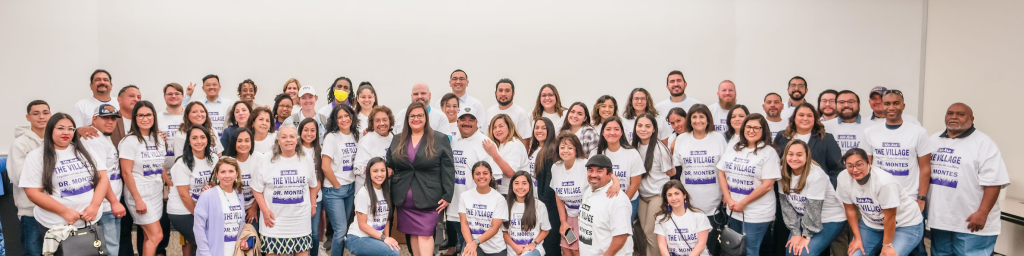
    Cynthia Montes ’05 (MEd ’11, PhD ’22), center in purple and black, oversees the Student Support Services program at TCU. Courtesy of Cynthia Montes
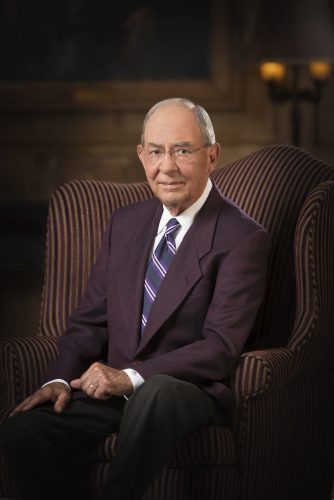
  2. A Servant Leader

    10 Comments


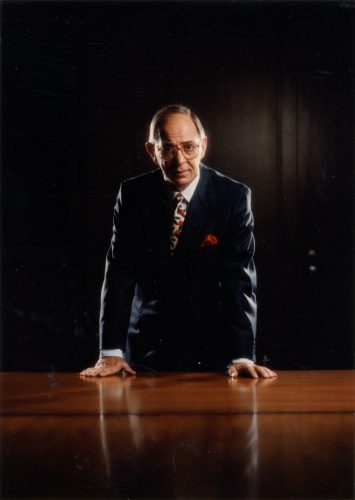
    William Edward Tucker ’56 BDiv, who served as TCU’s chancellor from 1979 until 1998, died Oct. 14. He was 90.

    Born in Charlotte, North Carolina, Tucker devoted his life to the Christian Church (Disciples of Christ) and, eventually, Texas Christian University.

    William Edward Tucker was born in Charlotte, North Carolina, at the Crittendon Home for Unwed Mothers and named Stanley Perry. When he was about a year old, he was adopted by Ethel and Cecil Tucker. An ordained Disciples of Christ minister, he became TCU’s eighth chancellor. (Photo courtesy of the Tucker family)

    “I think TCU was always part of my dad’s destiny,” said daughter Jan Tucker Scully ’79 (MBA ’81).

    Tucker first learned of TCU during his undergraduate days at Atlantic Christian College — later renamed Barton College — in Wilson, North Carolina. Then TCU Chancellor M.E. Sadler had graduated from Atlantic Christian, and Tucker, who earned a bachelor’s degree in English, religion and history, studied there while James Mattox Moudy ’43 (BDiv ’49), who became TCU’s seventh chancellor, was dean.

    Tucker came to Fort Worth to pursue a degree from Brite Divinity School because he had planned to become a working minister. “I came to Fort Worth never having been west of the Mississippi River,” he told Michael Gutierrez, who was working on behalf of the TCU Oral History Project, in 2011.

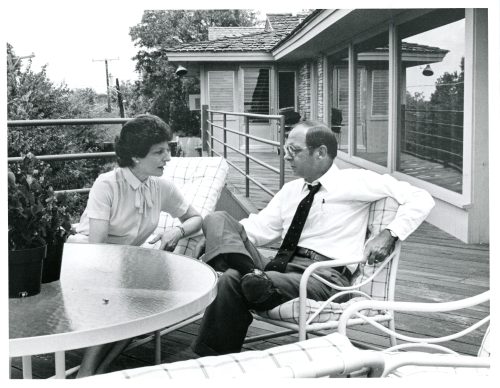
    While at Brite, Tucker fell in love with a TCU undergraduate from Albany, Texas, his future wife, Jean Jones Tucker ’56.

    “Jean’s understanding of life has enabled me to derive all sorts of counsel,” Tucker told TCU Magazine in 1998. “She is more accepting of people on the earth, no matter their station in life or point of view, than anyone I have ever known.”

    After 1956, when he became an ordained Disciples minister, he switched his life goals from ministry to service in higher education. He left Texas to pursue a master’s and then a PhD in church history at Yale University and graduated with honors. He returned regularly to visit Fort Worth. After he discovered it, he said, “I never really left TCU.”

    Early in his academic career, he came back to Brite and worked his way from professor to dean. During that time, he and Lester McAllister co-wrote the seminal history of the Disciples Church, Journey in Faith.

    Bill and Jean Jones Tucker ’56 married in 1955. “I believe my mother was the source of my Dad’s strength,” said daughter Jan Tucker Scully ’79 (MBA ’81). Photo courtesy TCU Special Collections

    “He was a seeker, a great intellect with an inquisitive mind,” granddaughter Kate Scully Wells ’08 wrote in a tribute.

    Another Disciples-affiliated school, Bethany College in West Virginia, lured Tucker away from Brite by making him president. He served Bethany in that role from 1976 to ’79.

    Back in Fort Worth, Moudy was experiencing failing eyesight. The executive committee of the TCU Board of Trustees unanimously recommended the 47-year-old Tucker to be his replacement.

    Tucker embraced the appointment as TCU’s eighth chancellor, telling the Bayard H. Friedman-led board: “I accept with enthusiasm, without reservation and with sincere gratitude for their expression of confidence in me. It is a privilege to return to this university.”


    Righting the Ship


    When Tucker assumed the TCU chancellor’s role in fall 1979, “Higher education in America was at a time of low tide,” he told Gutierrez. “It was especially low tide at TCU.”

    The mood in Fort Worth was “gloomy,” he said. Enrollment had dropped to 5,930 students, and the university was losing money. He made the tough initial decision to scuttle some faculty positions; the remaining professors were earning salaries in the bottom quartile for the industry.

    An adherence to fiscal conservatism would mark Tucker’s tenure at the helm of TCU. He became known around campus, and in higher education circles, for his saying: “A university that is not fiscally sound cannot remain academically strong for long.”

    As the 1980s took hold, Tucker focused on balancing TCU’s budget and raising funds to secure the university’s future.

    “He never spent a penny on our office,” said Mary Nell Kirk, who served as Tucker’s administrative assistant for his final eight years as chancellor. “Every penny went to the endowment.”

    TCU at the time derived more income from oil and gas than any other private school in the country, and Tucker found the petroleum industry’s volatility dangerous for the long-term financial stability he envisioned. He decided to cap the percentage of income the university could reap from oil and gas. “That was a major decision at a time when TCU was not flush with money,” he told the TCU Oral History Project.

    In 1979, the combined endowment for TCU and Brite was $52 million, a figure too small to ensure the university’s long-term success. Tucker made a silent personal vow to raise an additional $52 million during every two years of his leadership. “I knew the endowment needed to grow — and grow significantly — if TCU were to ever fulfill its mission to become what it is today.”

    The Next Frontier fundraising campaign, which he led alongside Provost William Koehler, aimed for a $100 million goal. The effort was slated to kick off in the 1980s, but the timing was terrible, Tucker said. “That’s when so many banks failed — the price of oil fell — it was a serious recession.”

    They postponed the campaign kickoff until 1990. By 1997, the campaign had exceeded its $100 million goal, and faculty were earning salaries akin to high-ranked national universities.

    By Tucker’s retirement in 1998, TCU’s endowment had reached $750 million — meaning he had far exceeded his secret fundraising goal.

    Eyes to the Future

    New buildings constructed during Tucker’s tenure could rise only if their maintenance would be provided for in perpetuity. The Dee J. Kelly Alumni & Visitors Center, the Mary D. and F. Howard Walsh Center for Performing Arts, W.A. Moncrief & W.A. “Tex” Moncrief Jr. Hall, the Winthrop Rockefeller Building for Ranch Management and new athletics training facilities popped up during those two decades. He also doubled the size of the Mary Couts Burnett Library and added a nursery to the physical plant so the campus would be permanently blanketed with fresh flowers.

    Though reluctant to spend money from TCU’s endowment, Bill Tucker, along with wife Jean, were generous to the university with their time and funds. The couple purchased, among other things, the famous statues of TCU founders Addison and Randolph Clark and the university seal embedded in the ground in front of Sadler Hall. (Courtesy of TCU Special Collections)

    By 1985, after a successful football season highlighted by an appearance in the Bluebonnet Bowl, TCU’s admissions woes had ceased. Koehler suggested TCU cap freshman admissions — a move that would have been unimaginable to the struggling university of 1979. The dormitories were so crowded that the facilities could not accommodate all of the incoming students. Bill and Jean Tucker invited some students to stay at their home while they looked for a place to live.

    Enrollment was at 7,273 by the end of the Tucker years — a growth of 23 percent.

    With Tucker serving simultaneously as chancellor and moderator for the North American Christian Church (Disciples of Christ) — he had a separate Sadler Hall office for each role — TCU’s academic ambitions grew as well.

    He launched an undergraduate program in engineering, which is now housed in the William E. and Jean Jones Tucker Technology Center. He grew doctoral enrollment in arts and sciences and wired the entire campus for the advent of the internet age.

    He kept his head down for the duration of his leadership, Kirk said. “He would help students move in, and they would say, ‘Who are you?’ ‘I’m Bill Tucker; I work for the university.’ And then later on, they would find out that, oh, he’s the chancellor.”

    Victor J. Boschini, Jr., TCU’s current chancellor, concurred: “Of the many things I admired and liked about Chancellor Tucker, the one I most appreciated was that he was such — what I would call — a secure leader. He did not need to be out in the spotlight. He did not always need to be the smartest guy in the room. He was more than happy to learn along with you in any given situation or circumstance.”

    Tucker retired in 1998, having set the intentional course for a more ethnically and racially diverse, academically ambitious and wealthy university. Because of his diligence and foresight, the TCU of today little resembles the struggling regional college he assumed leadership of in 1979.

    “In the dark of the evening when he finally felt comfortable leaving TCU’s campus,” said his son Vance Tucker, “he still found time to be a great husband and father, worthy opponent on the tennis court and a legendary force on the basketball court, with the sharpest, most dangerous knees known to mankind.”

    In retirement, Tucker stayed connected to the university. “He was always there to help and guide me whenever I called him,” Boschini said. “He never made me feel as if my problems or concerns were unimportant or trivial … even when they were. He was the one person who I knew would always have a 100 percent appreciation of exactly where I was coming from on every issue.”

    Tucker’s gentle guiding presence was not reserved for those in high-pressure leadership positions, his granddaughter Amanda Scully Peterson ’11 wrote in a memorial post: “He made everyone he met feel like the most important person in the world during that moment.”

    Today’s TCU enrollment stands at 12,273 students, and the endowment Tucker labored over has reached $2.4 billion. Upon his retirement, Tucker refused to take credit for the university’s steady growth under his leadership. He told TCU Magazine: “I hope the word I use most often … is thanks. Bill Tucker may be getting a pat on the back, but I am merely representing a community that has succeeded. TCU is something that everyone should own, and claim, and celebrate.”

    William Tucker is survived by his beloved wife, Jean; daughter Jan Tucker Scully, a longtime TCU Trustee; sons Will Tucker and Vance Tucker; several grandchildren and great-grandchildren; and by many thousands in the global Horned Frog community who are thankful for his enduring love for and service to TCU.


    Please consider making a gift to the William E. Tucker Endowed Scholarship in honor of his legacy.


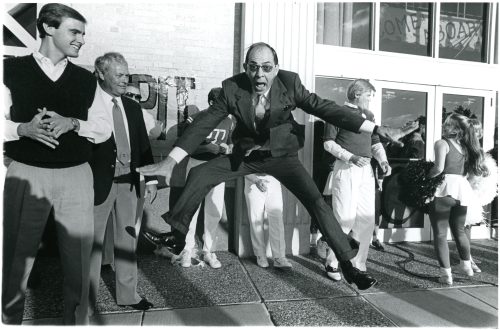
    Though Bill Tucker was famous for working until midnight, seven days a week, he knew how to let loose and have fun. Granddaughter Amanda Scully Peterson ’11 wrote in tribute about his “quick wit, the dry humor, the incredibly long pauses. The humor where you didn’t quite know he was joking until he began to laugh.” (Courtesy TCU Special Collections)

  3. To Save A Species

    1 Comment


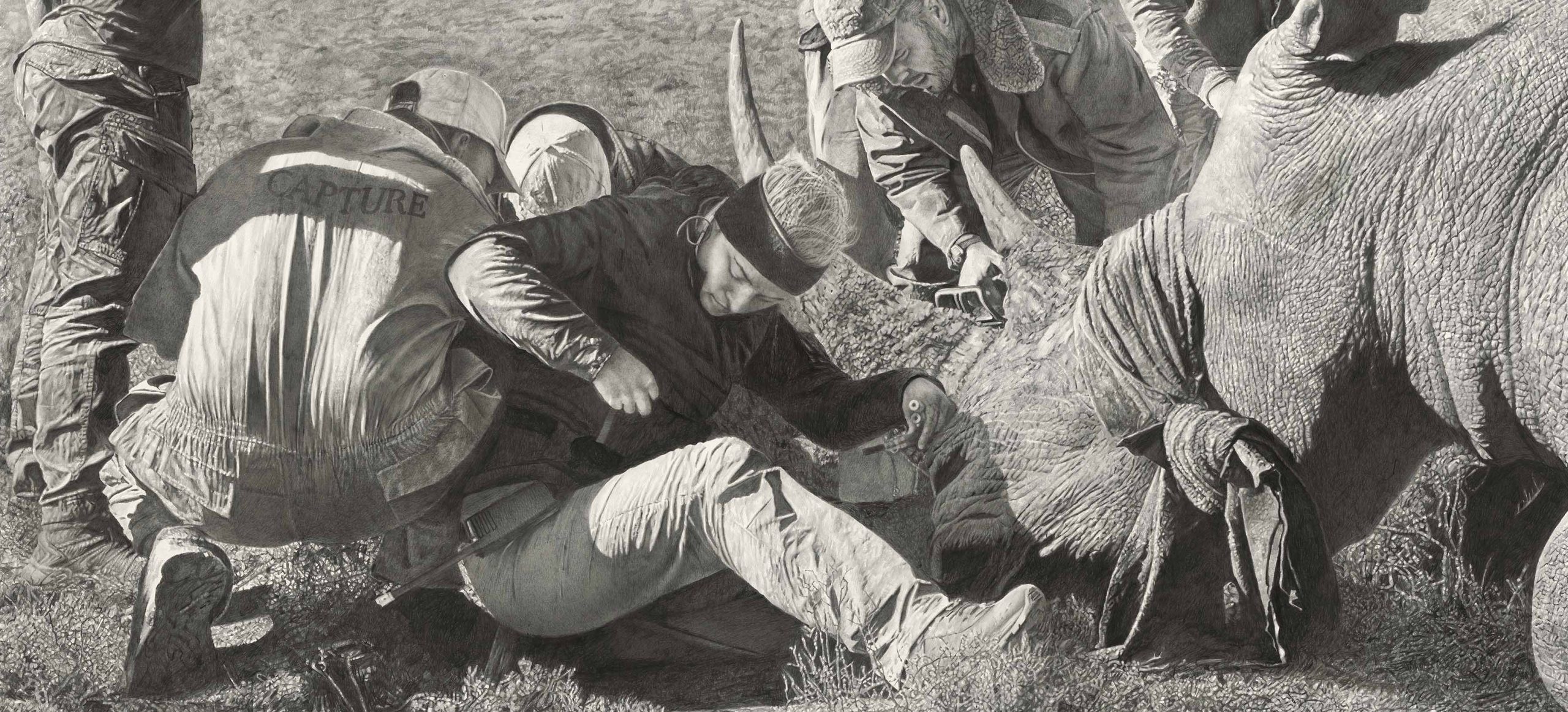
    The Rescue by Woodrow Blagg, stretching 15 feet across, is a mixed-graphite drawing of a rhinoceros being attended to by TCU students on the Amakhala Game Reserve in the Eastern Cape of South Africa. Wildlife veterinarian Will Fowlds is removing the rhino’s horn, sought by poachers who hunt the animals, killing or leaving them for dead. (The horns, made of keratin, grow back.) The students are also depicted notching the ear of her calf and taking a DNA sample to identify it for future care.

    Blagg unveiled the drawing Nov. 21, 2021, at TCU’s Brown-Lupton University Union, where it is displayed on the third floor. His hope is that The Rescue will bring awareness to TCU’s Rhino Initiative, launched in 2014 by Michael Slattery, department chair and director of the Institute for Environmental Studies. A collaboration between TCU and Fowlds, the Rhino Initiative aims to ensure the species’ long-term survival.

    The dramatic scene in The Rescue is a curated composition — the artist emphasized that the exact scene never took place — created from photos Blagg took in South Africa. To compile the source image for his drawing, Blagg worked with friend and collaborator Tom Hall.

    “He was very helpful in helping me go through probably close to 2,000 pictures,” Blagg said. “We made a composite. … I worked from that particular reference. It took another 12 to 14 months to complete the drawing.”

    As Blagg drew, he worked with graphic artists to make adjustments to the source image and pulled inspiration from The Calling of Saint Matthew by Caravaggio. His goal was to depict a field clinic team working in unison.

    “The first four or five compositions looked a little forced. … It looked like a class photo. I’ve been an artist my whole life, so when putting a picture together you intuitively begin to sense that something isn’t right: I must keep working,” Blagg said. “So I’d have to take three or four days off just to clear my mind and think about it. We would start to look at it with a fresher eye and put new people in or replace/reposition people.”

    Rendered in black and white, the drawing is precise and detailed. From the wrinkles on the rhino to the creases in the students’ pants, every aspect is realistic.

    The drawing was commissioned by Larry Brogdon, a member of the advisory board of TCU’s Ralph Lowe Energy Institute, inspired by his own experience with rhinos in South Africa. Brogdon called Blagg after admiring his artwork. The artist then joined Slattery and students on the trip to South Africa.

    “I’m proud of the way the picture turned out,” Blagg said. “I feel it represents what TCU wants to do. I think it hopefully represents what Will Fowlds and his field clinic want to continue to do.”

    A close-up picture of a portion of Woodrow Blagg's mixed-graphite drawing, "The Rescue."

    Blagg took almost 2,000 photos to inspire “The Rescue.” The exact scene never took place. Rather, the artist wanted to present a fusion of the photos that showed a conservation team working in unison.

  4. Alex Snodgrass turned her love of cooking into a career

    1 Comment

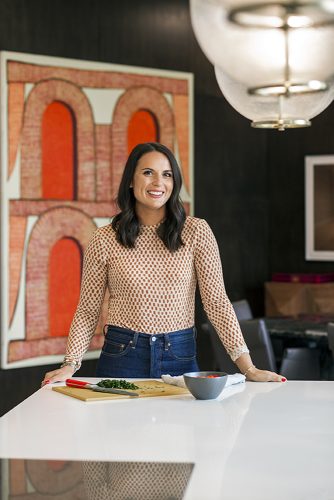
    Though New York Times bestselling cookbook author Alex Glendenning Snodgrass ’10 loved her years at TCU, mealtimes could be tough. She neither loved the food in the dining halls nor the practice of eating there every night.

    Alex Snodgrass of The Defined Dish

    Alex Snodgrass tests recipes in the kitchen of her Dallas home, which doubles as a film studio. She published her second book, The Comfortable Kitchen, in December 2021. It quickly became a New York Times bestseller.

    “It was something I wasn’t used to,” Snodgrass said, noting that her mother made family dinners throughout her childhood in Celina, Texas, a city of less than 17,000 about an hour northeast of Fort Worth.

    As a sophomore, she and three of her Tri Delta sorority sisters decamped to an apartment. Snodgrass, who majored in history with a minor in political science, cooked daily for the crew.

    “My biggest joy is cooking for other people,” she said.

    Snodgrass weighed law school and a path in politics as she continued to educate herself on all things culinary. For recipes and cooking advice, she supplemented calls to her mom with watching Ina Garten’s Barefoot Contessa.

    “I would get home from school and turn on her show,” Snodgrass said. “Ina was such a huge inspiration to me partly because she brings a lot of clarity to the process.”

    Upon graduating, Snodgrass moved to Austin where she and her now-husband, Clayton Snodgrass ’10, lived for 2½ years. She interned for a state representative during a session of the Texas Legislature, then worked in public policy, all while indulging her passion for cooking.

    The couple moved to Dallas to live near family after she became pregnant with their daughter, Sutton, now 9. About two years later, they welcomed another daughter, Winnie, who will be 8 in September.

    In Dallas, Snodgrass went to work for her family’s residential real estate company. After a bout of post-pregnancy anxiety, her sister recommended she try Whole30, a 30-day diet that emphasizes whole, unprocessed foods and eliminates refined sugars.

    Adhering to the plan helped her feel better, Snodgrass said, and she relished the process of tweaking family recipes to fall within Whole30’s parameters. She also embraced her sister’s suggestion to start a blog. Together they launched The Defined Dish in summer 2014, with Snodgrass providing recipes and other food-related content while her sister Madison “Mada” Glendenning Lavey ’13, a personal trainer at the time, focused on fitness.

    “I fell in love with blogging, which gave me a creative outlet that real estate wasn’t giving me,” Snodgrass said. After about two years, she realized the blog might be the path to a new career.

    In 2016, Lavey decided to devote time to other things, which allowed Snodgrass to focus fully on food. Around that time, Instagram launched its stories feature, where users can upload short videos. “It was the perfect storm for me,” she said. “Right as I was becoming consistent in my blogging, the Instagram stories became a really authentic way for me to connect with people.”

    Alex Snodgrass of The Defined Dish

    Alex Snodgrass capitalized on an opportunity to take over the Whole30 Instagram account and now has more than 700,000 of her own followers on the platform.

    Snodgrass credits word of mouth with the explosion of page views. On Instagram, she went from 10,000 followers to around 80,000 in less than 18 months. She’s now up to nearly 700,000.

    A literary agent approached her about writing a cookbook in 2017. Upon its release in December 2019, The Defined Dish: Healthy and Wholesome Weeknight Recipes was an instant New York Times bestseller.

    “She’s a totally relatable neighbor from next door or a sister who is super down to earth and very real,” said Teri Turner, whose blog, nocrumbsleft, also led to a cookbook deal and podcast. “People love to bring her into their homes because she inspires us not only in cooking but also in life.”

    The Defined Dish cookbook is “Whole30 endorsed.” Melissa Urban, Whole30’s co-founder and CEO, wrote the foreword, in which she cites the curried pot roast, rack of lamb with mint chimichurri sauce and okra fries as favorite dishes. Snodgrass gravitates toward nutrient-dense foods with flavors as big and bold as her home state. She embraces her Italian roots with a love of anchovy sauce, garlic and meatballs.

    Many of her recipes also work for those adhering to a paleo diet. While Whole30 is a short-term elimination diet that embraces the food available 10,000 years ago, meaning no alcohol, sugar, grains, dairy and more, the paleo diet focuses on meat, fish, fruit, eggs, vegetables, nuts, seeds and certain oils with small quantities of wine and dark chocolate.

    As the Covid-19 pandemic drove more people to cook at home, many turned to The Defined Dish blog for help, driving up traffic on her website, thedefineddish.com.

    During that time, she and Clayton moved into a sprawling mid-century home in the Preston Hollow neighborhood of Dallas. They combined three rooms into an oversized space for the new kitchen and dining room. She designed the kitchen with videos in mind, including an induction cooktop on a massive island so she can face the camera.

    The first week of January, her follow-up cookbook, The Comfortable Kitchen: 105 Laid-Back, Healthy and Wholesome Recipes landed in the No. 2 slot on The New York Times bestseller list, just below Brené Brown’s blockbuster Atlas of the Heart.

    The proximity felt especially fortuitous as fellow Texan Brown had provided praise on the back cover of Snodgrass’s first book. “She approaches both food and life with a playful soulfulness that nourishes my family and my heart,” Brown wrote.

    Favorite recipes in this second volume include taco bowls with salmon, honey-sesame sheet pan cauliflower and lemon avocado oil cake.

    Business has grown to the point where Snodgrass now outsources photography. She also has partnerships with many companies including Made In, a premium kitchen tools brand, and Siete Foods, a paleo and vegan brand.

    “I am so grateful for my community, which has grown with me and supported me all this time,” she said. “People know what’s authentic and what’s not.”


    She shared these lessons learned along the way:

    Make the most of opportunity.When I first started The Defined Dish, I was asked to take over the Whole30 Instagram account for a week to share recipes and I crushed it. I planned out the week, showed up and did three recipes a day, and I’d be on Instagram stories sharing the tutorials and demos. People started following me from there.

    If you want to get better at something, learn all you can about it.I became good at taking food photos after obsessively researching the topic.

    Involve your kids in the kitchen.They might add salt and pepper to the chicken and think they made the meal themselves. At least they’re making great memories while learning about cooking, which is one of the things everyone should know how to do.

    You can make almost any recipe healthier when you make substitutions, but beware. Some people will try to swap out cassava flour with coconut flour, but it doesn’t work because they’re totally different products. People try to make their own swaps using what they have on hand, but grain-free flours are way too fickle.

    When I first started out, I thought my recipes were so simple that it was weird for me to share them,but then I realized there is such a need for that. People love simple dinners. I cater to the intimidated cook.


    Edited for clarity and length.


    Alex Snodgrass shares a recipe for dairy-free quest perfect for TCU tailgates:


  5. Carolina Alvarez-Mathies Brings a Latinx Voice to Dallas Contemporary

    Leave a Comment

    Your education background is in fashion merchandising and entrepreneurship. Now you’re Dallas Contemporary’s executive director. How did you get here in your career?

    After graduation I moved to New York City, where I began my career with Venezuelan fashion designer Ángel Sánchez, who hired me as his director of press. This opportunity set the course of my career.

    Through Ángel, I got to know El Museo del Barrio, New York’s leading Latin American art museum. After forming part of the founding junior council, I eventually joined as head of communications. From there, I joined Creative Time, the public art nonprofit, as director of external affairs. At both El Museo and Creative Time, I learned about the importance of seeking out innovative platforms and initiatives to engage wider audiences with contemporary art.

    The sum of these experiences brought me back full circle to Dallas-Fort Worth. In 2019, I visited for the TCU vs. UT game (that we won!) and was connected to the team at Dallas Contemporary. A few weeks later, I moved to Dallas as deputy director, charged with reimagining the vision of the institution. In May 2022, I took over as executive director.

    How did your time at TCU influence your career?

    TCU has been a huge part of my life since growing up in El Salvador: Both my parents attended TCU, as did my uncles, aunts and most of my cousins and siblings.

    I graduated from TCU with a Bachelor of Science in fashion merchandising and minors in strategic communication and Italian language. It was through my work in fashion that I developed an eye for contemporary art and design, and my educational background in strategic communications helped pave the way for my work with institutions like El Museo del Barrio, Creative Time and, of course, Dallas Contemporary.

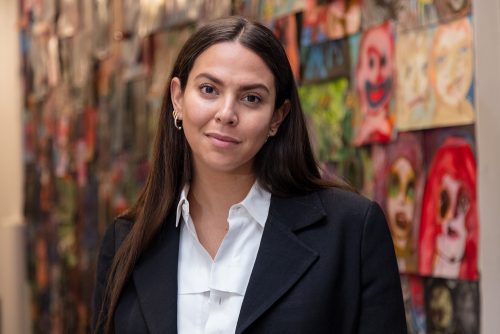
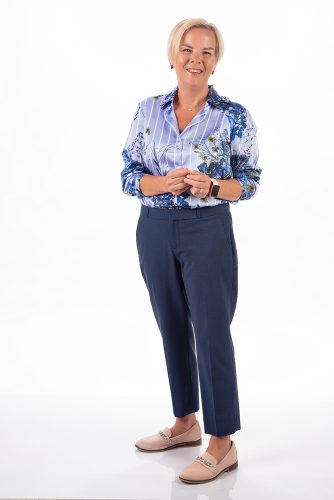
    Carolina Alvarez-Mathies, executive director of Dallas Contemporary

    Carolina Alvarez-Mathies, a second-generation Horned Frog, arrived at Dallas Contemporary in 2019, three months before the pandemic temporarily closed its doors. During that time, she said, “My team and I, small but mighty, looked inward to develop a robust digital program. The focus on digital allowed us to reach new audiences.” Photo by Vishal Malhotra

    Who have been some influential people in your career and why?

    So many individuals and organizations as a whole have contributed to my success, and they still continue to inspire and challenge me to this day.

    I continue to be inspired by my longtime mentor and friend, Cristina Grajales of Cristina Grajales Gallery. As one of the most distinguished and trailblazing voices in the design world, Cristina has helped me to chart my own path in the art world, constantly pushing me to take risks and grow in my career path. I admire her fierce interest in challenging the status quo and her passion for bringing forth unique, emerging voices representative of our mutual Latin American heritage.

    Robert Wennett and Mario Cader-Frech have also been strong influences on me. They founded Y.ES Contemporary, a nonprofit organization that creates opportunities for contemporary artists working in El Salvador and beyond. I have served on the advisory board of Y.ES since its inception in 2015. Their tireless work that has made Y.ES a world-renowned program is incredibly inspiring.

    How do you think your Salvadoran and Latinx identity has influenced your career decisions?

    I have an immense pride for my Salvadoran heritage, and I have actively worked to carve out much space for the work of fellow Salvadoran and Latinx artists — whether officially through my roles in public arts institutions, to personal pursuits and endeavors, such as my involvement with Y.ES Contemporary or my time as El Salvador’s ambassador on special mission for cultural affairs.

    How did you become El Salvador’s ambassador on special mission for cultural affairs? What did it mean to you to hold that title?

    I found my time as ambassador a definitive career highlight. Promoting the strength of the country’s culture worldwide has become a personal passion of mine, and doing so in an official capacity was a profoundly rewarding experience. During this time and since, I was able to leverage my global network to promote the strength of the country’s culture worldwide and raise awareness of the many talented artists living and working in El Salvador and beyond. Being a woman of Salvadoran descent, I strive to approach programming much more thoughtfully and more inclusively, creating opportunities for wider, more diverse artistic voices.

    Where did your spark for contemporary art start?

    I grew up in a family with a huge appreciation for travel. I have had the opportunity to do that quite extensively from a very young age. It made me curious, in the broadest sense. I wanted to know how different cultures did it all, and experience it — from fashion, to design, gastronomy and so on. Art as the greatest tool of expression was a huge part of that. Museums and the opera were staples of any trip.

    You were brand new at Dallas Contemporary when the world shut down because of Covid. How did your team pivot? What positive lasting impact do you think the pandemic has had on the art museum world?

    I joined Dallas Contemporary in late 2019, only three months before we had to close the museum due to the global outbreak of Covid. I am extremely proud of the resilience the Dallas Contemporary showed during this time. My team and I, small but mighty, looked inward to develop a robust digital program. The focus on digital allowed us to reach new audiences. Reaching wider and more diverse groups will be a core mission for the museum under my leadership — digital initiatives that go hand in hand with in-person programming are a necessary and ongoing part of that.

    The pandemic also underscored the importance of innovation and agility, being nimble and thinking on one’s feet, to provide timely opportunities for artists to tackle some of today’s most pressing issues.

    In your career you have worked with many well-known artists. What have those experiences been like for you personally and professionally?

    Working with artists and creatives is a unique and incredibly rewarding experience. It makes one think differently, more creatively, more openly, which of course has had and will continue to have a huge impact on my professional career and the direction I take as a leader.

    Carolina Alvarez-Mathies

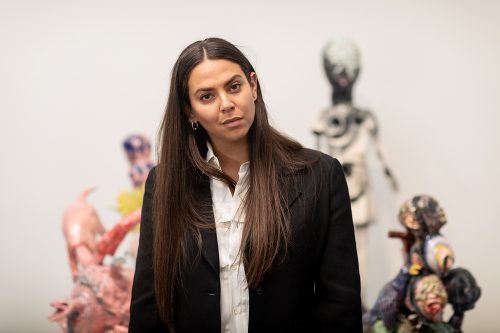
    Alvarez-Mathies counts Guadalupe Maravilla among her favorite artists, she said. “His practice has evolved into sculpture as sound and healing while talking about immigration and migration.” Photo by Vishal Malhotra

    Who is your favorite artist? Or someone you would really love to exhibit/work with?

    I could never pick just one! But I have to say, Guadalupe Maravilla’s career is beautiful to witness. His practice has evolved into sculpture as sound and healing while talking about immigration and migration. I am excited to travel to New York and see his solo show at Brooklyn Museum.

    You’re on the cover of D CEO’s 2022 Dallas 500. What was it like to be recognized as one of the region’s most influential business leaders?

    It is truly an honor to be recognized as a leader within the wider community and to be taking on a leadership position at an organization I am extremely passionate about. Dallas has given me so much during my formative, educational years, and I am very excited about this opportunity to give back.

    What’s next?

    I have been responsible for helping to launch concurrent shows by leading artists Joseph Havel, Lonnie Holley, Borna Sammak and Natalie Wadlington. Renata Morales, known for her costume designs and outfits for celebrities like Grimes and Arcade Fire, continues her “evolving” exhibition of 700-plus drawings and ceramic works until September 2022, and we’re just getting ready to announce an exciting lineup for the rest of the year. My focus is furthering Dallas Contemporary as a museum and a place for everyone in the community — a point of convergence and convening, where interesting art and interesting people can come together. Stay tuned!

    Editor’s Note: Questions and answers have been edited for clarity and length.

  6. Total Immersion

    Leave a Comment


    Graduate STEM students, especially international students, may face extra stress if they have families or jobs to worry about on top of their studies, said John Singleton, director of international services at TCU.

    “Not only do international STEM students of color have to survive a rigorous academic routine, but they have to navigate that without having family, friends or a map for how to compensate for these things,” Singleton said. “There’s a very good chance that a number of people have pooled resources to help them get through their degree, so there’s additional pressure to succeed.”

    Salina Hona, a graduate student in biology from Nepal, didn’t know anyone when she arrived on TCU’s campus in fall 2021. Amid academic pressure, she was also trying to figure out practicalities like how to open a bank account and acquire a credit card.

    When Maverick Tamayo, a master’s student in biology from the Philippines, arrived in the United States last year, his English wasn’t very good. The budding botanist struggled to convey his thoughts.

    “That’s really a gap between forming a connection with other people,” he said. “You feel like you are not part of the community.”

    Tamayo met Peter Fritsch, vice president of research at the Fort Worth Botanic Garden/Botanical Research Institute of Texas, in 2019 during the latter’s research expedition to Mindanao, Philippines. Fritsch now serves as Tamayo’s mentor and thesis committee member.

    As a research assistant in TCU’s biology department whose studies are supported by a National Science Foundation grant, Tamayo splits his time between TCU and the botanical institute.

    No matter how hard they work, international graduate students sometimes face obstacles outside their control.

    Last year Hona and Tamayo were among students whose stipends and paychecks were held up by a pandemic-related delay in receiving a Social Security number from the federal government.

    In a tight spot, Tamayo borrowed $4,000 from Fritsch.

    “It was just a highly unusual circumstance,” said Fritsch, who called it a cash flow problem.

    Hona borrowed about $5,000 from her parents. “I came here thinking I could manage my own expenses,” she said. “I felt helpless.”

    Neither Hona nor Tamayo has let such hurdles deter their studies and research.

    Hona, who earned a bachelor’s degree in biotechnology from a Nepalese university, came to TCU to work with Shauna McGillivray, a biology professor who researches how bacteria can cause infectious diseases.

    Hona is now helping McGillivray figure out how genes aid Bacillus anthracis, the bacteria that causes the infectious disease anthrax, and make cells antibiotic-resistant. She hopes to pursue her PhD or work in a clinical research lab.

  7. Helping STEM Bloom

    1 Comment

    From age 5, Sabrina Jones knew she wanted to be a doctor. She’s on the way to realizing that dream after landing a coveted spot in TCU’s STEM Scholar Program.

    Sabrina Jones, a biology major at TCU

    Sabrina Jones, a junior biology major, lived through a rare skin condition as a child. The experience spurred her interest in the medical field. Photo by Glen E. Ellman

    But the junior biology major, whose mother is white and father is Black, didn’t envision the culture shock awaiting her on campus.

    “No one looked like me,” Jones said. 

    She said the science, technology, engineering and mathematics programs — the STEM subjects — must improve the representation of women of color at TCU and beyond. 

    Black and Latinx people in particular are underrepresented among the estimated 19 million STEM professionals nationwide. While women in general outnumber men in obtaining higher education degrees today and have made progress in health care, they are still underrepresented in other segments of STEM jobs.

    At TCU, the 895 STEM students of color made up roughly a quarter of all students in those majors in 2021.

    Underrepresentation means certain groups of people may be excluded from opportunities for career development and financial security. STEM jobs are among the nation’s highest paying and fastest growing — the federal government forecasts that the economy will add positions in those fields two times faster than for occupations overall through 2029. 

    “When we’re looking at the workforce, the jobs of the future are in STEM,” said Zoranna Taylor Jones ’98 (MS ’07), assistant dean for TCU’s College of Science & Engineering and director of the STEM Scholar Program. “How do we meet the needs of this growing workforce? In the United States, we’ve had to recruit in other countries to bring in talent.” 

    Millions of available STEM jobs go unfilled across the country each year for lack of qualified professionals. 

    The payoffs of a diverse student body reach far beyond the classroom. Studies show that diversity creates untold benefits including innovation, enhanced competitiveness and better teamwork for organizations, research and the economy. 

    “When you have a more diverse team — diversity of thought and ideas — you actually have a more innovative team,” said Zoranna Jones, who also holds a doctorate in public and urban administration from the University of Texas at Arlington. “It’s problem-solving from different viewpoints. It’s a benefit for companies to hire more diverse talent because it increases productivity overall.”

    NURTURING CHANGE 

    The challenge is how to increase diversity in STEM education — and in the workplace — while providing the tools and support to ensure historically underrepresented students succeed.

    TCU is fostering diversity through its STEM Scholar Program, launched in 2018 to reach underrepresented students in STEM in 16 North Texas counties. Program benefits include a four-year scholarship and mentoring.

    Devionte Warren, TCU Class of 2022

    Devieonte Warren ’22 sees himself as an IT coordinator for a disadvantaged school district who can provide the tools students need to compete and prosper in the 21st century. Photo by Amy Peterson

    “I want them to graduate, and I want this program to make them the most competitive person for a job and/or graduate education,” said Zoranna Jones, who created the program. She said it complements TCU’s Vision in Action: Lead On strategic plan, which aims to strengthen academic rigor and attract a more diverse student body while bolstering tomorrow’s workforce. 

    The 27-student program already has racked up impressive numbers. So far, it has a 100 percent retention rate, and students are earning an average GPA of 3.54. The first group of five students graduated in 2022.

    STEM Scholar Devieonte Warren ’22 earned a bachelor’s in business information systems, a STEM major, and began studying for a master’s in business analytics at the TCU Neeley School of Business in June. 

    As a junior, he researched technology in disadvantaged socioeconomic areas. He concluded that a lack of access to technology — and a lack of education on how to use technology — perpetuates long-standing problems. That topic will likely be his master’s thesis project.

    “I’d like to dig deeper into that and help close the gap in those underrepresented areas so [people of color] have the same opportunities and the same chance at success as others do,” said the first-generation college graduate, the oldest of 14 children. He sees himself as an IT coordinator for a disadvantaged school district who can provide the tools students need to compete and prosper in the 21st century.

    If students of color, via technology or traditional education settings, are exposed more to STEM possibilities, perhaps more would pursue science degrees.

    Take chemistry major Precious Castillo. She became interested in science at 14 but didn’t realize that being a scientist could be a career for her until recently.

    The 21-year-old Filipina who grew up in Bahrain said that the media she consumed as a child didn’t show scientists of color. “I want to change what a scientist looks like,” said the aspiring biomedical researcher.

    One reason Castillo came to the United States was to participate in undergraduate research, which is uncommon in the Philippines. “After my undergraduate studies,” she said, “I plan to enter a PhD program [in biochemistry.]” 

    This year, Castillo began volunteering in the lab of Mikaela Stewart, an assistant professor of biology at TCU. Their work focuses on the structure of genes and proteins to help better predict an increased risk of breast cancer associated with the protein BRCA1.

    FORMING COMMUNITY

    Castillo transferred from a community college in North Carolina to TCU during the Covid-19 pandemic, so meeting people was difficult. She joined organizations including Pinoy Scientists, through which Filipino scientists share their journeys, and the Association of Filipino Scientists in America.

    Precious Castillo

    Precious Castillo, a chemistry major, plans to pursue a PhD in biochemistry. “I want to change what a scientist looks like,” she said.

    Other students have found career training and internship opportunities through campus peer groups and TCU’s Pre-Health Professions Institute, which provides information about workshops, internships and job opportunities.

    After attending a student activities fair as a first-year, Robert Molina joined several groups, including TCU’s biology club and Alpha Epsilon Delta, the national pre-health professions honor society. He helped establish the Society for Advancement of Chicanos/Hispanics and Native Americans in Science chapter on campus.

    “There was this huge camaraderie,” said Molina, a senior in the STEM Scholar Program and Honors College who is pursuing a double major in biology and Spanish and Hispanic studies. 

    Senior engineering major Jasmine Paz is exploring an aerospace career. In 2020, she interned with GE Aviation, where she learned about thermal dynamics and how to design a jet engine.

    “It was really interesting,” Paz said. “It definitely gave me a different perspective and showed me a real-world experience of what it would be like as an engineer working for GE.”

    She hopes an internship at Bell Helicopter in Fort Worth this summer turns into a full-time job after she graduates in December.

    For Sabrina Jones, a childhood diagnosis of hidradenitis suppurativa, a skin condition caused by infection of the sweat glands, spurred her interest in the medical field. Two recent shadowing opportunities only fueled her fire: As a sophomore she followed surgeons at Cook Children’s Medical Center in Fort Worth, and she shadowed doctors at Texas Health Harris Methodist Hospital Fort Worth while a junior.

    “I loved every second of it,” said Jones, who also works two jobs. “Both of these experiences solidified for me that I was meant to be a doctor. I know the importance behind patients being able to interact with doctors that look like them, doctors that understand their pain and understand what they have been through.”

    MENTORING MATTERS 

    Despite big accomplishments and promising futures, some college students — about 20 percent, according to a Brigham Young University study — suffer from impostor syndrome, a form of intellectual self-doubt. This occurs when high achievers attribute their successes to luck, not ability, and fear they’ll be exposed as frauds. 

    Molina said he suffered from impostor syndrome during his first few semesters.

    Zoranna Jones, assistant dean for TCU's College of Science & Engineering

    Zoranna Jones, assistant dean for TCU’s College of Science & Engineering. Photo by Glen E. Ellman

    “There was always a voice in the back of my head — you don’t belong here, no one here looks like you,” he said. “It took a while for me to realize my worth.”

    Molina found help outside the classroom — among friends, professors and advisers. “There’s such a strong, tightknit community outside of those classes that really helps me.”

    Mentoring is crucial to the success of the STEM Scholar Program, said Zoranna Jones, who mentors about half of those students. In addition to meeting regularly, she encourages students to go talk to professors during their office hours.

    “When you go into a classroom space and you don’t see someone who looks like you, it might be harder to connect,” she said. “Our students have found some fantastic faculty who are very supportive, but they’ve also found that people make assumptions about their abilities.”

    Omar Harvey, an associate professor of geological sciences and a native of Jamaica, said he benefited from mentoring when studying for his master’s and doctoral degrees at U.S. universities. Now he’s returning the favor. 

    Each year, Harvey mentors up to 10 students, including many from underrepresented groups who approach him to arrange research opportunities. 

    This concept of paying it forward also is strong among TCU STEM students, some of whom have created campuswide organizations to foster inclusion and promote wellness for women of color.

    “They want to help other students navigate the space,” Zoranna Jones said. “They’ve become leaders on campus.”

    As a first-year, Sabrina Jones co-founded Between, a campus group for people like her who identify as more than one race. It now has about 35 members.

    “Being two or more races can be more difficult because neither group accepts you,” she said. “Where do I fit in?”

    Molina wanted to make the transition from high school to college easier for others, especially first-generation college students. In 2020, he received a grant from TCU’s Pre-Health Professions Institute to launch a STEM mentoring program for Fort Worth high school students.

    The Junior STEM Scholar Mentoring Program began at Chisholm Trail High School, Molina’s alma mater, and spread last year to North Side High School. 

    Molina serves as a role model to teenagers, said Stacy Donalson, former assistant principal at Chisholm Trail, where
    64 percent of students are people of color.

    “We were able to expose our kids to postsecondary education and what students can actually do,” Donalson said. “It enriched their learning and extended an opportunity to dabble in STEM to our kids, who don’t usually get that opportunity.”

    Molina said mentoring can make a big difference. He wants to show “kids who have such big dreams that it’s possible.”

    “Having that support early on, especially for first-generation students, is something I wish I had,” Molina said. “It could help build a foundation early and perhaps help eliminate things like impostor syndrome in college.”

    Molina and other rising STEM stars at TCU share a determination to transform their lives and revolutionize their chosen career fields. The sky is the limit.

    “I know this field is not as diverse as I wish it could be,” Paz said. “I don’t think of it as a challenge or an obstacle; it’s more of a motivation and inspiration to me to work harder and lead by example.” 


  8. Joanne Connor Green on Politics and Gender

    Leave a Comment

    As professor of political science and an affiliate faculty member in women & gender studies, Joanne Connor Green researches the role of gender in elections, in political representation and in public opinion.

    Green served as department chair of political science from 2009-2015. She recently finished serving as coordinator for TCU’s council of department chairs. Today, she mentors individual students on their senior projects. Green also serves on the TCU Global Academy team, which offers students the opportunity to tackle a global issue through both study and working on a community-driven project abroad.

    You grew up in upstate New York, near where the first women’s rights convention was held in Seneca Falls. When did you understand how influential gender is?

    I was raised very much in this post-feminist environment. We thought we didn’t need feminism anymore and women achieved equality, and I remember being completely and entirely ill-prepared for how relevant my sex was going to be in my treatment, particularly in graduate school.

    My experience got me interested in gender on a normative level. Then I started looking at gender substantively in my research in graduate school and the role of gender in elections and how candidates are evaluated. I’ve been interested in it ever since.

    When did you realize you wanted to pursue a PhD in political science and teach?

    I couldn’t decide if I wanted to go to law school or graduate school. I’m a first-generation college student, and I self-advised for most of college. I took the GRE, decided I was going to graduate school and I got this wonderful financial aid offer in this fellowship. Since it was free, I thought I might as well try it out.

    The first semester was rough; I went to the University of Florida, and it was a really difficult transition. I wasn’t sure if I was in the right place, and I was still thinking I should go to law school.

    I was a teaching assistant for an American politics class and the professor had to go out of town for business; he told me I was going to lecture for his class of 300 people. I was 22 years old. I went in there to lecture and the first 10 minutes I was terrified, but then something clicked in my head; I knew what I was doing. I felt alive and I knew that’s what I wanted to do, so I completed my PhD.

    What drew you to TCU?

    I can remember exactly when I wanted to come to teach here — it was when I was on the interview. So, they brought me in and the department was all male. I was the first woman that could have a tenure-track position in political science. The first night they took me out to dinner, and it was me and seven male professors.

    After they were done putting me in the hot seat, I was able to sit back and watch them interact with each other, and they started talking about students by name. They really cared about their students.

    I decided I could see myself at a place like this, where they value teaching, and you get to know your students.

    What makes AddRan College of Liberal Arts unique compared to liberal arts colleges at other universities?

    AddRan has many strengths including the long tradition of really embracing the liberal arts, strong support for thinking critically and analytically and the emphasis on experiential learning. By experiential learning, I mean opportunities for internships and emphasizing the practical elements of liberal arts.

    Sometimes liberal arts have been criticized because some people ask, “What do you do with liberal arts?” and say there’s no marketability for it. But the research has clearly demonstrated that liberal arts majors do really well economically and are quite happy and fulfilled in their careers.

    Joanne Connor Green, politcal science

    Photo by Glen E. Ellman

    Which of your classes is the most impactful for students, and which is your favorite to teach?

    My Gender Politics class is the one that I hear the most about from students. I love Gender Politics because it really challenges students to look at things from a critical perspective, like gender roles and our views of what is equality in the United States.

    But I also really like teaching Campaigns and Elections. We create a campaign plan for a candidate that is actually running for Congress. And that’s really important for students when they get to take what they learn in a book, and then they get to apply it in real time for somebody seeking higher office.

    It really helps them learn on a substantive level in very practical ways. Students respond to it very positively; they actually make campaign ads and they edit them. Sometimes they’re better quality than you see on TV. The students do really well with the campaign plans and they find that really rewarding.

    One time a student called me — she graduated years ago — and said, “You’re never going to believe this, but the person I wrote a campaign plan for happened to be in a restaurant when I was on vacation.” She went over and introduced herself to him and said, “When I was in college, I wrote a campaign plan for you.” He lost. And he invited her for a drink, and they talked about it.

    What kind of energy do you foster in the classroom? How do you keep the information relevant?

    I have a natural enthusiasm for teaching and so I do have a high energy when I teach. I try to instill the energy that our society will be better off the more we’re involved. My teaching has always been well received by the students, and I’m grateful for that.

    I try to have feminist classrooms. By feminist classrooms, I mean I try to instill the idea that you can take your education, or you can receive your education. When you receive it, you passively sit there and just let it sit, but when you take your education you own it, you own your place, you know you belong, you take your space and you have agency.

    I want my students to know we’re on this journey together. I am always learning from my students, and I am learning with my students.

    What kind of teaching awards have you won?

    In 2005, I was the director of the women & gender studies program and there was a group of students who wanted to bring The Vagina Monologues to campus. They tried to do so through a student-run group, but they couldn’t get permission, and so they came and asked if we would sponsor it through the women’s studies program. We said yes.

    A lot of people on campus didn’t want it; I got called to the provost’s office, but the provost sided with us as a form of academic freedom.

    Part of having The Vagina Monologues on campus was raising a lot of money. In order to get a licensing agreement, you pledge to raise money, through ticket sales and sponsors, for an organization that fights violence against women; that’s what the monologues are designed to do.

    They awarded two of us as the Vagina Warrior that year. While not exactly a teaching award, it certainly reflects my commitment to gender equity at the university, so I’ve always been really proud of that.

    I also won the Deans’ Teaching Award, which was really awesome recognition. I’ve been a finalist for the mentoring award several times as well, and I think those all speak to my teaching commitment.

    Did you learn anything from teaching during the pandemic?

    The pandemic was very difficult for me. I was also doing a number of administrative responsibilities and it was hard. I went months and months and months working every day without a day off.

    It really taught me the importance of balance because it was starting to affect my health; it reminded me on a personal level how important self-care is.

    It was really important for me to reset and get some better balance in my life so, for instance, I really try to make an effort to not check my email on the weekend, or at least try a whole day without doing email. So, it has made me have better professional boundaries.

    But it has also made me more compassionate and empathetic. The pandemic reminded us that we don’t always know what’s going on in other people’s lives and how challenges manifest differently to different people. I think we need more humanity in our interactions with everybody we come into contact with.

     What kind of research are you working on?

    Currently, I’m looking at political scandals and if the population evaluates men and women differently. I am also researching the consequences of the changing demographic composition of state legislatures. Specifically, as legislatures become increasingly diverse, do they enact different kinds of laws? A new project I’m looking at is the role of feminism and how feminist identity impacts how people are seeing politics and politicians. I’m specifically interested in how male feminists are different than female feminists because I think during the Trump administration, we saw men who identify as feminists activate in different ways than we saw female feminist identities activated.

    You’ve co-authored two major textbooks, one on American politics and one on Texas politics. Which are you most proud of and why?

    The Texas politics book has been used all over the state, and the American politics book has been used in hundreds of schools across the country. There is an opportunity to make some great influence through touching thousands of people every year in introductory classes.

    Living Democracy is the textbook that I am most proud of because the reason we wrote that book was to reengage youth in our country. At the time we wrote the book, there was a lot of discussion about how the youth in our country were getting disengaged from politics. The goal of the book was to empower young people to understand that they can make a difference.

    That is deeply important to me and what I try to instill in all of my students. I know if you take Intro to American Politics with me, you’re not going to remember every little thing you learn, but what I want you to emerge with is this sense that you can make a difference in your communities and that you have the knowledge, the skills and the confidence to change lives.

    How do you think gender will impact politics in this year’s midterms? How are these midterms different than midterms in the past?

    Gender could impact the elections via the heightened attention that is sure to be placed on abortion and reproductive rights, and gender could impact the elections indirectly through the differential policy preferences likely to be seen by male and female voters — the gender gap.

    For example, education is a hot topic and with more women being responsible for Zoom school and home schooling during the pandemic, this could impact women and men voters differently.

    In the last two elections, we saw a large increase in women elected to office — 2018 was a big year for Democratic women; 2020 was a big year for GOP women. With more attention being placed on the economy, and given how much women were economically impacted by the pandemic, this is certainly a large issue for women.

    These midterms feel a bit different than others given some uncertainties — how large of a role will Trump play in the midterm campaigns, how bad will inflation be in the fall, what will the economy look like in the fall. Some wonder how large the expected Democratic midterm losses will be; the party of the president traditionally loses seats in Congress during midterms.

    What’s next on your list?

    I’ve stepped back from some administrative responsibilities so I can really focus more on teaching and being in the classroom. I’m really excited about that. I was the interim chair and that responsibility takes you out of the classroom. I was doing some other serious service responsibilities that were important and good to do, but now it’s somebody else’s turn and I’m excited to focus more on my teaching and research again.

    I really enjoy working with students, and I mentor a number of student projects now. Teaching is what really makes me want to get up in the morning.

    Editor’s Note: The questions and answers have been edited for length and clarity.

  9. Building Interfaith Bridges

    1 Comment


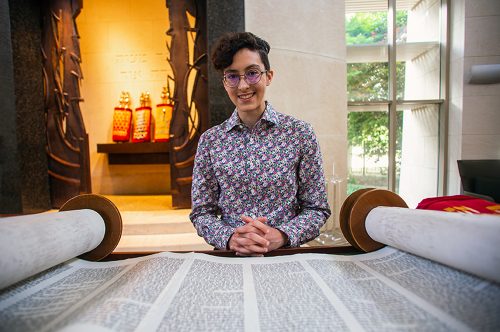
    Morning light filtered through stained-glass windows as 30 TCU students gathered in the sanctuary at Beth-El Congregation, a Reform Jewish synagogue in central Fort Worth. The docent who had welcomed them stepped beneath the ner tamid, the eternal flame, and opened the heavy brass doors of the ark to reveal the congregation’s Torah scrolls. 

    He showed the visitors a scroll that survived the Holocaust, saved from a Jewish community in a farming village outside Prague that was destroyed by the Nazis, and unrolled it so the students could see the Hebrew lettering. 

    Jonah Murray ’21 stepped closer to look at the delicate handwritten text. Murray described feeling honored that the congregation would share its treasure with a group of largely non-Jewish students.

    TCU student Jonah Murray reads a Torah Scroll.

    Jonah Murray was among the TCU students touring Fort Worth worship spaces, including Beth-El Congregation. “As a Catholic person, I feel connected to the Jewish faith because our roots are in Judaism,” Murray said.

    “As a Catholic person, I feel connected to the Jewish faith because our roots are in Judaism,” Murray said. 

    “I always like being able to learn about Jewish people and the Jewish faith, so experiences like that were really valuable.” 

    That afternoon, the students boarded a bus and rode to the Hindu Temple of Greater Fort Worth. 

    At their destination, the visitors left shoes at the door before meeting a representative who showed them the temple’s deities, some surrounded by offerings of flowers. 

    Kundan Chaudhary ’22, a Hindu from Nepal, used the opportunity to share insight on his religion with students on the excursion. While at TCU, he had taken a course on Islam and had been involved with two Christian clubs. “I want to celebrate my religion and value my traditions, but at the same time I want to learn about the traditions of different religions,” he said. “TCU has been a good place for that.” 

    The Interfaith Bus Tour, coordinated by the Office of Religious and Spiritual Life, introduced students to multiple worship spaces in Fort Worth. The experience was meant to deepen participants’ understanding of these religions and expand their capacity for interreligious dialogue. 

    While college offers students the chance to study other religions and make friends from different faiths, higher education also can be a training ground for leaders who are skilled at mediating religious conflict. The bus tour and TCU’s other interfaith activities are designed to prepare students to build bridges in a religiously diverse world. 

    “Knowing how to approach and talk to people who are really different from you makes you a better neighbor or better worker or better friend,” said Britt Luby ’06, a former associate chaplain in TCU’s Office of Religious and Spiritual Life who launched the Interfaith Bus Tour. 

    “ ‘Interfaith leader’ is going to be a new résumé-builder one day,” she said. “You’re going to want that line: ‘I know how to bring people from different religious traditions together, and I’m religiously literate.’ ”

    The initiatives stem from the university’s emphasis on inclusive excellence and its historical association with the Disciples of Christ denomination, which values interreligious education, respect and dialogue. 

    The interfaith programs also align with TCU’s strategic plan, Vision in Action: Lead On, which prioritizes diversity and inclusion — a theme that informs goals such as recruiting a diverse student population and developing all students’ cultural and global awareness.

    “Obviously not everyone in the world is a Christian,” said Ella Johnson, a sophomore political science and religion major and president of the Disciples of Christ student group, Disciples on Campus. 

    “Nine times out of 10, when you go into a group of people, you’re going to interact with people who have a different religion than you. It’s going to make you a better person and a more understanding and empathetic individual if you understand something so core to their identity.”

    PLURALISM DEFINED

    College is many students’ first exposure to religious perspectives other than their own, either in the classroom — the core curriculum requires students to take a course in religious traditions — or in club meetings or residence halls. Having a serious conversation with a person from a different faith requires participants to interrogate and articulate their own beliefs. Many end up clarifying a commitment to their own faith while broadening their understanding of the role of religion in other people’s lives. 

    “My experience — and I think a lot of people’s experiences with interfaith [dialogue] — is that it actually strengthens your own resolve in your religion,” Murray said. “I’ve found interfaith to be a great strengthening tool for grounding me more deeply in my Catholicism and in my relationship with God.”

    TCU religion professor Jan Quesada

    Jan Quesada uses case studies in her introductory interfaith course to teach students how to defuse religious tensions. “It’s an opportunity for students to consider this scenario of religious clash and offense in a very pragmatic, real-world, contemporary American context,” she said.

    Interfaith work encourages students to find common ground without suggesting all religions are fundamentally the same.

    In an interfaith studies course, Jan Quesada, a senior instructor in religion, introduces the idea that “pluralism does not mean this mush of, ‘All religious traditions are the same; we all basically believe the same thing,’ ” she said. “It’s about trying to have a respectful understanding of religious distinctives. You can respect and appreciate other people’s tradition without giving up your own.”

    Her former student Lex Drake ’21, who majored in religion and women & gender studies, said the idea that the world’s religions are not different paths to the same ultimate goal was at first startling. 

    Drake remembered being struck by a passage from When One Religion Isn’t Enough: The Lives of Spiritually Fluid People by Duane Bidwell ’88 (MDiv ’77, PhD ’03). “I do not believe that God is one or that all paths reach the same mountain,” Bidwell writes. “Religions are not different descriptions of a single reality; they describe different (and sometimes related) realities. … Each religious and spiritual path leads to its own mountain.”

    The idea took a while to digest, Drake said. “At the time, I was very much in the zone of, ‘Yes, all religions should work together because we’re all going for the same thing.’ And then after that, I was like, ‘How do we still work together?’ ”

    The Office of Religious and Spiritual Life helps answer that question by setting the stage for students to listen to one another and find mutual understanding despite their differences.

    DINNER AND DISCUSSION

    At a pre-pandemic Know Your Neighbor Night, two dozen students sat down for dinner in Jarvis Hall with relative strangers. The event was open to all students, but the organizers, who included Murray and Fatima Burney ’21, fellows in the Office of Religious and Spiritual Life, had intentionally gathered a diverse group by inviting the Muslim Student Association, the Collegiate Recovery Community, the Black Student Association and the Disciples of Christ student group.

    At each table, the conversation began with icebreaker questions: Where are you from? What activities are you involved with? Where do you see yourself in 10 years? 

    The organizers then nudged the students to tackle more difficult prompts: Think about an identity you hold and a moment when you’ve been made to feel unwelcome because of it. Now think of a time when you felt welcome, fully seen and heard. What can we do at TCU to create more of the latter?

    “It was a good way for people of different faiths and different backgrounds to get to know each other,” Burney said. “A lot of people are going through struggles that you don’t see, and having those deeper conversations made me more cognizant of that.”

    TCU student Fatima Burney.

    Fatima Burney says she has felt the sting of negative stereotypes about Muslims, but interfaith education efforts such as TCU’s can help dismantle those misconceptions.

    In fall 2021, students from Disciples on Campus invited peers in the Muslim Student Association and TCU Hillel, a Jewish student group, to a similar event. Addison Gardner ’19 (MDiv ’22), then a Brite Divinity School student and Disciples on Campus minister, managed logistics, like ensuring the evening’s enchiladas would be suitable for both kosher and halal diets. 

    At the end of the evening, Gardner asked the 30 participants to write down a word or phrase that summarized the evening. She later posted the cards outside her office: Understanding. Solidarity. Unity. Community.

    Interfaith activities such as Know Your Neighbor Nights give students a chance to learn about one another’s experiences in a structured, respectful way. The ground rules: What’s said at the table stays at the table. Speak only for yourself, not for an entire group with which you identify. Let others do the same. 

    Burney, a Muslim, said she knows how it feels when those rules aren’t followed. Since she started wearing a hijab in sixth grade, people have been asking questions about her religion, some more charitable than others. In one of her TCU classes, students read an article critical of Islam. Burney was the only Muslim in the room. “I felt like I had to explain myself and my experience,” she said, “when I didn’t necessarily want to be put in that position.”

    To foster more understanding and dialogue, the Muslim Student Association in April invited the campus community to learn about the holy month of Ramadan and join in an iftar, the evening meal to break the day’s fast. TCU Hillel has taken students — both Jewish and non-Jewish — to a Passover Seder at Beth-El Congregation. 

    “We see part of our mission as educating the broader community about Judaism,” said Mimi Zimmerman ’22 MTS, TCU community adviser to Hillel. “It’s important to have events for Jewish students to get together as a community, but it’s equally important to be open to [students of] other faiths who are interested in learning more about Judaism.” 

    THE DISCIPLES INFLUENCE

    In addition to comporting with TCU’s strategic plan, interfaith understanding is a value the university shares with the Disciples of Christ. 

    Associate chaplain the Rev. Lea McCracken ’00 leads the Religious and Spiritual Life office’s interfaith programs and serves as church relations officer, a liaison between the university and the Disciples of Christ church. She said the denomination offers people freedom to practice their faith however they encounter the Holy Spirit. That perspective extends beyond Christianity to other religions and informs the Disciples’ emphasis, particularly in youth groups, on interfaith education and dialogue.

    “There’s automatically this understanding that if we’re on our own journey, then others are on their own journey,” she said. “God is revelatory in bigger ways than just our own understanding through Christ.”

    Miranda Sullivan ’21, who was heavily involved in Disciples of Christ youth activities in high school, remembers learning about Judaism and Islam in her youth group. Growing up, “It was just important to understand where other people were coming from and respect other people’s beliefs and interact with people who believe differently,” she said. “That was something that was instilled in me really young by the Disciples of Christ.”

    At TCU, Sullivan, who majored in religion and political science, was a leader in Disciples on Campus and attended interfaith events.

    “I learned so much in my religion classes and in Disciples on Campus that broadened my worldview of not only my own faith, but generally what religion looks like in the world and what meaning looks like in the world,” she said. “So much of religion is a search for meaning, and people find this meaning in such different ways.”

    In spring 2022, Gardner and Disciples on Campus organized a service project followed by an interfaith experience. 

    In the experiential component, representatives from various religions shared an aspect of their religious expression, such as a prayer, sacred text or meditation. Operating from a stance of unity, not uniformity, Gardner said, meant “seeing that differences are something to be celebrated, something to be recognized and affirmed.”

    Even the process of designing the event required religious literacy. While some religions would welcome non-adherents to participate in their prayers or rituals, such behavior would be inappropriate in others. 

    DIWALI DAYS

    In addition to organizing events for students from multiple faiths, the Office of Religious and Spiritual Life has expanded its efforts to meet the needs of Christian and non-Christian students. Its staff roster includes part-time advisers to the Jewish and Muslim student groups. 

    Staff members also work with the South Asian Inter-Cultural Association, which hosts cultural activities open to all students but comprises a number of Hindus.

    TCU student Divyanshi Singhal

    Divyanshi Singhal’s participation in activities such as organizing a Diwali dinner for fellow Hindu students helped her combat the isolation she sometimes felt on campus.

    Divyanshi Singhal ’22, who served as president of the South Asian student group, came to TCU from the state of Uttar Pradesh in northern India. Her move to Texas underscored the role religion had played in her life at home

    “One thing that you don’t really consider when you’re applying to colleges, especially abroad, is your religious identity,” Singhal said. “I think I took that for granted being a Hindu, which is a majority religion in India. Changing from a majority identity group to a minority identity group, not only in terms of my race but also my religious identity, was a huge culture shock.”

    During Singhal’s first semester at TCU, she went to class during Diwali, a significant Hindu festival, for the first time ever. In India, the five days of Diwali were school holidays spent with family. Together, Singhal and her relatives would decorate the house and celebrate with rituals, a traditional feast and fireworks. In Fort Worth, surrounded by non-Hindus, she missed that sense of community. 

    The same semester, Singhal took a course on the Quran taught by Samuel Ross, an assistant professor of religion. On the first day, Ross quoted Max Müller, a German scholar of comparative religion: “He who knows one, knows none.” 

    Müller was observing that people who study other religions can better understand their own, Ross said. Most of Ross’ students were not Muslim, but they could use their newfound knowledge of Islam to develop a more nuanced perspective on their own faith, if they had one. 

    The idea resonated with Singhal and shifted her perspective on being a religious minority. Instead of focusing on the isolation she sometimes felt, she said, she could view the experience as an opportunity to learn about other faiths and better understand Hinduism in the process.

    In Singhal’s sophomore year, she worked with Murray to organize a Diwali dinner for Hindu students. “That was the first time I truly felt a sense of belonging in terms of my religion,” she said. 

    AN INCLUSIVE HOLIDAY POLICY

    Singhal also served on the Religious Advisory Council, first organized in 2017 by Luby to discover how TCU could better support students’ religious needs. Singhal said the experience was another venue for learning about other religions. “It’s a very safe space where you can make mistakes but also learn.”

    When Luby first convened the group, she posed a question: What’s working for you, religiously, and what’s not working for you at TCU? 

    The answers varied depending on the members’ traditions. Drake, the interfaith studies student who had been rattled by the notion that different religions have different ultimate goals, represented the Disciples of Christ.

    Suddenly, the lesson from Bidwell’s book made sense. Members of the council wanted different types of support from TCU because their traditions prioritized different experiences. For some students, a dedicated prayer space on campus was most important. For others, a sense of family and community during religious festivals like Diwali was paramount.

    The non-Christian students’ biggest concern was about missing class for religious holidays. Many professors accommodated students’ desire to miss class to attend services or go home to their families on holidays.

    But if an instructor wasn’t willing to excuse the absence, the student would have to choose between academic and religious obligations. 

    In 2020, TCU adopted a policy to support students whose religious holidays conflict with the academic calendar. Former university minister the Rev. Angela Kaufman ’95, Luby and members of various campus faith organizations drafted an initial policy. 

    Claire A. Sanders, a senior instructor in history and the provost’s faculty fellow, and Kaufman revised that policy and presented it to TCU’s Faculty Senate, which approved the measure unanimously in spring 2020; it went into effect that fall. The policy also was approved unanimously by the Student Government Association. 

    The policy’s development allowed council members to apply their interfaith education to advocacy on behalf of fellow students. 

    “What we want to see, ideally, is our Buddhist student advocating for our Mormon student to have what he needs, and vice versa,” said McCracken, who now advises the council. 

    The council provides “a platform for students to feel involved in really important work when it comes to policies,” she said. “But underlying that is the interfaith work of getting them around a table once a month and talking about how we celebrate our differences, but again, what is it that we have in common?” 

    Students share the need for their peers and institutions like TCU to respect and support their distinct religious experiences. The advisory council gives its members practice in solving problems related to religious diversity. 

    INTERFAITH CLASSROOM 

    Quesada incorporates similar peacemaking and problem-solving skills into her interfaith studies courses. In 2017, the Daryl D. Schmidt Lecture on Religion and Public Life brought interfaith activist Eboo Patel to campus. Patel, the Chicago-based founder of Interfaith Youth Core, now called Interfaith America, met with faculty during his visit and introduced them to his method of teaching with case studies to illustrate the complexity of religious pluralism. 

    The following summer, Quesada was one of 25 national scholars to receive training from Patel’s organization on teaching religious understanding. 

    Since then, students in her introductory interfaith studies course have used case studies to practice negotiating solutions to religious tension. One case study challenged students to balance the needs of a Baptist congregation and the Sikh community in a small town in California’s Central Valley. 

    In this real scenario, the Sikhs’ peace parade passed a Baptist church as services were ending, and the minister distributed flyers to paradegoers that warned they would go to hell unless they became Christian. The Sikhs, who believe in the validity of all religions, objected to the flyers and the minister’s attempts to convert them. Quesada asked her students to take the role of a civic leader and use their knowledge of both faiths to suggest strategies for resolving the conflict. 

    “It’s an opportunity for students to consider this scenario of religious clash and offense in a very pragmatic, real-world, contemporary American context and try to recommend, what would you do?” Quesada said. “How do you bring communities into some sort of potential positive engagement across their religious difference?” 

    The problem was tricky, Drake said. “Both parties felt completely justified, and in each one’s religious tradition, they had done exactly what they were supposed to.” 

    Drake suggested that the minister should apologize, and if the Sikhs were willing and the pastor promised not to try to convert people, the Sikhs could invite him to dinner at their gurdwara so he could learn more about them. 

    The focus of such exercises is on “civically focused, respectful, First Amendment pluralism, which allows the free expression of different traditions within a democratically diverse society,” Quesada said. “Everyone is ultimately working for the common good in a way that takes seriously religious differences and respects them.” 

    Universities play an important role in preparing future leaders who can facilitate interreligious dialogue and compromise. The work starts with building religious literacy and students’ capacity to listen to and learn from one another. 

    “There are a lot of very harmful and negative stereotypes that exist about Muslims that have very real implications on my everyday life,” Burney said. “My community has gone through hate crimes and attacks on our mosque through the years.” 

    But, she said, universities like TCU can develop students who are committed to educating themselves about Islam and dismantling those misconceptions in their workplaces and communities. 

    Interfaith work can prepare students to preserve religious freedom for all people and defuse conflict. 

    “It’s really important, in our current context, for students to be more self-aware about religious differences and about what they bring to a religiously diverse contemporary American society,” Quesada said. Students need “the equipment to be able to engage positively in that real-world environment that’s very different from what they still fondly refer to as the ‘TCU bubble.’ These are skills and sensitivities and awarenesses that will benefit and strengthen them and prepare them for a much more religiously diverse world.” 


  10. Here’s to the leaders, the coaches and the mentors

    Leave a Comment


    How do we excel at Texas Christian University? Mentoring. Our connection culture is at the heart of fostering success and developing leadership.

    And not just in the classroom. Our athletics coaches become close and trusted advisers to student-athletes. Coaches are some of the most influential and dedicated members of the Horned Frog family, and their stories are always inspiring.

    David Roditi ’96, our head men’s tennis coach, has come full circle in giving back the kind of success and connection he experienced as a marketing major at TCU three decades ago. He has built a nation-leading program through inclusion and supportive personal relationships. He and former teammate Devin Bowen ’94, now assistant coach, guided the Horned Frogs to a national indoor tennis championship earlier this year and celebrated the success of alumnus Cameron Norrie at the Wimbledon semifinals.

    Women’s soccer coach Eric Bell arrived at TCU in 2011 just as we entered the Big 12. He had big plans. Already one of the nation’s best soccer coaches, he focused on recruiting top developing players through the youth clubs in North Texas. With each season Bell revamped the program and four years later achieved “something monumental” — a spot at the NCAA tournament. This set the stage for a joyous Big 12 championship in 2021.

    Of course, not all coaching takes place on an athletic field. Dr. Zoranna Taylor Jones ’98 (MS ’07), 2017 winner of the Wassenich Award for Mentoring and a track athlete during her TCU student days, has been instrumental in establishing and cultivating our STEM Scholar program. The first class of these scholars recently graduated, and I hope you will read more about them here.

    As we head into the fall, expect more great things from Karen Monez, head coach of TCU’s women’s rifle team, long ranked as one of the best teams in the nation. And coach Haley Schoolfield will be at the helm of the equestrian team she’s brilliantly recruited and developed.

    Also in this issue: football head coach Sonny Dykes, who came to TCU eager to mentor his players far beyond the playing field. He’s guiding his team to navigate Name, Image and Likeness partnerships and self-agency because teaching our Frogs to adapt to a changing world is what we do.

    At TCU, we do more than mentor our Horned Frogs. We coach for life.

    Victor J. Boschini, Jr. 

    10th Chancellor

    TCU students and administrators at the New Orleans Frog Camp i 2022. They are pictured by a river boat wearing mardi gras masks.

    Frog Camp offers one mystery destination trip every summer. In 2022 participating students were surprised by the mystery destination, New Orleans, and by the fact that Chancellor Boschini joined them. Direct participation in University life is a hallmark of TCU’s connection culture. Photo courtesy of Vanessa Roberts Bryan