Menu

Author Archives: Caroline Collier

  1. Ron Parker Leads the Way

    1 Comment

    On the football field, Ronald C. Parker ’76 conquered. 

    In the business world, he achieved results with integrity. 

    Parker has now combined that business savvy and winning spirit to help lead the school’s largest fundraising campaign amid growing enrollment and rising national rankings for academics and athletics. 

    Engaging and charismatic, the TCU football celebrity bleeds purple. His 6-foot, 4-inch frame shows up wearing purple at every home football and basketball game. 

    “Ron is a wonderful cheerleader for TCU,” said Don Whelan, vice chancellor for university advancement. “He does not miss an opportunity to talk about the vision for the university, what we’re trying to accomplish and how the campaign supports that vision.” 

    Parker’s passion plus an ability to motivate people toward a common goal are why he’s co-chair of the $1 billion Lead On: A Campaign for TCU, which concludes this year during the school’s 150th anniversary. The campaign’s four priorities mirror TCU’s overall strategic plan: to strengthen academics, student scholarships, faculty and its $2.4 billion endowment. 

    “The goal is to constantly progress and be better tomorrow than we are today,” said Parker, a retired PepsiCo Inc. executive who is a TCU Trustee and member of the Neeley School of Business Board of Advisors. “If we can build a culture of the next generation of leaders, we’re good.” 

    From Field to Boardroom

    Parker grew up in Brenham, Texas, a town of about 18,000 between Austin and Houston where his family raised cattle and planted cotton and corn. The small town also is the home of Blue Bell ice cream. 

    While Parker began school during segregation, he took on leadership roles after integration at Brenham High School, becoming a football captain and a member of the basketball team. His senior year, he was class president, voted most popular and named an All-Central Texas football player. 

    He played football at Brenham’s Blinn College, then transferred to TCU on a football scholarship. While a Horned Frog, the tight end and team captain had 33 receptions and two touchdowns, including 21 catches for 289 yards as a senior. He was inducted into the TCU Block T Hall of Fame in 2004. 

    His stats caught the attention of the Chicago Bears, which drafted him after he earned a bachelor’s in political science. Parker injured his knee during his rookie year in the NFL. Following the advice of mentor and Horned Frog booster the late Dick Lowe ’51, Parker left football for the business world, even working for Lowe’s oil company.
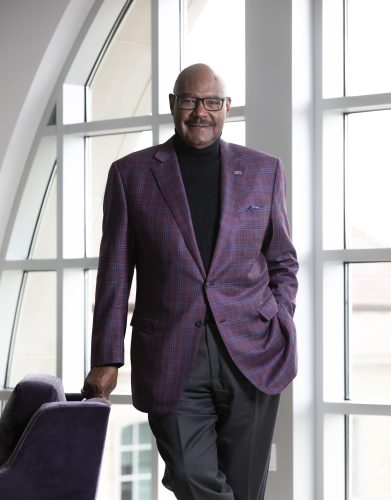
    TCU Trustee Ronald C. Parker shows up in purple at every Horned Frog football and basketball home game. At TCU he studied political science in the AddRan College of Liberal Arts and now serves on the Neeley School of Business Board of Advisors. Joyce Marshall

    Parker eventually found his way to human resources, landing at PepsiCo. After almost 30 years, he retired in 2010 as senior vice president of human resources/labor relations and chief global diversity and inclusion officer of the then $60 billion company. 

    At PepsiCo, Parker crisscrossed the country, working in different areas to become a complete leader. He brings that same holistic approach to the TCU Board of Trustees, where he’s chair of the development committee. He also likes to sit in on other committee meetings to understand how all the pieces fit together. 

    “It’s the leadership of people like Ron who inspire us to do more,” said Pro Football Hall of Famer and fellow TCU Trustee LaDainian Tomlinson ’05. “At our board meetings, he’s the one who always comes up with intriguing questions to challenge us. The man is a wealth of knowledge.” 

    Even when Parker led more than 30 labor contract talks at PepsiCo, he prioritized people, said Steve Reinemund, former chairman and CEO of PepsiCo. “He has strong followings and is able to lead people to accomplish worthy goals. If Ron speaks, we listen.” 

    Now Parker juggles so many balls that friends and colleagues wonder when he sleeps. Even when walking his dog, Lola, he wears headphones so he also can talk on his cellphone. To relax, he plays golf or helps tend the Angus cattle on his family’s 300-acre ranch. 

    After retiring from PepsiCo, Parker took on high-profile leadership roles for global organizations intent on growing the ranks of and supporting professionals of color. As president and CEO of the Executive Leadership Council for six years, he grew membership and programs to boost the number of Black executives and board members. In 2019, he became president and CEO of the National Association of Securities Professionals, helping raise a record $1.1 million in 2022. 

    “He has the rare ability to improve and elevate organizations,” said Richard Turnley III, chairman of the national securities organization and director of institutional sales and marketing for Channing Capital Management in Atlanta. Parker is “able to organize, mobilize and motivate folks to reach a goal.” 

    Spreading the Word

    At TCU, Parker sees his role as leading individuals to win as a team. Since he and campaign co-chair Dee J. Kelly Jr., a lawyer and partner at Kelly Hart & Hallman in Fort Worth, launched the effort in fall 2019, they’ve deepened TCU’s reach to high-profile supporters, wooed new donors and broadened community engagement. 

    As of the end of December 2022, TCU had raised $907 million, including $276 million for campus facilities and $631 million for people and programs. A previous multiyear fundraising campaign, which ended in 2012, raised $434 million. 

    Success requires building trust through sincerity and transparency, Parker said. That genuineness shines when he speaks about what TCU means to him and his family. He focuses on the university’s qualities that are important to him — a reimagined campus, its national rank as the 89th best university in the U.S. and the Horned Frog football team’s recent renown. 

    “We have found a way of making it personal,” Parker said. That includes matching potential donors with their interests, such as approaching Mary Ralph Lowe to name the Ralph Lowe Energy Institute in her late father’s honor. Or convincing the late Nashville businessman Spencer Hays ’59 and his wife, Marlene, to give $30 million for the Neeley School of Business. Personal connection also means sending individualized thank-you notes to every donor. 

    For Parker, a self-professed data guy, it’s a simple investment and return equation. 

    “Businesspeople talk about ROI — return on investment; Ron talks about ROR — return on relationships,” said Whelan, who has known Parker for 20 years. “Ron is very charismatic. He has helped open a lot of doors for us.” 

    As of early December, more than 54,000 people had donated to the Lead On campaign, up from slightly over 40,000 in the previous campaign. 

    “Ron’s a natural leader and he loves people,” said Kelly, whose late father, Dee J. Kelly ’50, was an Emeritus Trustee. “He’s particularly good with keeping the volunteers and employees working toward the goal.” 

    Alumni, students, friends and parents in a nationwide volunteer group act as ambassadors for the Lead On campaign. That networking strategy helped Parker and his wife, Paula Rhodes Parker ’77, exceed their goal to raise $109 million while co-chairing the Campaign Scholarship Initiative in 2012. Paula Parker is now a volunteer leader on the Lead On National Campaign Committee. 

    Walk the Talk

    The Parkers met at TCU, where Paula pursued a bachelor’s in nursing. They began supporting the university not long after they wed in 1978. They bought season football tickets, even though they couldn’t afford them, and donated to scholarships when they could. 

    “IT’S THE LEADERSHIP OF PEOPLE LIKE RON WHO INSPIRE US TO DO MORE. AT OUR BOARD MEETINGS, HE’S THE ONE WHO ALWAYS COMES UP WITH INTRIGUING QUESTIONS TO CHALLENGE US. THE MAN IS A WEALTH OF KNOWLEDGE.” 
    LaDainian Tomlinson '05

    Their first major TCU gift was a football scholarship in 2006. Since then, they established the Ron and Paula Parker Endowed Scholarship for a tight end, recently awarded to Geor’Quarius Spivey ’22 and Carter Ware ’21; the Harris College Scholarship for Nursing; and an endowed professorship in the Harris College of Nursing & Health Sciences, now held by Carol Howe. They also supported other TCU projects, including the renovations of Amon G. Carter Stadium and Ed and Rae Schollmaier Arena. They received the Alumni Association’s Valuable Alumni Award in 2012. 

    “The reason why Paula and I are so passionate about TCU,” Parker said, “is because that’s where it all started with us.” 

    Even though Paula Parker grew up in Dallas, she had never been to Fort Worth before attending TCU as a first-generation college student. 

    “This was my first step out, and what a place to land,” said the retired registered nurse who went back to work during the Covid pandemic as a nurse at a Dallas preschool. “I always felt like I was safe and OK.” 

    Paula Parker is on the Harris College Board of Visitors and has held leadership roles with the Susan G. Komen Race for the Cure and the Texas Women’s Foundation.

    Inspiring the Next Generation

    Paying it forward, the Parkers help others as others have helped them. They focus their philanthropy on three areas: education, health care and diversity. 

    Their efforts also reach beyond TCU. In 2018, the couple co-founded the Donors of Color Network, the first cross-racial group committed to achieving racial equity. 

    “I try to step into the gaps where I see a need,” Ron Parker said. “I’m all about equity.” 

    He also hopes to foster change by serving on the boards of many companies and nonprofit groups, including the United Way Foundation of Metropolitan Dallas and the Association of Governing Boards of Universities and Colleges. 

    The Parkers also instilled their altruistic philosophy in their three children, two of whom, Lauren ’07 and Jonathan ’08 MBA, are TCU alumni. 

    “They taught us that you have an obligation to give back, that we’ve been fortunate and to pay it forward,” said Lauren Parker, a Dallas resident who sits on the TCU Chancellor’s Advisory Council. “I love the university as much as my parents do.” 

    That’s music to her father’s ears. 

    “The whole idea is to transfer that knowledge to the next generation,” he said. “I have amassed some tremendous experience and if I don’t use it in a useful way then … I have not done enough.” 
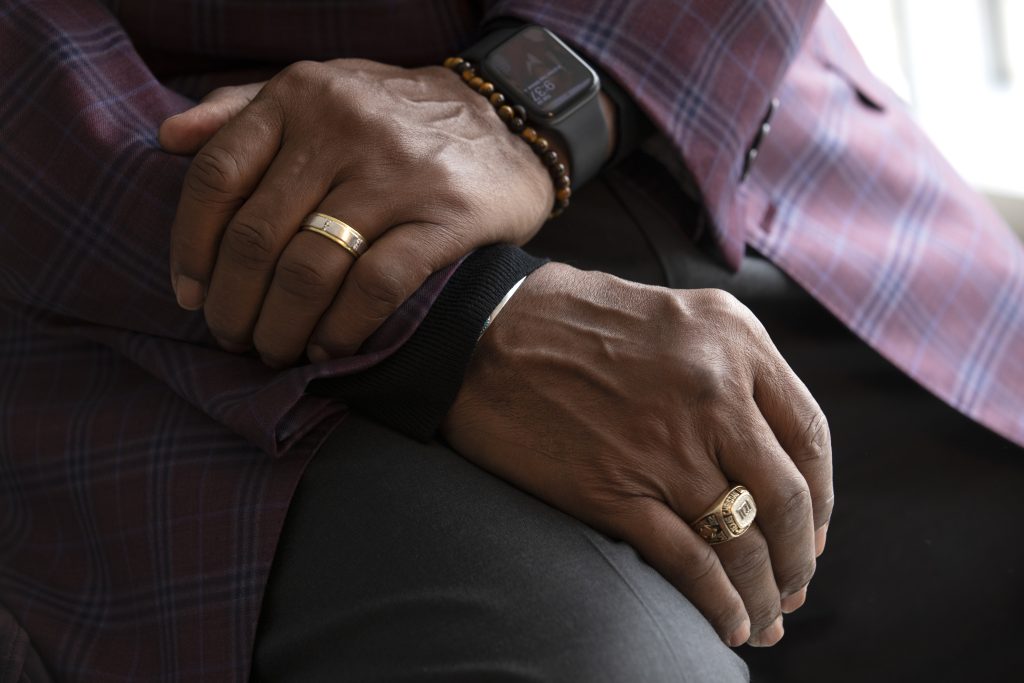
    “The reason why Paula and I are so passionate about TCU,” Ron Parker said, “is because that’s where it all started with us.” Photo by Joyce Marshall

  2. Heart of a Horned Frog

    3 Comments

    The nine-hour heart surgery.

    Playing on a broken foot.

    The loss of a starting gig he had held for three years.

    This magical season.

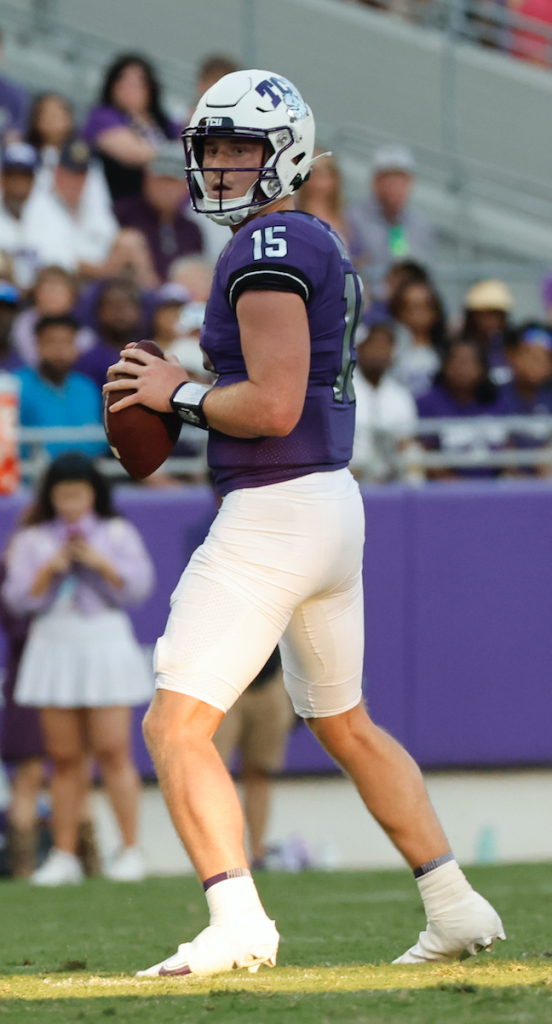
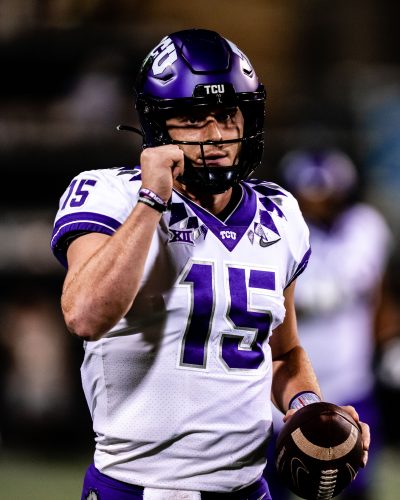
    The highs and lows Max Duggan ’22 faced during his four years as TCU’s starting quarterback have become the stuff of legend.

    Jeremy Clark, the longtime TCU beat reporter for 247 Sports, expressed little surprise at Duggan’s success.

    Not long after Duggan committed to TCU in 2018, Clark traveled to Iowa to watch him lead Lewis Central High School to a 51-7 playoff victory. That night the quarterback threw four touchdowns and rushed for two more.

    The four-star recruit and future Davey O’Brien Award winner spoke with Clark after the game, expressing his appreciation that the reporter made the trip.

    A text from Duggan a few hours later gave Clark early insight into the future TCU star’s character. Duggan thanked him again before apologizing for how he’d acted as a result of his frustration with himself.

    “What kind of teenager does that?” said Clark, who hadn’t considered Duggan’s behavior as anything but gracious at the time. “That’s just who Max is.”

    In the four years since that text, Duggan has logged 43 starts as a Horned Frog and has now led the Horned Frogs to the National Championship game.

    “We at TCU don’t think he’s one of the best college athletes in the country, we think he’s the best college athlete in the country,” Chancellor Victor J. Boschini, Jr. said in December while introducing Duggan at his pre-Heisman news conference.

    “The reason we think that is because of what Max is both on and off the field.”

    IOWA ROOTS

    Duggan, who will turn 22 in March, was born and raised in the blue-collar city of Council Bluffs, Iowa, directly across the Missouri River from Omaha, Nebraska. His parents, Deb and Jim Duggan, met at the University of South Dakota where she was a top hurdler. Her husband-to-be, meanwhile, was the Coyotes’ quarterback.

    The couple relocated to Iowa where they started a family by adopting two children from South Korea, Sam and Megan. Max, who was born when his siblings were ages 6 and 4, respectively, describes the Duggan clan as a football family. His dad coached football at a local high school. Sam played quarterback for their father’s team.

    Max Duggan high-fives fan as he leaves the field after TCU beat Texas Tech in 2022.

    Duggan helped TCU achieve its first undefeated regular season since 2010. Courtesy of TCU Athletics

    In junior high, Max Duggan would work summers baling hay, building both muscle and character. (Hay bales can weigh 65-85 pounds apiece.)

    In high school, Max participated in student council while maintaining an A average and lettering in baseball, basketball, track and football. On occasion, his dad would bench him. The elder Duggan also caught flak for starting his son, something that only fueled Max’s resolve.

    “His mom is a stubborn farm girl from central Iowa and he’s ornery Irish on the Duggan side,” said Jim Duggan, who retired from coaching and teaching in the spring of 2019. “That combination has made Max who he is.”

    As Iowa’s Gatorade Player of the Year in 2018, Max Duggan fielded interest from Iowa, Kansas State, Penn State, Ole Miss, Ohio State, Georgia and other top programs.

    Sonny Cumbie, TCU’s offensive coordinator and quarterbacks coach at the time, was determined to make the high school junior a Horned Frog upon meeting him in early January 2018. For the next several months, Cumbie returned to Duggan’s school, attended his track meets and spent time with the whole Duggan family. (He still raves about Jim’s chili.)

    After stepping onto campus for an unofficial visit in March 2018, Duggan fell hard for TCU. A month later, he committed. He never wavered, Cumbie said. “He’s a loyal dude.”

    Duggan’s affection for TCU only deepened during his four years as an undergraduate.

    “I love this place,” he told the media after the Frogs’ come-from-behind, double-overtime 43-40 victory over Oklahoma State in October 2022.

    “I love the school. I love the city. I love this program.”

    Two months later, as he prepared to head to Phoenix for the Vrbo Fiesta Bowl, Duggan described playing for TCU as a dream come true.

    “The support from the school has been fantastic,” he said. “It’s been incredible. [Football] brings together our program and our university. A lot of people have a lot of pride in it.”

    FOREVER FROG

    After graduating from high school a semester early, Duggan enrolled at TCU. He moved into Wright Hall in January 2019 and a few months later started spring practice.

    He started 10 games as a true freshman in 2019. He finished the season with 2,077 passing yards and 15 touchdown passes.

    The coronavirus pandemic upended his sophomore season in more ways than one. A routine electrocardiogram in the summer of 2020, part of the university’s Covid-19 protocol for student-athletes, revealed that Duggan had Wolff-Parkinson-White syndrome. The congenital defect makes the heart beat abnormally fast.

    He was diagnosed on a Friday. Late Monday afternoon, he underwent a nine-hour surgery in Houston.

    Duggan runs the field during TCU's victory over Colorado in September 2022.

    Duggan built muscle and character in junior high by baling hay during the summers. Courtesy of TCU Athletics

    Two days later, Duggan was back in Fort Worth … and heading to the emergency room. At midnight he had emergency vascular surgery to remove a blood clot.

    “That was the one that really set him back,” said Jim Duggan, who drove his wife and daughter to every home TCU game, a roughly 20-hour round trip, for four years. (Sam Duggan flew in from Denver when he could.)

    But the blood clot wasn’t enough to keep the quarterback down for long. Eight weeks later, he started for the Frogs against Iowa State.

    The pandemic caused TCU to play one fewer game during the regular 2020 season and to miss the Mercari Texas Bowl. Nevertheless, Duggan finished his second year as a Horned Frog with 3,321 passing yards and 30 touchdowns along with 404 rushing yards plus six additional scores on the ground.

    Midway through his junior season, the 6’2” signal caller encountered more health woes after breaking a bone in his foot during the October game against Texas Tech. (He nonetheless led the Frogs to a 52-31 victory.)

    Afterward, Duggan refused to wear a boot out of concern that his injury might leak on social media. He played with the fracture for the final seven weeks of 2021 before having surgery in Dallas in late November.

    “His broken foot and the fact he was still playing on it gave me a lot of motivation,” said junior receiver Quentin Johnston. “He’s always fighting for us, which makes it that much easier for us to fight for him.”

    The Frogs finished eighth in the Big 12 with a 5-7 record that season. Head coach Gary Patterson exited the program in October.

    In August 2022, about a week before the season would kick off, new TCU head coach Sonny Dykes met with Duggan to inform him that he and offensive coordinator Garrett Riley were selecting Chandler Morris to start the season. Though many speculated on Duggan’s next move, he said he never entertained thoughts of transferring.

    “We understood the logistics of a new coaching staff,” Jim Duggan said. “Max knew he was going to have to do something spectacular to win over the coaches, who want to start from ground zero with new people.”

    His son’s reaction, however, caught many who didn’t know Max Duggan well by surprise:

    “I told Coach Dykes I was going to be the best backup quarterback in the country,” Duggan said.

    “Max never blinked, never had a bad practice, he never pouted,” Dykes said. “He never thought of himself one time. How many people can you say that about that you know in your life?

    “You can say that about Max Duggan, that’s for sure.”

    SECOND CHANCES

    When a knee injury sidelined Morris during the second half of the 2022 season opener against the University of Colorado, Duggan stepped up and never looked back.

    He started the next 13 games, leading the Frogs to a 12-0 regular season, one that saw him throw for 3,321 yards with 30 touchdowns and 404 rushing yards with six touchdowns on the ground.

    TCU Quarterback Max Duggan surveys the field during a September 2022 game against Tarleton State.

    Max Duggan is the first TCU student-athlete to win the Davey O’Brien National Quarterback Award. Courtesy of TCU Athletics | Ellman Photography

    “Max is one of those guys who in the last minute you want to get the ball in his hands,” said cornerback Tre’Vius Hodges-Tomlinson. “For me personally his best leading is the way he plays football.”

    Other teammates and coaches describe Duggan as a self-directed and self-motivated player who never panics or complains.

    “The team tries to match his energy because if you’re going to play as hard as him, you’re going to be playing really hard,” said junior linebacker Johnny Hodges.

    Duggan said he realized how truly special the 2022 team was after a trio of mid-season wins: 55-24 over Oklahoma; 38-31 over Kansas; and a stunning double-overtime victory over Oklahoma State.

    “Three ranked opponents and we were down in all three of them and came back,” said Duggan, who threw a 73-yard touchdown pass to Taye Barber in the first quarter of the Oklahoma game before running 67 yards for another touchdown a minute later.

    “There have been times he’s put the team on his back and figured out how to win games,” Dykes said. “He’s just one of those kids who has been incredibly steady in his approach and in the way he’s handled himself.

    “When things go great, he’s got the same mentality as when things go bad,” Dykes said. “Everyone in our program appreciates that consistency.”

    Duggan’s calmness and resolve on the field along with his trust in his teammates helped him lead the Frogs to six come-from-behind victories. His parents always considered him level-headed, even as a child. He brings that discipline and focus to the field.

    IN THE SPOTLIGHT

    In December, Duggan racked up a passel of awards in addition to crossing the stage to collect his degree in marketing.

    “Max was so happy and proud to get accepted into the Neeley School of Business,” Jim Duggan said. “It was always really important to him to graduate from Neeley.”

    The sports world also heaped accolades on Duggan.

    By unanimous vote, he was named Associated Press Big 12 offensive player of the year.

    He and his family traveled to Baltimore where he was presented the Johnny Unitas Golden Arm Award. He became the first Horned Frog to receive the honor, which highlights character, citizenship and academic achievement.

    From there, the Duggan posse (parents, siblings, girlfriend, athletics staff) decamped to New York City for the Heisman Trophy Ceremony. He toured the city — his first trip there — in the company of fellow finalists. At the Saturday night ceremony he mingled with 23 former Heisman winners, from Tony Dorsett to Tim Tebow.

    On that stage alongside his parents, Duggan listened as his mother described how her son found time to inspire a new generation of players by coaching a team of young flag football players that season. Their nickname? Duggan’s Destroyers.

    “We talked about when he was a little kid, as he looked up to other people, that was important to him,” Deb Duggan told the Heisman audience.

    Duggan was the Heisman runner-up to USC’s Caleb Williams. He was the Frogs’ highest Heisman finisher since 1955 when Jim Swink also placed second. Duggan was the university’s first finalist since LaDainian Tomlinson in 2000.

    As she fixed his purple necktie in advance of the Heisman ceremony, Deb Duggan revealed to her son that he’d won the Davey O’Brien Award, named after the legendary 1939 TCU grad. Duggan is the first Horned Frog to win.

    “From his exceptional play on the field to his steadfast leadership and unrelenting will to win, Max truly embodies who Davey O’Brien was,” said Foundation Executive Director Kendall Cason Iles ’10.

    Eight days later, Duggan declared for the NFL draft.

    “Being a student athlete at TCU has been the greatest experience of my life,” he said. “It has helped me develop as a football player, earn a degree and become a better man.”

    Duggan had consulted with his family, friends and coaches before opting out of a fifth year of playing for TCU.

    “He’s got that pro mentality,” Dykes said.

    Duggan timed the announcement to distract as little as possible from the Frogs’ preparation for the Vrbo Fiesta Bowl. The players spent the Christmas holidays in Phoenix, practicing for the matchup with No. 2 Michigan.

    While Jim Duggan paced the concourse (“It was the worst game for me as a coach or a parent”), his son led the 51-45 win over the Wolverines, sending the Frogs to Monday’s National Championship Game at SoFi Stadium in Los Angeles. Duggan helped the Frogs become the first Big 12 team to make the National Championship game since the college football playoff era began in 2014.

    Boschini, who traveled to NYC for the Heisman ceremony and was in Phoenix for the epic upset, is still dreaming of everything to come.

    “We have not seen the last of Max Duggan,” Boschini said. “I am absolutely certain he will be a huge figure in the future of TCU for many, many years ahead.”

  3. TCU Presents: A CEO’s Personality

    Leave a Comment

    How does a CEO’s personality influence leadership style and investor relations? The November 2022 TCU Presents panel, moderated by Daniel Pullin, the John V. Roach dean of the Neeley School of Business, explored the topic. Guests were Joseph Harrison, assistant professor of strategy, management and leadership at Neeley, Megan Hays, managing director of Kimmeridge, and Carlos Treadway, CEO of Ford Credit Europe.


    Question for Professor Joseph Harrison: What got you interested in the relationship between personality and business?

    Question for Megan Hays and Carlos Treadway: How much of your time do you spend thinking about your professional image, and what kinds of decisions are influenced by this?

    Question for Megan Hays: What do investors want to know about the CEO?

    Question for Carlos Treadway: How does global culture affect management style?

    Question for Professor Joseph Harrison: What are some examples of CEOs who have said things that have caused them issues or impacted a company’s growth?

    Question for Carlos Treadway: How do you balance your authentic self with the entirety of the Ford brand?

    Question for Megan Hays: How do you convince executives to listen?

    Question for Professor Joseph Harrison: What advice would you give to company leaders about how they can cultivate their image?

    Question for Megan Hays: What personality traits do investors cherish the most?

    Question for Carlos Treadway: How do you take the aspects of your personality and lead for effective outcomes?

    Question for Professor Joseph Harrison: Which traits best correlate to value in the firm?

    What role does social media play in a CEO’s image?

    Does the post-Covid world require a CEO to show more of their personality than before?


    Summary of panel


  4. The Class of 2026 Share Their Application Essays

    1 Comment

    SUZANNA TESFAMICHEAL

    Engineering

    Fort Worth, Texas

    I grew up in a refugee camp called May-Ayni, one of four such camps in Tigray, Ethiopia.

    I am one of the lucky ones who made it out.

    Woman wearing long braids, Africa-shaped earrings, and a white blazer faces the camera.

    Suzanna Tesfamicheal grew up in a refugee camp called May-Ayni in Tigray, Ethiopia. Photo by Carolyn Cruz

    I have seen things that forever changed me. Many people in the camp fled from Eritrea. People arrive at those refugee camps for many reasons, but the common reason at May-Ayni was the Eritrean dictator, Isaias Afwerki.

    Eritrean citizens have no freedom; if they try to protest or say anything bad about the government, they will go to jail and live in inhumane conditions or even be tortured. They cannot so much as voice an opinion, so many people leave. Kids as young as 8 sometimes cross the border all by themselves to reach the camps, where people wait a month for basic rations.

    The refugee camps are not the best, but they are at least safe. Most of the houses are made of mud; imagine what happens when the rain comes. People who had a little money would build their houses with bricks. This building technique piqued my interest in education and then engineering.

    I want to go back to the community and give back to my people, who are suffering. May-Ayni was home to me. Growing up in a place like that helped me figure out my WHY in life. I have an opportunity most of my people did not get. I am going to use this chance to become a person who will give back. This is what matters to me.


    HANNAH HELFRICH

    Business Information Systems

    Nashville, Tennessee

    On May 26, 2020, I saved a stranger’s life.

    While at a gas station parking lot on a summer afternoon, I noticed a dented, brown Buick surrounded by three men acting strangely. As a woman, I have been taught to be aware of my surroundings. I put the fuel pump in my car, returned to my seat and locked the doors. Once my tank was filled, I replaced the pump. As I was about to leave the station, I stopped cold and did a double take. On the ground next to the car was an unconscious man.

    My heart sank, and I got out of the car. Maintaining distance due to the pandemic, I asked the men if they knew how to perform CPR. They did not.

    In 2018, I had been certified to do CPR, but I struggled to remember the details. No practice simulation compares to a real life-or-death situation.

    Blonde woman in red-orange shirt and jeans faces camera.
    Hannah Helfrich saved a man’s life by performing CPR. Photo by Carolyn Cruz

    One man was on the phone with a 911 operator while the other was attempting CPR. His technique was wrong. I sang “Stayin’ Alive” to demonstrate the proper rhythm for compressions to no avail. As the unconscious man turned greenish-yellow, I knew I had to act.

    “This experience changed my perspective on pressure: It is a motivator, not something to be feared. I learned that I can perform at my peak when under duress, and this knowledge has helped me overcome challenges.
    Hannah Helfrich

    Kneeling over the lifeless man, I searched for a nonexistent pulse. I started chest compressions and ordered one of the men to give mouth to mouth on my count. After multiple rounds of compressions, I remembered an essential part of CPR and instructed someone to open the man’s airway.

    Almost instantly, the unconscious man’s eyes came to life. He started coughing and regained consciousness. The sight was indescribable. After the paramedics arrived, they explained that the man went into cardiac arrest due to a drug overdose.

    I had made a judgment call that ended positively. Though hesitant at first, I had felt pressure to do the right thing, which pushed me to recall my CPR training, to step out of my comfort zone. Those decisions saved someone’s life.

    This experience changed my perspective on pressure: It is a motivator, not something to be feared. I learned that I can perform at my peak when under duress, and this knowledge has helped me overcome challenges. I have improved my grades; I am able to think on my feet, and I am resourceful during complicated situations. I’m certain I will thrive in college because I now know how to respond when confronted with pressure. I see it as an opportunity to do better.


    JAMES BOYD

    Entrepreneurship and Innovation

    Spartanburg, South Carolina

    Last year, a conversation with my cousin led to my taking a 3,218-mile bike ride across the United States.

    My cousin and I were talking about doing something different and interesting over summer vacation. A few weeks later, I signed up for the American Challenge bike trip and started training.

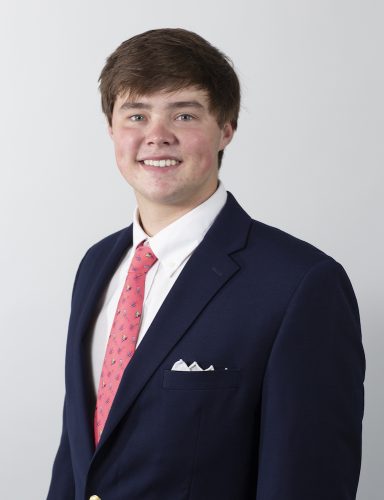
    Young man in suit and pink tie angles body to camera.

    James Boyd participated in the American Challenge, biking 3,218 miles across America to raise money for a nonprofit that assists families in his hometown of Spartanburg, South Carolina. Photo by Carolyn Cruz

    Last June, I left Tybee Island, Georgia, with 13 strangers for a 3,218-mile bike trip that would end in August in Santa Monica, California. Those six weeks would challenge me mentally and physically in ways I could not have imagined. During 11 of those summer days, my group rode more than 100 miles. Carrying 60 pounds of gear, we climbed an 11,000-foot peak in the Rocky Mountains and rode 220 miles through the Mojave Desert.

    I used the trip to raise money for a nonprofit called Total Ministries, which assists families in need in my hometown of Spartanburg, South Carolina. My parents wrote me midway through the ride to say we had raised $20,000 in pledges. Total Ministries was going to use the money for rental assistance for families in need.

    I then understood that my bike trip would help a lot of people. I was motivated to finish the trip no matter how hard the ride became. In the Mojave, a support van trailed us for three days because the temperature was 121 degrees. Almost everyone in the group got in the van, but I pressed on.

    I didn’t want to tell the people at Total Ministries that I had almost biked across America. I wanted to ride every single mile for the families who needed help. Arriving at the Santa Monica Pier to swim in the Pacific Ocean on the final day was an awesome feeling.

    The American Challenge bike trip taught me two things: First, I can do anything if I focus on my goals. Second: A person can make a real difference in the lives of others. I ended up raising more than $30,000 for Total Ministries. That money helped more than 50 families stay in their homes.


    KATIE JANNUSCH

    Nursing

    Cary, Illinois

    *This letter is addressed to a nurse I never met.

    Dear Maddie,

    I know you know the story. I know you know the damage our shared experience did to my family. I know you know the pain of watching a baby die.

    What you don’t know is how you saved my parents, my family and me. The day that Ally died, my parents were devastated and confused. They needed answers, but the OB/GYN was silent; the geneticist didn’t have answers. You were the voice that carried my parents through the death of their first child. You were the person who stood by my mom’s side as my sister took her last breath, and you were the person who assured my parents that life could go on.

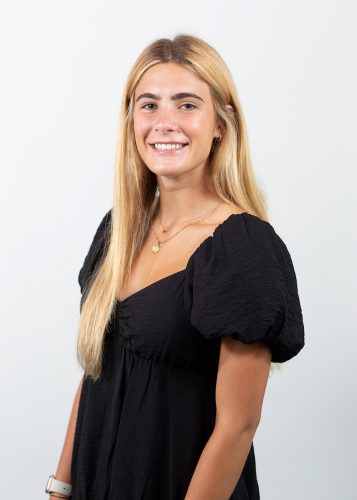
    Young woman in black angles toward camera.

    Katie Jannusch wrote to a nurse she never met: “You saved my life by helping my parents cope, but you also saved my life by giving me a role model.”

    No one had answers for why Ally died, just suspicions: “The umbilical cord was wrapped around her neck.” “She had an esophageal fistula.” “There was a genetic problem.”

    Words and more words filled Ally’s medical documents, but all the words were followed by question marks.

    You were the one who finally pulled my parents aside to talk. You warned them that Ally was going to die, but you helped them enjoy their time together. The geneticist warned them that this tragedy could happen to another of their children should they have more. You found the strength to encourage them to keep trying for kids. You explained that in all your years as a neonatal nurse, you could attest that cases like Ally’s are extremely rare.

    You gave my parents the courage to pursue their family dreams, and because of your advice, I am alive.

    You impacted my parents’ lives so much that the first child they had after Ally was named Maddie. My sister carries on your name, but I want to carry on what your name represents to my family. I want to carry on the strength you showed my parents and the kindness you gave as you talked them through their grief.

    You are the person who made me want to pursue a career in nursing so that I could be the “Maddie” for another family. I want to save lives, but if I can’t, I want to be there for families like you were for mine.

    You may not think you are a superhero because you couldn’t save Ally, but in my house you are. You hold this status because you were honest and compassionate. You had the strength to tell the truth when it was needed.

    When I am a nurse, I will carry on that same strength.

    Maddie, you saved my life by helping my parents cope, but you also saved my life by giving me a role model. You are the reason that someday I am going to be a strong, compassionate, honest and hardworking nurse. I cannot thank you enough for that.

    With Gratitude,

    Katie Jannusch

  5. How To Avoid A Cyberattack

    Leave a Comment

    Keep computers up to date with antivirus and antispyware programs. Computer users should go the extra mile to create strong passwords — the more complex the better:

    • Use at least one letter, one number and one special character. The password should be at least eight characters long, with upper- and lowercase letters.

    • Don’t use something generic, such as password123.

    • Don’t use a word similar to other passwords or make a play on your name.

    • Come up with something not found in the dictionary and difficult to guess.

    • Don’t share the password.

    When possible, opt for two-factor authentication, especially on websites that store valuable data about finances or medical history. For example, investment, mortgage, student loan, banking, medical and social media sites.

    Install software updates on phones and personal computers immediately. These software updates fix security vulnerabilities.

    Do not click on links or open attachments from unfamiliar senders. Email is the preferred method for hackers to gain access to data, computers, phones and money.

    Be wary of emails that request personal information, especially alarming-sounding ones that urge an immediate response; the seemingly pressing deadline is used to discourage people from carefully assessing the situation.

    Double-check the sending address to verify it matches expectations.

    Keep important data — financial records, cherished family photos, etc. — backed up on a regular basis. Ensure that these backups are disconnected from phones or computers, as an infection could render data backups unusable.

    Consider copying important data to an external storage drive and placing the hard drive in a separate, safe place.

    Always lock computers and handheld devices and use a password-protected screen saver.

    Source: Aaron Muñoz, assistant director of IT security at TCU

  6. Saving The Urban Forest

    1 Comment


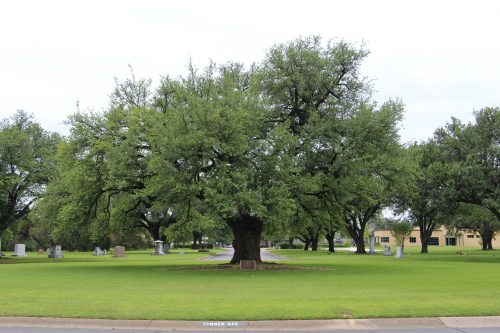
    Standing at the entrance of Greenwood Memorial Park, the massive Turner Oak has been a part of Fort Worth since its founding more than 150 years ago. The tree, which tests show is more than 250 years old, has outlasted generations of residents as the city transformed into the 12th largest in the nation.

    A luscious live oak tree stands in a cemetery.

    The Turner Oak, which stands at the entrance to Fort Worth’s Greenwood Memorial Park, is more than 250 years old, which means the oak rose from the ground more than a century before TCU’s founding. Courtesy of Fort Worth Park & Recreation Department

    Southern live oaks reach their mature maximum trunk diameter within about 70 years, and some of the oldest in the country are several hundred to 1,000 years old, reports the National Wildlife Federation.

    As cities across Texas continue to grow, “there’s concern for tree removal,” said Brendan Lavy, an assistant professor in the department of environmental and sustainability sciences at TCU. “It is much easier for developers to cut down trees rather than preserve them.”

    People suffer along with the felled oaks and elms. Trees are “air conditioners for the local environment. Think of a parking lot in Texas summer: You’re looking for a spot that is shaded underneath a tree. Studies have also shown that trees also make us happier. People want to be around trees.”

    City governments across the country have created preservation ordinances to protect the urban forest. Turner Oak is one of many stately trees specifically protected by Fort Worth’s regulations.

    Since 2017, Lavy has been studying the scope of Texas tree preservation ordinances, which regulate what public and private landowners can and cannot do with trees on their properties.

    Through a local lens, he is assessing what might be done about a global problem.

    The planet’s tree population has declined by half since humans began to evolve, reports the World Wildlife Fund. The accelerating tree loss is speeding up the effects of climate change, destroying natural habitats and increasing soil erosion and subsequent destruction of crops.

    As many as 15 billion trees are now being cut down every year across the globe. The rate of destruction is not sustainable.

    UNDERSTANDING PRIORITIES

    Tree protection ordinances are an important tool to ensure a livable planet for future generations.

    Lavy and Ronald Hagelman, a professor in the department of geography at Texas State University, documented tree ordinances, which vary depending on each community’s goals and ideals, to understand Texas’ framework for protection.

    They first obtained a list of Texas municipalities with ordinances from the International Society of Arboriculture. They verified, added to and updated that list, then extracted the purpose statements from each document to compare how each ordinance referenced the three dimensions of sustainability: environmental protection, economic stability and social equity.

    “A sustainable ordinance,” Lavy said, “would address all three areas equally.”

    These preservation documents are key to understanding the value humans put on protecting the Earth, Lavy said. “My view on sustainability is that it is a new environmental ethic. And as an ethic, sustainability emphasizes the inherent goodness of the Earth and its natural systems, the ecological limitations of unfettered economic growth and the advancement of intergenerational equity.”

    Brendan Lavy works with his students Peter Fahey, right, and Kenna Mollendor in urban forests like this municipal park in Arlington, Texas.

    Lavy and Hagelman found 63 Texas tree ordinances. Each document had a different agenda for protecting trees based on height, width and species. If a tree is protected, people must obtain a city permit to remove it. Some cities offer mitigation processes — a landowner can replace trees or fund tree replanting elsewhere. Cities can dole out penalties if trees are removed without a permit. Fines in Texas range from $500 to $2,000.

    Most ordinances require permits for removing heritage trees — native species with aesthetic value and long lifespans. Fort Worth’s tree ordinance says trees of unusual size, age or species may be given heritage status. The term is also given to trees connected to a historical event and trees that serve as well-known landmarks or have significance to the community. Not all trees are sheltered by regulations, as almost half of Texas tree ordinances exempt single-family homes.

    Research shows that private property contains 80 percent of trees within a city, Lavy said. “So, if you exempt single-family properties, then you’re leaving most of the urban forest unprotected.”

    Gareth Harrier, a board-certified master arborist and Fort Worth resident, said many Texans live by the philosophy of “my house, my rules” and support limited government interference. “A lot of the ordinances will go after the big commercial developers and industrial sites.” Communities are more accepting of such ordinances, and they’re easier for small city staffs to enforce, he said.

    But in most cases, efficiency-seeking developers have cut down trees and leveled the land rather than worked around the trees.

    WORKING TOGETHER

    In recent years, developers and environmentalists have found common incentives to protect the trees, Lavy said. “When it comes to sustainability, it can be developers versus the environmentalists, but that is not always the case. It’s really hard to point fingers at one entity, because there are good people doing good things on all points.”

    In a field experience class, Lavy is teaching students how to quantify the benefits of trees to the urban environment. Measurements and calculations, Lavy said, include “carbon sequestration, energy saving and pollution removal.”

    The more trees on the planet, the more carbon they can remove from the atmosphere. Trees shade houses in the hot Texas summers, which saves energy. They prevent heat from being reflected back into the atmosphere by shading parking lots and other concrete surfaces. Leaves remove air pollution through small holes on their undersides.

    By putting a numerical value on the benefits that come through tree preservation, humans can better learn how — and why — to conserve the Earth’s ecosystem.

    “Sustainability prioritizes intergenerational equity,” Lavy said. “Sustainability is not a trend. It has lasting power, and it is not going away.”

    As many as 15 billion trees are now being cut down every year across the globe. The rate of destruction is not sustainable.

  7. Unfinished Business

    Leave a Comment


    Mike Miles Jr.’s basketball career saw a meteoric rise when his fourth-grade highlight tape went viral on YouTube, amassing more than 4 million views and counting. He went on to become a four-star recruit by Rivals, leading Lancaster High School to the Texas’ state tournament finishing with a 36-1 record (12-0 in the district). Most recently, he led TCU to the 2022 NCAA Tournament and was named to the Second Team All-Big 12.

    What was it like growing up in the Highland Hills neighborhood of Dallas?

    It was bad. It was not a good part to live in, but I got through it, so it made me a better man. It made me have to grow up at an early age, but I have great memories from where I’m from. It definitely wasn’t fun all the time.

    Was there a strong basketball culture around you?

    Yeah, I pretty much say everyone I grew up with always went to the park and I had a basketball hoop in the front of my house. So a lot of people came and played basketball at my house.

    Was there a player or a personal figure that inspired you to play?

    I’ll say Allen Iverson. I think that’s the first player I’ve ever seen play and it kind of made me go towards basketball along with my brother. So, Allen Iverson and my older brother I say are the two people.

    Did you model your game after anyone? Was it Allen Iverson?

    When I was younger it was Allen Iverson, but I don’t really play like Allen Iverson anymore. Right now, I don’t really think I pattern my game after anybody but growing up it was definitely Allen Iverson.

    Miles chose to wear No. 1 because of one of his favorite NBA players, Derrick Rose. Courtesy of TCU Athletics | Ellman Photography

    Did you ever imagine your future? What did it look like?

    In the NBA someday, obviously. Doing good hopefully. That’s what I wish and what I hope my future looks like.

    When did you begin taking ball seriously?

    Sixth grade is probably when I first started taking it seriously because growing up, I was always good, but I never really worked out or anything like that. When I got to middle school I started taking it seriously.

    Bill Russell used to get so nervous before games that he would start vomiting. Do you experience similar anxiety? Or how would you describe your state of mind before games?

    Before games I’m pretty calm. I’d say the only thing I always have to do before a game is always gotta pee. But other than that, I’m nervous a little bit but not to where I have to throw up or anything like that.

    Can you detail the differences between Amateur Athletic Union and high school ball?

    High school ball was slower, obviously because I played in Texas, so there wasn’t a shot clock. In AAU, there was a shot clock in every tournament we played in. So high school basketball in Texas was just extremely slower.

    Recently there’s been discourse around if Amateur Athletic Union and “ballislife” — a platform that highlights basketball coverage and video mixtapes — culture ball is bad for basketball. What do you think?

    I’m kind of biased because ballislife is how I blew up when I was younger, so I think it’s great if you ask me. I love ballislife and not only ballislife, but every other basketball platform like overtime and things like that. So, I think it’s good for basketball.

    Is there any significance behind your jersey No. 1?

    Yep, Derrick Rose. After Allen Iverson, Derrick Rose was my favorite player. I used to wear 3, then I changed my number to 1. I’ve been No. 1 for a long time.

    “I feel like we have more things to do, more things to accomplish, and I don’t feel like I would have found anything anywhere else like I found here.”
    Mike Miles

    Why did you choose to play at TCU?

    It is close to my family. Everyone can come watch me play and I had a great relationship with Coach Jamie Dixon ’87. TCU recruited me when I was a freshman, so that was four years in high school that I got to know Coach Dixon. I knew Coach Tony Benford when I was younger and then he came here so it was just an easy decision for me.

    Does Mike Miles on the court differ from Mike Miles off the court? If so, in what ways?

    No, I don’t think so. I’m pretty much the same on and off the court. Quiet, reserved, but you know, I do have moments in the game where I yell and stuff like that, but I’m pretty much the same on and off the court.

    In March the team learned it would make its ninth NCAA Tournament appearance. What was it like waiting to hear TCU’s seed in the tournament?

    I’m not going to lie, on that day I was nervous just to see who were going to play. It was my first time in the tournament, a lot of my teammates’ first time in the tournament. That’s probably when I was the most nervous, I’d say just waiting to see who we would be playing.

    How did you feel going into the tournament?

    I felt really good after the practices we had. Going to San Diego I felt really good and confident that we were going to win. And we did. We didn’t get as far as we wanted to, but I felt good going into the tournament.

    In the second round of the NCAA Tournament TCU fell in overtime to the No. 1 seeded Arizona. Does the end of the game against Arizona still bother you?

    It does, but I’m trying to move past it. I don’t know how soon I will, I think I’ll be over it in a little while, but it definitely still bothers me.

    At the end of March you announced on social media that you were declaring for the 2022 NBA Draft. You decided to return to TCU for your junior season, tweeting “Coming back to finish what we started with my brothers!! #UnfinishedBusiness.” Why did you decide to return?

    I wanted to come back and play with my team. This is my favorite team I’ve ever been a part of. I feel like we have more things to do, more things to accomplish, and I don’t feel like I would have found anything anywhere else like I found here. Those are my main reasons for coming back.

    What have you learned during your collegiate career thus far?

    Taking care of my body is definitely the thing I learned the most. It’s a lot of practices, a lot of games, especially in our conference.

    How would you describe yourself as a teammate?

    I’m a good teammate. I feel like I’m always encouraging my teammates. I never really bring them down even when they miss a shot, airball a shot. I tell them “good shot” or “next shot.” I try my best as a leader to just encourage my teammates so they’ll play well, because when they play well it helps everyone else.

    Would you rather have the game-winning basket or game-winning block?

    Basket. I’m short, I’m not getting too many blocks, so the game-winning basket.

    Kevin Durant described playing ball as a meditative state. Is this the same for you? Or how would you describe it?

    I definitely would describe it that way, especially if you’re a real basketball player — then you know how it feels. It calms you when you love basketball so much. Sometimes it feels like that’s the only thing that can take things off your mind.

    Do you enjoy pleasing the home crowd or silencing the opposing fans more?

    Silencing opposing fans — I like road games.

    In light of the treatment Boston Celtics fans have been giving Golden State Warriors forward Draymond Green — vulgar chants during the NBA Finals — does heckling from the fans affect or bother you?

    No, I kind of like it. I’m used to it now and it happened a lot during high school. In college, it’s louder and there are crazier things being said. But I like it, and it doesn’t really bother me.

    What hobbies do you enjoy outside of the game?

    Sleeping, eating, playing video games. I like watching movies too.

    How do you remain focused despite temptation?

    I just try to remember the main goal, what I’m here for and what I’m trying to accomplish. There’s always going to be things out there that people want you to do that might not necessarily help you. In the end, you must remain focused on your main goal.

    Has the Name Image Likeness helped your experience in anyway?

    Life is always better when you have money. You make money and everything feels a little better, so it’s helped my college experience.

    Give me your all time starting five.

    Allen Iverson, Michael Jordan, LeBron James, Tim Duncan, Shaquille O’Neal.

    You’re from Dallas, you’re not going to name Dirk Nowitzki?

    I was thinking about it. He was right there. I wanted to put him in, but I just had to go with Tim Duncan.

    MJ or LeBron?

    LeBron. ’Bron over everybody.

    When it’s all said and done, how do you want fans to remember your time at TCU?

    I want to be remembered for doing something that’s never been done before at this school. When I’m done, I just want people to remember me. Hopefully I leave a legacy at this school.

    What can we expect this season?

    Big things, better things. More wins. A lot of things, a lot of accomplishments—team goals and personal.

    “It calms you when you love basketball so much. Sometimes it feels like that’s the only thing that can take things off your mind.”
    Mike Miles

  8. Chancellor: Meet the Frogs

    Leave a Comment

    I boast about this every year, but I never tire of saying it: Texas Christian University’s incoming Class of 2026 is the best and highest-achieving group of Horned Frogs to date.

    As we continue blooming into a truly world-class institution, some of the world’s best and brightest high school students submit applications in hopes of joining our community of ethical leaders and responsible global citizens. In this issue, you’ll find the admission essays of four stellar new students just embarking on their TCU journeys.

    These aspiring nurses, engineers and entrepreneurs share a common ideal: a passion for Leading On and making an impact. The gifts and ideas they bring to the Horned Frog community make us an even more powerful force for the greater good.

    TCU is a selective university, and our admission counselors personally review thousands of applications and essays each year. Thousands. Revealing one’s best self with candor and humility in just 500 words is no easy task—so we offer thought-provoking prompts to get the applicants started.

    I enjoyed pondering these myself. Here are the essay starters, paraphrased:

    If you were to write a mission statement about your life, what would it be?

    Describe a time in your life when failure pushed you toward success.

    In her best-selling novel The Secret Life of Bees, alumna Sue Monk Kidd wrote, “The hardest thing on earth is choosing what matters.” What matters to you?

    At TCU, doing what matters guides us daily. As demand soars for the uniquely personal and rigorous college experience we offer, we keep breaking new ground and expanding in exciting ways. While our mission stays the same, our students just keep getting more impressive.

    Take a look at their stories and you’ll know why these students are Horned Frogs. This inspiring generation will join our alumni in carrying forth the TCU mission of responsible world citizenship into a future full of both promise and challenge.

    I think you’ll agree that the days ahead look bright. Especially if you’re a Horned Frog.


    A white house near campus with decorative purple and white banners, welcoming students back to campus.

    Molly and Rusty Reid welcome students back to campus with decorative banners in the front yard of their home near campus. Photo by James Anger

    We are grateful for the many ways our Fort Worth community extends the love and spreads TCU pride — curbside markers, purple street signs, game day flags, “Go Frogs!” on storefront windows, TCU gear and purple downtown lights. These gestures extend a warm welcome to our students and send the signal that TCU is THE University of Fort Worth, creating a deep affinity and a sense of belonging.

    The family of Molly and Rusty Reid live near the TCU campus and have embraced their role as university supporters and super fans. Our WELCOME HOME messages come alive in their front yard. Countless students and TCU parents shared comments with me about this display of TCU pride … so much so that I walked over there one day to see for myself. As you can see, the Reids are unparalleled at welcoming our students to campus!

    Don’t you agree?!

  9. By a Child’s Side

    1 Comment

    Mackenzie ’22* was raised by her mother and stepfather, the person she considered to be her father, in a small city in the Northwest. When she was 5, her parents told her she was going to take a trip to Hawaii to meet her dad.

    “I remember I was so confused because my dad was sitting on the couch in front of me,” Mackenzie said. “Little did I know my parents were in a custody battle. … I was court-ordered to go to Hawaii to meet my biological dad.”

    As mandated visits continued, Mackenzie said, her mother became concerned about her welfare. Through the court, Mackenzie was assigned a volunteer from the Court Appointed Special Advocate program. These CASA volunteers advocate for children in the foster care system or during custody battles when neglect or abuse is suspected.

    Mackenzie’s advocate spoke on her behalf in the courtroom. She said he also sat with her in school, observed how she interacted with other children and made sure she was getting proper care and attention.

    The organization that served Mackenzie is one of 950 such programs operating in 49 states and the District of Columbia under the national CASA/ Guardian Ad Litem Association for Children. Much as in Mackenzie’s case, the volunteer advocates look out for a child’s best interests by getting to know them, speaking up for them in court, working with others to connect the child with needed services and reporting what they’ve learned.

    In 2021, CASA of Tarrant County served 1,167 children. “There are still 400 kids on the waiting list, meaning there are more children in foster care than we have volunteers,” said Natalie Stalmach, the organization’s development director.

    Illustrated courtroom scene

    Illustration by Dahl Taylor

    Bridging the gap between the number of children in crisis and the shortage of adult helpers isn’t only a matter of finding volunteers — it’s also a funding issue. “Our biggest expense here is staff,” said Don Binnicker, CEO of CASA of Tarrant County. “One staff member can supervise and train 25 to 30 volunteers.”

    Volunteer advocates do what Child Protective Services caseworkers cannot. “Caseworkers that are assigned to these children usually have more cases than is manageable, and it is difficult to see every child face to face,” Stalmach said. “That gap could be filled with volunteers.”

    Volunteers are typically appointed to one court case at a time, though the case may involve one child or a sibling group. “We’ll go and talk with the foster homes, talk to the child’s teachers, day care providers and develop a court report,” Binnicker said. “A lot of times we give the information we gather to their attorneys and CPS workers — they depend on our information to help their recommendations to judges.”

    Each volunteer stays with an assigned case until it is resolved. Ultimately, the organization’s goal is to find the child a safe home with family.

    “We believe children belong to the parents,” Binnicker said. “And if they can’t go home to Mom and Dad, they need to go home to a relative if possible.”

    Mackenzie’s advocate was there when her mom regained full custody and her stepfather adopted her.

    HORNED FROGS HELPING

    TCU’s Kappa Alpha Theta sorority has been raising money for CASA of Tarrant County since 1989. That is what drew Mackenzie to join the Greek organization after she became a Horned Frog. “I knew nothing about sororities,” she said. “I walked into Theta and heard about CASA, and I felt called to join.”

    With its two annual fundraisers — a burger cookoff and a 5K run — the sorority collected $125,000 for CASA of Tarrant County during the 2021-22 school year. The donation will train 50 advocates, who will each serve a child in need. The fundraisers “are a tremendous help to us financially,” Binnicker said.

    Catelyn Devlin ’11, adjunct professor of social work, serves as the director of grants and contracts at CASA of Tarrant County. She also brings the work that the organization does into the classroom.

    “I always end up talking about child abuse and neglect in every class,” Devlin said. “I talk about it as a public health issue. … Everyone in Texas is a mandated reporter, meaning anyone in Texas is required by law to report suspicions of abuse and neglect.”

    Lynn Jackson, associate professor of professional practice and field director for the social work department within the Harris College of Nursing & Health Sciences, has sent students to CASA of Tarrant County for internships.

    Students from other disciplines have gotten involved, too.

    “I love working with kids. I want to be a third-grade teacher when I graduate."
    Sam Fanning

    “I love working with kids. I want to be a third-grade teacher when I graduate,” said Sam Fanning, a senior early childhood education major who worked as an intern with the organization. “CASA makes such big impacts on the lives of children and provides kids with education resources, so that sparked my interest.”

    “I was a journalism major at TCU,” said Cynthia Bishop ’89, a current volunteer. “I had an advertising internship my senior year of college. But we did pro bono work, and I created advertising for CASA.”

    Bishop spent the next 25 years in the technology and marketing fields, moving to Seattle and the San Francisco Bay Area before returning to North Texas. “I’m at the point in my life now where my kids are grown and moved on, and I was looking for a way to give back. And I remembered CASA, so I volunteered.”

    NEXT STEPS

    Volunteer advocates must be at least 21 years old and complete a fingerprint background check. They go through 33 hours of training to learn about the Child Protective Services system, the court system, and abuse, neglect and trauma.

    Advocates are asked to dedicate 12 to 15 hours a month to their case and take continuing education. Most cases require appearing before a judge in a courtroom three to six times over the course of a year, though some can take longer.

    “You do have to have a flexible schedule, but you do not have to have an infinite amount of free time,” Stalmach said. “Most of our volunteers work full time; you just need flexibility during the day to go to court.”

    Binnicker said the organization is looking for varied representation within its volunteer force. “Half of the kids in foster care are boys and half are girls, but about 15 percent of our volunteers are men. We need more male volunteers, we need more African American volunteers, we need more Hispanic volunteers,” Binnicker said. “We want volunteers that can understand a child’s culture and look like them to build a more comfortable relationship.”

    Mackenzie, a recent communication studies graduate, felt compelled to become an advocate as soon as she was old enough. She began her training during her senior year at TCU and completed it shortly after graduating. Today, while working at a legal firm during a gap year before law school, she awaits her first CASA assignment.

    “I just want to be able to be something that kids look forward to during the week … just offer a sense of stability in a child’s life when they’re going through the court system and just be that welcoming face that they feel comfortable enough talking to,” she said. “I think it’s going to be incredibly fulfilling … knowing that you’re making a difference in a kid’s life.”

    *Editor’s Note: Last name withheld as a courtesy to the source.


  10. Agent And Advocate

    Leave a Comment


    As a licensed real estate agent in Fort Worth, Maria Mason ’02 often finds herself working with Horned Frog clients to navigate the overheated Dallas-Fort Worth market. Since 2017, Mason has worked with hundreds of homebuyers, most of whom grew up speaking Spanish.

    Melondy Doddy-Muñoz ’22 EdD sought Mason’s help in finding her family’s dream home. They decided to build a house in Fort Worth that ticked nearly all their collective boxes.

    That’s when things got interesting.

    While their home was under construction, Mason reached out to say she’d found the perfect property for them. Mason then guided the Muñoz family through the process of untethering themselves from the new build and buying the house she’d scouted for them.

    “I was blown away by the fact that Maria never stopped thinking about us,” said Doddy-Muñoz, executive director of The Ladder Alliance, a Fort Worth nonprofit. She noted that Mason would have made a larger commission with the new build.

    “I didn’t want a Realtor; I wanted someone who cared about me,” Doddy-Muñoz said. “Maria is an incredible human being who is dedicated to strengthening communities. She also gives back to TCU by putting her time and money where her mouth is. She’s the real deal.”

    A portrait of a sand-colored, two story suburban home.

    Mason’s journey to Fort Worth began when she was 9 months old. Her parents decided to bring her and her older brother to the United States from Zacatecas. Now she is a leading Fort Worth Realtor. Photo by Jill Johnson

    Mason, who studied marketing at the Neeley School of Business, considers herself the personification of the American dream. She said that plus her Christian faith propel her to give back. She serves as an ambassador for the Fort Worth Hispanic Chamber of Commerce and on the board of TeenLife, which supports students on public school campuses.

    Mason’s journey to Fort Worth began when she was 9 months old. Her parents decided to bring her and her older brother to the United States from Zacatecas, a state in central Mexico. The family of four (which would grow to six with the addition of another sister and brother) settled in the Texas Panhandle where her parents found agricultural work.

    Once she learned English as a kindergartner, Mason became the family translator.

    “I would miss school to help my family,” she said. “There would be a pickup truck of people and I would go and knock on the farmer’s door and ask if they had any work.”

    A few years later, Mason’s father took a job in road construction while her mother began cleaning hotel rooms, both of which helped elevate the family’s standard of living. Opportunities in construction brought the family to Fort Worth, where Mason learned of TCU.

    Mason toured the university as a seventh grader at Leonard Middle School. At the time, she and her family were living just off Las Vegas Trail, which she said is “one of the worst areas in Fort Worth to this day with poverty and drugs.” Though stepping on campus was a revelation, she also described TCU as “a distant dream.”

    “Maria’s energy has always been infectious.”
    Susie Olmos-Soto

    Upon graduating from Western Hills High School, Mason enrolled at Tarrant County College (then known as Tarrant County Junior College), where she thrived. As her academic adviser at TCC, Susie Olmos-Soto’01 MEd, now a senior learning and development consultant at TCU, supported Mason on everything from admissions to financial aid. Olmos-Soto, who recommended that Mason continue her education at TCU, had been a first-generation college student, which Mason said inspired her.

    “Maria’s energy has always been infectious,” Olmos-Soto said. “And here 25 years later, she and I sit on the TCU National Alumni Board, and we are friends. It’s a beautiful story of a relationship coming full circle.”

    The academic scholarship Mason earned by becoming a transfer scholar made TCU possible. She also received assistance from Student Support Services, which provides academic help as well as some funding. Still, tight finances meant she had to commute to campus from her family’s home. She also worked, usually juggling more than one job at a time.

    Mason started as a communications major but switched to marketing and marketing management. What resonated with her most was the idea of harnessing success in business as a way of helping people and enhancing communities. In 2002, she became the first person in her family to graduate from college.

    Armed with her degree, Mason traveled the country as a multicultural marketing specialist for the Memphis, Tennessee-based St. Jude Children’s Research Hospital. She also worked as associate director of corporate development for Mothers Against Drunk Driving, headquartered in Irving, Texas.

    “She has a 10-year vision for the business, but also for our communities.”
    Sam Mason

    Her husband, Sam, is the son of a real estate agent and a broker himself. In August 2017, Maria joined his family firm, Mason Real Estate. She knew from the outset that matching clients to homes was a perfect marriage of her talents and interests.

    The couple had an ongoing conversation about the barriers to homebuying that Spanish speakers face. She often encounters men and women who think they will never own their own property. To dispel myths and educate residents, the Masons began hosting free homebuying seminars. In partnering with the TCU Alumni Association, they have presented their Homebuying 101 workshop to various groups on campus and in the Dallas-Fort Worth area.

    In October 2020, the Masons launched Camino Real Estate, a full-service agency. “It’s a very Latino name,” Maria said, noting that camino means the way. They say they were motivated to help a Spanish-speaking clientele buy and sell homes in Tarrant County.

    “When I have a passion for something, I run with it,” Maria said, flashing her megawatt smile. “The timing might have surprised some people, but we knew we could make Camino a success.”

    “She has a 10-year vision for the business, but also for our communities,” said Sam, who calls Maria “the face of our agency.” Since most of Camino’s clients speak Spanish, so do their real estate agents.

    The plan includes opening additional Camino offices, with the goal of one day serving all the major Latino markets in Texas.

    Mason manages to balance a high-octane professional life with motherhood. The couple has two sons, Samuel, 8, and Joshua, 5.

    She shared some advice from lessons learned along the way:

    Get involved —in school and in life.

    I gravitated to the Hispanic sorority on campus, which was Sigma Lambda Alpha. It was a place where I went and felt accepted. I’ve also always been involved in my church. Building a community is so important.

    Move through your days with an entrepreneurial mindset.

    Growing up, I was always trying to think of ways to get my family out of poverty. I learned at a very young age to work really hard.

    Learn all you can about the homebuying process. I wish they taught courses in high school or college on how to buy a home. One of our goals as a company is to educate everyone on the process.

    Harness the power of social media.

    I found a home for a TCU alum close to campus but still within his budget because I saw the home pop up on Facebook from one of my Realtor friends. The buyer had already given up on us finding the right home because of how crazy the market has been.

    The key to success?

    It’s never about the money—it’s about relationships. We love people really hard.


    Melondy Doddy-Muñoz, left, is executive director of The Ladder Alliance. Maria Mason helped her family find its dream home. Photo by Jill Johnson