Menu

Author Archives: Caroline Collier

  1. Learning to Listen

    Leave a Comment

    On Oct. 12, 2019, Atatiana Jefferson was playing video games with her 8-year-old nephew at her family home in Fort Worth’s Hillside Morningside neighborhood. 

    She was unaware that a concerned neighbor had called the Fort Worth Police Department, which sent officers to investigate the report that a door to her house was open. 

    Thinking she heard a prowler, the 28-year-old Black woman grabbed her handgun and peered out the window. Bodycam footage revealed that Aaron Dean, a white officer who had graduated from the police academy 18 months earlier, shot Jefferson once through the glass. In December 2022, Dean was convicted of manslaughter and sentenced to almost 12 years in prison. 

    The tragedy grabbed worldwide headlines and sparked protests throughout Fort Worth. Police in riot gear locked down City Hall. As demonstrators marched through the streets, protesters decried police violence. 

    Many members of the Black community said they felt unheard by city officials, which amplified their anger, frustration and fear.
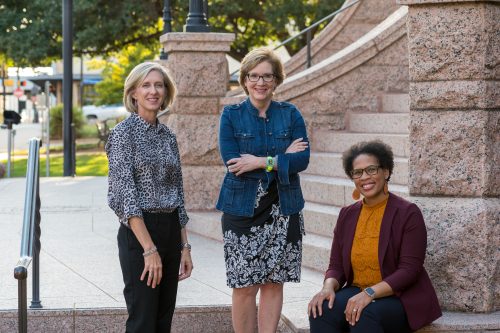
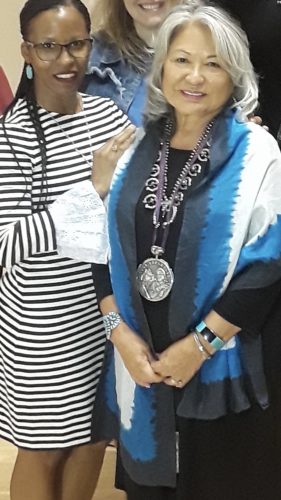
    “Listening can save someone’s life,” says Ashley E. English, right. “And maybe listening can also heal and affirm those who have not felt heard for so long.” Photo by Leo Wesson

    “The truth is that many of us are tired,” Pastor Bryan Carter of the Concord Church in Dallas, where Jefferson’s funeral was held, told the Fort Worth Star-Telegram. “We are tired of talking to our children about police, tired of crying mothers, tired of funerals, tired of checking the box, tired of hoping the jury will come back with a just verdict.” 

    A few months after Jefferson’s killing, Julie O’Neil, associate dean for graduate studies and administration in the Bob Schieffer College of Communication and professor of strategic communication, began working with colleagues Ashley E. English and Jacqueline Lambiase to find ways to improve communication among civic leaders, the police and marginalized residents. 

    “Good public relations is about building relationships, listening, dialoguing, engaging,” O’Neil said. “We thought it would be a unique contribution to look at listening and city government and Black communities.” 

    Supported by a grant from the Arthur W. Page Center for Integrity in Public Communication at the Donald P. Bellisario College of Communications at Pennsylvania State University, the three scholars are studying civic listening in Fort Worth and around the nation. 

    They spoke over Zoom with 25 Fort Worth residents, including community activists, pastors, retirees, attorneys and elected officials. 

    During these hourlong conversations, the professors explored the experience of Black residents and activists with the city in the wake of Jefferson’s death. 

    How did the residents perceive the city’s listening architecture and processes, meaning did the city government have systems in place to effectively listen to residents’ concerns? Did they feel the city took the concerns of its Black people less seriously? And how might the city improve its listening processes for communities of color? 

    “We don’t see a lot of research that looks in a systematic fashion at the experiences of Black stakeholders,” said English, an assistant professor of strategic communication. 

    The interviews became emotional at times. Tears were shed by participants fearing for the lives of their Black children and grandchildren. 

    The researchers also heard disdain for the three-minute public comment period during Fort Worth City Council meetings. Complaints focused on the restrictive nature of the system; explaining problems and proposing meaningful solutions can often take more than 180 seconds. At no time during meetings can residents have an official, on-the-record dialogue with council members. 

    Many also expressed frustration at feeling policed during City Council meetings. Impassioned speakers were sometimes warned that they were speaking too loudly or that they needed to exercise more decorum. 

    Some of those interviewed raged against perceived displays of pseudo-listening. 

    “You say you’ve come to listen, but your social media people are taking pictures so you can post that you’re there,” English recalled hearing from several community members. “It was really important to the younger generation that the city leaves the publicity team at home.” 

    For Lambiase, professor of strategic communication, “My takeaway is just how much trauma was experienced by the Black community in Fort Worth after an incident like Atatiana Jefferson’s murder. 

    “The experiences of brutality may not have happened to them individually, but they felt it.” 

    All three professors spent months analyzing themes and other qualitative data. Their study appeared in Journalism & Mass Communication Quarterly in late 2022. 

    “We heard a lot about a lack of basic human caring on the part of the city,” O’Neil said. 

    Participants also held the professors accountable, expressing hope that their findings could effect real change rather than just become fodder for an academic journal. 

    English, O’Neil and Lambiase have reached out to their network of public relations scholars and other communication leaders around the country. The goal is to build a national movement among local governments to better listen to constituents. 

    “Listening is not a thing that communicators necessarily do well, which is ironic,” Lambiase said. 

    She wants to help civic leaders “allow the community to become co-solvers of problems. Because community residents can help you only if you take the time to listen to them.” 

    In April 2021, English moderated a virtual discussion for public administrators on building equitable communities that included Carter as well as Fort Worth Police Chief Neil Noakes MS ’19, who took office that February. 

    “It was a transformative experience,” English said. “It was unbelievable the level of humility shown by this police chief. These kinds of dialogues between leaders can make our processes much more efficient, more equitable and more effective for the benefit of all.” 

    Listening also guides the second phase of the professors’ research. The Page grant funded a survey of more than 500 Black people from around the country. 

    “We want to know if better listening leads to better relationships and better perceptions of trust within their city government,” O’Neil said. “Or for folks who think their city doesn’t listen to them, do they have less trust in their city? Are they less committed to their city government and are less involved as a result of that?” 

    As English said, “Listening can save someone’s life. And maybe listening can also heal and affirm those who have not felt heard for so long.” 
     

  2. Engineering a Career of Service

    1 Comment

    Gordon England ’75 MBA, an engineer and executive who later answered the call to help lead the nation after the attack on Sept. 11, 2001, has resume highlights ranging from serving as president of General Dynamics to serving the U.S. as deputy secretary of defense.

    “None of my success was planned,” England said. “In fact, I tell students to not plan a career; it doesn’t work that way. There’s a lot of happenstances in life, and you’ll be disappointed if your plans don’t happen.”

    England said that early on, he committed himself to a relentless work ethic, treating people right and keeping his priorities in line. Pursuing those three goals has made him a successful leader, according to former colleagues, who include decorated military officers.

    “Gordon is a true believer in connecting with people,” retired Navy Vice Adm. Peter Daly said. “He understands the motivation of the people that he leads. His ability to gauge the full spectrum of those he led truly stands out to me.”

    Lt. Gen. John Wissler, a three-star commander who served in the Marine Corps, considers England a mentor and friend.

    “When you think about the sacrifices that he made … serving eight difficult years in the Pentagon and doing unbelievably challenging jobs, from establishing the Department of Homeland Security as the first deputy secretary to fundamentally restructuring the way money was spent in the office of the secretary of defense, his contributions were monumental. His sacrifice of personal financial resources, not to mention his time and commitment to family, was immense,” Wissler said. “And yet he did it because he believed in serving the nation. He embodies everything it means to be a selfless, servant-leader character.”


    Trusted with ‘really hard stuff’

    England served as the 72nd secretary of the Navy from May 2001 through January 2003. He then served as the nation’s first deputy secretary of Homeland Security through October 2003. He was called back to the role of secretary of the Navy, where he served through June 2005. That was immediately followed by an appointment to serve as the 29th deputy secretary of defense from June 2005 to February 2009.

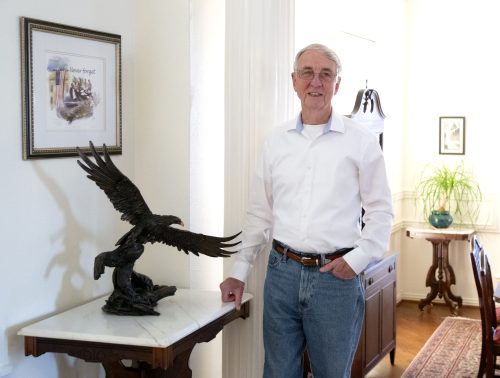
    Gordon England served as the 29th Deputy Secretary of Defense and the 72nd and 73rd Secretary of the Navy. Photo by Joyce Marshall

    England served first under Secretary of Defense Donald Rumsfeld and then under Secretary of Defense Robert Gates, who acknowledges England’s contributions in his 2014 book Duty: Memoirs of a Secretary at War.

    When Gates replaced Rumsfeld, he immediately faced the public relations challenge of repairing the Defense Department’s relationships with Congress, other agencies and the media. An hour after he was sworn in on Dec. 18, 2006, Gates held his first staff meeting with senior civilian leadership and the Joint Chiefs of Staff.

    “My priorities are clear: Iraq, Afghanistan, the war on terrorism, and transformation,” Gates said, according to his account of the meeting published in his book. “I want to continue the division of labor with Deputy Secretary (Gordon) England that existed under Secretary Rumsfeld — with all the really hard stuff going to Gordon! He and I will be joined at the hip.”

    Prior to joining the administration of President George W. Bush, England helped lead General Dynamics Corp., with roles ranging from director of avionics to president. His business career spanned four decades as an engineer and senior executive.

    Wissler said England often would share leadership lessons from his days working at General Dynamics.

    “When Gordon took over the plant in Fort Worth, I want to say it took nearly 42 months to build an F-16 fighter jet. The number is unimportant, except in its magnitude. So when Gordon arrived there, he decided that was too long to build the F-16 and they needed to shorten the time in order to get a product to the customer faster yet maintain quality,” Wissler said. “He started a process where he went to virtually everybody in the plant, from the security folks to the office folks, to the engineers, to the artisans on the floor who were responsible for making the jets. He talked to them all, and eventually asked them one key question: ‘What’s the one thing you would do differently to make yourself more effective?’ ”

    Wissler said England collected those responses, did some additional probing and research, and created a plan to produce the F-16 in 28 months. When he was reassigned by General Dynamics to run another large program, he had cut the time to make an F-16 to 29 months, bringing the jet to the customer faster and under budget.


    Engineer to executive

    England grew up in Baltimore’s inner city with parents who never attended high school; they both went to work after the eighth grade. After England graduated from high school, he was accepted into a Westinghouse work-scholarship program that gave him a leg up with his engineering studies.

    “People often ask how I ever got into this profession. Well, when I was in high school, there was still surplus equipment around from World War II. So I became a ham radio operator. I built my own receivers, transmitters, antennas. As a ham operator, I could communicate via Morse code with others around the world,” England said. “Ultimately, I became an electrical engineer, but I expect it was this exposure in high school that helped.”

    England graduated with a Bachelor of Science degree in electrical engineering from the University of Maryland in 1961.

    His fascination with tinkering, coupled with his work experience at Westinghouse after high school, allowed him to enter the workforce with more experience than others in his peer group. He began his career at Honeywell, where he was an engineer on the Project Gemini space program, which was NASA’s second human spaceflight program.

    “My objective in life was to be a senior engineer,” England said. “I told my wife, with that job we would be able to buy a modest house, have a car, raise a couple of kids and go on vacation.”

    He accepted an offer to work with General Dynamics in Fort Worth. In 1975 he earned a master’s in business administration from TCU’s Neeley School of Business and subsequently earned distinguished alumnus recognition in 2005 for his success after leaving TCU.

    “When I started moving into program management, there were a lot of things I realized I didn’t know. And that’s when I decided to go to TCU to get an MBA,” England said. “I wanted to take specific courses that I needed for the job I was evolving into, which was managing engineering, rather than doing engineering.”


    Serving and leading

    “None of my success was planned,” Gordon England says. “In fact, I tell students to not plan a career; it doesn’t work that way. There’s a lot of happenstances in life, and you’ll be disappointed if your plans don’t happen.” Photo by Joyce Marshall

    England has volunteered in a variety of civic, charitable and government organizations, including working as a city councilman in Benbrook, Texas, from 1980 to 1985 after moving his family to the city to work at General Dynamics.

    England was elected to the National Academy of Engineering in 2012 for making advancements in digital avionics for aircraft, land and naval platforms. He later was named chairman of the nonprofit peer-elected organization, which provides independent advice on matters involving engineering and technology.

    “He’s just a delight to work with,” said John Anderson, president of the National Academy of Engineering who served with England from 2019 to 2020. “He’s very good with people and very smart. He has ideas and thoughts about how things should be done, but he doesn’t expect you to fall in line always. I can see why he was so successful.”

    England admits that not every government leadership decision worked out perfectly; some decisions have come with political blowback. However, he’s at peace with the choices he’s made.

    “Many decisions [in the Department of Defense] are so massively complex and there is no right or wrong; there’s just better and worse in every decision you make,” he said. “There’s always a downside, but what you do as a leader is you find a decision that has far more upside than downside.”

    England attributes his ability to handle those decisions and high-pressure roles to his perspective on what matters most.

    “Careers can be satisfying and rewarding, but that’s not what makes you happy,” England said. “What makes you happy is family, friends, giving and sharing. That’s the happy part of life. You should never ever sacrifice the happy part of your life for your career.”

  3. Luc Fomba Rules the Court

    Leave a Comment

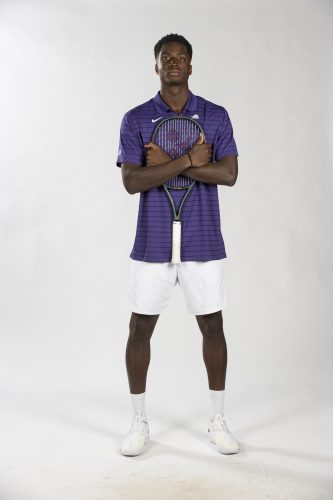
    Fan favorite Luc Fomba ’22 dominates the purple courts with his lethal serve, imposing physical presence and outsized personality. A native of France who grew up near Paris, the 6-foot-5-inch ace came to Fort Worth in August 2018 to play for the Horned Frogs and Coach David Roditi ’96. In February 2022, he led his team as its top player to win the ITA Indoor National Championship, a first for TCU. Later that season, the team co-captain became a four-time All-American who also earned a national seed in the NCAA tournament for the second year in a row.


    You’re playing your fifth year at TCU thanks to the pandemic rules that let you compete an extra year. How does it feel to be leading the team a final time?

    When I was younger, in France, I was just playing for myself. Tennis, it’s not really like a team sport where I came from, so TCU was a big change for me. When I came here I had to learn how to play not just for me but also for the school, for the name of TCU, for my teammates. That was a big change for me, but now I’m loving it. I feel it’s so fun.I wish more people would come to college to feel this energy of all the people around you.


    You started playing tennis at 5 years old in part because your siblings, an older sister and brother, both played. When did you realize you were so good?

    I was always tall for my age, and I played with both my brother and sister when I was young. My dad brought me to the tennis club. I started taking lessons when I was maybe 10. I was in the top three for my age group between 10 and 17.


    What did your high school training look like?

    “My goal was always to be a top player. I didn’t just want to play tennis. I wanted it to be my full-time future, so I had to make some sacrifices for sure.” – Luc Fomba. Courtesy of TCU Athletics | Ellman Photography

    I was in class from 9 to 1 o’clock, and then I was going to my club to practice with my coach and two other players. I was practicing from 3 o’clock until 5 or 6 p.m., and after that I’d come back home. I would come home starving every night, and my mom would cook and give me a big portion of food, French meals.


    Did you feel like you were missing out on normal teenage life?

    My goal was always to be a top player. I didn’t just want to play tennis. I wanted it to be my full-time future, so I had to make some sacrifices for sure. Like not going out too much with my friends, not smoking as my friends did, that kind of stuff. I was very focused on my goals, and I had to be smart about my choices, which wasn’t always easy.


    What were some of the advantages of playing in Europe?

    I was able to play all around France and travel to a bunch of countries like Belgium, Italy, Spain, Qatar, Dubai, Malta and Greece.


    Tell us about the transition to Texas. Any challenges?

    It was a big change. I had studied English in school, but when I got here it was hard. About two months in I started understanding the language and having an easier time in my classes. There were tough moments for sure, but I knew this was a big chance for me.


    What were some of your most memorable moments during those early years at TCU?

    I lived in Tom Brown my first year with two roommates who played basketball. That was cool for me. I love to watch the NBA, so it was fun to go to basketball games. I’m not really a big fan of football because in France it’s not a big sport, but sometimes I would go with my friends just to watch the guys.


    You’ve met with tremendous success on the purple courts as a top-ranked player nationally in both singles and doubles. Which do you prefer?

    It is difficult to say. I have had great doubles partners at TCU. I played doubles with Alastair Gray ’21 in my second year, I believe. He’s now playing professionally. Now I’m with Jake Fearnley, who is a good friend. It’s very easy for us to know what it is the other is going to do and what they are thinking right now. But with singles it’s like everything is my own choice, and I get to play a bit more freely. If I mess up it’s on me.


    Does the TCU crowd make an impact on your play?

    It’s a big boost for me, you know? I love the show, the people being around and loud and screaming, “Go Frogs,” “Let’s go, Luc,” “Big Ace!” In Europe, people just applaud, but it’s not like they scream. It’s nice for me to have people around for the big matches.

    “I’m 6 foot 5 inches, so it’s easier for me to serve bombs. I’m sure it’s mentally tough for my opponents when I ace them again and again.”
    Luc Fomba

    You’ve obviously grown as a player during your time at TCU, considering that you were nationally ranked in the teens last season. What’s helped you achieve your goals?

    The coaching is incredible. David [Roditi] and Devin [Bowen ’94] are the best college coaches in the country, I believe. They have both played at a high level professionally. They always talk to us about what is good to do, like you should eat that at this time of the day, to drink more, to take care of school.


    Your serve is lethal!

    I’m 6 foot 5 inches, so it’s easier for me to serve bombs. I’m sure it’s mentally tough for my opponents when I ace them again and again.


    Who’s your favorite player on the tour right now?

    Roger Federer but now he’s pretty old so he’s not playing tennis. But I just love him. I can watch him play for hours. I have a one-handed backhand, so he’s a model for me.


    Some of those old guys, like Rafael Nadal, are still playing even through pain. Do you have pain?

    I’m not like him but yeah, I do have some pain with my body for sure. I feel pain is like part of this process. You always have something, but you just have to forget that and go on the court and fight.


    You are done in May! What’s next?

    I want to play professionally. I’m ready to go on the tour after this year. I’m not sure yet if I’m staying here to practice or I could go back to France. I am going to talk with the coach more deeply about that and my parents, too. I want to go play the Grand Slams and play the French Open, the U.S. Open. I watch the players play there and I’m just like, I want to be there also, you know. Why not me?


    Editor’s Note: The questions and answers have been edited for length and clarity.

  4. 150 Years Never Looked So Good

    1 Comment

    WELCOME TO TEXAS CHRISTIAN UNIVERSITY’S 150TH YEAR. Throughout 2023 we will celebrate the University’s incredible and ongoing story. Our past was built on vision and grit; our present thrives on inspiration and impact; and we’re positioned for a future in which leadership and values will transform the institution as well as the wider world. 

    Since our founding in 1873, TCU has been educating leaders to be a force for the greater good. Over those 150 years, TCU has grown, prospered and developed in ways that founders Addison and Randolph Clark could have never dreamed. Or more likely, they did envision exactly this progress when they established one of the first coeducational colleges west of the Mississippi River — a thriving community of learners and leaders who would revolutionize education, medicine, government, arts, athletics and more over the next 150 years. 

    We begin 2023 having celebrated unimaginable milestones for our University. TCU’s football team won the thrilling Vrbo Fiesta Bowl in front of an audience of millions and became the first Texas school to earn a chance to play for the College Football Playoff national championship. This team and our TCU community showed the nation what it means to be a Horned Frog. I can’t express the pride I feel about how we came together to cheer on these remarkable young men. Coach Sonny Dykes, Tre’Vius Hodges-Tomlinson, Max Duggan and innumerable others were recognized with just about every national award possible. 

    The success of our student-athletes — and all of our students and alumni — speaks to the strength of TCU’s academic mission and our unmatched faculty and staff. The journey of Trustee Ronald C. Parker ’76 from Amon G. Carter Stadium to the corporate boardroom to his current role as co-chair for Lead On: A Campaign for TCU is an inspirational example of what a motivated person can accomplish with a TCU degree and the support of our powerful Horned Frog network. 

    In this issue of TCU Magazine, read about how faculty and staff transform the campus daily through stellar leadership and how alumni like Dr. Gordon England ’75 MBA, former deputy secretary of defense, lead society on a global stage. We are also giving you some great insights into one of our newest campus leaders: President Daniel Pullin. Check it out and see if you agree that we are blessed with so much talent at TCU.

    In my 20 years as Chancellor, the people and programs of TCU never fail to inspire.Join me as we celebrate 150 years of TCU and build the next 150 years of Horned Frog history.

    Go Frogs!

    Victor J. Boschini, Jr., 10th Chancellor

  5. Chief of Change

    1 Comment

    When she served on the force, Catherine Johnson ’95 said she was often chosen to work undercover because she did not look like a police officer.

    At 5-foot-1, her short stature meant she approached situations differently from her peers — and relied on her social work training from TCU. “I can’t tell you how many times I’ve defused the situation just by simply listening to somebody,” she said.

    After graduation, Johnson started her career in juvenile probation. She joined the Austin Police Department in 1999. “I was always fascinated with law enforcement, and especially working in undercover,” she said.

    Johnson started as a patrol officer and said she loved how every day held something different. “That time in my life was probably the most fun I’ve had in my career.”

    In 2003, Johnson was promoted to detective, investigating cases involving physical and sexual abuse of children. “That part of my career was most rewarding,” she said. “There is nothing like putting a child predator in prison for a very long time.”

    Over the years, Johnson held many roles and was chosen for the FBI National Academy’s prestigious three-month leadership program.

    In 2021, she was promoted to assistant chief, where she served until her retirement in June 2022.


    Women in Policing

    Johnson worked in recruiting for the Austin Police Department when she first heard of the 30×30 Initiative. Police departments that choose to sign the pledge commit to raising their percentage of female law enforcement officers to 30 percent by 2030 and to making police culture more inclusive.

    Nationwide, women make up only 12 percent of the force — and only 3 percent of leadership positions. “To me, that’s unacceptable,” Johnson said. “There’s so much that women can bring to the table regarding any career, but especially in law enforcement.”

    Catherine Johnson joined the Austin Police Department in 1999 as a patrol officer. She retired last year as assistant chief of police. Photo by Kirk Weddle

    Research compiled by 30×30 shows that female officers are more trusted by the community, use less unnecessary force than their male counterparts and promote positive outcomes for crime victims, including higher rates of sexual assault reports and offender arrests.

    Johnson brought the 30×30 Initiative to Anne Li Kringen, the training academy division manager at the Austin Police Department, and together they proposed it to Austin Police Chief Joseph Chacon. He was immediately on board.

    In March 2022, Austin became one of nine Texas police departments and nearly 200 in the U.S. to sign the pledge. Johnson led efforts to promote 30×30 within the Austin Police Department and in the media, acting as spokesperson for the initiative.

    Barriers to women in policing are not about talent, but department culture, said Kringen, a member of the 30×30 steering committee. Limited childcare opportunities or restrictive haircut policies may cause quality candidates to drop out.

    Austin Police Department officials are making the department more equitable and appealing for women through leadership seminars, recruitment programs and marketing strategies.

    Johnson is excited to see the changes. “It sounds really cheesy, but it’s for my daughter,” she said. “I want to make the path a little bit smoother for women in any type of career.”

    Building Better Officers

     Johnson’s toughest test as an officer came in 2021, when she took on a new role restructuring the police training academy.

    After city reports raised concerns about the academy’s culture and effectiveness, the Austin City Council shut down the academy until changes could be made. The department tapped Johnson and Kringen to establish a new system.

    In Johnson, Kringen said she found a valuable work partner in the fellow mom. “She’s warm and bubbly, and kind of puts you at ease — but yet she also, being a police officer, really has this ability to kind of flip a switch and take sort of a business leadership tone when she needs to get things done.”

    The two women replaced the academy’s traditional military-style approach with an adult learning atmosphere. Kringen focused on the curriculum while Johnson was more people-oriented, reassuring recruits about the changes and pushing through initiatives in the department.

    They often faced pushback from other officers for challenging longstanding traditions, but Johnson pressed forward even when it was difficult. “She knew that this might produce a better police officer, this might produce a better way of someone serving their community,” Kringen said.

    Johnson and Kringen were so successful that their work was featured on 60 Minutes and contributed to Johnson’s promotion to assistant chief. Johnson said other departments requested their blueprint for the program.

    “Police officers, really, we don’t like change too much,” Johnson said. “As law enforcement executives and leadership, [we] have to be able to adapt.”

    “Make sure the people who work for you are taken care of. Treat everybody with dignity, respect and how you would want to be treated.” – Catherine Johnson. Photo by Kirk Weddle

    Forever a Frog

    More than half of Johnson’s family attended TCU, including her father, a psychologist, who inspired her to look after others. “I was born purple,” she said.

    Her grandmother Inez was the dorm receptionist at Colby Hall, where she and Beth Watson ’95, her friend and sorority sister, roomed in 1991. As a student, Johnson was hardworking and engaged on campus, Watson said.

    Today, Johnson’s daughter lives in Colby Hall as a first-year student. “I was really excited when my daughter decided to join the [Frog] family,” Johnson said.

    Johnson is still determining her plans post-retirement, but she’s excited to attend more TCU events and be a soccer mom for her son in high school.

    Looking back, Johnson said her biggest achievements were not accolades or promotions. “It’s leaving knowing that I left my career at least helping people.”


    Johnson shared some of the lessons she’s learned as a leader and law enforcement officer.

    Seek out a mentor. I’ve been very fortunate to have some great men and women who have taken an interest in me and my career. I think that’s imperative in any business or career path — find somebody you can respect and learn from.

    Some women think they just can’t do it. And that is not the case. If I could do it, anybody can do it. You don’t have to be 6-foot-1, 200 pounds to be a police officer. You can do these things. And that’s the great thing about law enforcement: Police departments are going to invest in you and they’re going to teach you how to protect yourself and how to protect the community.

    Some days are going to be really sad. There are going to be some really hard days; there are going to be some really hard calls. But the good days always, always outweigh the bad. If you know why you’re there and you know what your purpose is and what your career path is, then it’s all worth it in the long run.

    I think the most important thing is to be a good listener. You must be able to listen and communicate with people, not only with other police officers, but also with the community. Sometimes people just need someone to listen.

    Make sure the people who work for you are taken care of. Be transparent, and be a good communicator … treat everybody with dignity, respect and how you would want to be treated.

  6. Flipping the Scripts

    1 Comment

    In the summer of 2017, Emily Moss Wilson ’05 found herself in a New York City boardroom with Lifetime network executives looking for someone to direct happy holiday movies. Given her background in thrillers, she had to work to convince them that she understood “nobody’s gonna get murdered.” 

    Wilson wrote and directed her first thriller in 2014. Drink is a short, eerie film about a mother whose life is changed after a night in an old motel room; it has more than 5 million views on YouTube. In 2016, Wilson directed Nanny Seduction, a low-budget Lifetime thriller released the next year.

    “FEMALE DIRECTORS OFTEN HAVE TO JUMP THROUGH A LOT MORE HOOPS TO PROVE THEY CAN DO THE JOB.”
    Emily Moss Wilson

    The X-Files and The Twilight Zone and Hitchcock — they were really big influences for me,” Wilson said. 

    In spite of her thriller-heavy past, she landed a holiday movie project for Lifetime. Wilson directed Christmas in Mississippi, the first of what would be six holiday movies in five years for the cable channel. She directed Christmas in Tune with Reba McEntire in 2021; for the 2022 holidays, she directed A Christmas Open House for Discovery+ and co-wrote and directed My Southern Family Christmas, set in her native Louisiana, for Hallmark. 

    “I think it’s nice to be able to hire somebody that has lived through Southern Christmases. We understand the no-snow Christmases,” she said. Her production team worked “extra hard to really put the colors of Christmas, the reds and the greens and just the textures, in the scene as opposed to being able to rely on white snow everywhere.” 

    Directing and Writing

    Wilson acknowledged the tropes that run rampant in TV holiday movies: hometown sweethearts, mistaken identities and “Christmas conflict,” such as an ice sculpture competition. But she said cliches aren’t confined to the holiday genre. 

    “It’s kind of the same way people get excited to see horror movies. There’s an unspoken set of rules and expectations when you go to see a horror movie. Even when it’s cheesy, that’s what you’ve come to see,” Wilson said. “Through directing, I just constantly kind of refresh the themes and try to make them better, try to make them more grounded — just kind of put my thumbprint on it where I can.”

    Among many professional development opportunities, Emily Moss Wilson participated in the Half Foundation Directing Program, which paired her with Jamie Lee Curtis on “Scream Queens.” Photo by Jill Johnson

    For Christmas in Mississippi, adding a thumbprint meant incorporating a tradition she learned from extended family who grew up on the Gulf Coast. They had a box inscribed with “Some have chimneys, but all have locks. The key to entry is in this box.” Inside was a brass key. 

    “It’s Santa’s key,” Wilson said. “The lore is that if you put this in your mailbox, Santa will take it and use it on Christmas Eve to get into all the houses of Gulfport, Mississippi, because not everybody has chimneys to go down.” The tradition made it into the movie — and into Wilson’s home. “We actually now have the box from the movie, and my kids love to do it at Christmas.” 

    “She always tries to find ways to deliver the best possible moment on screen no matter how big or small,” said Daniel Lewis, who first worked with Wilson on Nanny Seduction. They have since done five more movies together, with Lewis producing and Wilson directing. 

    In addition to directing, the film, television and digital media alumna also writes scripts. She got her break by filling in for a lead writer, Marcy Holland, on a Lifetime project. They began by co-writing scripts, but in 2019, Holland was swamped with work and suggested that Wilson write the next film. 

    “2019 was my first experience with writing two of them — from square one, an idea to first draft — by myself. And then I ended up directing both of those that year,” Wilson said. “From that, I started getting these little writing gigs. … It’s helped me grow my confidence in my abilities.”

    Wilson now has writing credits not only on holiday movies and thrillers, but also on romantic comedies and dramas. 

    About a year before the pandemic, Wilson moved from Hollywood back to her hometown of Lake Charles, Louisiana, with her husband, Greg, and their son, Walt, born in late 2015. The family welcomed another son, Max, in late 2019. 

    Working in the movie industry outside of Hollywood has its pros and cons, said Wilson, who enjoyed the ease of bumping into colleagues and mentors at places like the grocery store or a coffee shop in Los Angeles — not to mention the convenience of living near a major airport. 

    “There’s kind of that buzzy, networking, in-person energy that I was really sad to lose,” Wilson said of her move. But in Louisiana, she said, she enjoys not talking shop every day. “We knew that we wanted to buy a house that we could afford, be near grandparents while the kids were little.” 

    Character Development

    Wilson’s origin story starts like that of most movie characters — with great conflict, what she calls a “battle between art and science.” The family business is medicine, but Wilson’s pull toward the theatrical began during childhood as she directed her cousins and the neighborhood kids in skits and songs. 

    She found her affinity for film in high school, where she made movies in English and speech classes. “I remember a friend in high school got the very first nonlinear editing software on this computer,” Wilson said. “You could actually craft the story through editing and move little pieces around.” Moments like these motivated her to pursue film in college.

    Only 17 percent of the directors for 2021’s top grossing films were female. Emily Moss Wilson is working to change that. Photo by Jill Johnson

    She chose TCU because she knew she would get her hands on the equipment faster at a smaller school. She was an early member of the Student Filmmakers Association, an outlet for students to pitch, write, cast, produce and direct movies in collaboration with peers and faculty. Wilson worked on five original film projects during her time at TCU. 

    In 2005, shortly after graduating, Wilson traveled to Italy with a class offered by the film, television and digital media department. There, she helped produce a short film the students made while abroad. 

    “She was always soaking everything up,” said Charles LaMendola, associate professor of professional practice in film, television and digital media, who led the trip with two other professors. “Whatever she was doing, she was learning from the experience.” 

    After graduation, Wilson moved to Los Angeles and spent four years with 20th Century Fox in a variety of roles, from assisting a TV development executive to working on a Wolverine movie. 

    In 2009, she married Greg Wilson, then director of development and producer for director Garry Marshall, and began a freelance career. Working as script coordinator for Marshall on his films Valentine’s Day and New Year’s Eve, both with all-star casts, gave her a directing mentor. 

    Wilson participated in the Half Foundation Directing Program, which paired her with Jamie Lee Curtis on Scream Queens. Curtis, a photography buff, “just had an eye. She obviously knows how to work with actors,” Wilson said. 

    Wilson was named an emerging female director by the WeForShe DirectHer Program in 2019; the program pairs up-and-coming female directors with established female directors on episodic TV shows. 

    According to research from San Diego State University’s Center for the Study of Women in Television & Film, only 17 percent of the directors for 2021’s top grossing films were female. 

    “Female directors often have to jump through a lot more hoops to prove they can do the job. Multiple directing programs, endless shadowing assignments,” Wilson said. She added that instead of keeping women “in a perpetual state of preparing,” mentoring programs should lead to jobs. 

    Full Circle

    Wilson returned to TCU in early 2022 to deliver a talk to film, television and digital media students in the Schieffer College of Communication. “She walked into the building, and it was like 2004. She hadn’t changed a lick,” LaMendola said. 

    “The fact that I was sitting there, being the one to impart some knowledge and wisdom, it felt very cool. It felt very full circle,” Wilson said. 

    Currently she’s working on a few scripts of her own. One is based on the true story of her in-laws’ honeymoon in the ’70s, a road trip movie she likened to Little Miss Sunshine or Juno in tone. 

    Wilson said she would love to return to her darker roots. “Because I’m so in the world of Christmas, day in and day out, my escape is like the opposite. I just need something that kind of puts me on the edge for a second,” she said. “I’m dying to do a thriller.” 

  7. Daniel Pullin Named TCU President

    1 Comment

    TEXAS CHRISTIAN UNIVERSITY NAMED DANIEL PULLIN, formerly the John V. Roach Dean of the Neeley School of Business, as its new president. 

    Pullin began the position on Feb. 1. His appointment comes after a national search during which TCU students, faculty and staff provided feedback. 

    “Daniel is an inspiring leader and cares deeply about our community, which has been built upon academic excellence and an unmatched student experience,” said Chancellor Victor J. Boschini, Jr. “For the past four years he has been passionate about his role as John V. Roach Dean of the Neeley School of Business, and he will use that same energy and expansive vision to make an impact as TCU’s president.” 

    Pullin is also a professor of entrepreneurship and innovation at Neeley. Since joining TCU in 2019, he has combined his extensive experience in higher education with a foundation in leading corporations and private industry to serve as a steward for the business school. 

    Under Pullin’s leadership, the Neeley School has seen dynamic faculty and staff growth and curriculum innovation, earned increased national visibility and rankings, realized development success, built community and civic engagement, and placed an unmistakable focus on inclusive excellence. 

    “I am honored and humbled to be appointed the incoming president for Texas Christian University,” Pullin said. “Four years ago, this community welcomed me and my family with the kindness and generosity that only Horned Frogs can offer. I’m grateful for the opportunity to serve TCU in a greater capacity, as I’ve seen firsthand the transformational power of what a TCU education can provide. 

    “TCU’s leadership has a shared vision of academic excellence, belonging and an unrivaled student experience for our Horned Frog students. Chancellor Boschini’s leadership has inspired a generation of students, and I’m excited to work with Victor and my colleagues to carry that into TCU’s future.” 

    As TCU president, Pullin will report to the chancellor and is responsible for overall operations supporting and enhancing the university’s academic mission. He will provide executive leadership to advance the mission, vision and values of the university. 

    “Daniel will work closely with me and the cabinet to help usher in a new era for TCU under the exciting spotlight of TCU’s sesquicentennial year,” Boschini said. “This includes maintaining the level of excellence for which our community is known, especially our culture of belonging, academic impact and engagement. We share this focus on investing in our people and our community.” 

    Prior to joining the Neeley School of Business, Pullin was the dean of the Price College of Business at the University of Oklahoma, where he also served as university vice president. Before transitioning to higher education, Pullin worked for global consultancy McKinsey & Co. and the private equity firm Hicks Muse Tate & Furst and its portfolio companies. 

    Pullin earned undergraduate degrees from the University of Oklahoma and an MBA from Harvard Business School before returning to Oklahoma for a Juris Doctor degree.

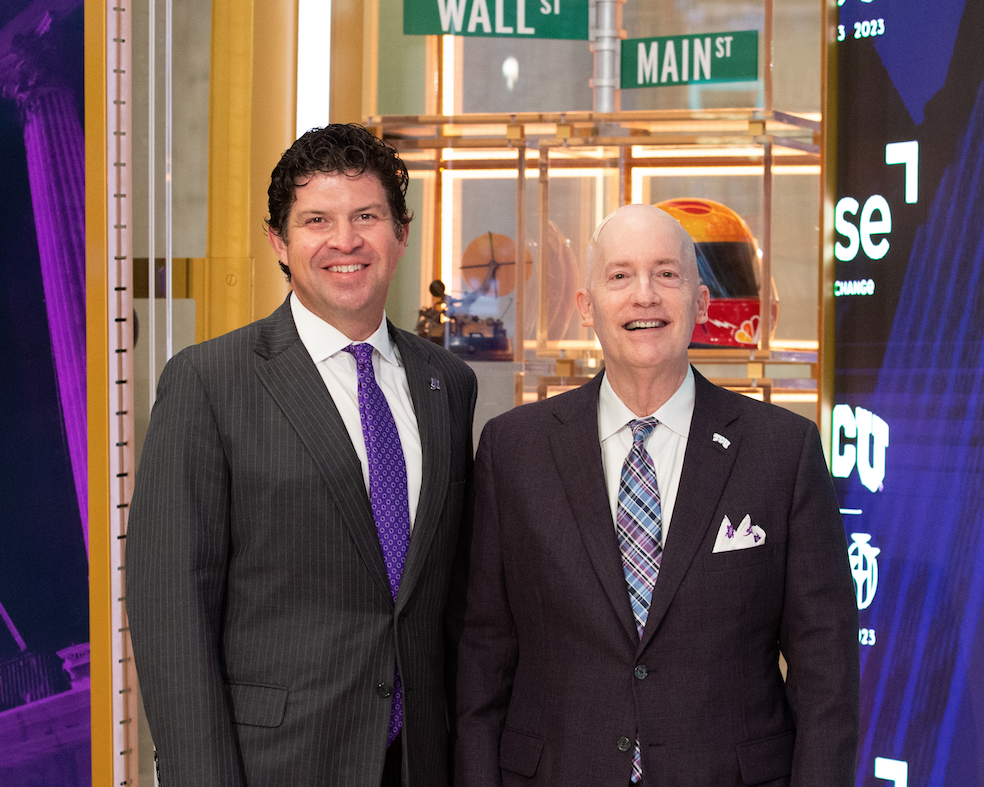
    Pullin and Boschini in New York

    As president, Daniel Pullin will work to advance TCU’s academic mission, vision and values while
    Chancellor Victor J. Boschini, Jr. oversees the university’s financial future. Photo by Amy Peterson

  8. Aim High

    Leave a Comment

    On the job search, being too cautious can hold candidates back. Tara Mohr wrote in the Harvard Business Review that in her survey of more than 1,000 Americans, the top reason for not applying to a job was the same for men and women — they didn’t think they’d be hired and didn’t want to waste their time. But for women, additional reasons included following guidelines about who should apply and fear of failure. Mike Caldwell, executive director of TCU’s Center for Career & Professional Development, shared advice on when to go for it.


    Should people apply for a job if they don’t meet 100% of the qualifications that are listed?

    In a lot of cases, people will and should apply if they don’t meet 100 percent of the qualifications.

    What’s most important is that you review the job description carefully — is the qualification a preferred requirement, or is it required? For example, you may see in the description that a bachelor’s degree is required. If you don’t have a bachelor’s degree, you probably should not apply to that. However, if you’re an upcoming grad, by the time you start that role you may be a qualified applicant.

    Read between the lines — sometimes job descriptions will ask for the ability to do something. You should have the ability to articulate your knowledge of that area, but an ability requirement is something that’s going to be a little bit more subjective. It might be a potential ability.

    As long as you’re meeting the majority of requirements, I would encourage people to go ahead and apply — give it a shot. I think people get hired every day who don’t check all the boxes on the preferences or abilities side.

    Failure is not a bad thing. I have yet to meet anyone who’s landed 100 percent of the jobs they’ve applied for. I wouldn’t look at it as a failure; it’s just a part of the process.


    Do you have insights into the selection process that can help inform job candidates?

    If you’re looking at a larger company, they may have a very structured process; if you’re applying to a local, small nonprofit, they may be more likely to respond to you if you’re an applicant who doesn’t check all the boxes.

    Put yourself in the other person’s shoes and look at your application and your qualifications for the role. Ask yourself, “Does it make sense why I’m applying for this role? Am I a qualified person for this position?” If the answer is yes, then proceed.

    If there is an application with a direct checkbox that says, “affirm that you have a bachelor’s degree” or “affirm that you have three years of experience managing people,” those checkboxes are probably minimum requirements. And if you can’t check those boxes, that those are the types of roles that I would maybe second-guess applying for.


    Are applicant tracking systems — or robots — deciding who gets hired?

    They use the application and make sure that you have completed that; a complete application is required. But in most cases, an actual person will be the one on the other side looking at it. And they will still make that that old school 10- to 30-second glance at your resume and say, “OK, is this a person we want to move to the yes pile or not?”

    I see people on LinkedIn all the time; the recruiters are like, “Where’s my robot? I work for a Fortune 500 company; I don’t have a robot looking at resumes.” They have this big pile that they have to go through and sort and score.

    I’ve seen some employers that will use a cap; once it hits a certain number of applications, it will automatically close. Those are the things to be more aware of. If you’re applying to a government role, for example, those will open in windows, so a job will open September 5 at midnight, and it will close September 5 at 3 p.m. And if you’re not in that applicant window, you’re out.


    Why do people sometimes undersell their qualifications on the job hunt, and how does that hold them back?

    Some of the best candidates undersell themselves because they’re conscientious, they want to follow the rules. They’re probably someone who’s a great employee. They’re trying to be honest and reflective about themselves about their abilities. They know that they have things to learn; at TCU, we talk about having a growth mindset. People with a growth mindset know, “I can always get better.”

    Sometimes people will create a hypothetical candidate in their mind, and that may be just a kind of magical person that really doesn’t even exist.

    I’ll add another piece in here that sometimes comes up: A student might see “one to two years of experience required,” and they may think “I don’t have that experience.” I’ll ask, “Well, did you have an internship? How long did you do the internship?”

    Have someone you trust help you walk through your resume and determine what qualifications you actually have. Look through your resume and total up all experience — experience is experience is experience. They’re not asking for X years of full-time experience, they’re asking for that span of time.

    When you’re applying to positions, you’re applying to those 10 or so positions to see where you are — it’s kind of like applying to college in a way. Maybe there’s one or two roles that are a reach; throw those in that bucket as well. There’s nothing stopping you from applying.


    Have you heard from alumni who’ve been successful applying for jobs that at first seemed out of reach?

    I have. I can think of one computer science student who said, “I’m applying to these internships with these organizations; I’m not really sure if I’ve got the skill set.”

    She was working in restaurant jobs or retail jobs. She was basing a lot of things on her past experiences that did not align with a role at Google or Facebook. But in reality, her education, her skill set and her background actually did align to that; her experience didn’t match, but her skills did. And ultimately, that’s what the employer was looking for.

    She was still a student when she got her internship. And then she graduated and converted the internship to a full-time role.

  9. TCU Treasures

    Leave a Comment

    My 60-year-old TCU diploma prominently hangs in my home office, accompanied by a 50-year reunion disc. The items evoke memories of long-ago 5-cent Coke machines and 5-cent dial tones on pay phones scattered around the campus, memorizing a few Bible verses in Paul Wassenich’s Survey of the Old Testament and Life and Teachings of Jesus courses, and manually registering in the science building hallways in the fall of ’58 and paying (in cash) at the rate of $13 per semester hour.

    — Don Buckman ’62


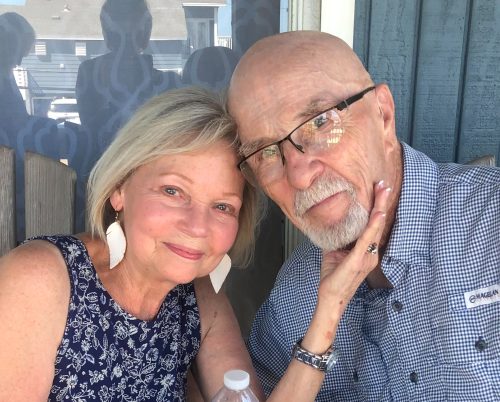
    Our most treasured TCU memento? It has to be each other! We met at TCU in 1967, were married in 1968, graduated in 1970 and just celebrated 54 wonderful years together. We rekindle many memories every time we visit our beautiful campus.

    Mynette and Gene Taylor

    Courtesy of Mynette and Gene Taylor


    My diploma.

    — John R. Cole ’71


    TCU Frogs piggy bank.

    — Chris Curtin ’86


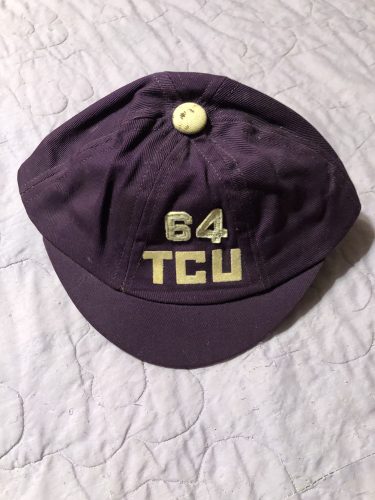
    My most treasured memento is my freshman beanie. Many of us folded it in half and used bobby pins to hold it in place to keep from messing up our hair.

    — Patricia Mueller Iverson ’64

    Courtesy of Patricia Mueller Iverson


    It is this beautiful TCU 75th anniversary plate. I won it at a white elephant exchange with members of the Dallas TCU Women’s Club.

    — Carol Duff ’68


    I have a carved wooden university seal, with the Horned Frog and motto, that once hung on the side of the stage in the ballroom of the old Brown-Lupton Student Center.

    — Joe Jordan ’87


    My awesome roommate and friend Marquita Kerley.

    — Andrea Hovey ’00


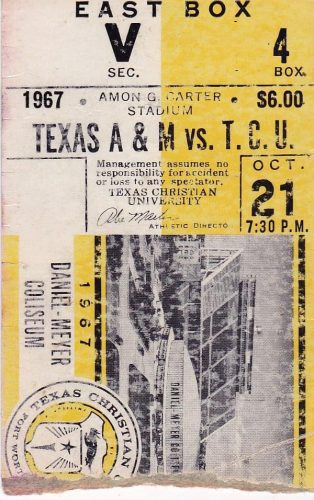
    I kept the ticket stub to my very first TCU game — 1967 vs A&M. I was 8 years old.

    — Keith Robinson ’82

    Courtesy of Keith Robinson


    My class ring — I worked so hard to earn it and I’ll never forget my ring ceremony. What’s even more exciting is I’m graduating with my TCU doctorate this coming May.

    — Anne Holder ’14


    Football signed by Coach P that I won in a live auction and my dad’s class ring.

    — Sandy Dickerson McAllister ’89


    I have a brick from Pete Wright Hall as well as one from the Brown-Lupton Student Center.

    — Craig Taylor ’87


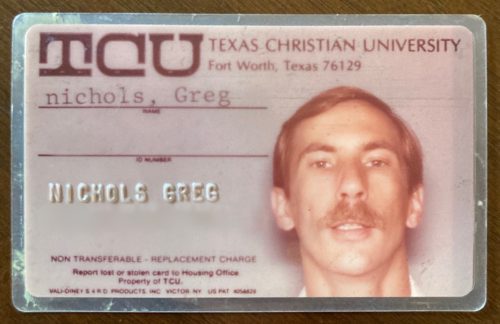
    My favorite TCU memento is my student ID, complete with embossed Social Security number for all the world to see. It is still displayed in my study. My ID has the centennial font that was temporarily used by the university. I remember standing behind Brite professor Glenn Routt at the library desk one day when he was asked to show his ID. He retrieved from somewhere in his wallet a yellow, creased faculty ID dated 1948. I don’t think the librarian knew what to do with it.

    — Gregory Nichols ’76 (MDiv ’80, DM ’92)

    Courtesy of Gregory Nichols


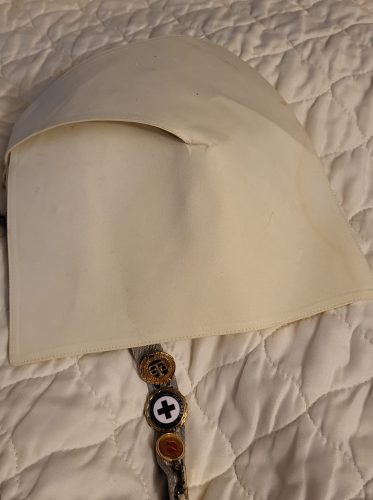
    My nursing cap (old and stained but never worn after graduation) and my TCU nursing pin.

    — Pansy Phillips King ’79

    Courtesy of Pansy Phillips King


    I have a TCU centennial coin. Now that we’re at the 150th, it’s even more special.

    — Matt Madderra ’07


    A baseball from the baseball game in Waco after the fire destroyed the original campus in 1910. It is dated and signed with the score; my husband’s great-uncle played on the TCU team.

    — Mellie Joiner ’90


    My TCU pajamas that my roommate’s mother made for us — and yes, I still wear them over 30 years later.

    — Ann Brewer Riza ’89

    Courtesy of Ann Brewer Riza


    When Luci Tapahonso, Navajo Nation poet laureate, professor and author of the book Blue Horses Rush In, came to TCU to celebrate with Crow hip-hop artist Supaman at the ballroom. We danced and chanted, all holding hands in one circle as a sign of unity, to worship the earth and air.

    — Hortencia Crosby ’16 (MLA ’20)

    Courtesy of Hortencia Crosby


    This 1941 ticket to a TCU vs. SMU game — a gift from a friend.

    — Jacque Petersell ’03

    Courtesy of Jacque Petersell


    When I got a photo with the heads of both of my alma maters, TCU and Tarleton.

    — Brooke Atkinson ’21

    Courtesy of Brooke Atkinson


    This silver platter, now hanging above my desk, was my father’s TCU graduation gift in 1951. That fierce Horned Frog has overseen the making of every TCU Magazine issue for the last nine years.

    — Caroline Collier ’98 (MLA ’17)

    Courtesy of Caroline Collier


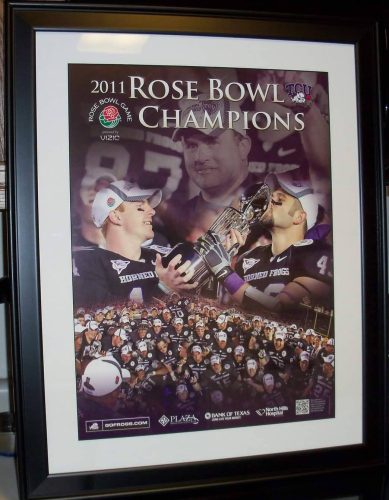
    A 2011 Rose Bowl Champions poster — one of my favorite pictures in our home!

    — Kerry Jernigan Jacobs ’91

    Courtesy of Kerry Jernigan Jacobs


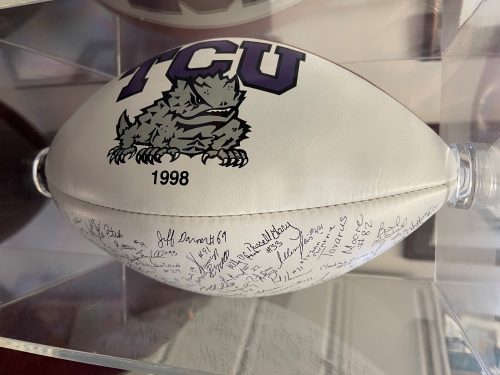
    Signed football from 1998 Sun Bowl Champs that put TCU on the national map. I won the football at a Frog Club fish fry. The funny thing is I won a basketball signed by Billy Tubbs and the 1996-97 team at the next Frog Club luncheon.

    — Robb Theisen

    Courtesy of Robb Theisen


    I’ve got a few: a shadow box framed picture of the old Amon G. Carter stadium, with an actual piece of the rubble after it was knocked down; an honorary TCU degree my dad received for years of dedication and support of the university, I received it after he passed away; and a football helmet signed by Coach P.

    — David Paul Crouch ’11


    Cap I bought at the Rose Bowl that Coach P autographed at the LA Marriott after the game. I have attended five Bowl games since 2010 and numerous other games since 2007, one of my favorites being the game at Boise State in 2011.

    — William Billy Mac Groeneveld


    A football program that Coach Patterson signed. I had won it in a contest, and they sent it to me by Fed Ex in December. That was the best Christmas present ever.

    — Lisa Carnes Mason


    Editor’s Note: Answers have been edited for clarity and length.


    NEXT QUESTION: WHICH ORGANIZATION OR CLUB WAS MOST IMPORTANT TO YOU AS A TCU STUDENT?

    Email us your response: tcumagazine@tcu.edu

  10. Flowers in her Hair

    Leave a Comment

    Alexandria Burns said that Growth, an intaglio ink print, was inspired by her life experiences as a Black woman; the work is a loose representation of one of her closest friends. “In this piece I am drawing connections between the growth and beauty of hair to that of flowers and the beauty of nature,” said the senior art education major. “The composition was designed to make the viewer focus on the hair but to also blend the visuals of the curls and the flowers into a single form.” The piece was on view in Moudy Gallery in the fall as part of the annual TCU Society of Artists and Art Educators show. The exhibition, which included paintings, photos, drawings, prints, sculpture and video, featured the work of 16 studio art and art education honors students.